Your Role in the Music Should Lead the Search
A bass guitar sits at the intersection of rhythm, harmony, and physical feel. The right one must translate your attack into a dependable foundation while fitting the tunings, register, and ensemble where you work. Genre names help, but technique and role are more precise. A pick player supporting loud guitars may need different attack and control from a fingerstyle player leaving space around a singer. Define how you create notes, how low you must go, and where the bass sits in the mix before comparing body shapes or finishes.
A: It is better when the music needs its range, regardless of experience level.
A: Any comfortable bass can work, though attack, bridge feel, and midrange deserve testing.
A: They are useful, but passive instruments appear throughout modern productions.
A: No. It offers a different tension and envelope used on many professional recordings.
A: Dual pickups and active systems are common, but setup and touch matter greatly.
A: Hum cancellation helps, yet clear single-coil and split designs can also succeed.
A: Yes, when its noise, controls, balance, and core voice serve both.
A: Listen for pitch, attack, and sustain rather than only loudness.
A: Weight alone does not predict useful tone and may reduce endurance.
A: Your normal grooves feel relaxed and occupy the intended place in the ensemble.
Describe Your Primary Bass Function
Decide whether the bass mostly anchors roots, outlines moving harmony, drives rhythmic hooks, doubles synth parts, or steps forward melodically. A foundation player may value a strong fundamental and simple controls. A busy melodic role benefits from clear upper-register response and access. Studio players need quiet electronics and repeatable sounds, while live players may prioritize fast adjustment and dependable output across unfamiliar rooms.
Write down the drummer, guitarist, keyboard, and vocalist textures you usually encounter. Dense arrangements reward focused lows and defined mids. Sparse trios may welcome a broader, richer voice. The best solo sound can consume too much space in a band, so audition with backing tracks or rehearsal recordings whenever possible.
Match Scale Length to Tuning and Touch
Standard 34-inch scale remains common because it balances tension, reach, and low-string definition. Short-scale instruments around 30 inches feel softer, place frets closer together, and often produce a round, immediate character. Extra-long scales can increase firmness and clarity for low tunings or extended-range strings, though they ask more from the fretting arm. String gauge, construction, and tuning reshape every scale. A light touch may enjoy flexible strings, while a forceful player needs enough tension to prevent notes from clattering sharp. Test the bass in the actual tuning. Dropping pitch after purchase can require heavier strings, nut work, relief, action, and intonation changes.
Choose Four, Five, or More Strings Intentionally
Four strings offer clear visual mapping, familiar spacing, and the broadest model selection. They cover most popular music and encourage players to learn position shifts. A five-string adds low notes below E and lets the player stay in one hand position across keys. It is valuable for modern gospel, metal, theater, worship, R&B, and any part written around a low B.
The fifth string widens the neck or narrows spacing, adds muting demands, and increases weight. Six-string basses add a high C for chords and extended melody but require an even broader technique. Buy extended range because arrangements need it, not because more strings appear more advanced.
Select Spacing for Fingerstyle, Pick, and Slap
Wide bridge spacing gives slap thumbs and popping fingers more room, while tighter spacing can make fast string crossing efficient. Nut width affects first-position reach and left-hand muting. A Jazz-style neck often feels narrow near the nut; Precision-style profiles may feel more substantial. Modern five-strings vary widely, so one model cannot represent the category. Play your dominant technique at realistic speed. Anchor the thumb or use a floating-thumb approach, cross all strings, and mute a syncopated line. Pick players should feel whether the bridge and pickup placement give the palm a comfortable reference. Slap players must check that controls are not in the hand’s travel path.
Understand Classic Pickup Voices
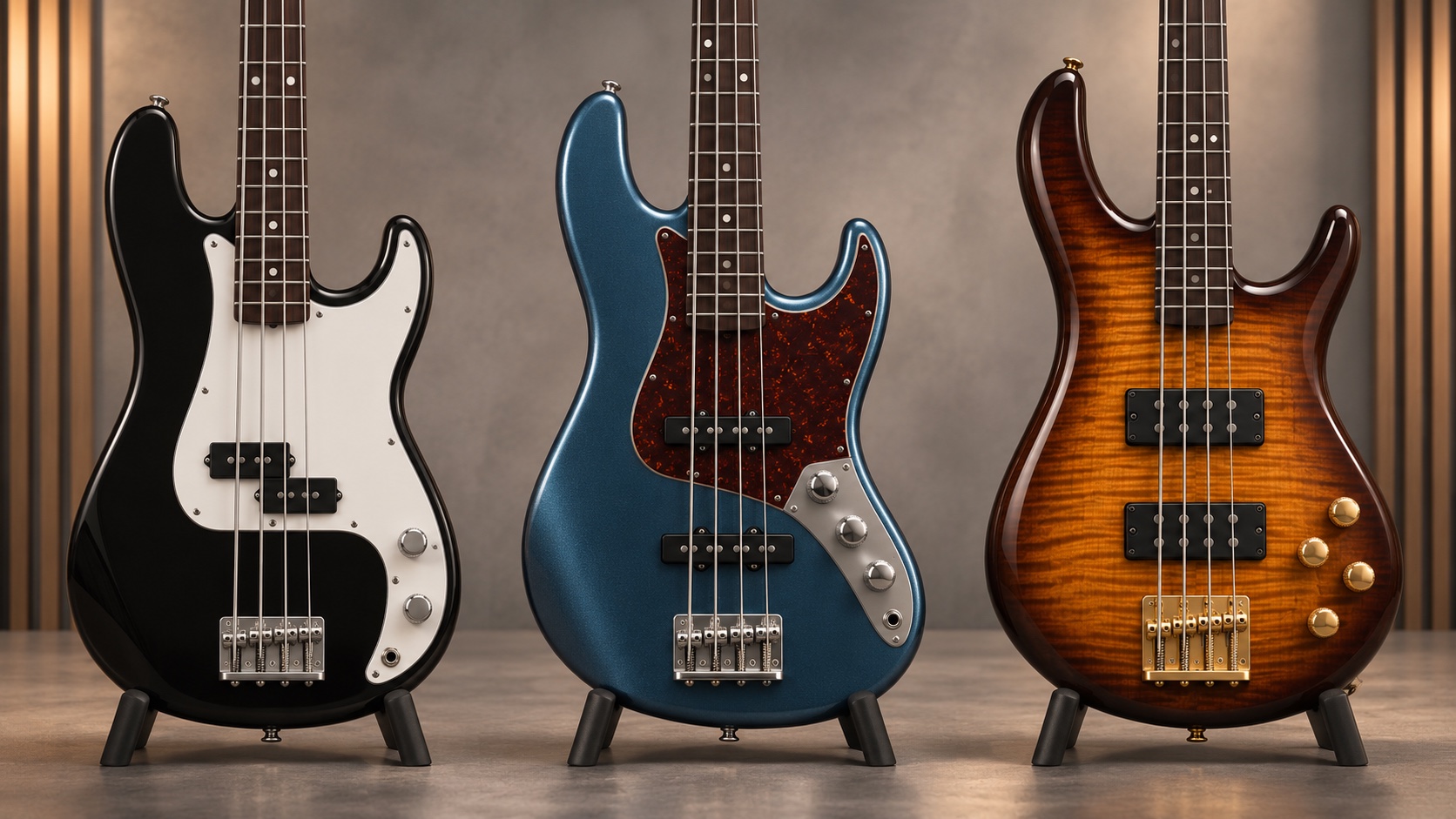
A split Precision-style pickup delivers a strong fundamental, supportive low mids, and hum-canceling operation. It sits easily beneath vocals and guitars, making it a standard for rock, soul, punk, country, and recording. Dual Jazz-style single coils offer bridge articulation, neck warmth, and blended complexity. Used alone, they may introduce hum but reveal detailed finger attack.
Soapbar and dual-coil pickups cover many designs, from dark and powerful to clean and hi-fi. Their shape does not guarantee sound; magnet, winding, placement, and electronics matter. Humbucking layouts help under high gain and stage lighting. Audition the actual circuit rather than predicting from the pickup cover.
Decide Between Passive and Active Electronics
Passive basses operate without a battery and use volume, blend, and tone controls to reduce or balance frequencies. They are direct, easy to troubleshoot, and respond clearly to changes in attack. Active preamps can boost and cut bass, mids, and treble, drive long cable runs, and adapt quickly to different rooms. They require battery care and can make poor settings louder. Active-passive switching offers redundancy and tonal choice. Check whether the passive mode works without a battery and whether tone controls remain active. Set all equalization neutral during evaluation. A bass that needs extreme onboard correction to sound balanced may not be the best starting platform.
Relate Construction to Sustain and Portability
Bolt-on necks are common, serviceable, and capable of a clear attack. Set-neck and neck-through designs can provide smooth upper access and a connected response, but they are harder to repair after serious damage. Body wood contributes alongside mass, neck stiffness, bridge, pickups, and setup; species alone should not control the choice. Weight is musical when it affects performance endurance.
A heavy bass may feel stable and authoritative yet become punishing through a long set. Chambering and compact bodies reduce load but must balance the neck. Test with your own strap for the length of a rehearsal segment, not a two-minute store trial.
Fit the Bass to Rock, Punk, and Metal
Rock and punk often reward immediate attack, stable tuning, and a midrange that remains audible beside guitars. Precision-style pickups, PJ layouts, and assertive humbuckers are natural candidates. Pick players should test palm muting and control clearance. Lower tunings need enough scale and string tension to keep transients defined. Metal styles vary from vintage growl to highly processed clarity. Extended range, active equalization, and hum-canceling pickups can help, but excessive output may blur fast notes. Evaluate with the actual gain structure and kick-drum sound. The bass should occupy its own lane rather than merely copying distorted guitar.
Fit the Bass to Funk, Soul, R&B, and Gospel
Funk demands rhythmic immediacy and controlled note length. Jazz-style pickups, active modern basses, and instruments with comfortable slap spacing offer useful options. Soul may favor a rounded split-pickup voice with flatwound strings, while contemporary R&B and gospel often use five-string range and active mid control. These traditions also depend heavily on touch.
Test ghost notes, left-hand muting, slides, and accents. A bass that sounds spectacular on sustained notes may not articulate a busy pocket. Listen with drums and keys, and judge whether every rhythmic subdivision is understandable.
Fit the Bass to Jazz, Country, Worship, and Pop
Jazz players may choose anything from a passive four-string to a six-string active instrument. Walking lines need even response across positions; chordal and solo work needs upper-register access. Country bass often values supportive fundamentals and clean attack. Pop requires consistency, fast tonal adaptation, and an instrument that records without fuss. Worship settings range from small acoustic rooms to large programmed productions. Five-string range can keep lines in comfortable positions, while active-passive flexibility helps across venues. Noise control matters around lighting and wireless systems. Choose based on the actual ensemble rather than an imagined universal church tone.
Evaluate the Bass Through the Right Amplification
Use an amplifier or direct-monitoring chain capable of reproducing low frequencies cleanly. Begin flat, match loudness, and avoid showroom bass boost. Play sustained low notes, muted eighths, and upper-register phrases. Listen for how the instrument starts and stops, not only how large it sounds.
Record direct if studio work matters. Noise, uneven pickups, and intonation become obvious without a flattering speaker. Then play through a band-appropriate amp to judge mix placement. A versatile bass should not require radical equalization to remain audible.
Run a Style-Specific Final Audition
Choose three grooves from your real repertoire: one foundational line, one technically demanding passage, and one using your lowest required notes. Play them seated and standing. Operate controls without looking and check whether the strap position preserves both hands’ technique. Have another musician play the bass while you listen from across the room. Compare notes rather than reputations. The winning bass should support time, pitch, muting, and endurance while producing the core sound your ensemble needs. When those elements align, appearance can make a true tie personal.
Choose Strings as Part of the Instrument
Roundwound strings provide bright attack, harmonic detail, and familiar growl for rock, funk, and modern pop. Flatwounds reduce finger noise and create a smooth fundamental associated with soul, jazz, reggae, and vintage studio sounds. Pressurewound and half-round designs sit between those responses. Nickel often feels and sounds balanced, while stainless steel can add bite and a more textured surface. Coated strings extend life but change feel and cost.
String construction can alter a bass more than a small electronics change. Test the intended type when possible, because a model wearing old roundwounds may seem dull and a bright new set may disguise an overly sharp pickup. Heavier gauges increase tension; lighter gauges ease bending and fast movement. Any major change may require nut, relief, action, and intonation adjustment.
Consider Fretless Only for a Specific Musical Reason
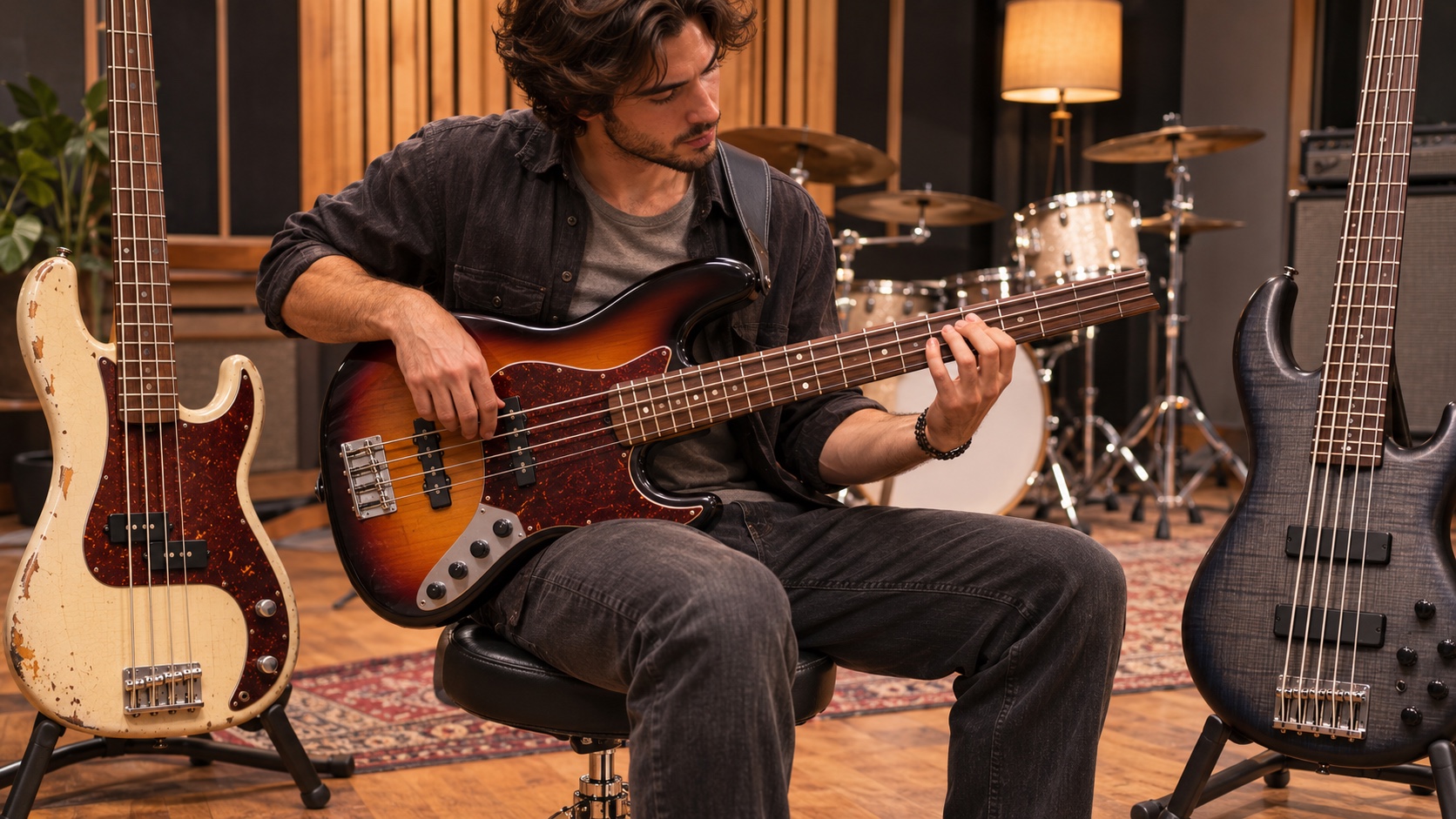
Fretless bass offers continuous pitch, vocal slides, and a softer attack. It also demands accurate left-hand placement and constant listening. Lined boards provide visual references, while unlined instruments emphasize ear and muscle memory. The choice suits players drawn to jazz, fusion, ambient music, and expressive accompaniment, but it is not a required step beyond fretted bass. Evaluate fingerboard condition, string type, and setup carefully. Roundwounds can mark some boards, while flats produce a different attack. Sustain and pitch clarity vary widely. A beginner may learn on fretless with strong guidance, yet most players benefit from selecting it because the sound is central to their music.
Test the Bass Against Drums
Bass tone that sounds impressive alone may vanish beside kick drum or occupy the same low-frequency space. Use a rehearsal recording with realistic drums. Play eighth notes, syncopated rests, and sustained roots. Listen for whether attack aligns with the kick while the note body supports harmony.
Adjust mids before adding large amounts of bass. Excess low boost consumes amplifier headroom and room space without improving definition. If the instrument fits the style, small control changes should place it in the groove. A bass requiring extreme correction in every room may have the wrong core voice for the player’s ensemble.
Recheck the Choice With a Full Rehearsal
When possible, borrow or buy with a return window and take the finalist into a normal rehearsal. Room acoustics, drum volume, standing time, and song transitions reveal more than isolated store playing. Notice whether control changes are quick, whether low notes remain pitched, and whether the shoulder stays relaxed after the last song. Ask bandmates what they hear without telling them which instrument is more expensive. Their perspective can reveal that a favored solo tone disappears in the mix or that a simple passive sound supports the group better. Check the recording again after rested ears can judge pitch and definition without showroom excitement. Keep the bass that makes musical decisions easier across the entire rehearsal, not merely the one that produces the most dramatic first impression.