
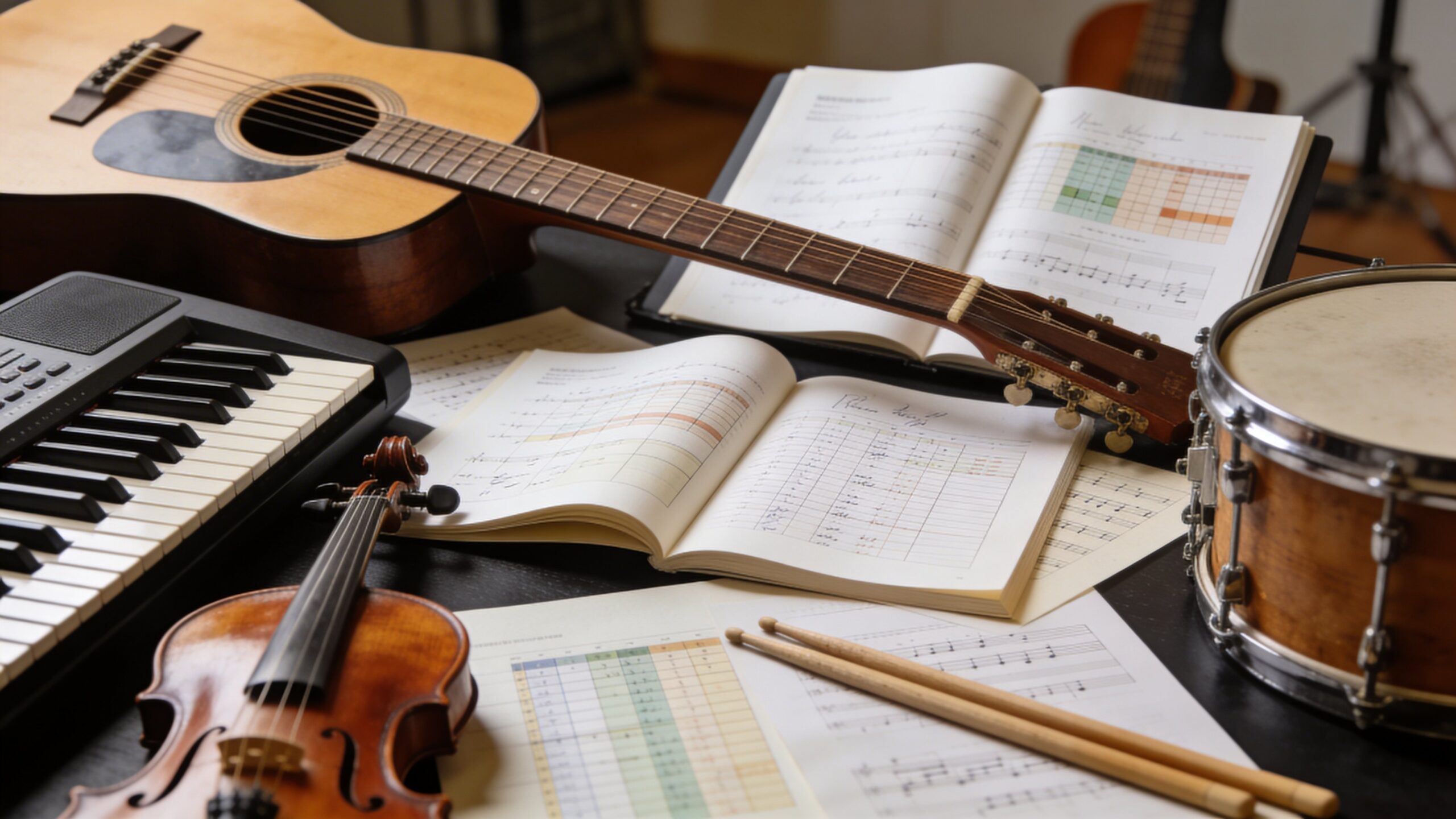
Learning to read sheet music, tabs, and chords opens a new way to understand instruments beyond simply copying sounds. Suddenly, patterns on a staff, numbers on strings, and chord symbols above lyrics stop looking mysterious and start feeling like directions into melody, rhythm, harmony, and expression. Whether you play guitar, piano, drums, violin, or another instrument, this skill turns scattered notes into a map you can follow with confidence. It helps beginners make sense of songs faster and gives experienced players a clearer view of how music is built from the inside out. This page explores the categories that shape music reading across instruments, from note names and timing values to fretboard tabs, chord formulas, key signatures, and common symbols players see every day. It is designed to make notation feel practical, exciting, and connected to real playing. As each concept clicks into place, reading music becomes less like decoding a puzzle and more like unlocking a language that makes every instrument clearer, richer, and more rewarding to learn, practice, and perform well over time.
A: Sheet music shows pitch and rhythm; tablature shows where to place fingers on the instrument.
A: Usually yes, because they focus on harmony and structure rather than every individual note.
A: Not commonly; pianists usually rely on staff notation, chord symbols, and lead sheets.
A: They can start there, but standard notation builds stronger rhythm and pitch understanding.
A: It tells you which sharps or flats are consistently used in the piece.
A: That format is designed for accompaniment and flexible strumming or comping patterns.
A: No; sight-reading is real-time performance, while theory explains why the music works.
A: Start with note names, basic rhythm values, simple tabs, and common major or minor chords.
A: Yes, especially in ensemble settings where harmony and song form matter.
A: With regular practice, many players notice steady progress within a few months.