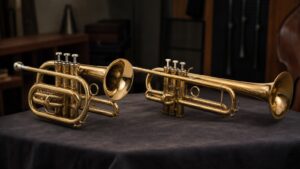
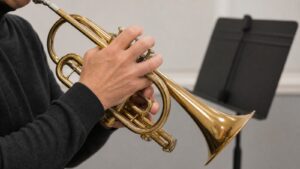
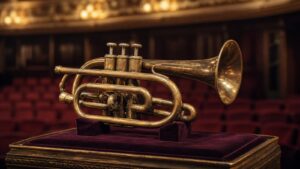
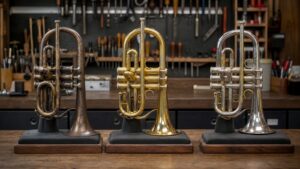
The cornet is the musical world’s quiet powerhouse, a compact brass instrument that carries surprising warmth and agility within its polished frame. With a voice that can shimmer like golden light or settle into a mellow, velvety whisper, the cornet invites players and listeners into a soundscape where precision meets poetry. Its smooth, conical bore gives it a uniquely intimate tone, making it a favorite in brass bands, jazz ensembles, and solo performances where nuance and color matter just as much as power. Whether soaring above a full ensemble or weaving delicately through a lyrical passage, the cornet proves that small size and expressive depth can go hand in hand.
Beyond its elegant curves and unmistakable timbre, the cornet has a history steeped in craftsmanship and musical evolution. It has shaped genres, inspired generations of performers, and carved out its own unmistakable identity beside its brass cousins. Today, it stands as an instrument for both bold innovators and thoughtful traditionalists, a bridge between old-world charm and modern creativity. Exploring the cornet means stepping into a rich musical tradition that continues to grow, adapt, and shine.
A: The cornet has a conical bore, producing a warmer, more rounded tone.
A: Yes—its resistance and tonal flexibility help develop solid fundamentals.
A: Brass bands, traditional jazz, concert bands, chamber ensembles.
A: Often yes, but cornet shanks may require adapters depending on model.
A: Their blend and lyrical tone suit ensemble balance and melodic clarity.
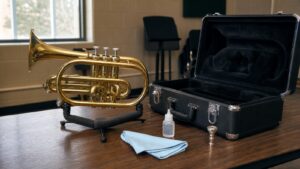
A: Ideally before each practice session or performance.
A: Yes—both share similar ranges and fingering systems.
A: Decades, especially with regular cleaning and professional servicing.
A: Silver offers brighter projection; lacquer provides a warmer tone.
A: Focused airflow, relaxed embouchure, and consistent practice are key.