Starting Cornet With Sound, Air, and Steady Habits
Learning cornet begins with a simple goal: make a clear, relaxed sound and repeat it on purpose. The instrument rewards steady air, patient listening, and small physical adjustments more than force. Beginners often want to jump straight into high notes or fast songs, but the early wins come from posture, breathing, mouthpiece placement, valve coordination, and short practice sessions that leave the lips fresh. A complete beginner does not need to sound impressive on day one. They need a practical routine that turns confusion into repeatable habits.
A: Short daily sessions of focused playing and rest are better than long tiring sessions.
A: Check steady air, relaxed lips, mouthpiece placement, and whether the valves are open.
A: Brief buzzing can help, but it should not tire the lips before playing.
A: Return to comfortable notes, use steadier air, and avoid forcing with pressure.
A: Lessons are not required, but they can prevent early habits from becoming difficult to fix.
A: After tone, air, and middle-register control become more reliable.
A: Oil them whenever action feels slow, following teacher or manufacturer guidance.
A: Airy tone may come from loose embouchure, leaks, weak air, or mouthpiece placement.
A: You can begin with careful resources, but occasional teacher feedback is very helpful.
A: Choose a slow simple melody that stays in a comfortable range.
Set Up Before You Play
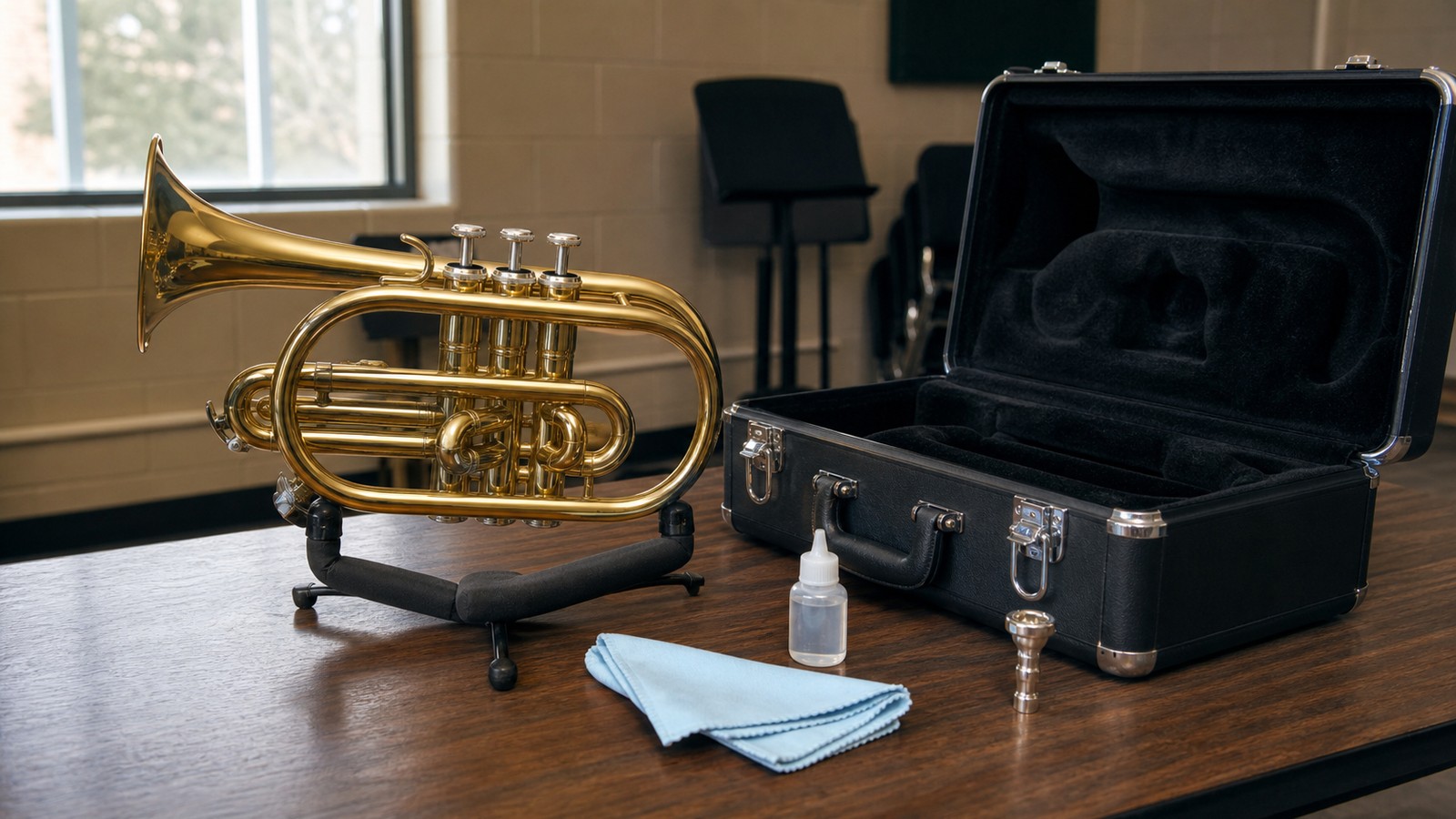
Start by checking that the valves move freely and that the mouthpiece fits gently into the receiver. Do not twist the mouthpiece hard; a light secure placement is enough. Keep valve oil nearby, because slow pistons can interrupt practice and make simple exercises feel harder than they should.
Sit or stand tall with relaxed shoulders. The cornet should come to the face, rather than the head dropping toward the instrument. Good setup gives the air a clear path and prevents tension from becoming part of the habit.
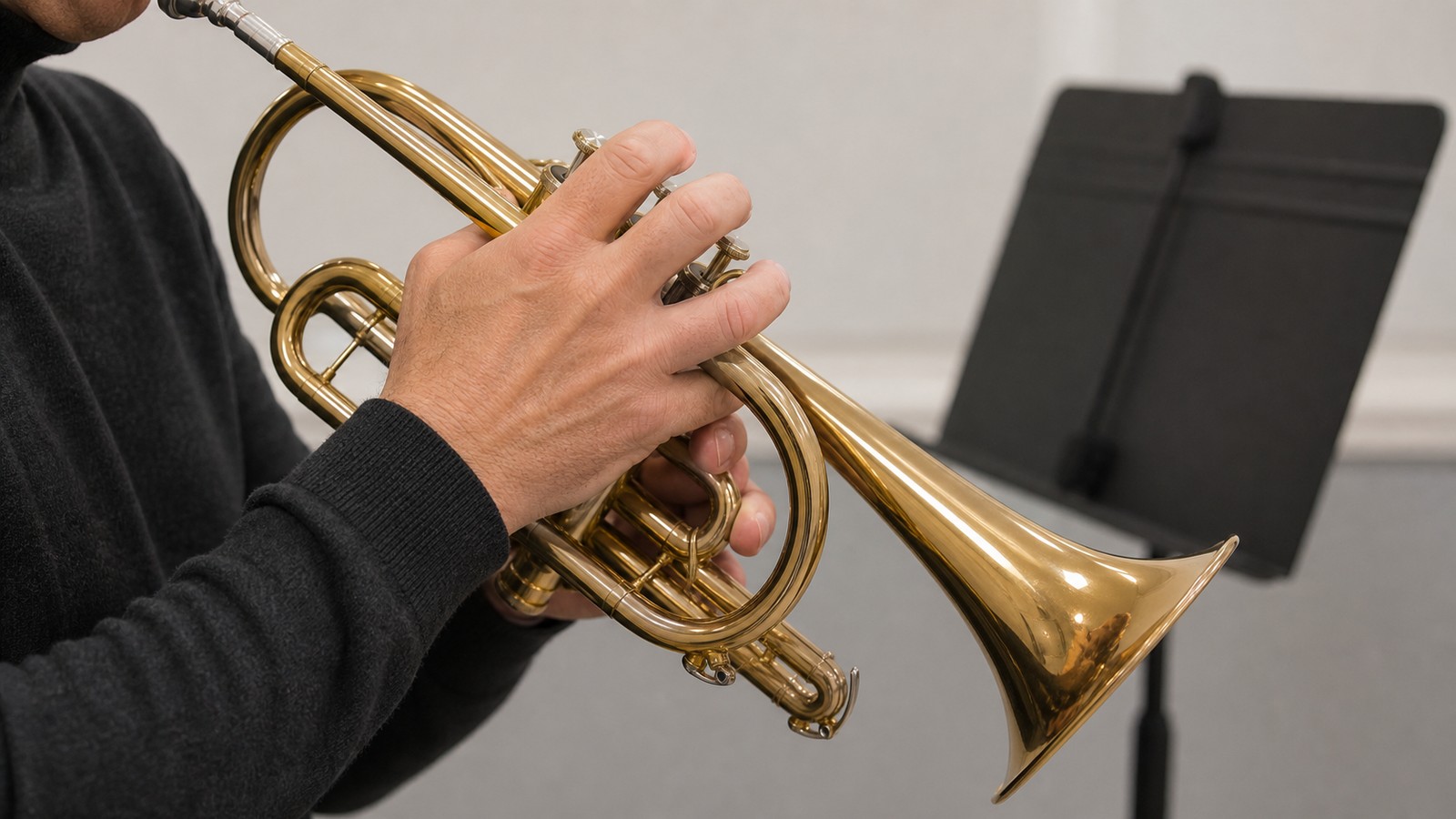
Hold the cornet with the left hand supporting the instrument and the right fingers resting naturally on the valve buttons. The fingertips should press straight down. Curved, relaxed fingers move more cleanly than stiff flat ones.
Learn the Breathing First
Cornet sound starts with air, not with lip pressure. Take a quiet breath that expands the body without raising the shoulders, then release the air in a steady stream. If the breath is tight, the tone will usually sound tight too.
Buzzing and Mouthpiece Placement
The lips should meet naturally inside the mouthpiece. Beginners do not need to clamp or stretch the mouth into an extreme shape. A gentle firm center with relaxed corners usually works better than a forced smile.
Mouthpiece buzzing can help some players, but it should stay short and easy. The goal is to feel vibration, not to grind the lips into fatigue before the cornet is even in the hands.
Make Your First Clear Notes
Begin with comfortable middle notes instead of chasing the highest sound possible. Blow through the instrument as if sending warm air across the room. If the note cracks, reset the breath and try again without punishing the lips.
Long tones are the beginner's best friend. Hold a note for a few seconds, listen for steadiness, rest briefly, and repeat. This trains tone, breath, and patience at the same time.
Rest as much as you play in the first sessions. The embouchure is learning a new physical task, and fatigue can teach bad pressure habits. Short successful attempts beat long frustrated ones.
Understand the Valves
Cornet valves redirect air through extra tubing to change pitch. The basic fingering system will feel less mysterious once the player sees that each valve lowers the instrument by a specific amount. Early method books introduce these combinations gradually for a reason.
Press valves straight down and release them fully. Half-pressed valves create fuzzy notes and slow transitions. Practicing clean movement at a slow tempo builds speed more safely than rushing.
Read Your First Notes
Beginners should connect written notes to fingerings, sound, and rhythm from the start. Saying note names can help, but playing with a steady pulse matters just as much. A simple two-note exercise can teach more than a page of rushed guesses.
Build a Practice Routine
A useful beginner routine can be short. Start with breathing, then play a few long tones, a simple slur or two, a fingering pattern, and a small melody from the method book. End before the lips are exhausted.
Keep a practice journal if motivation fades. Write down one thing that improved and one thing to ask the teacher. Small records make progress visible when the daily sound still feels uneven.
Consistency matters more than heroic practice length. Ten focused minutes most days will usually help more than one long session that leaves the player sore.
Tone, Tonguing, and Articulation
Tonguing should interrupt the air lightly, not attack the note like a hard consonant. Many beginners use a simple syllable such as tu or too while keeping the air moving. The tongue starts the note, but the breath carries it.
If every note sounds harsh, practice starting notes softly. If every note starts late, check whether the tongue is too heavy or the breath is uncertain. Clear articulation grows from coordination rather than force.
Avoid Early Pressure Habits
Pressing the mouthpiece harder may seem to help a difficult note, but it usually limits endurance and tone. Beginners should learn to reset with air instead of adding pressure. A teacher can spot this habit early before it becomes stubborn.
Play With Others When You Can
Ensemble playing teaches listening in a way solo practice cannot. A beginner hears whether their rhythm lines up, whether their pitch blends, and whether the tone matches the group. Even simple duets with a teacher can make practice more musical.
Playing with others also builds confidence. The cornet can feel exposed alone, but in a group the player learns to contribute one clear line to a larger sound.
Troubleshooting Common Beginner Problems
If no sound comes out, check the breath first, then the mouthpiece placement, then the valve positions. If notes crack constantly, slow down and return to a comfortable pitch. If valves stick, clean and oil them rather than forcing harder finger motion.
If the lips tire quickly, reduce practice length and rest more often. If tone sounds thin, use more steady air and less pressure. Most beginner problems improve when the player becomes calmer and more organized.
If rhythm falls apart whenever valves change, separate the tasks. Clap the rhythm, finger the notes silently, then combine them at a slower tempo. Beginners often improve faster when they practice coordination in pieces instead of repeating the same mistake at full speed.
What Progress Should Feel Like
Progress on cornet is not a straight line. One day the sound opens easily, and the next day the first note feels uncertain. That is normal. The important signs are steadier tone, cleaner valve movement, better rhythm, and more confidence returning after mistakes.
Your First Month of Goals
During the first month, the player should aim for consistency rather than range. A clear middle-register sound, a few reliable fingerings, and simple rhythms played with a steady pulse are enough. The habit of beginning calmly matters more than how many notes appear in the method book.
A teacher may assign specific pages, but the home goal is broader. The student should learn how to open the case, assemble the cornet, warm up, practice briefly, clean up, and stop before fatigue takes over. Those routines make future progress easier.
Working With a Metronome
A metronome can feel strict at first, but it gives beginners a fair mirror. Start with slow tempos and easy notes so the pulse does not become another source of panic. Playing fewer notes in time is better than playing many notes with no steady beat.
Use the metronome for short sections only. Four measures of clean rhythm can teach more than an entire page played anxiously. As the player improves, the click becomes less like a test and more like a musical partner.
Counting out loud before playing can help. Beginners who know when notes happen are less likely to press valves late or rush through rests.
Care Habits That Support Playing
Good care is part of learning the instrument. Wipe fingerprints after practice, empty water keys carefully, and return the mouthpiece to its case compartment. Small habits keep the cornet clean and make the next session easier to start.
Staying Motivated Through Uneven Days
Every beginner has days when the sound feels worse than expected. That does not mean the player is losing progress. Lips, breathing, attention, and confidence all change from day to day, especially in the first months.
On difficult days, return to the easiest successful sound and stop after a small win. A steady long tone, a clean two-note change, or one accurate rhythm can keep the practice habit alive. Cornet progress grows from those modest victories.
Simple Music to Start With
The best first music uses a small range, clear rhythm, and enough repetition for the player to hear improvement. Folk tunes, method-book melodies, and short call-and-response exercises work well because they give the ear something recognizable. A beginner who knows the tune can focus on tone and timing instead of decoding every measure.
Slow music is not a punishment. It gives the player time to breathe, set the embouchure, press valves cleanly, and listen to pitch. A slow melody played with care sounds more musical than a faster piece that falls apart.
After a tune feels comfortable, change one detail. Play it softer, shape the last note, or keep the tempo steadier. These small variations teach musicianship without overwhelming the beginner.
When to Ask for Help
Ask for help when the same problem appears for several practices in a row. Persistent airy tone, painful pressure, stuck valves, or confusion about fingerings can usually be solved faster with a teacher than with more frustrated guessing. Early help keeps small obstacles from becoming part of the player's normal technique.
Moving From Exercises to Songs
Exercises build the tools, but songs remind the student why the tools matter. Once a few notes are reliable, place them inside short melodies as soon as possible. The cornet should feel like a musical voice, not only a machine for drills.
A balanced practice session includes both. Spend a few minutes on tone and valves, then use those skills in a melody. Ending with music makes the routine feel complete and gives the player a reason to open the case again tomorrow.
A Weekly Check-In
Once a week, choose one easy exercise and record it. The recording does not need to be shared with anyone. Its purpose is to help the player notice tone, rhythm, and confidence from outside the moment of playing.
Listen for one improvement and one next step. Maybe the first note starts faster, the valves sound cleaner, or the tempo stays steadier. Maybe the breath still feels rushed before a longer phrase.
This habit keeps practice honest without making it harsh. Beginners need encouragement and direction at the same time, and a short weekly check-in can provide both. It also helps families and teachers see patterns that a student may miss. If the sound improves after shorter sessions, the routine can stay short. If rhythm slips whenever the player gets tired, the practice plan can include more rests. Small evidence makes the next week of playing more specific. The recording can also preserve wins that the player forgets. Hearing last month's tone beside this week's tone often proves that progress is happening, even when daily practice feels slow. That proof can keep a beginner patient during ordinary uneven weeks, longer learning plateaus, challenging first performances, and quiet practice stretches between lessons at home and school.