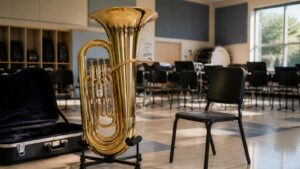
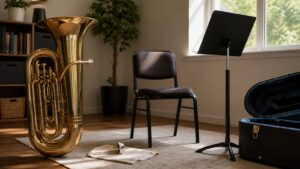
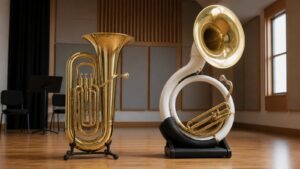
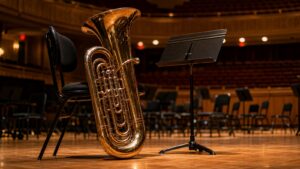
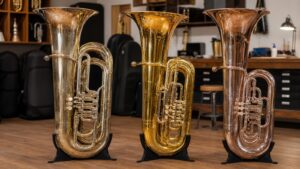
The tuba is the deep-voiced storyteller of the musical world, the instrument that rumbles beneath the orchestra like distant thunder while carrying a warmth that can reshape an entire performance. Its towering curves and wide, resonant bell make it both visually commanding and sonically unforgettable. Whether anchoring a symphony, powering a brass ensemble, or adding surprising agility in jazz and solo works, the tuba turns low frequencies into something alive, expressive, and unexpectedly charismatic. It is the foundation other instruments lean on, yet it also stands proudly on its own as a versatile and soulful musical force.
Exploring the tuba means discovering a universe of sound shaped by breath, brass, and bold imagination. Its tones can shift from velvety smooth to playful and brassy, from supporting harmonies to booming melodic statements that catch audiences off guard. Players become sculptors of resonance, guiding air through coiled tubing to create vibrations that can shake a hall or soothe a quiet room. For beginners and seasoned musicians alike, the tuba offers a chance to experience music from the ground up—rich, powerful, and full of creative possibility.
A: Most beginners start on a BBb tuba because it’s common in schools and band programs.
A: A steady, relaxed air stream is key—air volume matters, but efficiency matters more.
A: They are large but manageable with a good case and backpack straps.
A: Rotary valves offer smoother airflow and are often preferred in European orchestras.
A: Classical, brass band, jazz, folk, marching, film scoring, and modern experimental music.
A: Light oiling every few days of playing keeps valves smooth and responsive.
A: Yes—3/4-size instruments make learning accessible for younger players.
A: With consistent practice, players build low-register power within a few months.
A: CC tubas are favored by professionals for orchestral clarity; BBb for band versatility.
A: Yes—players adjust slides regularly to compensate for temperature and register changes.