


Beginner to Advanced Tutorials
Every great musician starts somewhere, but the most rewarding journeys are the ones that keep opening new doors. Beginner to Advanced Tutorials is built for that full progression, giving readers a place to move from first notes and basic technique to deeper control, expressive playing, and confident musical fluency. Whether someone is picking up an instrument for the very first time or refining years of experience, this page is designed
Practice Routines and Drills
Practice routines and drills are where musical progress becomes visible, repeatable, and deeply rewarding. More than simple repetition, they turn scattered effort into focused growth by helping players build timing, control, tone, technique, and confidence one session at a time. For beginners, routines create structure and momentum, making early lessons feel less overwhelming and far more achievable. For experienced musicians, drills sharpen precision, strengthen weak spots, and keep essential skills

Reading Sheet Music, Tabs, and Chords
Learning to read sheet music, tabs, and chords opens a new way to understand instruments beyond simply copying sounds. Suddenly, patterns on a staff, numbers on strings, and chord symbols above lyrics stop looking mysterious and start feeling like directions into melody, rhythm, harmony, and expression. Whether you play guitar, piano, drums, violin, or another instrument, this skill turns scattered notes into a map you can follow with confidence. It

Music Theory for Each Instrument Family
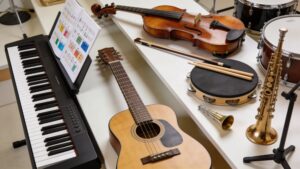
Music theory becomes far more exciting when it is explored through the distinct voice of each instrument family. Strings reveal how melody and harmony can sing through tension, resonance, and phrasing. Woodwinds uncover the color of breath, articulation, and tonal shading. Brass brings power, balance, and harmonic strength into focus, while percussion turns rhythm, pulse, and texture into the foundation of musical movement. Keyboards and plucked instruments connect theory to

Warm-Ups, Finger Exercises, Breath Control
Warm-ups, finger exercises, and breath control sit at the heart of musical growth, shaping everything from confidence and accuracy to tone and endurance. Before a melody fully opens up, the body and mind need a way in. Smart warm-ups prepare muscles, sharpen listening, and help players settle into rhythm with intention instead of tension. Finger exercises build coordination, independence, and speed across keys, strings, valves, and pads, turning awkward motion

Online Learning Platforms and Apps
Online learning platforms and apps have transformed the way musicians build skill, confidence, and creative range. Instead of relying only on traditional lessons or printed method books, today’s players can explore guided courses, real-time feedback tools, interactive exercises, and practice systems designed for every level. From beginner guitar chord drills to advanced jazz piano harmony lessons, digital learning opens the door to flexible, focused growth that fits modern schedules. It
Play-Along Lessons and Backing Tracks
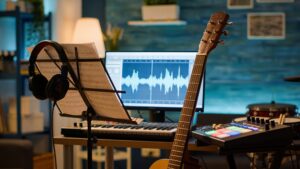
Play-Along Lessons and Backing Tracks turn practice into something that feels alive, immersive, and genuinely musical. Instead of repeating exercises in silence, players step into a fuller sound world where rhythm, harmony, timing, and expression begin to connect in a more natural way. Whether someone is picking up a guitar, sitting at a piano, exploring saxophone lines, or building confidence on drums, these resources create the feeling of playing with