
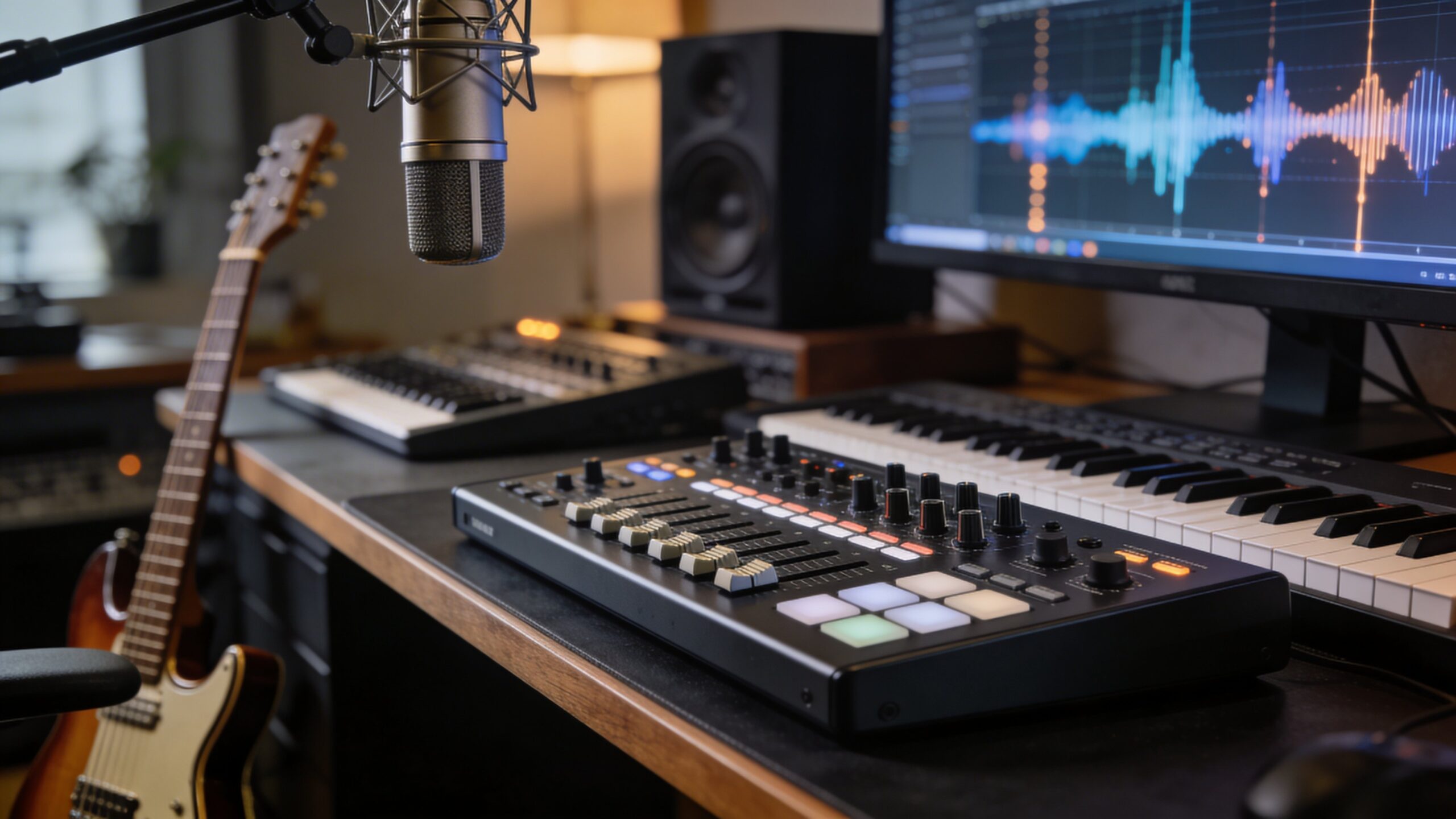
Audio interfaces and DAWs are where musical ideas stop being abstract and start becoming something you can shape, record, edit, and hear with clarity. An audio interface acts as the bridge between instruments, microphones, headphones, and your computer, while a DAW becomes the creative workspace where performances turn into polished tracks. Together, they form the modern recording environment for songwriters, producers, instrumentalists, and home studio builders who want more control over sound, workflow, and expression. For musicians, this category is not just about gear or software features. It is about capturing the character of a guitar, the punch of a drum performance, the warmth of a vocal, or the detail of a keyboard part without losing inspiration along the way. From beginner-friendly setups to advanced production systems, audio interfaces and DAWs shape how music is created from the first note to the final mix, making them one of the most important foundations in today’s instrument-focused recording world.
A: Usually yes, especially for better sound quality, proper instrument inputs, and lower-latency monitoring.
A: It records, edits, arranges, mixes, and exports music from one central workspace.
A: Yes, if the interface has an instrument input designed for guitar or bass.
A: Not always; the best choice depends on inputs, workflow, reliability, and your recording goals.
A: It is the delay between your performance and what you hear back through the system.
A: Yes, but ease of learning and workflow can matter more than advanced depth at first.
A: It lets you hear your input signal with very little delay while recording.
A: Only if it has enough simultaneous inputs or expansion for the full session.
A: Many do, though the bundle quality and quantity vary widely between programs.
A: Both matter, but the best system is the one that helps you record and create without friction.