
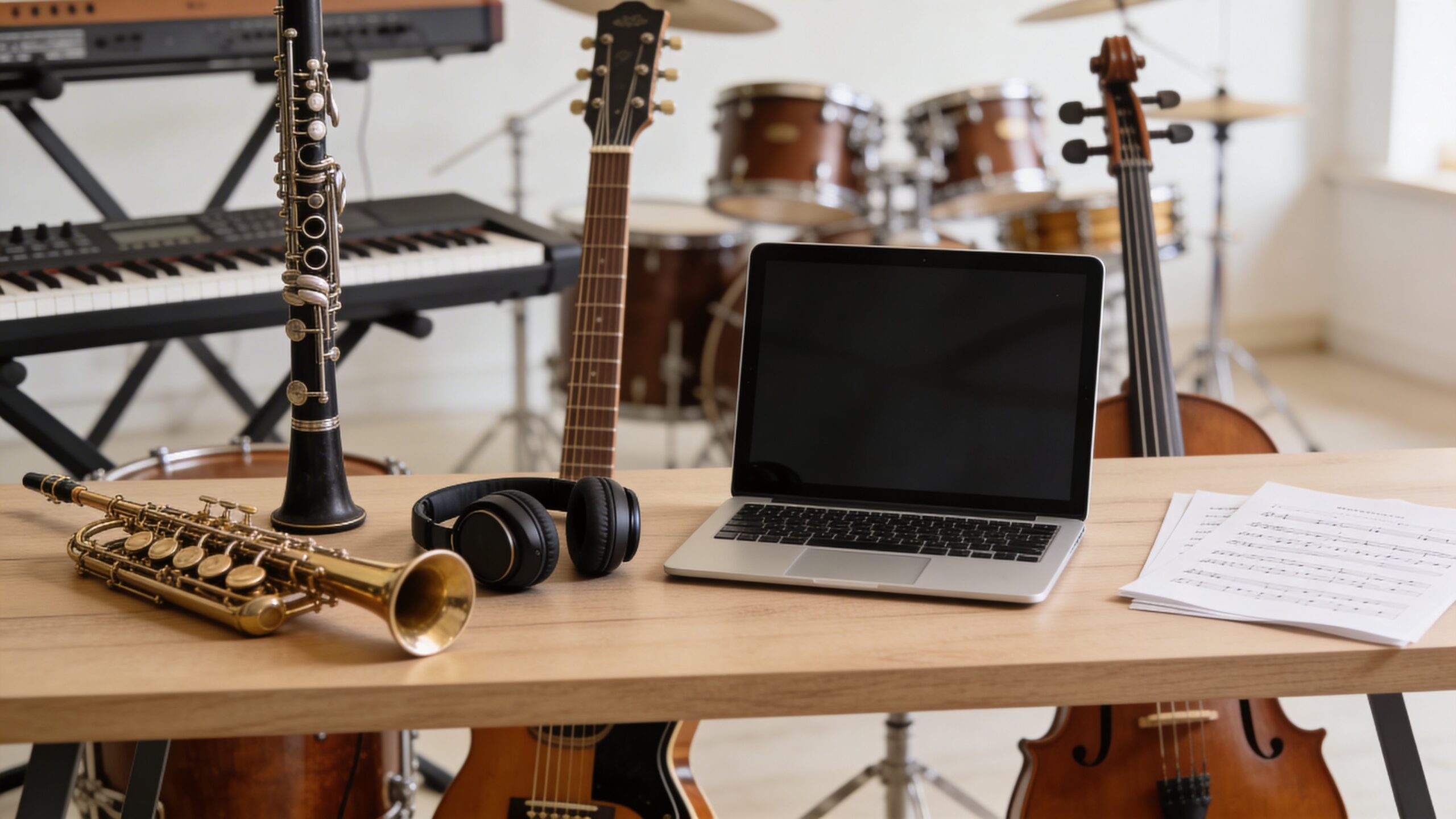
Online learning platforms and apps have transformed the way musicians build skill, confidence, and creative range. Instead of relying only on traditional lessons or printed method books, today’s players can explore guided courses, real-time feedback tools, interactive exercises, and practice systems designed for every level. From beginner guitar chord drills to advanced jazz piano harmony lessons, digital learning opens the door to flexible, focused growth that fits modern schedules. It also helps players move beyond memorizing songs, giving them better ways to understand rhythm, technique, ear training, notation, and the musical language behind what they play.
For instrument-focused learners, these platforms are especially exciting because they connect theory to real musical action. A drummer can study subdivision through groove trainers, a violinist can sharpen intonation with listening apps, and a brass player can build stronger phrasing through structured practice tools. Whether someone wants to master fundamentals, expand into new styles, or support private lessons with smarter daily practice, online learning platforms and apps make musical development feel more accessible, engaging, and full of possibility.
A: No. The core ideas are shared, but each family experiences them through different techniques, ranges, and visual layouts.
A: Keyboard instruments usually make intervals, chords, and voicings easiest to visualize at once.
A: Because percussion often defines pulse, subdivision, groove, and structure more than pitch-centered harmony.
A: The harmonic series strongly shapes brass technique, tuning, and note production.
A: No. Shapes help, but understanding note relationships makes players more flexible and musical.
A: Players often balance written pitch, sounding pitch, and ensemble context at the same time.
A: Ear training is vital, but theory improves reading, ensemble work, and musical decision-making.
A: No. It also includes rhythm, form, phrasing, texture, function, and musical structure.
A: Yes, especially when it is taught alongside simple songs, technique, and listening.
A: The best approach connects what the player sees, hears, and physically performs on their instrument.