
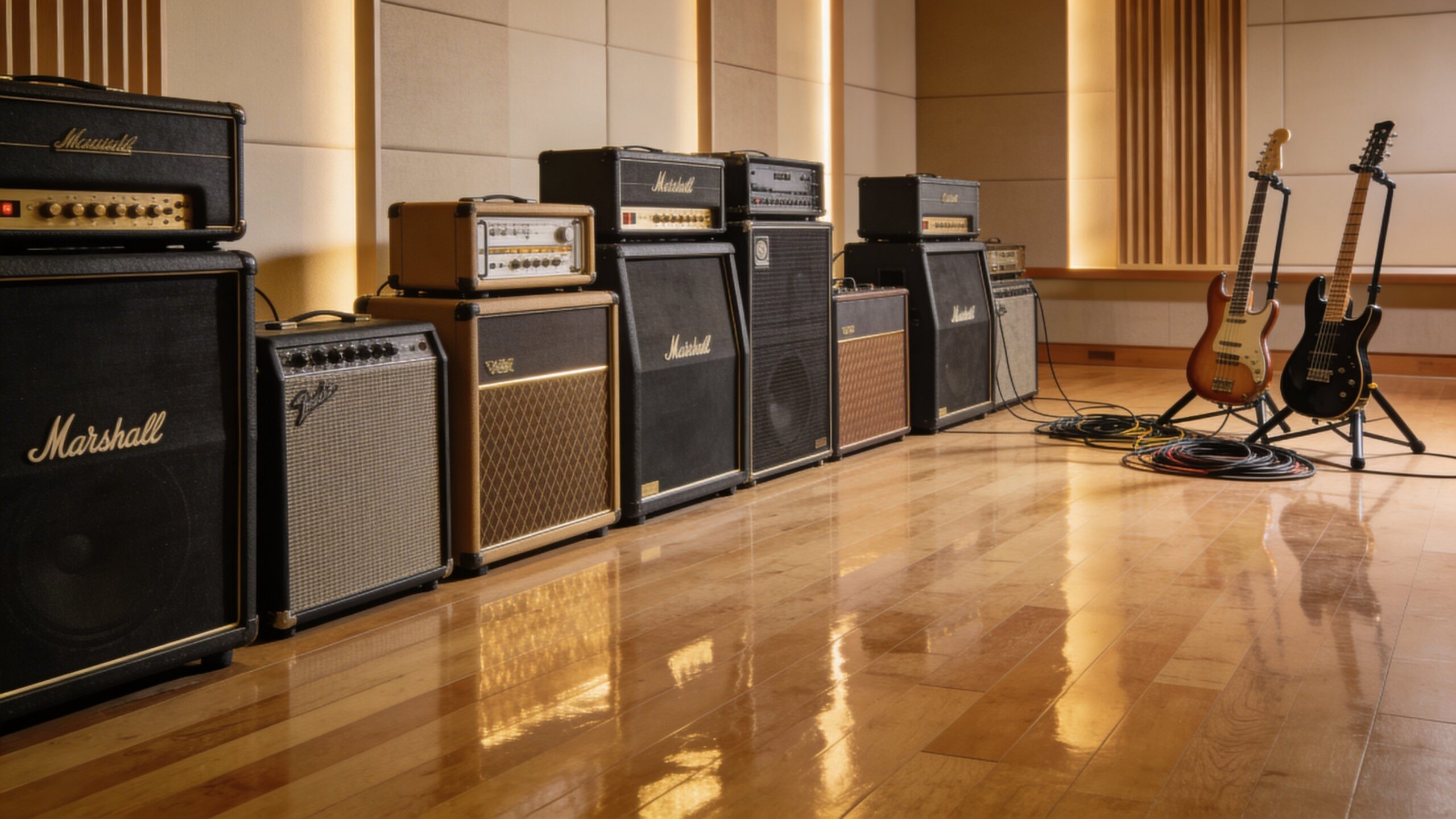
Instrument amplifiers and cabinets do far more than make musical instruments louder. They shape character, color, response, and presence, turning a clean signal into something warm, aggressive, glassy, punchy, or richly textured. From compact practice combos to towering stage-ready stacks, this category sits at the crossroads of performance and personality. Guitarists, bassists, keyboard players, and acoustic performers all rely on amplification systems that do more than project sound—they help define the emotional weight and sonic identity of every note, riff, chord, and sustained phrase. This section explores the world of instrument amplifiers and cabinets through the features, technologies, and design choices that matter most. It looks at how wattage, speaker size, cabinet construction, tone controls, and platform type influence feel and output across different playing styles and environments. Whether you are curious about classic tube warmth, modern modeling flexibility, or the physical impact of cabinet design, this category opens the door to the gear that transforms musical energy into a full, immersive listening experience.
A: The amp shapes and powers the signal; the cabinet contains the speakers that project it.
A: It combines amplifier and speaker in one unit, making setup and transport simpler.
A: Not always; they offer a distinct feel, but solid-state and modeling designs can be excellent too.
A: They influence response, projection, low-end weight, and the overall character of the sound.
A: It indicates power output, but cabinet efficiency and speaker design also affect real-world loudness.
A: No; impedance and power handling must match properly for safe and effective operation.
A: It uses digital processing to recreate the sound and behavior of multiple amp and cabinet types.
A: Yes; acoustic amps are usually voiced for clarity, wider range, and more natural reproduction.
A: Not necessarily; larger cabinets can sound fuller, but smaller options may fit rooms and use cases better.
A: A quality combo amp is often the simplest starting point for learning, practice, and small performances.