
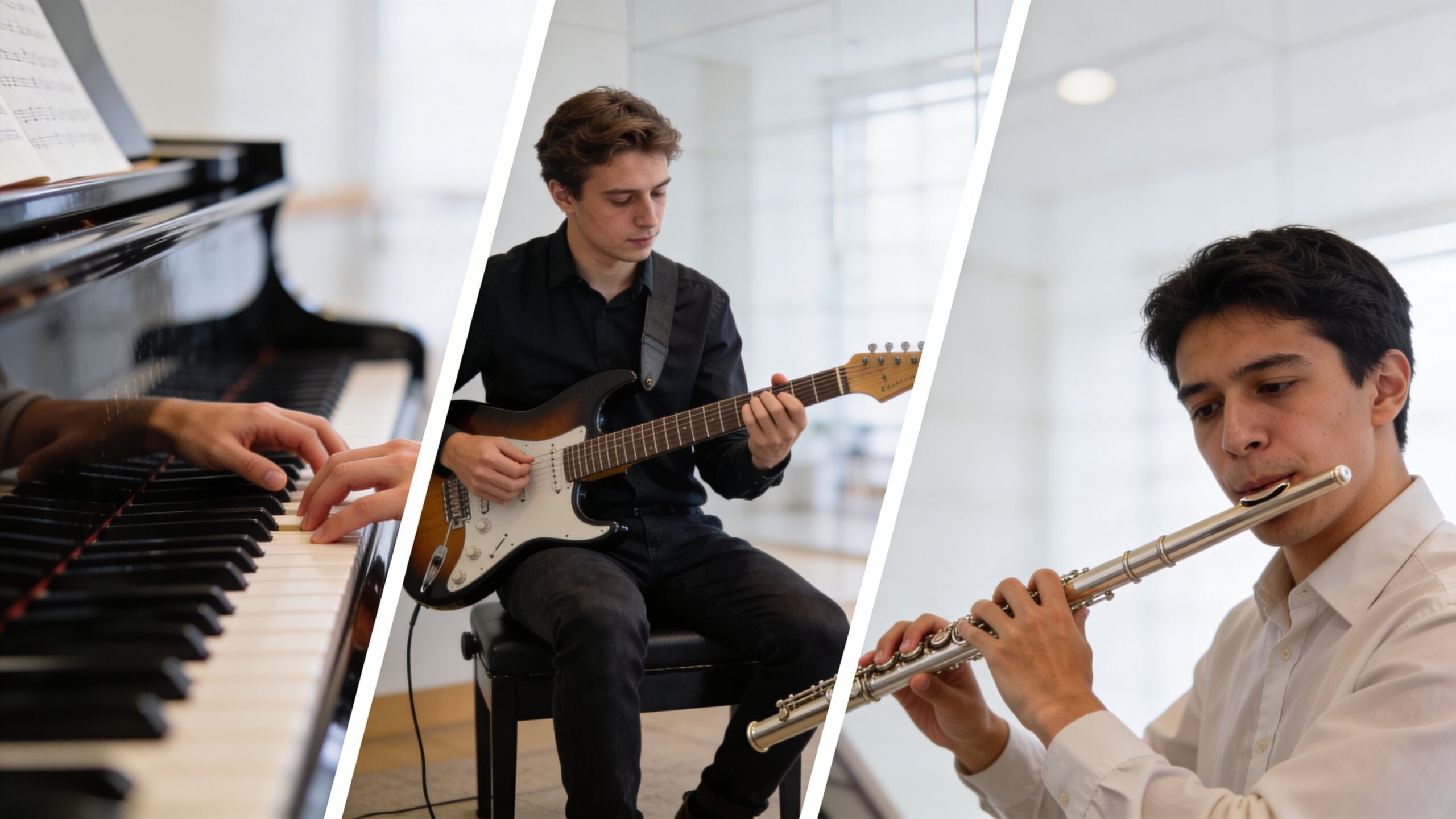
Warm-ups, finger exercises, and breath control sit at the heart of musical growth, shaping everything from confidence and accuracy to tone and endurance. Before a melody fully opens up, the body and mind need a way in. Smart warm-ups prepare muscles, sharpen listening, and help players settle into rhythm with intention instead of tension. Finger exercises build coordination, independence, and speed across keys, strings, valves, and pads, turning awkward motion into fluid expression. Breath control adds another layer, giving wind players stability, phrasing, and dynamic range while also teaching all musicians the value of pacing, support, and control. This page explores these essential categories as connected skills rather than isolated drills. Whether you are developing stronger hands for piano, cleaner articulation on brass, smoother movement on guitar, or steadier airflow on flute, the fundamentals remain powerful. Great technique rarely appears by accident. It grows through repetition with purpose, attention to form, and a deeper understanding of how preparation shapes performance. Here, you will find ideas that make practice feel more focused, musical, and rewarding.
A: The fundamentals are shared, but each family experiences them through different physical layouts and techniques.
A: Keyboards are often the clearest visually, though strings and fretted instruments reveal patterns well too.
A: It is built directly into how notes are produced, so theory and technique overlap constantly.
A: Yes, especially rhythm, form, phrasing, dynamics, and ensemble structure.
A: Many instruments read written notes that sound at different concert pitches.
A: Absolutely, though some players use piano as a second reference for harmony and voice leading.
A: Yes, because scales, rhythm, harmony, and structure still shape strong musical ideas.
A: It matters on all of them, but especially on fretless strings, brass, and voice-like wind playing.
A: Study concepts directly through the songs, exercises, and patterns that your instrument uses most.
A: Yes, the same interval or chord may be seen, heard, fingered, or breathed in very different ways.