
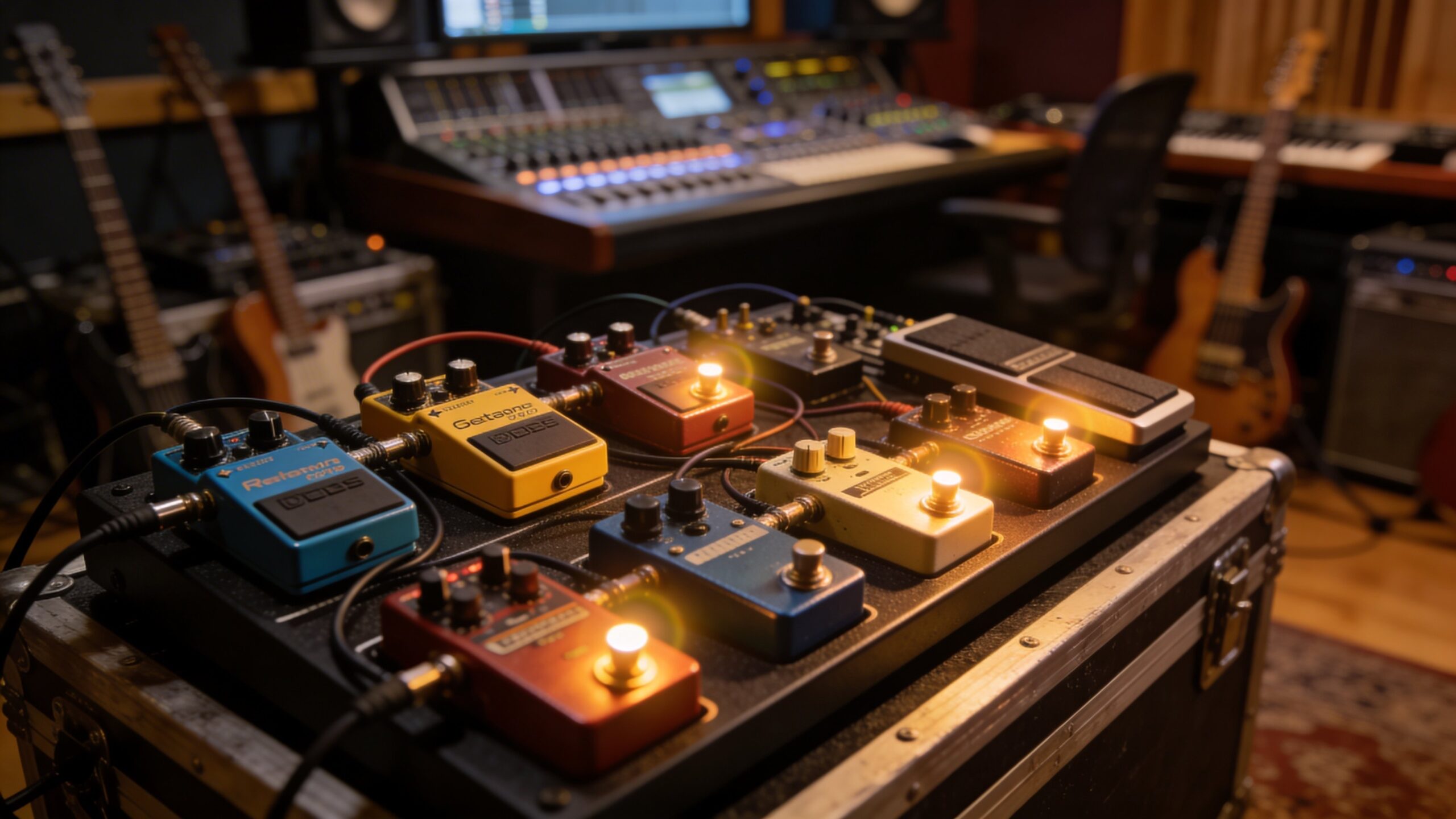
Pedals, plugins, and effects gear shape the sonic identity of modern music, turning raw instrument signals into expressive, layered soundscapes. From the tactile click of a stompbox to the precision of a digital plugin chain, these tools redefine tone at every stage of the signal path. Guitarists sculpt textures with overdrive, delay, and modulation, while producers and engineers use software effects to refine, transform, and expand recordings far beyond their original form. Whether analog or digital, each effect adds character, depth, and control. This category explores the full spectrum of sound-shaping tools, from classic hardware pedals to advanced studio plugins and hybrid systems that bridge both worlds. Understanding how these elements interact unlocks creative potential, allowing players and creators to move beyond basic sound into intentional tone design. With evolving technology and endless combinations, effects gear is not just an accessory—it is a core instrument in its own right, capable of defining genres, inspiring performances, and transforming how music is heard and experienced.
A: Pedals are physical devices; plugins are software-based effects.
A: Not necessarily—many setups use one or the other depending on workflow.
A: Typically dynamics → gain → modulation → time-based effects.
A: Not inherently; both offer different tonal characteristics.
A: A delay caused by digital processing time.
A: In many cases yes, especially in studio environments.
A: A device combining several effects in one platform.
A: Very—it affects noise and reliability.
A: A routing option in amps for placing effects after preamp stages.
A: Poor setup can degrade tone, but proper gain staging prevents this.