
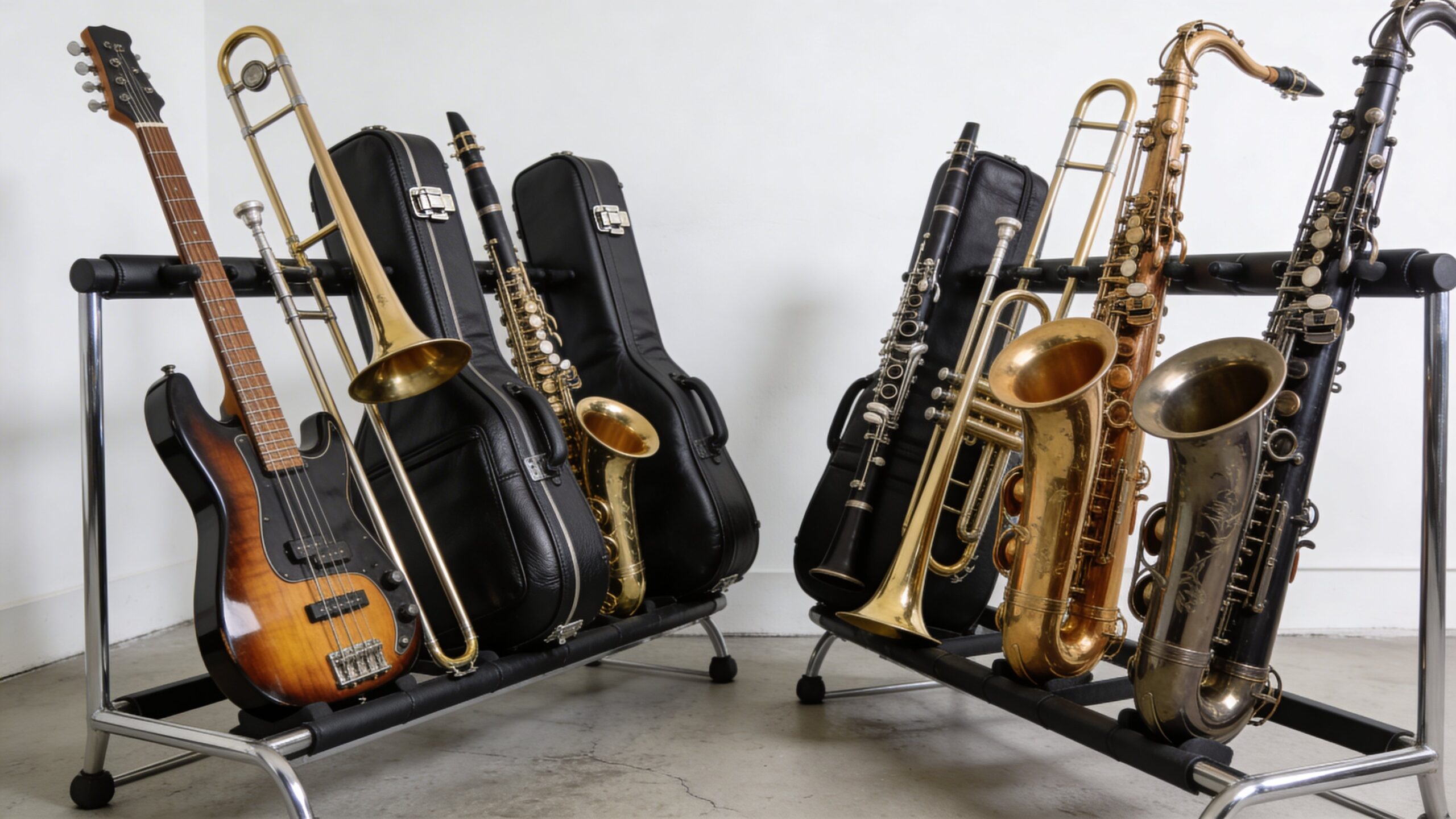
Cleaning, polishing, and storage are the quiet disciplines that shape how an instrument looks, feels, and ultimately performs. Beyond surface shine, proper care protects delicate finishes, preserves mechanical precision, and prevents the gradual wear that can dull tone and response over time. From wiping down strings and keys after a session to conditioning wood and maintaining metal components, every step contributes to a more reliable and expressive playing experience. Just as important is how instruments are stored between sessions. Cases, stands, humidity control, and thoughtful placement all play a role in maintaining stability and longevity. Whether you’re managing a studio full of gear or caring for a single cherished instrument, understanding these practices ensures consistency, protects your investment, and keeps every note sounding its best. In this section, explore the essential tools, techniques, and smart habits that keep instruments ready, resilient, and inspiring day after day.
A: Light cleaning after each use, deeper care weekly or monthly.
A: No, they can damage finishes and materials.
A: In a stable, dry environment using cases or proper stands.
A: Yes, especially for wood instruments like guitars and violins.
A: Keep surfaces dry and use appropriate protective oils.
A: Only occasionally; over-polishing can wear finishes.
A: Yes, temperature and humidity changes impact tuning stability.
A: Microfiber cloths, brushes, and instrument-safe cleaners.
A: Yes, if stable and placed in a controlled environment.
A: Use padded hard cases and avoid extreme conditions.