Cornet or Trumpet: Choosing the Voice That Fits You
Cornets and trumpets look close enough that many beginners assume they are nearly the same instrument. They share valves, fingerings, and a similar written range, but they do not feel or sound identical in real playing. The trumpet is usually brighter, more direct, and more common in jazz bands, orchestras, marching programs, and many school ensembles. The cornet is usually a little warmer, rounder, and physically more compact, with a tradition that runs strongly through brass bands and early band music. Choosing between them is less about which one is better and more about which sound, setting, and learning path fit the player in front of you.
A: Some players find cornet more forgiving, but teacher support and instrument quality matter more.
A: Often yes, because the fingerings and written pitch relationship are closely related.
A: Trumpet is usually the safer school-band default unless the director recommends cornet.
A: It can sound rounder and less piercing, but a strong player can still project clearly.
A: Yes, though the player should expect some changes in mouthpiece feel and tone approach.
A: Cornets provide the central soprano brass color in that tradition and blend well in sections.
A: Trumpet is more common in jazz settings, especially for lead and section work.
A: Adults can weigh personal sound preference more heavily if ensemble requirements are flexible.
A: No, they differ in design and should match the instrument being played.
A: Try both instruments with a teacher listening before renting or buying.
Why Cornets and Trumpets Get Confused
Cornets and trumpets both use three piston valves, and the basic fingerings are so similar that a player who reads one can usually understand the other quickly. A beginner looking across a music store counter may see two shiny brass instruments with bells, mouthpieces, and valve blocks, then wonder whether the names are mostly marketing. The confusion is understandable, especially when some school programs casually use either instrument in similar beginner parts.
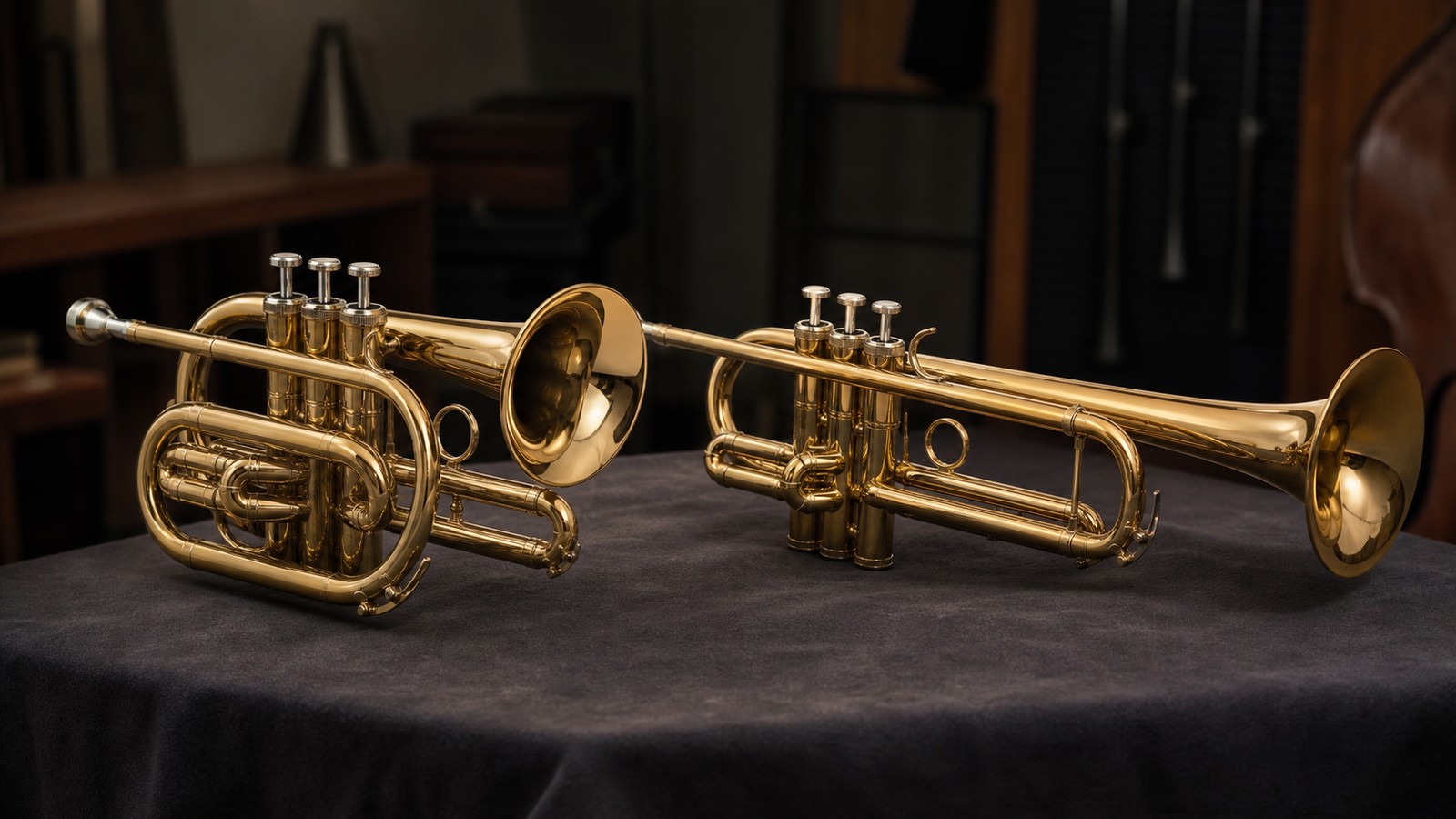
The real differences come from design and musical role. A trumpet generally has more cylindrical tubing before it flares, while a cornet has a more compact wrap and a more conical profile. Those design choices affect resistance, color, projection, and how the sound sits inside an ensemble.
Players also bring expectations to the instruments. A trumpet often suggests brilliance, edge, and lead lines. A cornet often suggests blended lyric playing, brass band warmth, and a gentler attack. Those are not rigid rules, but they are useful starting points.
Sound: Bright Edge or Rounded Warmth
A trumpet usually speaks with a clearer edge at the front of the sound. That brightness can help it project through a jazz ensemble, carry a fanfare, or make a melody stand out in a band texture. A cornet can still play loudly, but its tone often feels broader and less pointed, which many players describe as warmer or more vocal.
Shape, Wrap, and Hand Feel
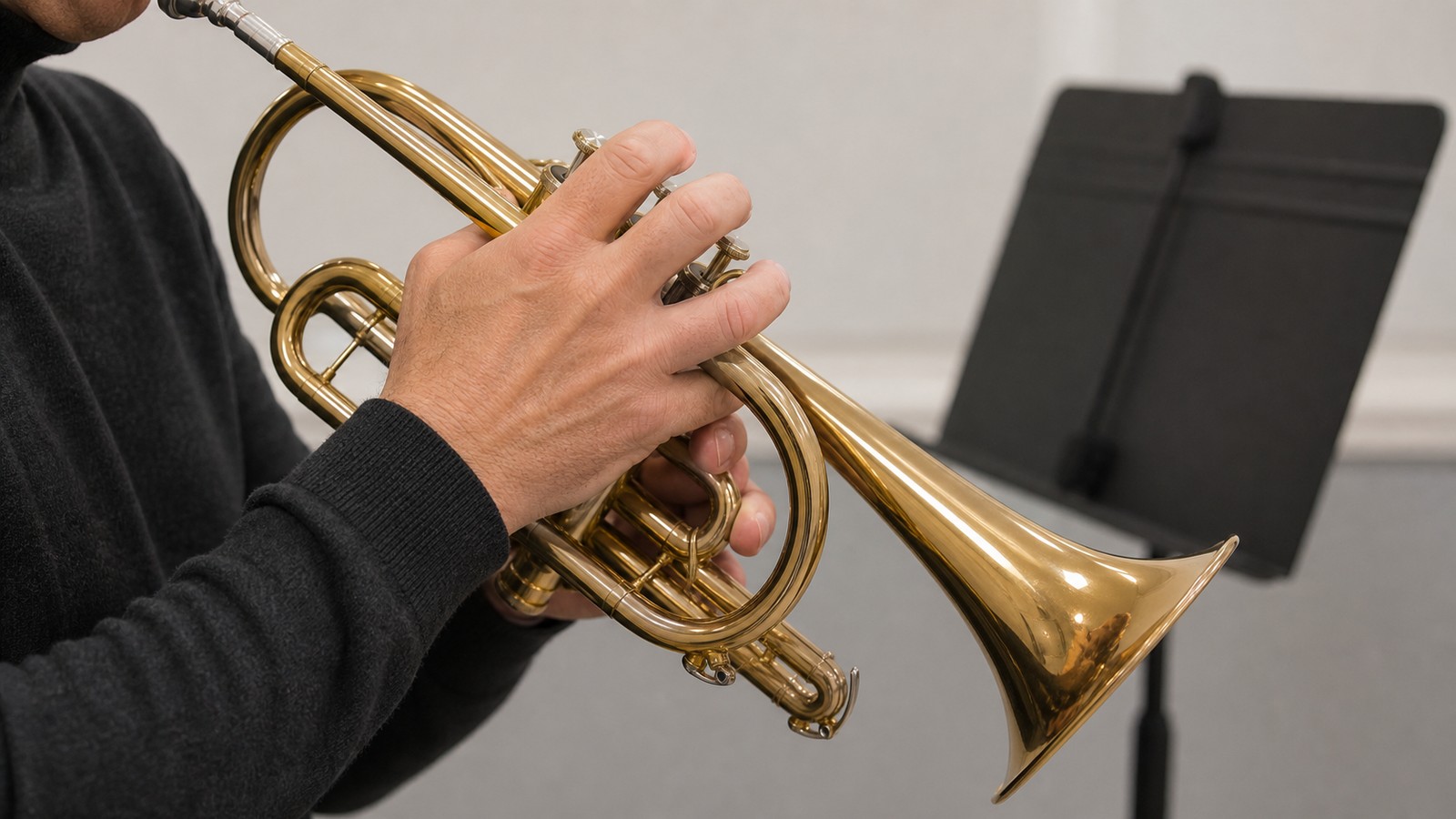
The cornet's compact wrap can feel reassuring to younger players because the instrument sits closer to the body. A trumpet's longer shape places the bell farther forward, which some players like because it gives a strong sense of direction. Neither shape is automatically easier; comfort depends on hand size, posture, and the balance of the individual instrument.
The mouthpiece can also change the feel. Cornet mouthpieces are shaped differently from trumpet mouthpieces, and that affects response and tone. A player moving between the two should not assume that a mouthpiece swap is a tiny detail.
Which One Is Easier for Beginners
For many beginners, the first months feel similar on either instrument because the biggest challenges are air support, relaxed buzzing, valve coordination, and reading rhythm. The cornet may feel slightly more forgiving for some students because the sound can be round even before the player has much strength. The trumpet may feel more familiar because more lesson books, school chairs, and peer examples are built around it.
Ease also depends on the teacher. A student with a strong trumpet teacher nearby may progress faster on trumpet than on a cornet no one in the program understands well. A student in a brass band environment may find the opposite, especially if cornets are central to the ensemble.
Parents should ask what the local program expects. If the band director assigns trumpet parts and does not maintain cornet inventory, trumpet is often the practical choice. If the school or community ensemble welcomes cornet, the warmer sound may be a wonderful fit.
Ensemble Fit and Musical Setting
Trumpet is the broader default in many American school bands, jazz ensembles, orchestras, pep bands, and contemporary worship settings. Cornet appears less often in those spaces, though it can cover many similar parts. In British-style brass bands, however, the cornet is not a substitute instrument; it is a leading voice with its own section identity.
Mouthpiece and Resistance Differences
A cornet mouthpiece usually helps support the instrument's rounded tone, while a trumpet mouthpiece often supports clearer projection and articulation. The rim may feel familiar, but the cup and shank are not the same. Using the right mouthpiece helps the instrument behave as designed.
Resistance is another part of the decision. Some cornets feel a little more cushioned under the air, while some trumpets feel more immediate. A beginner may not have words for that sensation yet, so a teacher can listen and watch for strain.
Tone Goals and Style
A player drawn to brilliant high lines, jazz lead work, orchestral excerpts, or marching band may find trumpet expectations easier to follow. The trumpet has a huge body of teaching material and examples in those styles. It also tends to be the instrument people picture when they imagine a bright brass melody cutting across a large ensemble.
A player who loves lyrical solos, hymn-like band writing, brass band repertoire, or a gentler core sound may feel at home on cornet. The instrument can encourage a singing approach that rewards smooth air and careful phrase shape.
These are tendencies, not walls. Excellent trumpet players can sound warm, and excellent cornet players can play with bite. The best choice is the one that keeps the player curious enough to practice.
Buying and Renting Practicalities
Trumpets are usually easier to rent, buy, repair, and resell because demand is larger. Cornets are available, but model selection may be thinner depending on the local market. If a family is choosing for a beginning student, service access should count just as much as tone preference.
When Trumpet Makes More Sense
Trumpet makes sense when the player's school program expects trumpet, when jazz band is a major goal, or when local teachers and repair shops support trumpet more confidently. It is also a good choice for students who want the largest pool of method books, ensembles, and used instruments.
A practical path does not make the trumpet boring. It simply means the student will have more built-in support. For many players, that support turns into faster progress and more chances to perform.
When Cornet Makes More Sense
Cornet makes sense when the player prefers a rounded sound, wants a compact feel, or will play in a brass band setting. It can also suit younger students who find the instrument easier to hold close to the body. A well-made cornet can make soft playing feel inviting rather than exposed.
Cornet is also worth considering for adult beginners who are not tied to a school instrumentation chart. An adult learner can choose the sound they love and build a practice routine around it. The key is finding a teacher who understands cornet tone rather than treating it as a shorter trumpet.
The instrument should still be tested carefully. A low-quality cornet with poor valves or odd intonation will not reward the player just because the concept is appealing.
Final Choice
Choose trumpet when you need the most common path, the broadest ensemble access, and a brighter direct voice. Choose cornet when you want a rounder brass color, a compact instrument, and a musical setting that values that sound. If both are available, listen before deciding.
A Simple Test Before You Decide
Play or hear the same short melody on both instruments in the same room. Listen for how the first note starts, how the sound fills the space, and how the player feels after a few phrases. Comfort and tone usually reveal more than a spec sheet.
Beginners should make that test with a teacher nearby if possible. The teacher can separate normal beginner uncertainty from a real instrument mismatch, which keeps the decision practical instead of mysterious.
Trying Both Instruments in a Shop
A side-by-side shop test should be slow and simple. Ask the player to hold each instrument first, without playing, and notice whether the arms, shoulders, and wrists stay relaxed. A cornet that feels balanced in the hands may encourage better posture, while a trumpet that points naturally forward may help another player feel more confident.
Next, compare easy notes rather than impressive ones. Long tones, a five-note scale, and one familiar melody will reveal more than a rushed attempt at range. The listener should stand several feet away because the player behind the bell hears a different version of the sound.
Finally, ask about service. If the shop can explain mouthpiece options, valve care, returns, and repairs clearly, the instrument becomes easier to own. The best test includes the support system around the horn, not just the horn itself.
How the Choice Affects Daily Practice
Practice feels different when the sound matches the player's motivation. A student who loves the trumpet's bright call may practice with more energy because the instrument sounds like the music they admire. A student who prefers the cornet's rounded center may relax into long tones and lyrical melodies more naturally. That emotional pull matters because beginners improve through repetition, and repetition is easier when the player likes the sound they are making.
What Parents Should Ask
Parents can make the decision easier by asking practical questions before discussing price. Which instrument does the school expect? Who will teach the student? Which one can be repaired locally? Does the student have a real preference after hearing both instruments in person?
Those questions keep the choice grounded. A cornet may be the more inspiring voice for one player, while a trumpet may open more doors for another. The right answer is the one that gives the beginner a clear path to lessons, ensemble use, and steady practice.
Choosing for the Long Run
A first choice does not trap the player forever. Many brass skills carry across cornet and trumpet, especially reading, rhythm, breath control, and valve coordination. If a student starts on cornet and later needs trumpet for jazz band, the move is manageable with guidance. If a trumpet player later joins a brass band, they can learn the cornet's softer attack and blend expectations.
The long-run decision should still be honest about opportunity. A student who wants marching band, jazz lead parts, and the most common school chair will probably benefit from trumpet early. A student surrounded by brass band music or strongly drawn to a gentler brass voice may stay more committed on cornet.
The best sign is repeated curiosity. If the player keeps reaching for one sound after hearing both instruments, that preference deserves respect. Practice follows interest, and interest often predicts progress better than an abstract argument about which instrument is more versatile.
The Plain Recommendation
When in doubt, choose the instrument that the player can study, repair, and use in an ensemble right now. Inspiration matters, but beginners also need a practical path. The strongest choice is the one that combines a sound the player enjoys with the support that helps them keep playing after the first excitement fades and through ordinary practice weeks at home, lessons, rehearsals, and beyond.