Comparing French Horn Brands by Player Fit and Long-Term Support
Holton, Conn, and Yamaha are three names that appear often when students and families compare French horn brands. Each can be a good choice, but not for the same reason in every situation. Holton has a long association with American horn playing and many familiar school and advancing models. Conn has deep brass history and can offer strong options when the model and condition are right. Yamaha is often praised for consistency, reliability, and student-friendly support. The best French horn brand depends on the player's level, the exact model, the condition of the horn, local repair access, and teacher preference. A brand comparison should guide testing, not replace it.
A: Yes, many Holton horns are respected, but model and condition matter.
A: They can be, especially when the specific horn is healthy and teacher-approved.
A: Yamaha is often consistent, reliable, and supported in school settings.
A: The best beginner brand is the one that fits, responds, and can be serviced.
A: Used horns can be good values after rotor, slide, leak, and bell inspection.
A: Condition is critical because even a respected horn can play poorly when neglected.
A: Response, color, range stability, hand comfort, and ensemble needs.
A: Yes, if the teacher approves and the weight and response are manageable.
A: Choosing by brand name without testing the actual horn.
A: A horn teacher, band director, and trusted repair technician are ideal.
How to Compare Horn Brands Fairly
French horn brands should be compared by model, condition, fit, response, and support. A brand name alone cannot tell you whether the rotors are healthy, whether the horn fits the player's hand, or whether the sound matches the ensemble.
The player's level matters. A beginner may need durability and easy response, while an advancing player may care about color, flexibility, and double-horn options. Professional-level preferences should not be forced onto a first-year student.
Teacher guidance is especially important because horn response can be subtle. An experienced player can hear whether a model helps or fights the student.
Holton: Familiar Horn Tradition
Holton has a long place in French horn conversations, especially in American school and advancing-player settings. Many players know Holton for models that have served students, serious amateurs, and developing horn players for years.
Where Holton Can Fit
A good Holton can make sense for students who want a recognized horn with familiar response and repair awareness. Used Holtons can be appealing, but condition matters. Rotor wear, dents, and maintenance history should be checked carefully.
Holton may be especially worth considering when a teacher knows the model and local shops can service it. A recognizable used horn is only a value when it still plays well.
Conn: History and Model Variety
Conn has deep roots in American brass making, and Conn horns can appear in school, used, and advancing-player markets. Some players appreciate Conn for familiar brass character and long-standing brand recognition.
As with any used horn, the specific instrument decides the outcome. An older Conn in excellent condition may be a strong choice, while a neglected one can be a repair burden.
Buyers should ask about the exact model, rotor condition, slide movement, and return terms. The more history a horn has, the more inspection matters.
Yamaha: Consistency and Practical Support
Yamaha is often recommended because its instruments tend to be consistent and well supported. Teachers and schools may trust Yamaha student and intermediate horns because they behave predictably across many players.
Where Yamaha Can Fit
Yamaha can be a safe option for students, school programs, and families that value reliability. Parts and repair familiarity are often easier to find, and resale can be helped by broad recognition.
Some advanced players may want a different tonal personality than a standard Yamaha provides, but that does not reduce its value for the right buyer. Consistency is a strength, especially in education.
Sound, Fit, and Response
Holton, Conn, and Yamaha can all produce beautiful results in the right hands. The differences often appear in response feel, hand comfort, resistance, and tone concept. These traits are difficult to judge from descriptions.
Testing should include long tones, slurs, soft attacks, middle-register lines, and a few passages the player actually needs. The best horn should feel stable without making the player force the sound.
A listener across the room can help. Horn sound changes with distance, and the player may not hear the same balance that the audience hears.
Beginner Brand Priorities
Beginners should prioritize reliability, fit, smooth rotors, and teacher support. A famous brand does not help if the horn is too heavy, leaky, or poorly maintained. Student progress depends on daily playability.
Used Horn Brand Risks
Used Holton, Conn, or Yamaha horns can be excellent, but they should be inspected. Rotor compression, linkage noise, stuck slides, bell damage, and solder repairs can affect value. A horn that needs major work may not be a bargain.
Ask whether the instrument has been cleaned or serviced recently. A clear maintenance history makes a used horn easier to trust.
Which Brand Should You Choose?
Choose Holton if a specific model fits the player, has teacher approval, and offers the sound and value you want. Choose Conn when the individual horn is healthy and suits the player's goals. Choose Yamaha when consistency, school support, and predictable ownership are priorities.
The best brand is the one that helps the student play more musically. If a horn responds easily, fits the body, and can be maintained locally, it deserves attention.
Avoid brand loyalty that ignores condition. French horns are too sensitive for that kind of shortcut.
Final Buyer Advice
Compare real horns, not just reputations. Bring a teacher, test quietly and loudly, check the right-hand feel, and ask a repair shop about the model. A horn purchase should feel specific and supported.
Holton, Conn, and Yamaha can all be right in the right circumstances. The winner is the instrument that supports the player's next several years of growth.
A careful brand comparison should end with confidence, not confusion. The best French horn is the one that makes good habits easier to build.
If the decision still feels unclear, keep testing. French horns are too personal and too expensive for a rushed answer based only on a familiar brand name.
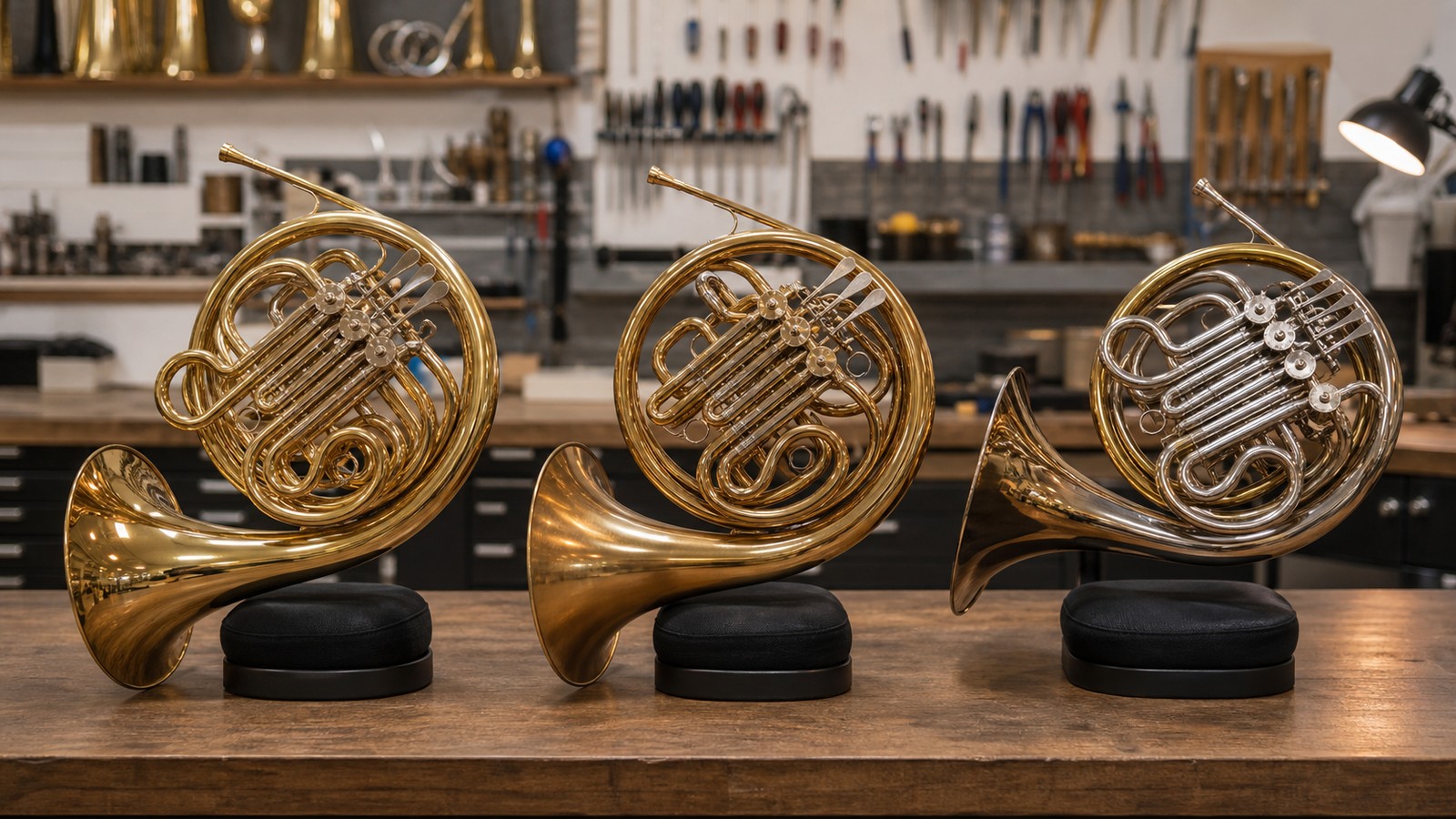
Testing Holton, Conn, and Yamaha Side by Side
A fair test should use the same mouthpiece, same room, and same short musical examples. Play a soft entrance, a middle-register scale, a slur pattern, and a phrase that requires stable tone. The goal is not to show off; it is to hear which horn helps the player sound most secure.
Have someone listen from across the room. Horn sound changes with distance, and the player may hear more bell reflection than true projection. A teacher's outside ear can reveal which instrument carries, blends, and tunes best.
Comfort should be part of the comparison. If one horn sounds good but creates wrist or shoulder tension, it may not be the best daily choice. Physical strain becomes musical strain quickly.
Used horns need extra time. A used Holton, Conn, or Yamaha may have years of service left, or it may need rotor work that changes the real price. Inspection protects the buyer.
The winning horn should feel like the clearest path forward. It may not be the most famous model. It should be the one the teacher trusts and the player wants to practice.
Ownership After the Purchase
Brand choice is only the beginning. The horn still needs oiling, slide care, safe storage, and regular attention from a repair technician. A good instrument can decline quickly if it is handled carelessly.
Students should learn basic maintenance from a teacher rather than guessing. Rotor oil, slide grease, and cleaning routines vary, and using the wrong approach can create problems.
Families should also keep records of service and repairs. Those records help with resale and make future troubleshooting easier.
A well-owned student horn can support years of growth. That long-term usefulness is the real reward of choosing carefully.
Final Brand Decision
Choose the French horn that fits the player's body, sound goal, school expectations, and repair network. Holton, Conn, and Yamaha all deserve consideration, but none should win by name alone. The best decision is the one that still feels sensible after the first month of practice.
How to Avoid Brand-Regret
Brand-regret usually comes from rushing. A family sees a familiar name, assumes it must be safe, and skips the teacher test or repair inspection. With French horn, that shortcut is risky because small mechanical issues can have large musical effects.
Avoid regret by slowing the process down. Compare more than one horn, write down what the teacher notices, and include repair estimates in the real price. A slower decision can still be exciting when it leads to a horn that actually fits.
What Changes as Players Advance
As players advance, they may care more about color, response in different registers, high-range security, and how the horn blends in orchestra or wind ensemble. These are more personal concerns than a beginner can usually judge.
That is why the best student brand is not always the final brand. A Yamaha that serves a beginner well, a Holton that carries a student through high school, or a Conn that fits a particular player may all be right for a season.
Good buying advice leaves room for growth. The horn chosen today should support the player honestly now, while teaching them enough to make a wiser choice later.
The Brand Comparison Bottom Line
Holton, Conn, and Yamaha are useful names to compare because they give buyers a starting field. The final decision should come from playing, listening, inspection, and teacher trust. When those pieces agree, the brand name becomes support for the decision rather than the whole decision.
What the Brand Should Do for the Player
The brand should make ownership easier. It should point toward reliable construction, available parts, teacher familiarity, and a sound concept that fits the player's setting. If the brand does not help with those things, its reputation has limited practical value.
For students, the best brand is the one that supports steady improvement. A horn that responds, fits, and stays maintained will do more for growth than a famous name attached to an unsuitable instrument.
A Practical Closing Test
Before buying, ask whether the player would be happy practicing this exact horn tomorrow, next month, and next school year. If the answer is yes and the teacher agrees, the brand comparison has done its job.
If the answer is uncertain, keep comparing. Horns are personal enough that one more test can save years of frustration.
The best choice should sound good, feel comfortable, and make logistical sense. That combination matters more than winning an argument about brand prestige.
Final Word on Brand Confidence
Brand confidence should feel practical. If the teacher trusts the horn, the repair shop can service it, the player likes the response, and the family understands the cost, the brand is doing its job. Holton, Conn, and Yamaha can all meet that standard in the right circumstances. What matters is the match between a real player and a real instrument, not an abstract ranking. A confident purchase should make tomorrow's practice easier to begin and next year's growth easier to imagine. That is the kind of brand value that actually helps a student through daily work.
The Safest Brand Choice
The safest brand choice is the one supported by a teacher and repair technician. If those two people trust the instrument, the family has much better odds of a good outcome.
That practical support matters more than winning a debate between Holton, Conn, and Yamaha. A supported horn is easier to maintain, easier to learn on, and easier to keep in service.