Two Horn-Related Instruments Built for Different Settings
French horn and mellophone are related in purpose but very different in design, use, and playing experience. The French horn is the coiled orchestral and concert-band instrument known for its warm, complex tone and hand-in-bell technique. The mellophone is a forward-facing brass instrument used mostly in marching band, where projection, visual uniformity, and outdoor durability matter. Many students encounter both: French horn during concert season and mellophone during marching season. The best choice depends on the ensemble setting, not on which instrument is more legitimate. Understanding the difference helps players switch with less confusion and helps families avoid buying the wrong tool for the job.
A: No. It is related in role but designed for forward-facing marching use.
A: Its bell direction, hand technique, and fragility make field use impractical.
A: Many do during marching season, especially in school programs.
A: French horn usually has the warmer, more blended concert sound.
A: Mellophone is designed to project forward on fields and parade routes.
A: Not always. Follow the chart and instructions from the director.
A: Usually only when there is a specific marching need not covered by school.
A: It can build endurance and marching skills, but horn fundamentals still need separate care.
A: Concert horn is usually the foundation, with mellophone added for marching.
A: No. Each is serious when used for its intended musical job.
Design and Bell Direction
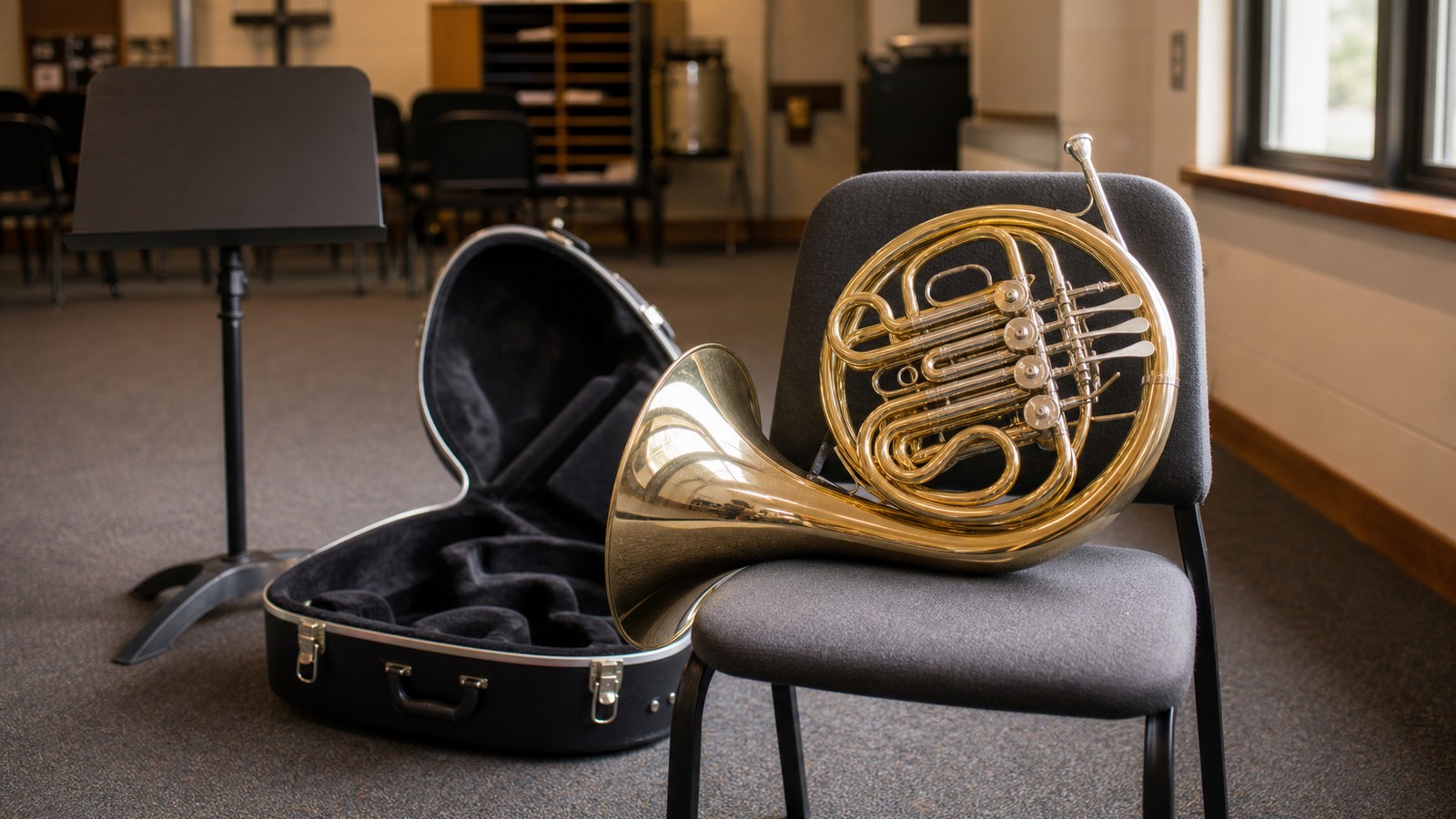
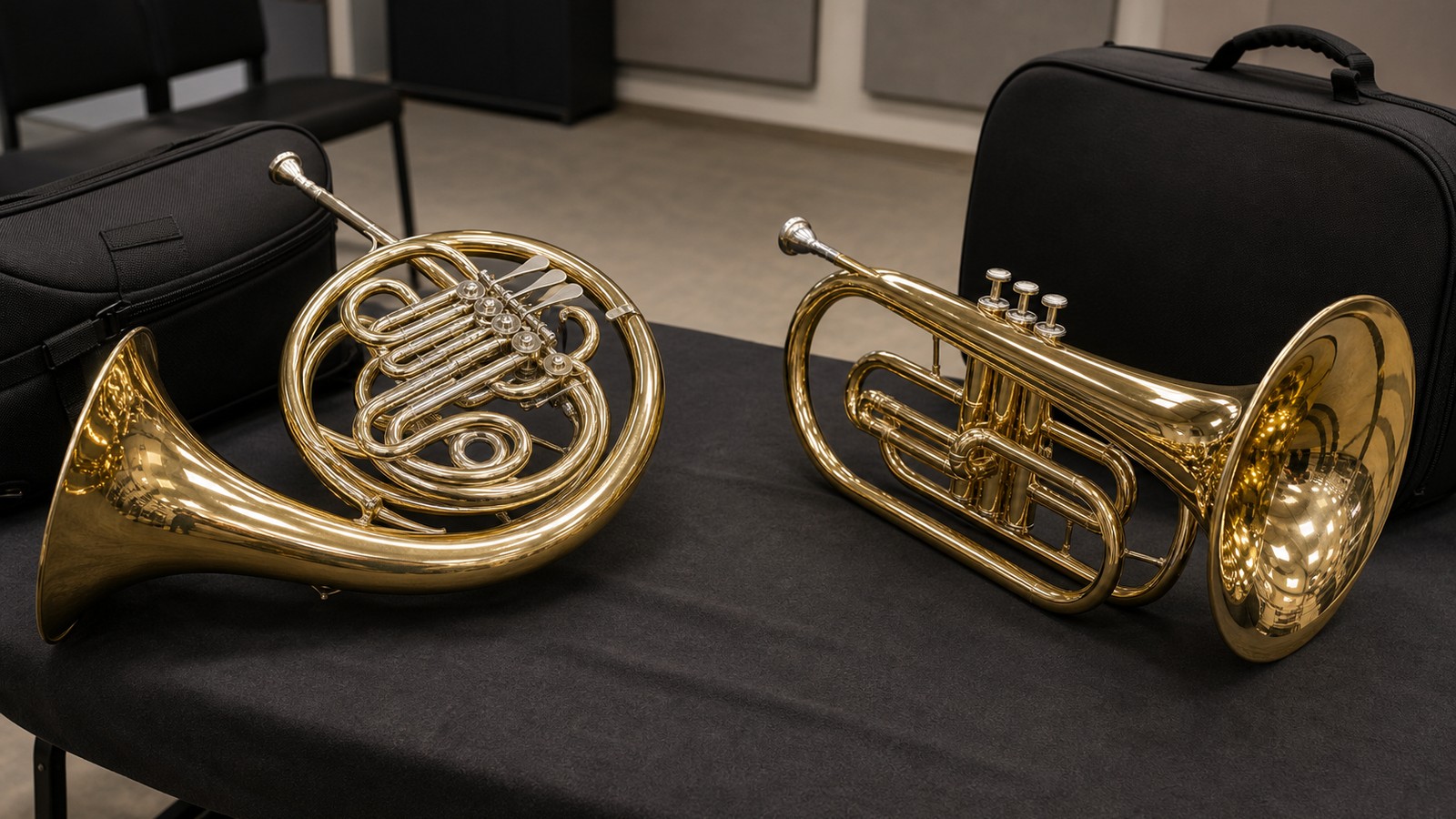
The French horn has a circular wrap with a bell that faces backward and is shaped partly by the right hand. That design contributes to its blended, warm, and sometimes mysterious sound. It also means the player hears the instrument differently than the audience does.
The mellophone points forward, more like a trumpet or marching brass instrument. This helps sound project toward the audience on a field. It also makes the instrument easier to align visually in a marching ensemble.
These shapes are not cosmetic differences. They show the jobs each instrument was built to do: indoor blend for French horn and outdoor projection for mellophone.
Sound Character
French horn tone is usually rounder, more covered, and more flexible in color. Mellophone sound is more direct and forward. A good mellophone can be musical, but it is not meant to copy every nuance of concert horn tone.
Marching Band Needs
Mellophone exists largely because French horn is not practical on the marching field. The backward-facing bell, delicate hand position, and complex projection pattern make horn difficult outdoors. Mellophone solves those problems by giving the section a forward-facing instrument that carries clearly.
Marching programs also value consistency. A line of mellophones can project evenly and fit drill forms more easily than French horns. That practical advantage is why many horn players switch during marching season.
Fingerings and Transposition
Mellophones are often pitched in F, and many use fingerings that feel closer to trumpet-style valve instruments than to double horn technique. French horn fingerings depend on the horn type and the use of F or B-flat sides. Students should follow the chart their director provides.
The written parts may also be handled differently depending on the program. A student switching instruments should not assume everything transfers automatically. Ask the director how the music is written and which fingerings are expected.
Confusion during the first week of switching is normal. The player is adapting not only fingerings, but also sound direction, resistance, and marching posture.
Which Is Easier to Play
Mellophone may feel easier for outdoor projection and marching because the bell faces forward and the instrument is easier to carry. French horn is more demanding in pitch targeting and tone color, especially for beginners. Easier, however, depends on context.
Concert Season Versus Marching Season
During concert season, French horn is usually the correct instrument because the music expects its tone, blend, and range of color. The horn section sits inside the ensemble texture in a way mellophone cannot fully replace.
During marching season, mellophone is usually the practical choice. It lets horn players contribute to the field sound without fighting the concert horn's direction and fragility.
Switching Between Instruments
Players switching from French horn to mellophone should expect a brighter, more direct response. They may need to adjust articulation, volume, and how they listen to themselves. The bell direction makes feedback feel different.
Switching back to French horn requires returning to hand-in-bell control and a more blended sound concept. Students should spend time on long tones and familiar scales after each switch.
The best players treat the switch as a change in job, not a downgrade. Each instrument teaches useful skills when used in the right setting. That mindset keeps the student from resenting mellophone during marching season or neglecting horn fundamentals afterward.
Buying Considerations
Most families should not buy a mellophone unless the student has a clear marching need outside school-owned equipment. Schools often provide mellophones because they are program-specific. A personal French horn is more common for advancing players, but even that purchase should involve a teacher.
Final Difference
French horn is the concert instrument, built for blend, color, and hand-shaped tone. Mellophone is the marching instrument, built for forward projection, mobility, and field use.
Neither instrument is fake or lesser when it is used for the right purpose. The confusion comes from expecting one to do the other's job perfectly.
Students who understand the difference can move between concert and marching seasons with more confidence. They learn to adjust sound, posture, and listening while keeping the same musical responsibility. The switch becomes a practical adaptation instead of an identity crisis.
How Directors Balance Sections
Directors often think about blend, projection, and visual consistency before individual preference. A mellophone section can project clearly on a field, while a French horn section can blend beautifully indoors. Those are different ensemble goals, and the director has to serve the whole group.
Students who understand that bigger picture usually switch more willingly. They see that the instrument choice is not random; it is tied to where the music is being performed.
Mouthpiece and Feel Differences
Some mellophones use trumpet-like mouthpieces, while others use adapters or horn-style setups depending on the program. This changes response and comfort. Players should ask what equipment is expected before assuming the switch will feel familiar.
The resistance can also feel different. A student may need time to adjust air speed and articulation. Slow long tones are the best first step after any equipment change.
Comfort should be checked while standing and moving, not only while seated. Marching posture changes everything.
A Better Way to Think About Both
French horn and mellophone are best understood as partners in a school musician's year. One develops the concert voice; the other carries that voice into a marching environment. Neither replaces the other completely.
When students respect both tools, they gain flexibility. They can sound warmer indoors, clearer outdoors, and more confident whenever the program asks them to adapt.
Making the Switch Work in Practice
The first week on mellophone should be treated as a transition, not a test of loyalty to French horn. Students need time to learn the balance, valve feel, mouthpiece setup, and forward sound. Slow long tones and familiar scale patterns make that transition less chaotic.
The first week back on French horn deserves the same patience. The right hand returns to the bell, the sound concept becomes more covered, and the player must listen for blend again. A few careful indoor sessions can reset the ear.
Directors can help by explaining why the switch is happening. Students adapt better when they know the mellophone is solving a field problem, not replacing their concert instrument. Purpose reduces resistance.
Players should also keep a small checklist for each instrument. For horn, check hand position and partial accuracy. For mellophone, check posture, projection, and marching balance. Clear reminders prevent confusion.
The switch works best when both instruments are respected. A student who takes mellophone seriously will march better, and a student who returns to horn carefully will keep growing as a concert player.
How Schools Decide the Practical Answer
School programs often decide based on what serves the ensemble. A small concert band may need horn color indoors, while a marching band needs forward sound and visual consistency outdoors. The same student can meet both needs with different instruments.
Budget also matters. Schools may own mellophones for marching season and French horns for concert season, reducing the need for families to buy both. That inventory shapes the student's path.
Tradition can influence the decision too. Some bands prefer mellophones, others use marching horns, and some adapt based on available players. There is no universal answer outside the program context.
The practical answer is the one that helps the group sound and function better. When students understand that, they can stop asking which instrument is real and start asking how to play the assigned one well.
What Students Should Practice When Switching
Students should practice the simplest shared skills first: breath, clean attacks, steady rhythm, and relaxed valve motion. These basics transfer even when the instrument shape changes. Starting there prevents the switch from feeling like a complete reset.
Sound Expectations for Each Role
A French horn section should usually aim for warmth, blend, and controlled color. The sound sits inside the ensemble and often connects woodwinds, brass, and harmony. That role rewards careful listening and subtle adjustment.
A mellophone section needs clarity, projection, and rhythmic confidence. The sound may be brighter and more direct because the field demands it. That does not mean it should be harsh; centered tone still matters.
Players who understand both sound goals switch more musically. They stop trying to make mellophone behave exactly like horn, and they stop bringing field volume back into the concert hall.
When Students Prefer One Instrument
It is normal for students to prefer one instrument. Some love the French horn's color and dislike mellophone brightness. Others enjoy the directness and confidence of the marching instrument. Preference is useful information, but it does not erase ensemble responsibility.
A Healthy Switching Mindset
A healthy mindset treats the switch as musicianship training. The player learns to adapt sound, posture, and listening while keeping breath and rhythm steady. That adaptability is valuable beyond marching band.
Instead of asking which instrument is better, ask which one the music needs today. That question keeps the player flexible and focused. It also shows respect for both concert and field traditions.
What Families Should Know
Families should know that needing both instruments in one school year is normal. A student may love French horn but still be assigned mellophone for marching season. That does not mean the student picked the wrong instrument; it means the program uses different tools for different settings.
Final Comparison Advice
For lessons, concert band, orchestra, and long-term horn development, French horn is the center of study. For field shows, parades, and outdoor projection, mellophone usually makes more sense. The answer depends on the calendar.
Students who learn both should keep separate routines. Horn routine means hand position, partial accuracy, and blended tone. Mellophone routine means forward sound, marching posture, and clear articulation.
The strongest players respect the difference without overcomplicating it. They bring the same musicianship to both instruments, then adjust the physical setup and sound goal. That ability to adapt is part of being useful in a real program, where the calendar may ask for concert blend one month and field projection the next. Students who learn that flexibility become easier to teach and more dependable in every ensemble, because they understand the reason behind each musical assignment.
The Simple Answer
Use French horn when the music needs the concert horn sound. Use mellophone when the ensemble needs forward-facing marching brass. That simple answer covers most real situations and keeps the comparison practical for students, parents, and directors.