Choosing a First French Horn With Patience and Practicality
A first French horn needs to do more than look beautiful in the case. The horn is one of the most rewarding brass instruments, but it asks beginners for careful listening, steady air, a relaxed embouchure, and a good setup from the start. A poor beginner horn can make the early months feel much harder than they need to be, especially because French horn notes sit close together and small response problems can feel like player mistakes. The best beginner French horns are reliable, serviceable, comfortable to hold, and appropriate for the student's school program. They should support healthy fundamentals without forcing a family to buy a professional instrument too soon.
A: It depends on school expectations, player size, and teacher recommendation.
A: The notes sit close together, so listening and response matter from the start.
A: Yes, if rotors, slides, leaks, dents, and bell condition are inspected.
A: Holton, Conn, Yamaha, Jupiter, and Eastman often appear in student discussions.
A: Yes, it affects pitch, tone color, and consistency.
A: Often no. School-owned or rental horns can be smart first steps.
A: Reliable rotor action is critical because it affects every technical pattern.
A: Spend enough for reliability and support, not for unnecessary professional features.
A: Yes. Leaks, sticky rotors, or bad fit can make normal learning much harder.
A: Have a teacher test the horn before purchase.
What Makes a French Horn Beginner-Friendly
A beginner-friendly French horn responds clearly in the middle register and does not require the player to force every entrance. New horn players are learning to hear partials, shape air, and place the right hand in the bell, so the instrument should not add unnecessary resistance. A horn that speaks evenly lets the teacher focus on musicianship instead of troubleshooting mechanical frustration.
Valve action matters because sluggish valves interrupt rhythm and make students question their coordination. The rotors should move quietly and return promptly. Linkages should feel secure, and the slides should move well enough that a teacher can help with tuning.
Durability also matters. French horns have long tubing, delicate slides, and a bell flare that can be damaged by careless handling. A student horn should include a protective case and come from a brand or dealer that repair shops are willing to support.
Single Horn or Double Horn
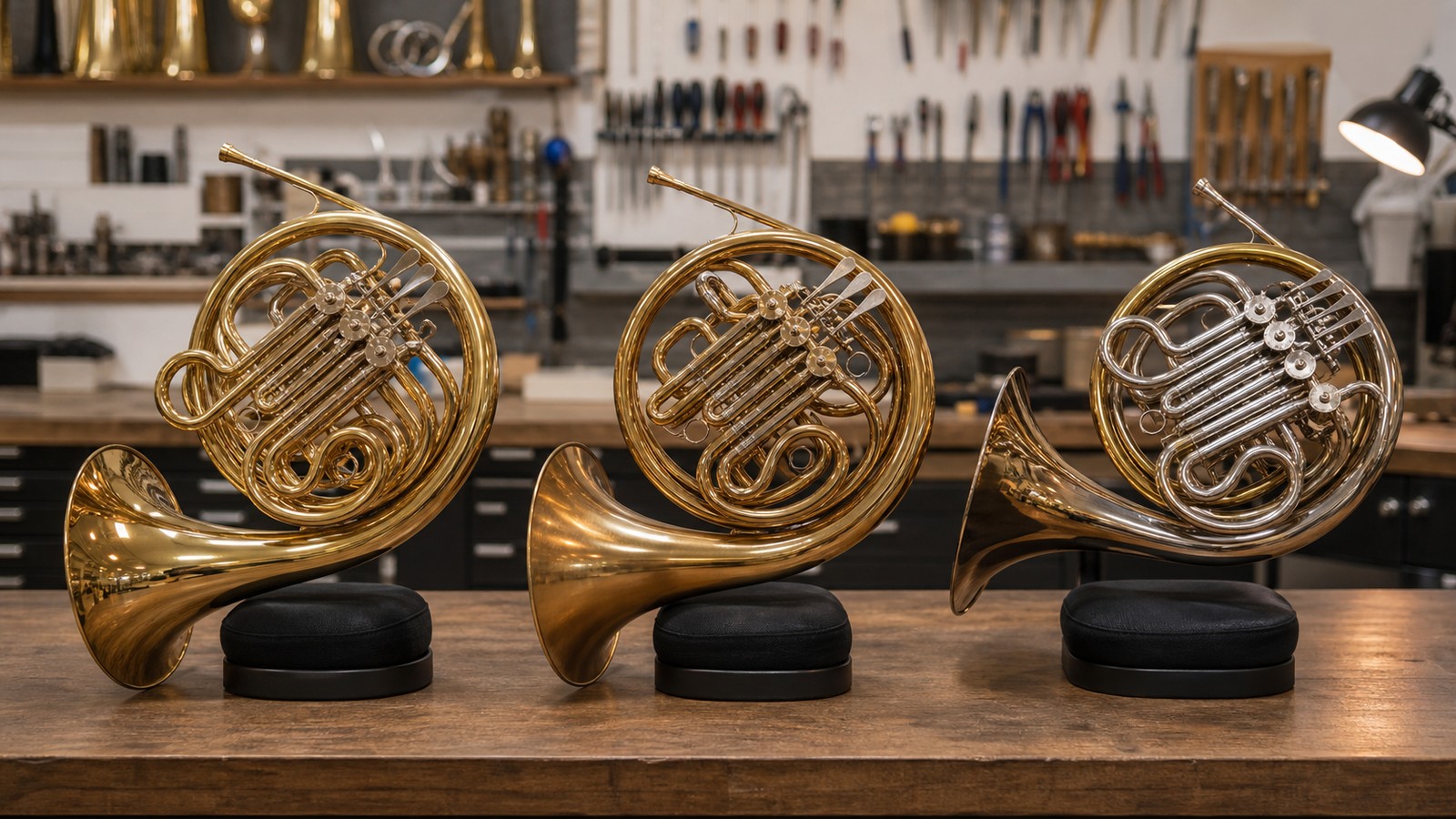
Many beginners start on a single F horn or a single B-flat horn, while others begin on a double horn if the school program provides one. A single horn is lighter and simpler, which can help smaller students. A double horn offers more flexibility and is often expected as players advance, but it adds weight, cost, and another layer of coordination.
Fit, Weight, and Hand Position
The horn should sit comfortably across the body without forcing the left wrist into an awkward angle. The fingers should reach the levers easily, and the right hand should fit into the bell in a natural curved shape. If a student has to squeeze, twist, or lift the shoulders, the setup may be too large or poorly balanced.
Right-hand position changes tone and pitch, so comfort matters musically. A beginner who cannot place the hand consistently will struggle to develop a steady sound. Teachers can show whether the horn's wrap, bell size, and leadpipe angle suit the player.
School-Owned Horns and Rentals
Many families should begin with a school-owned horn or rental if available. French horns are expensive, and a new student may not yet know whether they will stay with the instrument. A school horn lets the student begin while the director evaluates progress, physical fit, and long-term interest.
Rentals can also work if they include repair support and a reasonable path to purchase. The important detail is service. A rental horn with poor valves or leaks can slow progress, while a well-maintained rental can be a smart bridge to ownership.
Families should ask who handles repairs, whether the horn is a single or double, and whether the teacher approves the model. A low monthly price is not helpful if the instrument is unreliable.
Brands Beginners Often Compare
Holton, Conn, Yamaha, Jupiter, Eastman, and several other makers appear in student French horn conversations. Yamaha is often valued for consistency, Conn and Holton have long connections to school and American horn traditions, and newer student lines can be useful when dealer support is strong. Brand names help narrow the search, but the individual horn still needs inspection.
Used French Horn Inspection
Used French horns can be good values, but they need careful review. Check rotor action, string or mechanical linkages, slide movement, dents in tubing, solder joints, and bell condition. A horn with air leaks or worn rotors may feel unstable, and beginners may blame themselves for problems the instrument is causing.
A teacher should play the horn if possible. French horn response can reveal problems quickly to an experienced player. If the seller will not allow inspection or return, that is a serious warning sign.
Mouthpiece and Accessory Basics
A beginner should start with a teacher-approved mouthpiece rather than chasing extreme sizes. The mouthpiece affects response, tone, and endurance, but a new player needs stability more than specialization. A reasonable student mouthpiece gives the embouchure a fair starting point.
Useful accessories include rotor oil, slide grease, a cleaning snake or appropriate care kit, a soft cloth, and a sturdy music stand for home practice. The case should protect the horn securely because repair costs can be high.
Students should also learn how to set the horn down safely. French horns are easy to tip if placed carelessly. Good handling habits are part of beginner success.
Budget Expectations for Families
French horns can be expensive even at the student level. A family should budget not only for purchase or rental, but also for maintenance, oil, possible repairs, and lessons if available. The cheapest horn is not always the most affordable if it needs frequent work.
When a Student Is Ready to Buy
A student is more ready to buy when they have shown consistent interest, have teacher support, and know whether they need a single or double horn. Buying too early can lead to the wrong size or type. Waiting until the student has experience often leads to a better match.
If a purchase is necessary right away, choose a reputable student model with repair support rather than an unknown bargain. The horn should make practice clearer, not more mysterious.
Final Recommendation
The safest beginner French horn is a reliable, serviceable instrument that fits the student and matches the school program. It should have smooth rotors, manageable weight, stable response, and a case that protects it well. Teacher approval is not optional; it is one of the best forms of buyer protection.
A beginner does not need the most advanced horn on the market. They need an instrument that helps them hear, breathe, and build confidence. If the horn supports those habits, the student has room to grow.
French horn rewards patience. Choosing carefully at the beginning gives that patience a fair chance to become music.
Why Horn Buying Needs Extra Caution
French horn is less forgiving of hidden problems than many beginner instruments. A small air leak, uneven rotor, awkward leadpipe angle, or poor hand fit can affect pitch and response in ways a new player cannot diagnose. That is why a horn that seems affordable can become discouraging quickly. Careful buying protects the student's confidence as much as the family's budget.
How Teachers Evaluate a First Horn
A teacher usually listens for response, pitch stability, and whether the horn speaks clearly at soft and medium dynamics. They may play slurs, simple scales, and middle-register entrances to hear whether the instrument feels even. This takes only a few minutes, but it reveals more than a product listing ever can.
Teachers also watch the student hold the horn. A model that sounds good in an adult's hands may sit awkwardly with a smaller beginner. The best evaluation combines instrument quality with physical fit.
Common First-Year Fit Problems
Some students struggle because the bell rests at an uncomfortable angle or the left-hand levers sit too far away. Others press too hard because the leadpipe does not meet the face naturally. These problems can look like weak technique when the setup is partly to blame.
A horn stand, different chair height, or teacher-adjusted posture can help in some cases. In other cases, the instrument itself may simply be the wrong fit. Families should not ignore discomfort that appears every time the student practices.
Good fit gives the student one less obstacle. French horn is already demanding enough without adding preventable strain.
Planning the Upgrade Path
A student who begins on a single horn may eventually need a double horn, especially if they continue into more advanced band, orchestra, or solo work. That upgrade should come when the teacher sees a musical reason, not just because a catalog says double horns are better. The first horn's job is to build fundamentals.
Practical Final Checklist
Before committing, confirm the horn type, rotor health, slide movement, fit, case condition, return policy, and repair path. Ask the teacher whether the horn suits the student's current level and likely next step.
If those answers are clear, the family can buy or rent with more confidence. The best beginner French horn is not chosen by guessing; it is chosen by matching the student, teacher, instrument, and support system.
What Makes the First Year Easier
The first year is easier when the horn behaves predictably. Students can accept that French horn is challenging, but they should not have to wonder whether every missed note is caused by a leak, sticky rotor, or awkward setup. A dependable instrument lets mistakes become useful feedback.
A good beginner horn also helps the teacher assign realistic goals. If the instrument responds evenly, the teacher can focus on tone, rhythm, hand position, and listening. If the horn is unreliable, lessons often become repair triage.
Home practice space matters too. The student needs a chair, stand, safe case location, and enough quiet time to work slowly. French horn practice does not need to be loud to be useful, but it does need attention.
Families can support progress by protecting the routine. A student who practices a little most days will usually grow faster than one who waits for a long weekend session. The horn rewards steady contact.
The best first horn is the one that lets all of this happen with fewer obstacles. It should help the student return tomorrow with curiosity instead of dread.
The Real Goal of a Beginner Horn
The real goal is not to own a perfect instrument forever. It is to give the student a stable first musical home. A good beginner horn should make tone, rhythm, and listening easier to develop, even if the student eventually upgrades to a different wrap, bore, or double horn.
That perspective keeps the purchase grounded. Families can choose a horn for the next stage of growth rather than trying to predict every future need. A thoughtful first choice gives the student time to become the kind of player who can later choose more personally.
A Calm Choice Is Usually the Best Choice
The final decision should feel calm rather than rushed. If the horn fits, the teacher approves, the rotors work, the case protects it, and the repair path is clear, the family has a strong candidate. If several of those answers are uncertain, keep looking. French horn rewards careful preparation, and that begins before the first lesson. A careful choice gives the student a fairer start and steadier early confidence during practice, rehearsals, and the first real performances.