Learning French Horn With Air, Ear, and Patience
The French horn is famous for its warm sound and famous for its difficulty, but beginners should not let that reputation scare them away. The instrument becomes manageable when the first steps are clear: sit with balance, breathe calmly, form a focused embouchure, place the right hand correctly in the bell, learn the first fingerings, and listen carefully for pitch. Horn playing rewards small improvements because the notes sit close together and the instrument responds to tiny changes in air, hand position, and mouthpiece pressure. A beginner does not need to sound heroic right away. The first goal is a repeatable tone, a relaxed setup, and a practice routine that makes accuracy feel less mysterious.
A: It is demanding, but clear setup, listening, and patient practice make it manageable.
A: Nearby partials make pitch targeting important, so the ear must guide the sound.
A: Inside the bell in a curved shape that a teacher should check.
A: Short focused sessions with rest are better than long tired sessions.
A: Yes, but only after learning to listen for pitch center.
A: A comfortable middle range is safest before expanding higher or lower.
A: Too much hand blockage, tension, or weak air can all contribute.
A: Yes, especially early on, but they should be studied calmly.
A: Setup, steady tone, hand position, basic fingerings, and listening.
A: Early lessons are especially helpful because horn setup is subtle.
Start With a Balanced Setup
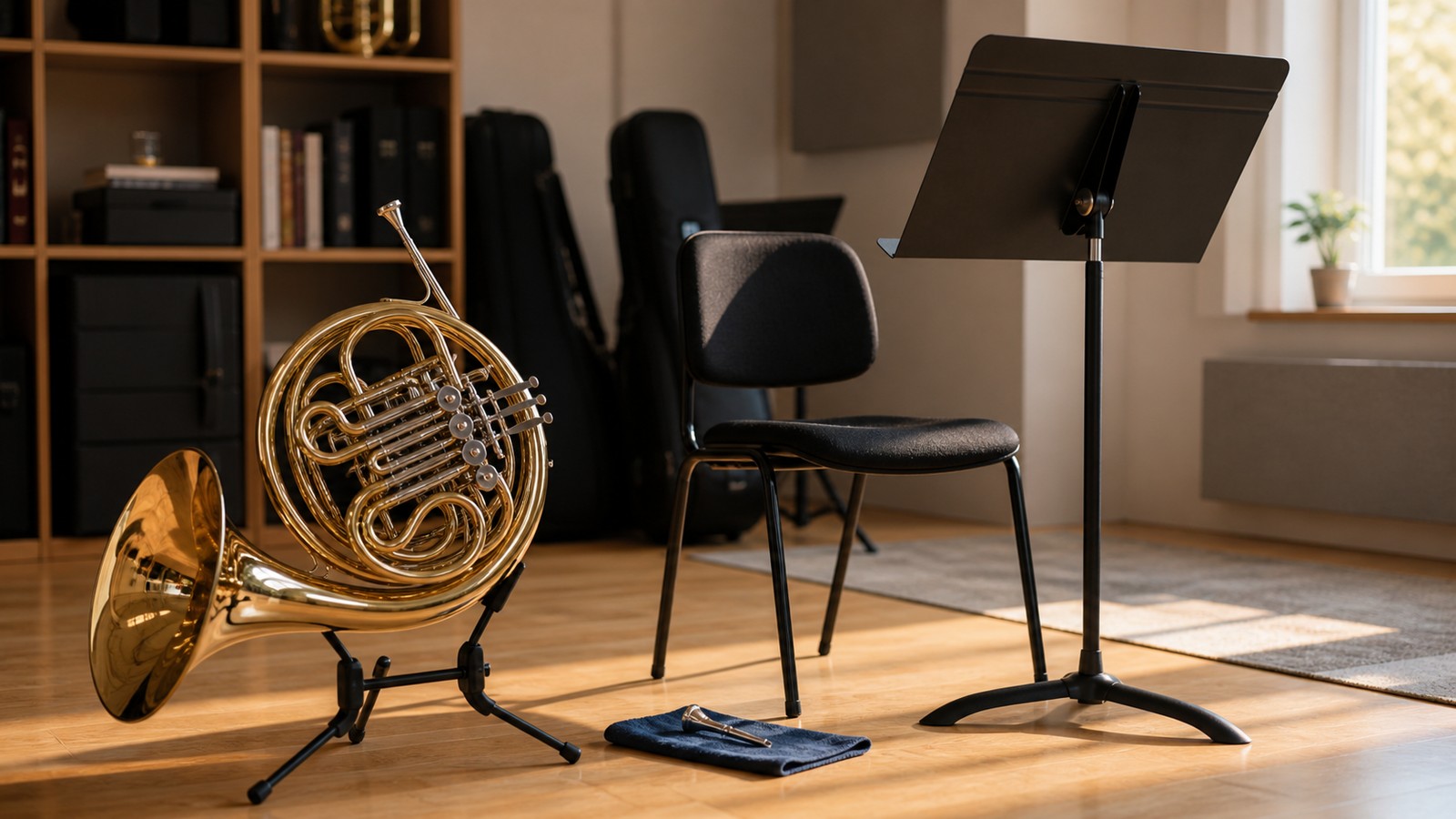
French horn setup begins before sound. Sit tall with both feet grounded, let the shoulders release, and bring the mouthpiece to the face rather than dropping the face toward the horn. The instrument should rest securely enough that the left hand can operate the levers without squeezing.
The right hand belongs inside the bell in a gently curved shape. It should not block the bell completely, but it should help shape tone and pitch. A teacher should check this early because inconsistent hand position can make every note feel unpredictable.
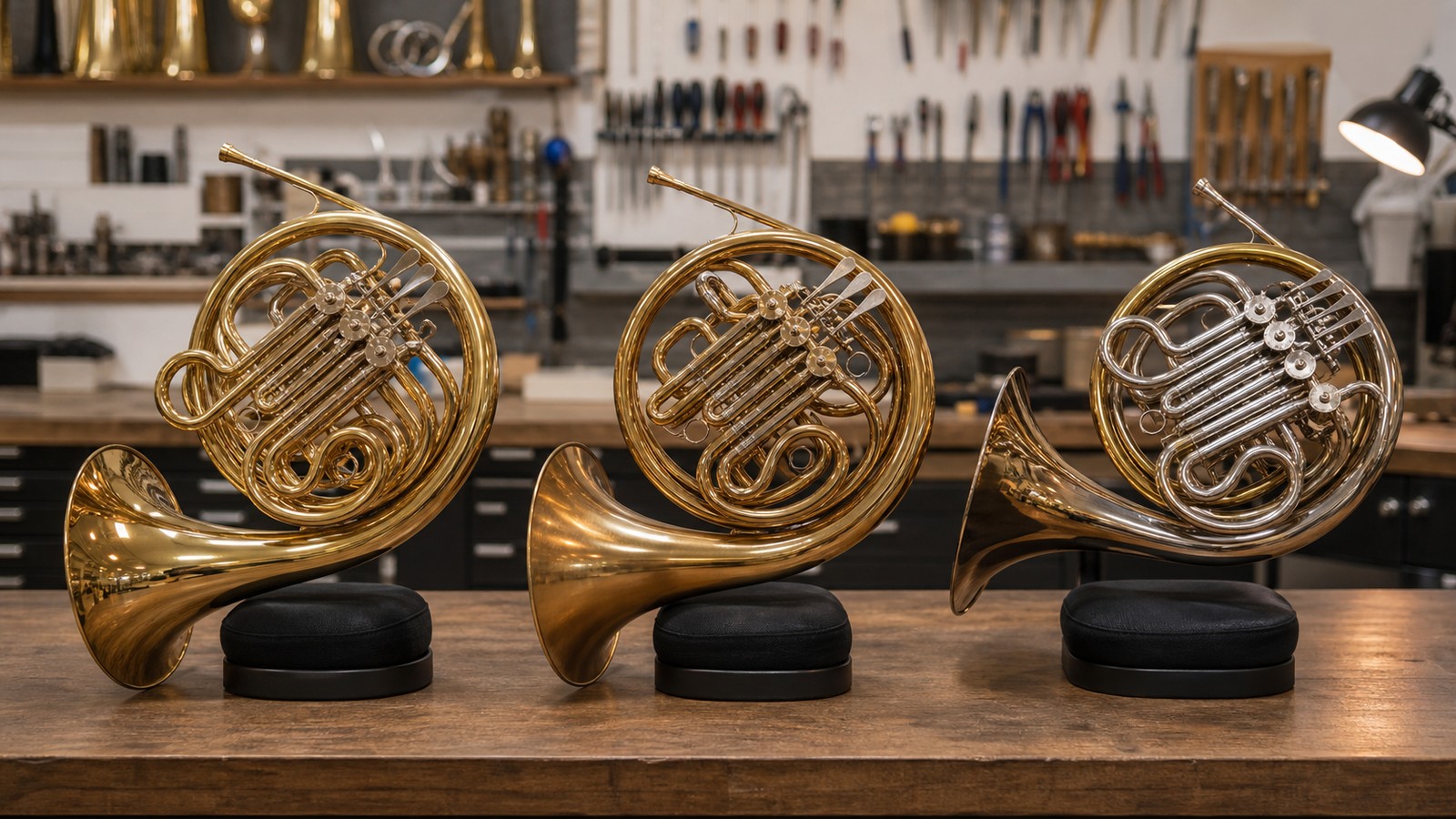
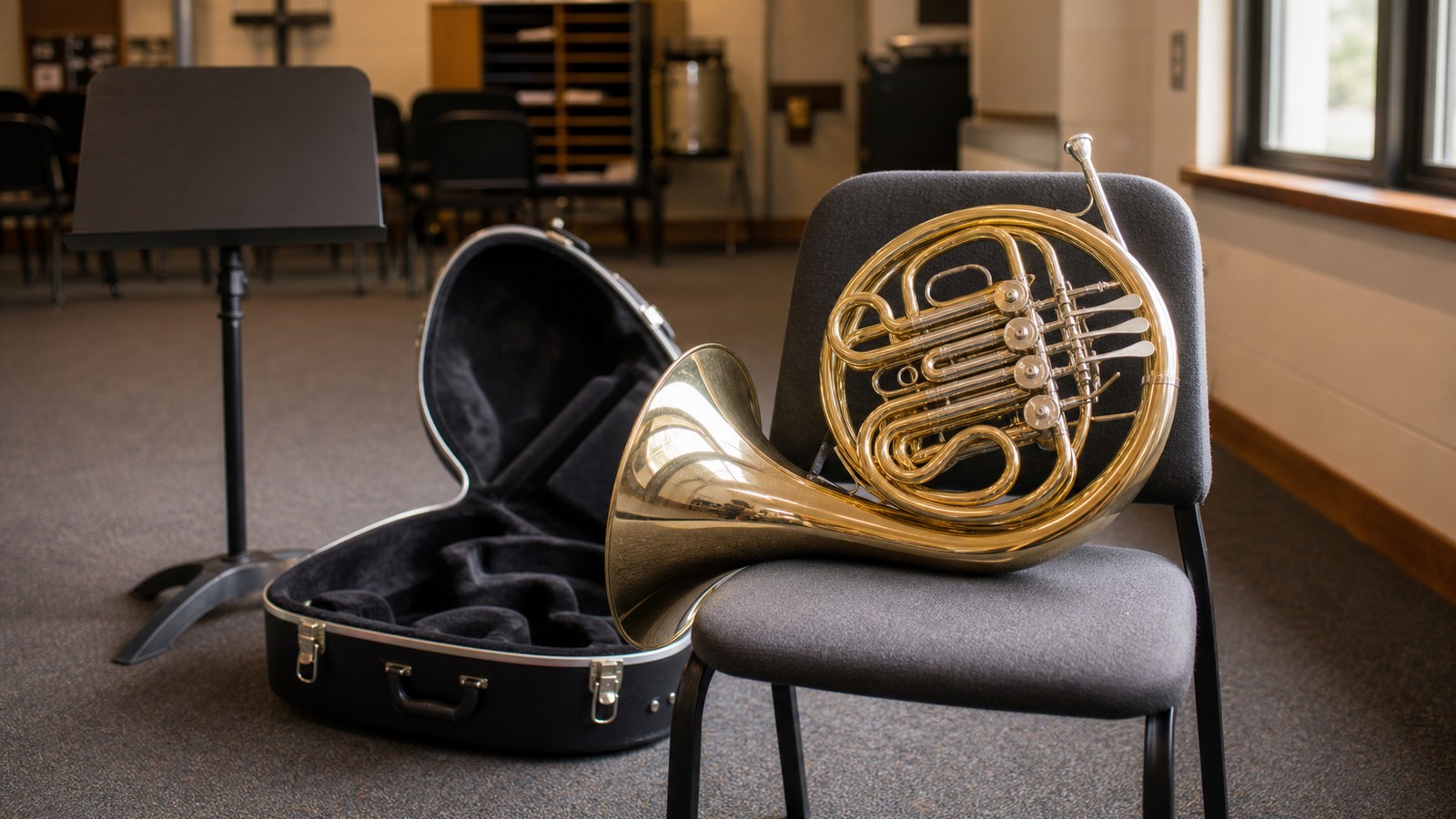
A beginner should also learn safe handling. The horn's tubing and bell are easy to dent, and the case should be opened on a stable surface. Careful setup protects the instrument and creates a calmer practice mindset.
Build the First Sound
The first French horn sound should come from steady air, not mouthpiece pressure. Form a relaxed but focused embouchure, breathe deeply, and release the air with a gentle start. The sound may crack or land on an unexpected pitch at first, which is normal because horn partials are close together.
Understand Why Listening Matters
Horn players must listen actively because the correct fingering can produce several nearby notes. The ear needs to know the target before the lips and air can find it. Singing, buzzing briefly, or hearing a piano reference can help beginners build that target.
A tuner is useful, but it should not replace musical listening. Beginners should first create a stable sound, then use the tuner to confirm whether the pitch is high or low. Over time, the ear becomes quicker than the eyes.
Learn the First Fingerings
French horn fingerings depend on whether the student is using an F horn, B-flat horn, or double horn. Beginners should follow their teacher's chart and avoid mixing systems casually. The left-hand fingers should move cleanly, with curved shape and relaxed pressure.
Slow fingering patterns help the hand learn without the distraction of difficult range. Press the correct levers, breathe, play a comfortable tone, and listen for a centered sound. Speed comes later.
Students on double horn should learn when the thumb valve is expected, but they should not treat it as a magic fix. The thumb changes tubing and response, yet the player still needs air, embouchure control, and accurate listening.
Use the Right Hand in the Bell
The right hand affects tone color, pitch, and response. If it is too far out, the sound may become too open and unstable. If it blocks too much, the sound may become stuffy and sharp. A consistent hand shape gives the beginner a stable starting point.
Practice Long Tones Carefully
Long tones are essential because they train air and pitch center. Hold one comfortable note for a few counts, rest, then repeat. Listen for steadiness instead of volume. A smaller but centered sound is more useful than a loud unstable one.
Rest is part of horn practice. The embouchure can tire quickly, and tired playing often leads to pressure. Short focused attempts with generous rest build better habits than pushing through fatigue.
Approach Range Slowly
French horn beginners often want the noble high sound they hear in recordings, but range should grow gradually. Start in a comfortable middle area, then expand up and down by small steps. If the sound pinches, back up and rebuild with easier notes.
Low notes need support too. They should not be loose or unfocused. Keep air moving and corners organized so the pitch keeps a core.
A teacher can help identify whether range problems come from air, embouchure, hand position, or instrument response. Guessing alone can create habits that take longer to fix.
Count Rhythms Before Playing
Because horn notes can be tricky to place, rhythm practice away from the instrument is helpful. Clap the rhythm, count aloud, and know where the breaths happen before adding pitch. This reduces the number of problems the beginner has to solve at once.
Play With a Good Sound Concept
Beginners should listen to healthy horn tone early. Recordings, teacher demonstrations, and strong ensemble players give the ear a model. Without a sound concept, students may accept squeezed or unfocused tone as normal.
The goal is warmth with clarity. A beginner tone may be small, but it can still be beautiful if it is centered and relaxed. That sound should guide every exercise, because a clear tone concept helps the player choose better air, pressure, and hand position.
Create a Beginner Practice Plan
A useful routine might include safe setup, breathing, a few long tones, a fingering pattern, rhythm work, one short line of music, and careful cleaning. Fifteen or twenty focused minutes can be enough for a new player when the goal is clear.
Practice should end before the embouchure collapses. Stopping with a playable sound helps the brain remember success. Tomorrow's session can begin from that memory rather than from exhaustion.
Write down one specific goal after practice. It might be steadier air, cleaner second-finger movement, or better hand placement. Small goals keep horn progress from feeling vague.
Fix Common Beginner Problems
Cracked notes often come from unclear pitch targets, tension, or tired lips. Reset with a breath, hear the note first, and play more gently. Missing a partial does not mean the player is hopeless; it means the horn is asking for better coordination.
What Progress Feels Like
French horn progress feels like more control over small details. The first sound speaks sooner, the hand position stays steadier, the ear notices pitch faster, and the player can recover from mistakes without panic.
The instrument may always feel demanding, but that is part of its character. Each layer of control reveals a more expressive sound. Progress feels especially rewarding because small improvements are easy to hear in the horn's color and accuracy.
A beginner who practices with patience, listens carefully, and gets teacher feedback can build a strong foundation. The horn rewards that steadiness with one of the most beautiful voices in the brass family.
Hearing Before Playing
One of the most useful horn habits is hearing the pitch before playing it. Beginners can sing, listen to a reference, or silently imagine the sound. This does not need to be formal ear training at first. It is simply a way to give the embouchure and air a target before the note begins.
Using Duets and Simple Ensemble Lines
Duets help horn beginners because they turn pitch into conversation. When another player holds a line nearby, the student can hear whether their sound fits. This is more musical than practicing every exercise alone.
Simple ensemble parts also teach restraint. Horn players often blend inside the texture rather than sitting on top of it. Learning that role early makes concert band and orchestra playing much more satisfying.
How Confidence Builds
Confidence on horn rarely arrives all at once. It grows when the first note speaks more often, when a familiar fingering pattern lands correctly, and when the student recovers from a cracked note without freezing.
Teachers can support confidence by naming specific progress. Instead of saying only good job, they might point out steadier air or a better hand shape. Specific praise helps students repeat the improvement.
Students should also expect uneven days. Horn playing is sensitive, and yesterday's success may need rebuilding. That does not erase progress; it is part of learning the instrument.
A Patient First Year
The first year should focus on consistency rather than drama. A student who learns safe handling, steady tone, basic fingerings, right-hand placement, rhythm, and listening is doing very well. Those fundamentals prepare the player for the richer horn music that comes later.
Final Practice Reminder
French horn rewards daily attention to small details. A few careful minutes of tone, hand position, and listening can do more than a long unfocused session. The player should leave each practice knowing one thing that improved.
The instrument's difficulty is real, but so is its beauty. When beginners approach it patiently, the horn becomes less intimidating and more expressive week by week.
Building Reliable Horn Habits
Reliable horn playing grows from repeatable habits. Set up the same careful way, breathe before tension appears, check the right hand, and begin with a sound the player can control. Repetition makes the instrument feel less unpredictable.
A beginner should not practice only the hardest measure. Easy sounds are where control is built. Long tones, simple slurs, and slow finger patterns create the foundation that later makes difficult music possible.
Listening should be active even during simple work. Ask whether the pitch started cleanly, whether the tone stayed warm, and whether the release was intentional. These questions keep practice musical.
Parents and teachers can help by praising process, not only results. A student who learns to reset calmly after a cracked note is building exactly the resilience horn requires.
Over time, these habits turn into confidence. The player still respects the horn's difficulty, but they no longer feel helpless in front of it.
The Best Mindset for a New Horn Player
A new horn player should expect accuracy to grow gradually. The instrument is sensitive, and even advanced players treat entrances with care. Beginners make faster progress when they see cracked notes as information rather than embarrassment.
Curiosity is the best mindset. Ask what changed, try a calmer breath, hear the pitch again, and repeat with patience. This keeps practice from becoming a fight and helps the horn's difficulty become part of its appeal.
The First-Year Goal
The first-year goal is not perfection. It is learning how to approach the horn with a repeatable process: set up carefully, breathe well, hear the pitch, play with a centered tone, rest when needed, and try again intelligently. If a student can do that, they have built the foundation for real horn playing.
Keeping Motivation Healthy
Motivation stays healthier when beginners measure the right things. A cleaner first sound, a steadier hand position, or one fewer cracked note in a familiar exercise is real progress. The horn may not reward impatience, but it does reward attention.
Students should also hear music they love. Beautiful horn recordings, simple duets, and successful rehearsal moments remind the player why the details matter. Enjoyment and discipline can grow together when practice has a musical purpose every day, even during slow technical work.