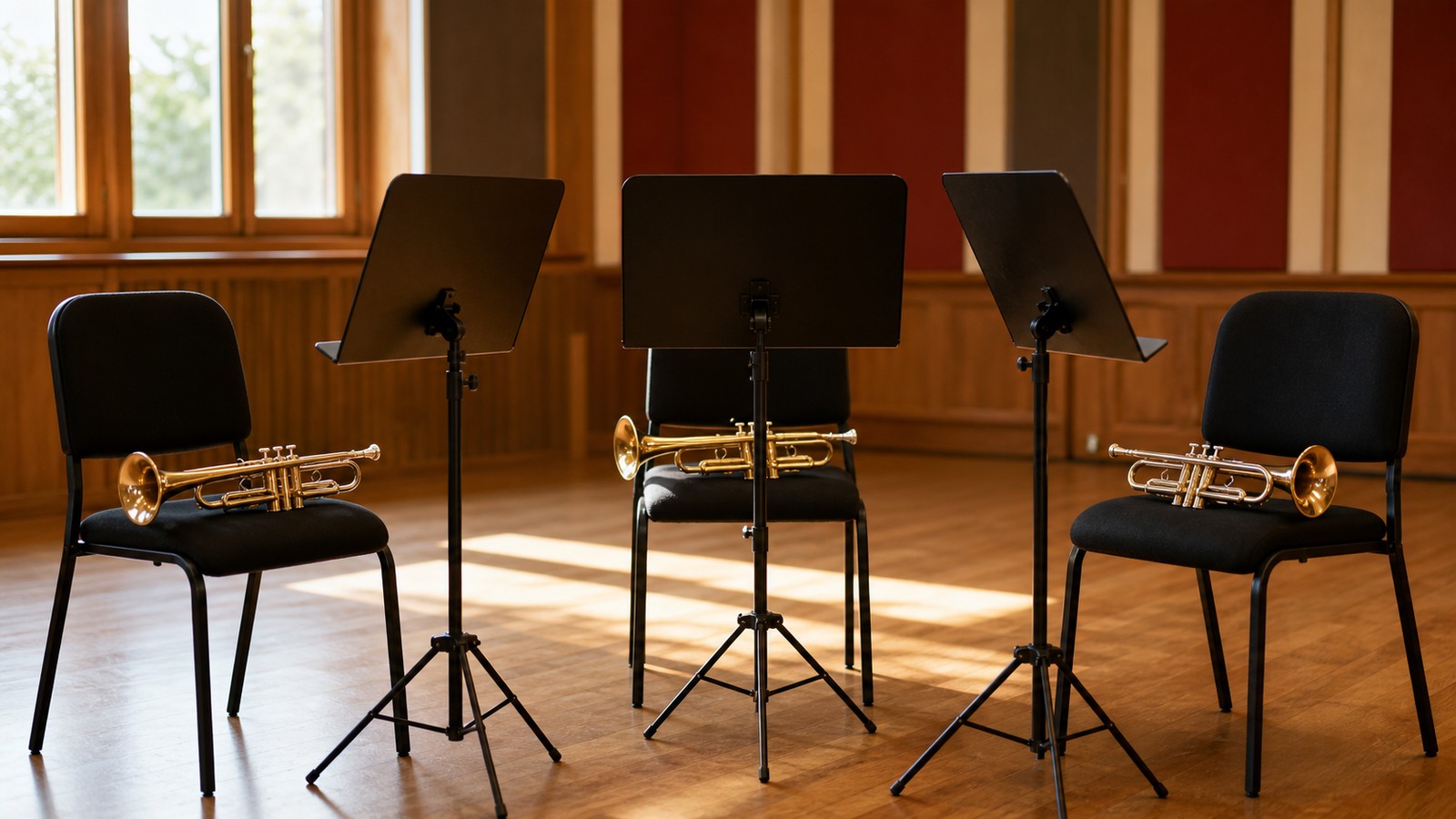
From Natural Brilliance to Modern Mastery
Few instruments in the brass family capture the imagination like the trumpet. Its regal timbre, commanding presence, and unparalleled versatility have allowed it to flourish across centuries—from the battlefields of antiquity to the stages of modern jazz and symphony orchestras. Yet behind its golden gleam lies an ingenious evolution: the development of the valve system. This mechanism transformed the trumpet from a limited natural horn into a chromatic powerhouse capable of expressing nearly any musical idea.
The story of how the trumpet valve came to be is one of invention, artistry, and the unrelenting pursuit of musical freedom. Let’s trace the remarkable journey that led to the modern trumpet we know today.
A: Added tubing lengths aren’t perfectly proportional; players use 1st/3rd slides and embouchure to correct.
A: Neither is “better”—pistons tend to articulate crisply; rotaries blend and slur smoothly. Choose for repertoire and feel.
A: Little and often. For frequent players, daily or every session keeps action fast and compression healthy.
A: Ensuring valve ports line up precisely with casings at rest/pressed positions—key to tone, response, and intonation.
A: Geometry dominates pitch; materials/plating subtly affect feel and color, not fundamental tuning.
A: It can reduce resistance and feel smoother; some players prefer the stability of standard designs—try both.
A: 1-3 and 1-2-3 combos lengthen tubing inefficiently; use 3rd slide throw (and sometimes 1st) to center pitch.
A: It can help slotting and comfort but won’t “repair” a fundamentally out-of-tune horn.
A: Cleaner fingerings, better low-note intonation, and extended usable range.
A: With clean oil, proper alignment, and service, decades. Grit and dried oil are the main enemies.
1. The Birth of the Natural Trumpet
Before valves existed, the natural trumpet reigned supreme. In the 16th through 18th centuries, trumpets were simple lengths of coiled brass tubing without any moving parts. Players relied solely on their embouchure—the control of lip vibration and air—to produce notes from the harmonic series.
This meant that trumpeters could only play certain pitches related to the fundamental tone. The higher they went into the harmonic series, the closer those pitches became, allowing for melodies, but only in the upper “clarino” register. In the lower range, the gaps between notes were wide, limiting the instrument’s versatility.
Despite these challenges, baroque composers such as Johann Sebastian Bach and George Frideric Handel wrote dazzling works for the natural trumpet, exploiting its brilliant upper harmonics. In skilled hands, the natural trumpet could sing, soar, and shine—but its limitations confined it largely to fanfares, ceremonial music, and specific tonalities.
2. The Quest for Chromatic Freedom
As music evolved during the late 18th and early 19th centuries, composers demanded greater harmonic flexibility. The rise of Romanticism brought new emotional intensity and complex modulations that the natural trumpet could not easily follow. Musicians and inventors alike began searching for a way to play chromatic scales—a complete set of notes—without changing instruments or crooks (interchangeable lengths of tubing used to alter pitch).
This search gave birth to a fascinating period of experimentation. Some inventors tried keys, similar to those on woodwinds, while others explored slides and rotary mechanisms. Each attempted to solve the same problem: how to alter the length of the trumpet’s tubing quickly and smoothly to achieve different pitches.
But it wasn’t until the early 19th century that a breakthrough changed brass playing forever.
3. The Invention of the Valve
The valve system emerged in the early 1800s through the combined efforts of several innovators. In 1814, Heinrich Stölzel, a German horn player, and Friedrich Blühmel, a miner and amateur musician, are credited with inventing the first practical valve design. Their mechanism allowed players to redirect air through additional tubing by pressing levers—instantly changing the pitch.
Stölzel and Blühmel’s design used two valves that lowered the pitch by whole and half steps, providing limited chromatic capability. A third valve was added later, which allowed for full chromatic playability across the instrument’s range.
Initially, the idea met with skepticism. Many traditionalists argued that valves compromised tone quality or intonation. But as the mechanisms improved, so did their acceptance. The ability to play in all keys without changing instruments or crooks revolutionized brass playing—and the trumpet was reborn.
4. The Early Valve Systems: Experimentation and Refinement
The first valve trumpets used Stölzel valves, which diverted air through extra tubing via pistons moving up and down in their casings. While ingenious, this design had drawbacks—stiff action, slow response, and air leakage.
Soon after, Christian Friedrich Sattler and Joseph Riedl introduced rotary valves, which used rotating cylinders instead of pistons. This innovation offered smoother airflow and faster action, making it particularly popular in Central and Eastern Europe. To this day, rotary trumpets are favored in German and Austrian orchestras for their dark, smooth tone.
Meanwhile, in France and England, further refinements led to the Périnet valve, patented by François Périnet in 1839. This piston-style valve, with its superior sealing and reliable action, became the standard for modern trumpets. Its vertical motion and simple design remain nearly unchanged today.
5. The Industrial Revolution and Brass Manufacturing
The rise of industrialization in the 19th century was instrumental—literally—in spreading the use of the valve trumpet. Improved metalworking, precision machining, and mass production allowed for standardized valve systems and consistent tuning.
Instrument makers such as Adolphe Sax (inventor of the saxophone) and Antoine Courtois in France, as well as Boosey & Hawkes in England, began producing high-quality valve trumpets. These instruments found their way into military bands, orchestras, and eventually, concert halls worldwide.
Valves didn’t just transform the trumpet—they redefined all brass instruments, leading to the creation of the cornet, euphonium, and tuba. The once-limited brass family became a chromatic force capable of expressive nuance and technical brilliance.
6. The Trumpet in the Romantic Era: Virtuosity Unleashed
With the advent of reliable valves, composers began to write for the trumpet in ways previously impossible. No longer confined to bright fanfares or ceremonial calls, the instrument could now sing in lyrical melodies and blend seamlessly with strings and woodwinds.
Composers such as Johannes Brahms, Richard Wagner, and Gustav Mahler embraced the chromatic trumpet, using it to evoke drama, power, and emotion. Trumpeters, once limited to heroic roles, now became expressive storytellers capable of subtle shading and dynamic range.
The new valve system also birthed the cornet, a close relative of the trumpet with a more conical bore and mellower tone. The cornet became immensely popular in the 19th century, especially in brass bands and solo performances, where its agility and lyrical qualities shone.
7. The Rise of the Modern Trumpet: Standardization and Design
By the early 20th century, the trumpet had evolved into the instrument we recognize today. The B♭ trumpet became the standard, replacing the longer and deeper F and E♭ trumpets of earlier periods. The Périnet piston valve system dominated, and instrument makers focused on improving intonation, response, and ergonomics.
Manufacturers such as Vincent Bach, Conn, and Besson refined the design with tighter tolerances and balanced weight distribution. Valve casings became smoother, ports were aligned for better airflow, and slides were fitted for fine-tuning.
This era also saw the rise of silver plating and new alloys, which not only improved aesthetics but enhanced tonal clarity and projection. The trumpet became more than an instrument—it became a symbol of precision engineering married to musical artistry.
8. The Trumpet in Jazz: Valves in the Age of Improvisation
The 20th century saw the trumpet find a new voice in jazz. The valve system gave trumpeters the agility to navigate complex harmonies, making it the instrument of choice for many jazz legends.
From Louis Armstrong’s groundbreaking swing phrasing to Miles Davis’s haunting minimalism and Dizzy Gillespie’s virtuosic bebop lines, the modern valve trumpet became synonymous with expressive freedom. The valves allowed rapid articulation, smooth chromatic runs, and soulful bends—all essential ingredients in jazz improvisation.
Valve technology also made possible the creation of hybrid instruments like the flugelhorn, which used similar valve mechanisms but with a warmer, darker tone. Jazz artists embraced these variants, expanding the expressive possibilities of brass music even further.
9. Technical Evolution: Precision Engineering and Modern Innovations
Today’s trumpet valves are marvels of engineering. Made from nickel-plated brass, monel, or stainless steel, they glide effortlessly within finely machined casings. Modern manufacturing ensures tight tolerances, preventing air leaks and ensuring smooth action even under heavy use.
Valve alignment—a crucial factor in tone quality—has become an exact science. Advances in CNC machining allow for perfect consistency, while synthetic lubricants keep valves fast and silent. Some modern trumpets even feature reversed leadpipes and lightweight valve caps to enhance airflow and response.
Manufacturers continue to innovate, experimenting with new materials like titanium and carbon fiber, as well as modular valve blocks that allow musicians to customize resistance and feel. The evolution of the valve system continues to blend tradition with technology, ensuring that the trumpet remains both timeless and cutting-edge.
10. Rotary vs. Piston Valves: A Tale of Two Traditions
Although the Périnet piston valve dominates globally, the rotary valve remains a beloved alternative, especially in European orchestras. Rotary trumpets, with their smoother transitions and rounded tone, are favored for works by Mahler, Bruckner, and Strauss, where blending within the orchestra is paramount.
In contrast, piston-valve trumpets excel in clarity and articulation, making them ideal for jazz, pop, and American orchestral styles. The distinction isn’t just mechanical—it’s cultural. Each valve type embodies a different musical aesthetic, reflecting centuries of regional evolution.
The coexistence of these two systems underscores the trumpet’s versatility. Whether delivering the sharp brilliance of a piccolo trumpet or the mellow warmth of a flugelhorn, the valve remains the heart of the instrument’s adaptability.
11. Specialty Trumpets and Valve Innovations
Beyond the standard B♭ and C trumpets, valve innovation has enabled the development of numerous specialized instruments. The piccolo trumpet, with its smaller size and higher pitch, uses a four-valve system to extend its range downward, making it ideal for baroque and solo repertoire.
The bass trumpet, with its deep, heroic tone, found favor with composers like Wagner and Strauss. Meanwhile, the slide trumpet—a hybrid between trombone and trumpet—pays homage to the pre-valve era while offering modern playability.
In the contemporary era, inventors continue to push the boundaries of valve design. Electronic valves, adjustable resistance systems, and even 3D-printed components hint at the next frontier of trumpet evolution. What began as a simple mechanical solution has become a platform for endless experimentation.
12. The Valve as a Symbol of Expression
The valve system did more than expand the trumpet’s range—it transformed its soul. It bridged the gap between the natural and the human, allowing players to translate emotion into motion, breath into melody.
When a trumpeter presses a valve, they engage in a subtle dance of physics and feeling. Air, metal, and mechanics work together in an instant to produce sound. The precision of the valve is matched only by the artistry of the performer. In that moment, centuries of innovation converge in a single note.
13. Maintenance, Mastery, and the Art of the Valve
A well-maintained valve system is a work of mechanical art. Trumpeters meticulously clean, oil, and align their valves to preserve responsiveness. Even minor imperfections can affect tone and tuning, underscoring how intimately performer and instrument are connected.
Valve maintenance has become a ritual among professionals—a reflection of respect for the craft. In this relationship between human and machine lies a poetic truth: mastery of the trumpet begins with understanding its heart.
14. The Future of Trumpet Valves
As technology advances, so too will the valve. Researchers and makers are exploring smart valves with electronic sensors that measure airflow, pressure, and performance in real time. Hybrid acoustic-electric trumpets already exist, merging traditional mechanics with digital processing.
At the same time, there’s a renewed appreciation for historical authenticity. Some artisans now handcraft natural trumpets and early valve instruments using period techniques, allowing musicians to experience the evolution firsthand.
The trumpet’s story, it seems, is still being written. Its valves—symbols of human ingenuity—continue to evolve in the hands of those who dare to innovate.
15. A Triumph of Music and Mechanics
The evolution of the trumpet valve system is a microcosm of human creativity. From the majestic simplicity of the natural trumpet to the precision-engineered instruments of today, each step reflects our desire to transcend limits.
Valves transformed not only how the trumpet sounds but what it means to play one. They unlocked its chromatic potential, reshaped musical history, and gave voice to generations of artists. The trumpet, once bound by nature’s harmonics, became a boundless medium for emotion, expression, and innovation.
As the 21st century unfolds, the trumpet’s song continues—an eternal dialogue between brass, breath, and brilliance. Its valves, those small but mighty marvels, remind us that even the simplest mechanisms can open the door to infinite possibility.