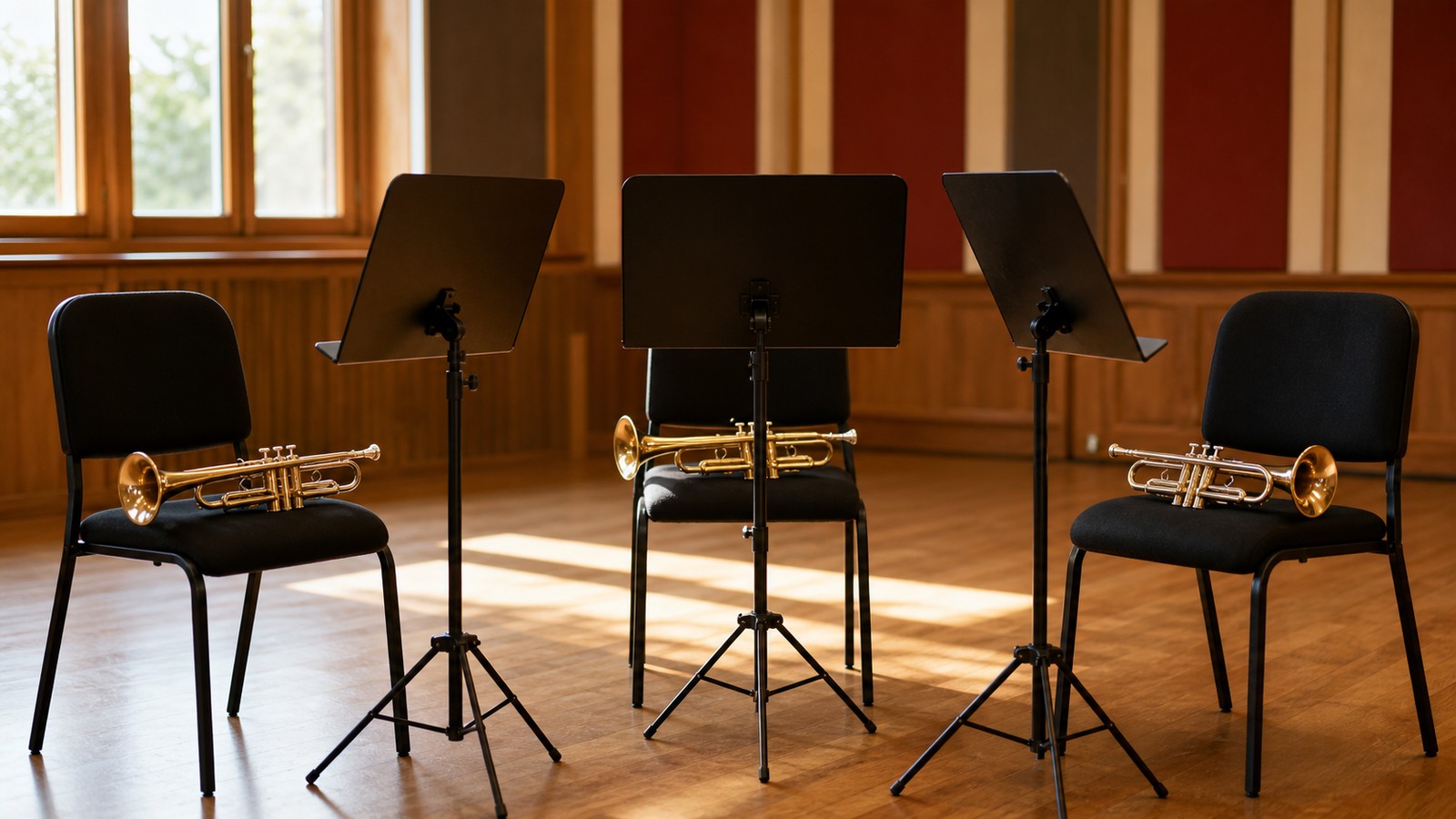
Speed and dexterity lie at the heart of trumpet mastery. Whether you’re executing rapid passages in a jazz solo, articulating brisk fanfares in orchestral work, or navigating complex etudes, your control over motion defines your musical freedom. True speed on the trumpet is not raw haste—it’s precision executed without tension. Developing dexterity requires intelligent repetition, mindfulness, and consistency, turning mechanical movement into musical expression. This guide explores practical exercises and principles that help you move beyond stiffness or hesitation. By focusing on efficient finger movement, fluid air support, and mental coordination, you’ll learn to blend physical control with artistry. Each section addresses a vital element of trumpet dexterity—from finger independence to articulation speed—crafted to elevate your playing in measurable, musical ways.
A: 20–30 focused minutes within a 60-minute session, with frequent short rests, is effective for most players.
A: Airflow is collapsing or overblown. Recenter with slurred reps, then re-add articulation at the same tone quality.
A: Start slow, three perfect reps rule, +2–4 BPM steps, occasional “leap ahead then return” to build confidence.
A: Both—chromatic for coordination across all valves; diatonic for musical context and common fingering patterns.
A: Isolate each valve, minimize lift, and drill in rhythmic groupings; record close-ups to spot extra motion.
A: Match tone between syllables (ta/ka), practice on one pitch, then add simple scales, staying relaxed and even.
A: Usually unnecessary; prioritize clean technique and properly maintained valves before hardware changes.
A: Yes—silent fingering with a metronome, then add air and finally articulation to confirm alignment.
A: Use rest ratios, gentle stretches, varied material, and stop at first signs of strain; consistency beats marathon sessions.
A: Clarke Technical Studies, Arban characteristic studies, and Charlier etudes to apply technique musically.
The Foundation: Building Finger Awareness
Every note begins with movement. The three valves of the trumpet may seem simple, but they demand intricate coordination. Most players struggle not because their fingers are too slow, but because their motion is inefficient. The first step in developing speed is awareness. Observe how high your fingers lift after pressing a valve and how firmly they return. Excessive distance wastes time and energy.
A slow, controlled exercise is essential: press each valve slowly, hold it down, and release with minimal motion. Repeat this across simple patterns like C–D–E–F–G and back down, ensuring each valve stroke is deliberate and even. Use a metronome at a relaxed tempo, gradually increasing speed only after each motion feels natural. The goal is not faster fingers—it’s smarter fingers. Precision first, velocity later.
Coordination Between Hands and Air
Finger motion alone cannot produce clarity at speed. The trumpet’s true engine is the air. Fast passages often falter because the airflow disconnects from valve movement. To synchronize both systems, practice simple scale runs focusing entirely on seamless airflow. The air must remain consistent even as your fingers change notes.
Try playing an ascending C major scale in eighth notes, breathing deeply before starting. Concentrate on maintaining a steady tone without fluctuation or “bumps” between notes. As you increase tempo, resist the urge to push more air—keep it even and relaxed. When fingers and airflow synchronize, the sensation of playing becomes smooth and frictionless. This synergy turns effort into flow.
Finger Independence Drills: The Precision Factor
Finger independence separates proficient players from fluid technicians. Each finger must move freely without the others tensing in sympathy. A focused independence routine isolates each finger’s movement to minimize cross-interference.
Begin with a “one-finger” drill: hold down the first and third valves while moving the second valve rapidly in sets of ten repetitions, maintaining relaxed hand posture. Rotate through combinations (1+2, 2+3, etc.), always listening for consistent clicks. Then apply the same coordination to melodic fragments like G–A–B–C, emphasizing clean valve action.
Over time, independence transforms mechanical awkwardness into agility. When each finger obeys your intent without pulling others along, technical passages unfold with minimal resistance. Consistency is the invisible force behind dexterity—each micro-motion practiced deliberately becomes part of your automatic muscle memory.
Chromatic Scales: The Speed Laboratory
The chromatic scale is the ultimate speed-testing ground. It traverses every valve combination, challenging coordination, intonation, and finger rhythm simultaneously. Practicing it effectively requires structure.
Start from low C and ascend to high C in half steps, focusing on even rhythm and tone. Use a metronome and play in various rhythmic patterns: triplets, sixteenth notes, and syncopated bursts. The key is maintaining identical tone quality across every interval. When tone begins to suffer, slow down. True dexterity never sacrifices sound for speed.
For variation, play the chromatic scale tongued, slurred, and in rhythmic groups of three or four. Each version targets different muscular responses and enhances flexibility. Over weeks, this single exercise becomes a complete laboratory for speed, endurance, and precision, uniting finger motion with breath control.
Lip Slurs for Fluid Dexterity
While valve work drives speed, lip flexibility ensures transitions remain smooth and resonant. Lip slurs—moving between harmonics without valves—train the embouchure to adjust pitch seamlessly. They refine micro-muscular response, allowing faster passages to sound connected rather than mechanical.
Begin with simple slurs between open partials (low C to G, G to C, etc.), keeping air consistent and corners stable. Gradually introduce valves: 1, 2, 3, and various combinations. The goal is a seamless “liquid” motion with no break in tone. When paired with finger patterns, lip slurs create an integrated physical coordination. Dexterity is not just in the hands—it lives in the breath, lips, and mind working as one.
Articulation Speed: Tongue Meets Valve
Even the most agile fingers mean little if articulation lags behind. For trumpet players, the tongue defines clarity and rhythmic accuracy. To develop fast articulation, combine tonguing exercises with valve motion.
Start with single-tongue bursts on repeated notes: ta–ta–ta–ta, maintaining identical attacks. Gradually incorporate valve changes using simple scale fragments. Once the motion feels clean, transition into double- and triple-tonguing patterns (ta–ka, ta–ta–ka). Practice slowly at first, focusing on precision over speed.
As you progress, coordinate these articulations with airflow rather than muscle tension. The best articulation sounds effortless. When the tongue merely interrupts air rather than stops it, the sound becomes percussive but fluid—ideal for rapid passages or technical solos.
Etudes and Technical Studies: Turning Drills into Music
Exercises alone build technique, but etudes transform that technique into expression. Composers like Arban, Clarke, and Charlier designed etudes to stretch every facet of dexterity. They offer musical contexts for technical growth.
Start with Arban’s “Characteristic Studies” for finger velocity and rhythmic agility. Move on to Clarke’s “Technical Studies,” which isolate speed through scalar motion and repeated patterns. Play each etude as if performing for an audience—musically, not mechanically. This develops not just the hands, but the interpretive brain behind them.
By alternating between pure exercises and expressive etudes, you prevent technical fatigue. Each passage becomes an artistic statement rather than an athletic test. True speed always serves sound, not the other way around.
Mental Mapping: The Secret to Rapid Reaction
Speed is as much cognitive as physical. The fingers react to what the brain anticipates. Training your mind to visualize fingerings, intervals, and scale structures dramatically enhances technical readiness.
Before playing a passage, imagine the finger sequence. Visualize valve combinations like a dancer rehearsing steps before performance. This pre-mapping reduces hesitation and misfiring. Many advanced players “hear” and “feel” fast passages mentally before executing them, aligning motor planning with auditory imagery.
To develop this skill, read through etudes silently while imagining the feel of each note. Combine visualization with slow practice until thought and motion become inseparable. Mental dexterity breeds physical speed—because the body only follows what the mind clearly commands.
Tempo Progression: The Science of Gradual Speed
One of the biggest mistakes players make is pushing tempo too early. True progress comes from systematic tempo expansion. The principle is simple: increase only when consistency is flawless.
Begin each exercise at a tempo where precision feels effortless—perhaps 60 BPM. Play through slowly, focusing on tone, timing, and control. Once you can play it three times consecutively without error, increase by just two or three beats. This small increment prevents tension buildup and encourages adaptation.
Use a metronome religiously. Speed gained methodically stays reliable under pressure, while rushed development collapses during performance. The journey from slow to fast mirrors musical growth itself—measured, mindful, and cumulative.
Endurance and Relaxation: The Balancing Act
Speed cannot thrive in tension. The faster you move, the more economy you need. A relaxed embouchure, flexible wrist, and supple fingers reduce physical strain. Overtraining or gripping the trumpet too tightly creates rigidity, the enemy of dexterity.
Incorporate brief rest intervals during technical sessions. For every minute of playing, allow at least half a minute of rest. Use that pause to gently stretch your fingers and take a few deep breaths. As your muscles recover, efficiency improves.
Endurance grows not from brute repetition but from balanced effort. The most agile players often appear motionless because every movement is necessary and nothing more. Stillness, paradoxically, becomes the foundation for speed.
Daily Practice Routine for Dexterity
A structured daily routine ensures steady progress. Here’s an ideal framework to integrate the exercises discussed:
Start with slow finger-awareness drills (5 minutes), followed by lip slurs (10 minutes) to awaken embouchure coordination. Transition to chromatic scales in varying rhythms (10 minutes), then move into articulation exercises (10 minutes). Conclude with one etude focusing on both musicality and technical challenge (15 minutes).
Keep sessions efficient and focused rather than prolonged. Record yourself weekly to track tone consistency and motion control. Over time, this balanced regimen will yield noticeable improvements—not just in speed, but in confidence and command of the instrument.
Listening as a Dexterity Tool
Technical growth also depends on what you hear. Study recordings of trumpet masters—players like Maurice André, Alison Balsom, or Wynton Marsalis—and analyze their articulation and precision. Listening shapes your auditory model of “clean speed.”
Notice how these artists maintain tone integrity even during rapid lines. Emulate their clarity by matching that sonic image in your own practice. The brain learns technique by imitation as much as by motion. Listening trains reflexes, informing your body how mastery should sound.
From Exercise to Expression
Ultimately, speed and dexterity are only means to musical expression. The greatest trumpet performances dazzle not because they’re fast, but because they sound effortless. Every technique you develop—each scale, slur, or tongued note—should serve phrasing, emotion, and storytelling.
Once your technical foundation stabilizes, use it creatively. Improvise short motifs, varying rhythm and articulation. Translate technical drills into musical ideas. When your fingers respond to imagination without resistance, you’ve achieved true freedom as a player. Dexterity becomes invisible, and music takes over.
The Road to Technical Mastery
Improving trumpet speed and dexterity is a lifelong pursuit of refinement, not perfection. It’s a dialogue between body and instrument—where control meets spontaneity, and repetition meets discovery. The secret lies not in rushing but in understanding motion deeply, crafting each phrase with awareness and precision.
Every great player builds speed through patience and curiosity. With daily dedication to intelligent exercises, mental focus, and relaxed persistence, your technique will evolve into artistry. And when your fingers dance effortlessly across the valves, what once felt mechanical will transform into pure musical freedom—the hallmark of every master trumpeter.