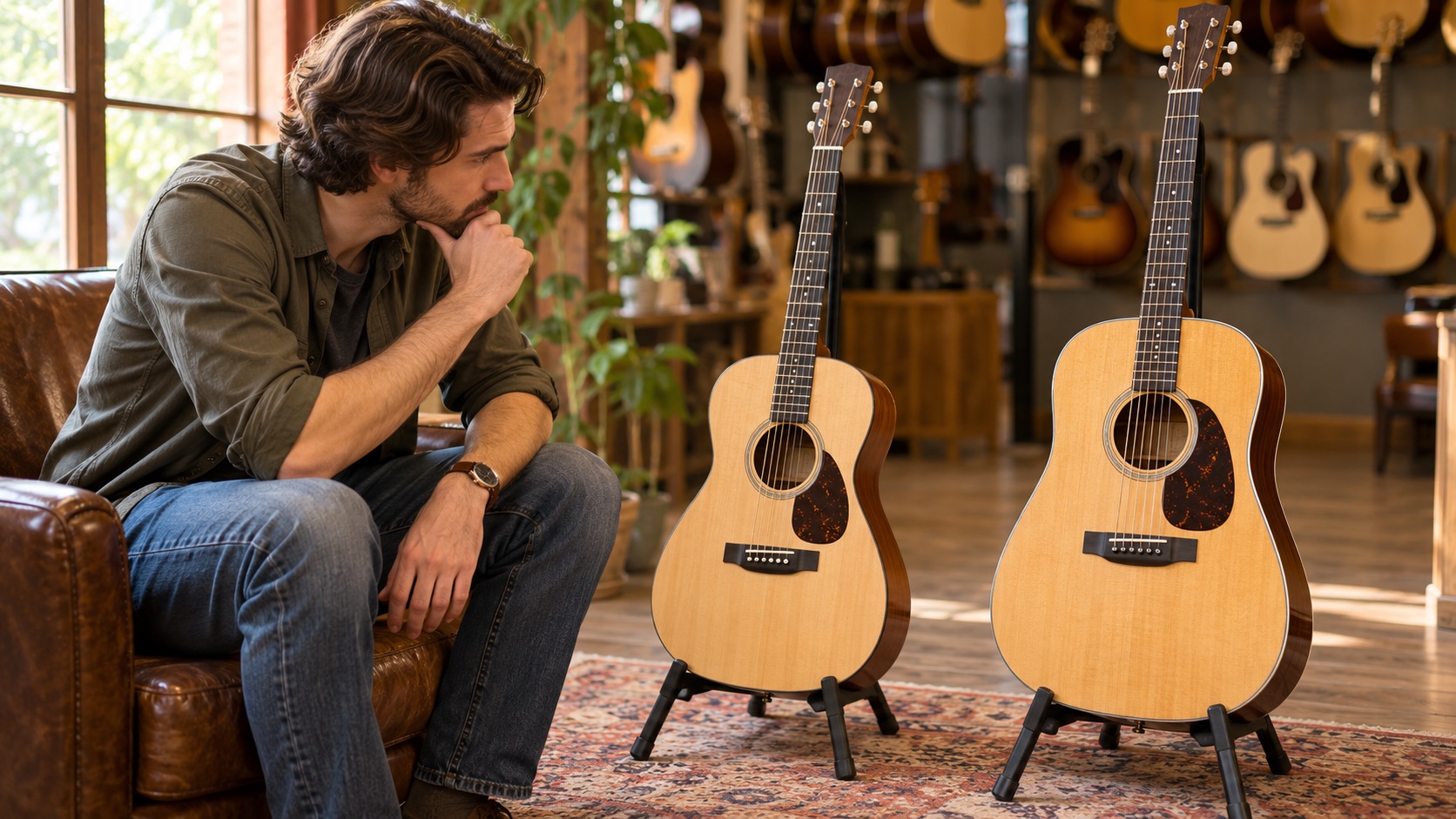
The Best First Guitar Is the One That Removes Friction
A beginner does not need the guitar with the longest feature list. The useful question is whether a specific instrument makes it easy to sit down, form a chord, hear a satisfying result, and return tomorrow. Body depth, neck feel, string height, fret condition, and setup quality affect that experience more immediately than decorative trim or brand prestige. This guide uses those practical filters to compare current Yamaha FG and FS models, then shows how to inspect any candidate before spending money. The goal is a guitar that supports regular practice instead of asking a new player to wrestle with preventable discomfort.
A: No. It works well when the player can reach comfortably and maintain relaxed shoulders.
A: Its concert-style small body can reduce the reach around the instrument.
A: No. Construction, setup, individual variation, and the player’s touch also matter.
A: It should at least be evaluated; many instruments benefit from adjustments suited to the player.
A: Not by themselves, but excessive effort or persistent tuning problems should prompt a setup check.
A: No. Compare response, comfort, condition, service, and price on the exact guitars.
A: Yes, if the seller offers a workable return policy and you arrange prompt inspection.
A: Only when amplification is an immediate need; prioritize acoustic fit and playability first.
A: Cracks, lifting bridges, neck-angle trouble, loose braces, and headstock repairs need expert review.
A: Give each finalist at least ten focused minutes and return for a second visit when possible.
Start With the Player, Not the Product Page
Before comparing models, note how and where the guitar will be used. A smaller player practicing on a couch may value a compact body more than maximum bass. A singer who expects to strum with others may prefer the broader sound and physical presence of a dreadnought. Someone with shoulder limitations needs to test the reach over the upper bout while seated. Write down three priorities: comfortable posture, an affordable total package, and the sound that makes the player want to continue. Those priorities are more useful than searching for one universal “best” guitar. Two instruments at similar prices can suit different bodies and musical plans.
Choose Between Dreadnought and Concert Proportions
A dreadnought has a broad lower bout and deeper body that can deliver strong low end and ample strumming presence. Its size also pushes the picking arm farther forward and outward. The Yamaha FG800J and FG820 use this familiar format. They deserve a seated test, especially for children, shorter adults, and players with shoulder tension.
The Yamaha FS800 and FS820 use a concert-style small body. A narrower waist and reduced overall bulk can make the fretting hand easier to see and reduce the reach of the picking arm. Smaller does not automatically mean better, but comfort that extends a practice session is a meaningful performance feature.
Check Scale Length, Nut Width, and Neck Feel Together
Measurements help narrow a search, yet the hand feels a combination of factors. Yamaha lists the FS800 with a 25-inch scale and a 43-millimeter nut. Scale length influences string tension, while nut width and neck profile shape the spacing and support under the fretting hand. Fingerboard edge shape and finish also affect comfort. Ask the player to hold a simple E minor, G, and C chord without squeezing. The thumb should be able to move rather than remain trapped. A neck that feels too large or too thin can encourage excess pressure. Do not reject a guitar after one awkward chord, but compare the same short sequence on every candidate.
Treat Setup as Part of the Instrument
Action is the distance between the strings and frets. If it is unnecessarily high, a beginner may assume sore hands and sharp-sounding chords are personal failures. If it is extremely low, notes may buzz. Nut-slot height, neck relief, saddle height, fret level, and string gauge all contribute, so action is not a single adjustment to make blindly.
A reputable shop should evaluate the individual guitar, not merely unbox it. Ask whether setup is included, what work was performed, and whether a follow-up adjustment is available after the instrument settles. Reserve part of the budget for professional setup when buying online or used.
Understand What a Solid Top Changes
All four Yamaha models discussed here use a solid spruce top according to the manufacturer. The top is the primary vibrating surface, and solid spruce is valued for a responsive, broadly useful voice. It should not be treated as proof that every individual guitar will sound identical or superior to every laminated-top alternative. Back-and-side materials, bracing, dimensions, strings, construction, and setup also shape the result. Yamaha specifies scalloped bracing across these FG and FS models. Use the construction details to build a shortlist, then let direct comparison decide which guitar responds clearly to the player’s actual touch.
Use the FG800J as the Dreadnought Baseline
Yamaha describes the current FG800J as a beginner-friendly dreadnought with a solid spruce top, nato or mahogany back and sides, scalloped bracing, and rosewood fingerboard and bridge. That combination makes it a sensible reference point: play it before judging whether a larger body helps or hinders.
Strum softly, then moderately, and listen for clean separation rather than only volume. Check whether the picking shoulder rises to clear the body. If the sound is inspiring but the posture deteriorates within ten minutes, compare the concert body before assuming discomfort is unavoidable.
Use the FS800 as the Compact Baseline
Yamaha positions the FS800 as a concert-style small-body model for beginning guitarists. It also has a solid spruce top and scalloped bracing, with nato or okoume back and sides listed in current specifications. Its smaller outline is the key reason to audition it alongside the FG800J. Play the same chords and single-note phrase used on the dreadnought. Notice arm reach, access to the lower frets, balance on the leg, and whether the guitar rotates away from the torso. Choose the FS800 because its complete feel works, not from the assumption that all beginners require the smallest available body.
Consider FG820 or FS820 for a Material Step Up
The current FG820 and FS820 retain the respective dreadnought and concert-style formats while using a solid spruce top with mahogany back and sides. They also use scalloped bracing. These models provide a controlled comparison for a buyer who likes the Yamaha geometry but wants to hear whether the material change justifies the price difference.
Compare FG800J with FG820, or FS800 with FS820, using identical picks and playing intensity. Listen from several feet away if possible. Pay more only when the preferred instrument offers a clear benefit in response, sound, finish, or ownership confidence; a model number alone does not improve practice.
Run a Ten-Minute Comfort Trial
Sit in the chair normally used for practice, if the shop allows it, or choose a firm chair without arms. Balance the guitar without gripping it tightly. Play open strings, three chords, a slow chord change, and a short melody. Pause to observe the neck angle and both shoulders. After ten minutes, note any numbness, pinching, wrist collapse, or urge to prop the instrument with the fretting hand. Some unfamiliarity is expected, but escalating discomfort is useful evidence. Repeat the same test standing only if a strap will be part of the player’s routine.
Listen at Beginner Volume
Many showroom demonstrations favor bold strumming because it creates an immediate impression. Beginners spend substantial time playing slowly and quietly. Test whether notes speak clearly under a light pick, whether bass notes obscure the chord, and whether the guitar responds to a gentle finger stroke.
Ask a more experienced player to demonstrate, but make the beginner play too. A guitar can sound excellent in skilled hands while feeling resistant to a new player. Record short clips from the same phone position, then compare later without relying on the visual appeal of the instrument.
Inspect the Exact Guitar You Will Take Home
Wood instruments vary, even within one model. Sight along the neck for obvious twists, examine the top and bridge for gaps or unusual deformation, and look for cracks near the body seams. Turn each tuner and confirm that it moves smoothly without slipping or excessive play. Play every fret on every string with moderate pressure. One isolated buzz may be a setup issue; widespread choking, sharp fret ends, or uneven notes merit evaluation before purchase. Check that the saddle has enough height for future adjustment and ask a technician about anything uncertain.
Separate Cosmetic Marks From Structural Risk
A used guitar with light pick scratches can be an excellent value. Cracks, a lifting bridge, loose braces, damaged headstock, neck-angle problems, or evidence of poor repair are different. These issues may cost more than the apparent discount and require assessment by a qualified repair professional.
Ask how the guitar was stored and whether it experienced very dry or wet conditions. Obtain the serial number and a written description of repairs. If the seller discourages inspection or pressures a quick decision, leave. Another suitable beginner guitar will appear.
Budget for the First Month, Not Just the Guitar
A realistic package may include a protective case or padded gig bag, tuner, picks, strap, spare strings, string winder, stand, humidification supplies where appropriate, and a setup. Lessons or a reliable learning resource often improve the outcome more than spending the same money on ornamentation. Ask what the model includes; do not assume every guitar arrives with a case. Avoid oversized accessory bundles filled with low-quality items the player will not use. Select a few dependable tools and keep enough money available for adjustment after the first weeks of playing.
Plan for Humidity and Storage
Solid-wood tops respond to environmental changes. Very dry conditions can contribute to sharp fret ends, top movement, and cracking, while excessive moisture can cause swelling and action changes. Follow the manufacturer’s care guidance and use a reliable humidity reading rather than guessing from the weather outside.
Keep the guitar away from heating vents, direct sun, hot cars, and damp storage. A case can buffer rapid changes, but it does not create a stable environment by itself. Ask a local technician which humidity practices suit the climate and home.
Buy Online Only With an Inspection Plan
Online purchasing can expand availability, but photographs cannot reveal action, fret feel, resonance, or comfort. Read the return window, restocking terms, shipping-damage procedure, and warranty conditions before ordering. Confirm whether the pictured instrument is the exact one being sold. When it arrives, photograph the box before opening, allow the shipment to acclimate as the seller recommends, and inspect promptly. Schedule a setup assessment within the return period. Do not make irreversible modifications until deciding to keep it.
Make the Decision With a Scorecard
Rate each candidate from one to five for seated comfort, neck feel, chord effort, quiet response, tuning stability, finish quality, service support, and total cost. Give comfort and setup more weight than appearance. Write one sentence about what made each guitar memorable.
A scorecard prevents a dramatic showroom strum or temporary discount from dominating the choice. If two models are close, return for a second audition. The better guitar is the one that remains easy to hold, easy to hear, and easy to maintain after the excitement of shopping fades.
A Focused Four-Model Audition
Begin with the FG800J and FS800 to decide whether dreadnought or concert proportions feel more natural. Keep the chair, pick, musical examples, and session length consistent. Then compare the preferred body style with its 820 counterpart: FG800J against FG820, or FS800 against FS820. This order isolates the body decision before the material and price decision. Have the beginner play first, followed by a teacher or shop employee. Listen from in front of the guitar as well as from the playing position. Record observations immediately, including any setup difference that could be corrected. A better-adjusted sample should not automatically prove that its entire model line is better.
Protect the First Thirty Days
New fingertips need gradual exposure. Begin with short, frequent sessions rather than one exhausting workout. Stop for sharp pain, broken skin, or numbness. Keep the guitar tuned, practice relaxed chord shapes, and record which strings fail to ring so a teacher can separate technique problems from setup problems.
Recheck tuning hardware, action, and environmental conditions as the guitar settles into the home. Use the seller’s follow-up service when available. A small correction during the return or adjustment window can prevent months of unnecessary struggle.
Know When Electronics Matter
A built-in pickup is unnecessary for a beginner practicing acoustically unless amplification is part of an immediate plan. Electronics add cost and another system to evaluate. If performances are likely soon, test the controls through a clean acoustic amplifier and check for secure output, even response, and accessible battery placement. Do not sacrifice the unplugged fit of the guitar for features that may never be used. A suitable acoustic instrument can often be miked, and a pickup may be added later after professional advice. First establish that the neck, body, and setup invite daily playing.
Choose Support Along With the Instrument
A trustworthy seller explains setup, return terms, warranty coverage, and repair options without dismissing beginner questions. Local service can be valuable when seasonal changes alter the action or a tuner loosens. For a used sale, the independent technician becomes the support system.
Keep the receipt, model and serial information, setup notes, and warranty documentation together. The purchase is successful when the player has both a workable guitar and a clear path for solving ordinary ownership problems. The Yamaha FG800J, FS800, FG820, and FS820 form a useful, current comparison set because they offer two body formats and a clear material step within each format. The final choice should come from the player’s posture, hands, ears, and the condition of the exact instrument. A comfortable guitar with a competent setup will usually do more for a beginner than an impressive specification that makes practice harder.