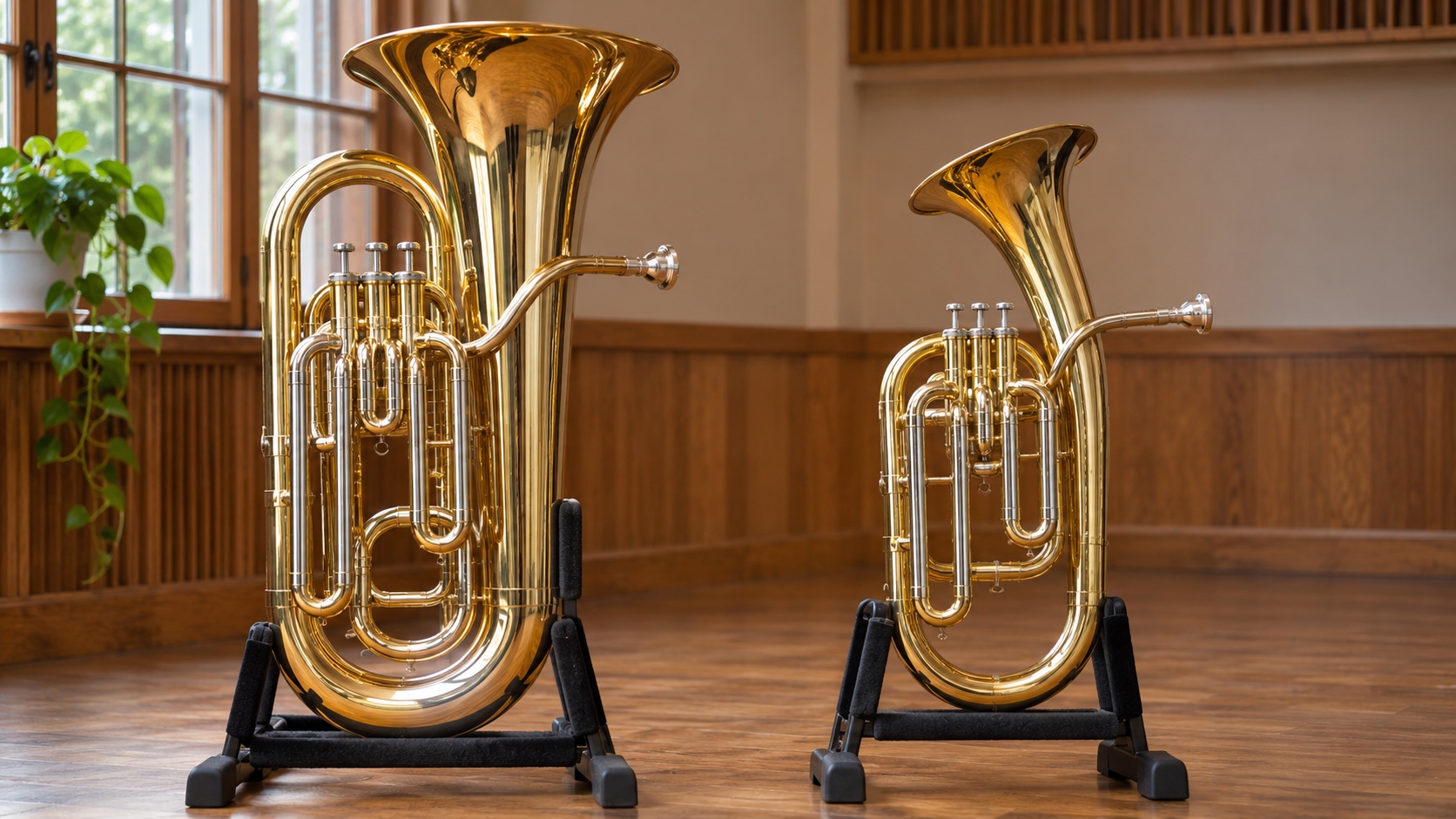
A Good Student Euphonium Removes Obstacles From the First Year
The best beginner euphonium is not automatically the least expensive horn or the model with the most valves. It is an instrument that responds without a fight, fits the student’s body, stays in workable adjustment, and can be serviced by a nearby technician. For most school players, a durable three-valve B-flat euphonium from an established maker is the safest starting point. A four-valve model can extend usefulness, but only when its added weight, price, and complexity suit the player. Teacher approval, a real play test, and dependable repair support should carry more weight than finish, accessories, or a dramatic online discount.
A: Yes. They cover normal early repertoire and keep the instrument simpler and lighter.
A: Consider it for a committed, physically comfortable student who needs expanded low-register options.
A: Neither finish guarantees better learning; condition, response, fit, and care matter more.
A: Often yes, especially when interest, growth, or ensemble placement is still uncertain.
A: Yes, after a technician verifies compression, valves, slides, leaks, and repairability.
A: Daily transport can fail if the case is too heavy, insecure, or awkward for the student.
A: Only with a real trial, clear return terms, and dependable local service.
A: Very little compared with mechanical condition and playing comfort.
A: The student’s teacher or band director should listen and assess fit.
A: Reliable response, appropriate fit, service support, and years of useful growth at a sustainable total cost.
Begin With the School’s Requirements
Ask the band director what the program supplies, which clef the student will read, and whether the section uses upright or forward-facing bells. Some schools own euphoniums and expect families to rent only a mouthpiece. Others require students to obtain an instrument but maintain a list of approved models. Matching the program helps a beginner receive consistent fingering, tuning, and care guidance. A director may also know which local dealers respond quickly during concert season. That relationship matters when a valve guide breaks or a water-key cork disappears before a performance. A bargain horn that must be shipped away for routine work can cost more in missed rehearsals than it saves at checkout.
Three Valves Are Enough to Start
A three-valve euphonium covers the normal beginner range and keeps the instrument lighter. Early method books spend most of their time where standard fingerings work well. Students can concentrate on breath, embouchure, rhythm, and tone instead of learning an additional valve before it serves a musical purpose.
A fourth valve provides alternate fingerings and a more complete low register. It becomes useful as music grows more demanding, but it does not fix poor response or careless construction. Four top-action valves can be straightforward for a student with sufficient hand reach. A side fourth valve, often paired with a compensating system, belongs more commonly on advanced instruments and adds cost and weight.
Fit Determines Whether Practice Feels Natural
Seat the student near the front of a firm chair with both feet supported. The mouthpiece should meet the face without the player lifting a shoulder, collapsing the chest, or craning the neck. The left arm should stabilize the horn without squeezing it, while the right fingers remain gently curved over the valve buttons. Smaller students may benefit from a compact body, a support cushion, or an instrument stand recommended by the teacher. Do not solve a fit problem by asking the student to hold a heavy horn in the air. Strain can turn a twenty-minute practice session into an argument and may establish habits that later take months to undo.
Yamaha YEP-201: A Sensible School Standard
Yamaha positions the YEP-201 as a standard B-flat student euphonium. Its three top-action pistons, 0.571-inch bore, and 11-inch upright bell make it a conventional school design. Yamaha specifically emphasizes its lighter weight, easy response, durable construction, and full sound. Those traits align well with a first-year player who needs predictable behavior more than professional complexity.
The YEP-201 is worth trying when a program wants a familiar upright instrument with strong dealer support. Confirm the current package, case, finish, and warranty with an authorized seller because those details can vary. A used example may be an excellent value if compression, valves, slides, and solder joints pass a technician’s inspection.
Jupiter JEP705: A Direct Three-Valve Alternative
Jupiter’s current product guide lists the JEP705 as a B-flat euphonium with a 0.570-inch bore, an 11-inch upright bell, and three top-action stainless-steel valves. It is offered in lacquered or silver-plated finishes and is paired with a molded case. On paper, that places it squarely in the traditional student category. The model deserves consideration where Jupiter dealers and repair parts are readily available. During a test, listen for an even response between open notes and valve combinations, check whether the valve buttons suit the student’s hand, and verify that the case is manageable on stairs or a school bus. Specifications narrow the field; the student’s actual comfort decides the result.
Jupiter JEP710: Useful When a Front Bell Is Required
The JEP710 uses a detachable 10.8-inch forward-facing bell, three front-action valves, and a 0.570-inch bore. That layout can direct sound outward and may match an older American school section. Jupiter describes stainless-steel pistons and an ABS case, both practical details for an instrument that moves between home and school.
A front bell does not make the model universally better for beginners. It changes balance, hand position, case shape, and how sound reaches the room. Choose it when the director wants that configuration or when the student clearly fits it better than an upright horn. Check the bell connection for secure assembly and teach the student to avoid cross-threading or forcing parts.
Yamaha YEP-321: Room to Grow
The YEP-321 is commonly treated as an intermediate step rather than a basic first instrument. Its four top-action valves broaden low-register options while retaining a familiar upright layout. It can make sense for a committed older beginner, a student likely to continue through high school, or a family buying after a successful rental period. Its added capability should be evaluated against hand reach and total weight. A student who struggles to stabilize the instrument will not benefit from the fourth valve. Compare it directly with a sound three-valve model and ask the teacher to listen from across the room. The more expensive option should earn its place through comfort, response, and long-term fit.
New, Used, or Rental
Rental is often the most rational first step. It allows time to confirm interest, growth, and ensemble placement, and a good plan may include maintenance or an exchange option. Read the contract carefully: rent-to-own totals, loss coverage, consumables, and return conditions vary.
A used instrument can stretch the budget toward a better model, but cosmetic shine is not evidence of mechanical health. Have a low-brass technician check valve compression, piston alignment, slide movement, leaks, red rot, dents in critical tubing, loose braces, and previous repairs. A modest bell dent may be less important than worn valves that make every note feel unresponsive. New instruments offer a warranty and clearer history. Buy from a seller that permits a meaningful trial and states who handles warranty work. Avoid unfamiliar marketplace brands when replacement valves, guides, stems, or leadpipes cannot be sourced. A beginner needs an instrument, not a future parts search.
What to Play During a Trial
Start with comfortable middle-register long tones at soft and medium dynamics. The note should begin cleanly without an exaggerated burst of air. Play a simple five-note pattern on open, second-valve, first-valve, and first-plus-second combinations. Valves should return quickly, and the response should not collapse when fingering changes. Next, play a familiar scale, two easy slurs, and a short melody. Use a tuner to observe tendencies, but let the teacher judge whether they are manageable rather than chasing a perfectly centered screen. Finally, assemble and pack the horn. A case that is too awkward for the student’s route to school is a real ownership problem.
Budget for the Complete First Year
The purchase price is only one line. Include a teacher-approved mouthpiece, valve oil, slide grease, a cleaning snake, soft cloths, a secure name tag, music stand, and periodic professional service. Do not buy abrasive metal polish for lacquered surfaces. The manufacturer’s care directions should govern cleaning.
Insurance may be worthwhile for an instrument traveling daily. Record the serial number and photograph the horn and case. Keep receipts and warranty documents together. These ordinary steps are less exciting than comparing finishes, but they protect the investment and reduce downtime.
A Practical Shortlist
For a typical younger beginner, start by testing a Yamaha YEP-201 and a Jupiter JEP705, then compare any program-approved equivalent supported by a strong local dealer. Consider the front-bell Jupiter JEP710 only when its configuration matches the ensemble or player. Add the four-valve Yamaha YEP-321 when the student’s size, commitment, and expected repertoire justify a longer-term instrument. No shortlist replaces the teacher’s ear or the student’s body. Choose the example that responds evenly, balances without strain, arrives with realistic service support, and leaves enough budget for lessons and maintenance. A reliable three-valve horn played every day will carry a beginner farther than an impressive specification sheet that makes practice difficult.
How Price Tiers Change the Decision
Entry-level pricing can hide several very different propositions. A well-maintained rental-return instrument from a reputable program may cost less than a new horn with uncertain parts support and still provide better valves, solder work, and intonation. At the middle of the market, families often pay for a stronger case, more consistent assembly, a fourth valve, or a dealer network that will still recognize the model years later. Those benefits are real, but only if the student can use them comfortably.
Professional compensating euphoniums solve musical problems that a first-year method book does not yet present. Their weight and price can also create anxiety about ordinary school handling. Buying far ahead of the student’s current needs is not automatically economical, because preferences in mouthpiece, valve layout, and ensemble role develop with experience. A staged approach—rental, dependable student horn, then an advanced instrument after guided testing—often spends money more intelligently.
Match the Instrument to the Student’s Routine
A horn that stays at school has different risks from one carried on a bus every day. For daily travel, case latches, handles, stair clearance, and a safe place to set the case matter. A family that drives the instrument may tolerate a larger case but should still plan how the student will move it without grabbing vulnerable tubing. If practice occurs in a small apartment, discuss reasonable hours and a teacher-approved practice mute while remembering that a mute changes resistance and should not dominate every session. Shared custody schedules and alternating homes deserve a plan before purchase. Moving one instrument repeatedly may be realistic with a strong case; maintaining two cheap instruments with different response can slow a beginner’s consistency. The director may allow secure school storage while a rental stays at home. The best arrangement is the one that makes five short practices easier to complete than one long weekend catch-up.
Use the First Month as a Final Test
A generous return or exchange period is valuable only when the student plays regularly during it. Keep brief notes about sticking valves, uncomfortable contact points, notes that consistently resist, and any case problems. Ask the teacher to reassess posture after the novelty wears off. Small adjustments to chair height, hand position, or support can solve fit concerns, while recurring mechanical faults should be documented promptly.
Do not wait until the final day to request service. A reputable dealer should explain whether a problem comes from setup, maintenance, damage, or manufacturing. By the end of the first month, the student should be able to assemble the routine, produce several dependable notes, and finish practice without pain. That evidence says more about a successful purchase than the instrument’s shine on delivery day.