Choosing a First Trombone That Helps Students Grow
A first trombone should make the early months feel possible. It does not need to be fancy, rare, or built for a conservatory player, but it does need to respond easily, stay in reasonable tune, survive daily handling, and give a new musician enough confidence to keep practicing. Students, parents, and adult beginners often see a long row of shiny brass instruments and wonder whether the cheaper option is good enough or whether a better-known model is worth the extra cost. The best beginner trombones sit in the practical middle: durable student instruments from repairable brands, with a comfortable slide, clear tone, solid case, and predictable parts support. A good choice lets the player focus on breathing, listening, rhythm, and slide positions instead of fighting stiff tubes, weak tone, or fragile hardware.
A: A straight B-flat tenor trombone is the standard first choice for school band and basic lessons.
A: Usually no. The trigger adds weight and cost before most beginners need the extra tubing.
A: They can be excellent values if the slide, braces, bell, and tuning slide are inspected first.
A: A dependable student trombone often costs more than a bargain import but less than an intermediate upgrade.
A: It may work briefly for fun or travel, but brass is usually better for serious daily learning.
A: Slide condition deserves the closest look because it affects nearly every early playing skill.
A: Yes. Directors know which models fit their program and which ones local shops can repair.
A: Finish matters less than response, slide feel, durability, and service support.
A: Upgrade when the current horn limits tone, range, tuning, or assigned music.
A: A school-approved rental or reputable student model from a trusted dealer is usually safest.
What a Beginner Trombone Needs to Do
The best beginner trombone is not simply the lowest-priced instrument that can make a sound. It should help a new player produce a centered tone at a moderate volume, move between basic slide positions without strain, and build a habit of careful handling. A stiff or dented slide can turn every practice session into a wrestling match, while a thinly built instrument may lose alignment after a few weeks of school use.
For most students, a straight tenor trombone in B-flat is the right starting point. It matches school band methods, is easier to manage than a large-bore symphonic horn, and gives the player access to the music they are most likely to see in class. A beginner instrument should feel balanced in the hands, include a secure case, and be easy for a repair technician to service.
Student Trombone Types and Sizes
Most true beginner trombones are small-bore or medium-small-bore tenor models. The bore is the inner width of the tubing, and it affects resistance, response, and how much air the player needs. A smaller bore usually gives beginners a clearer start because the instrument speaks without demanding the air support of an advanced orchestral horn.
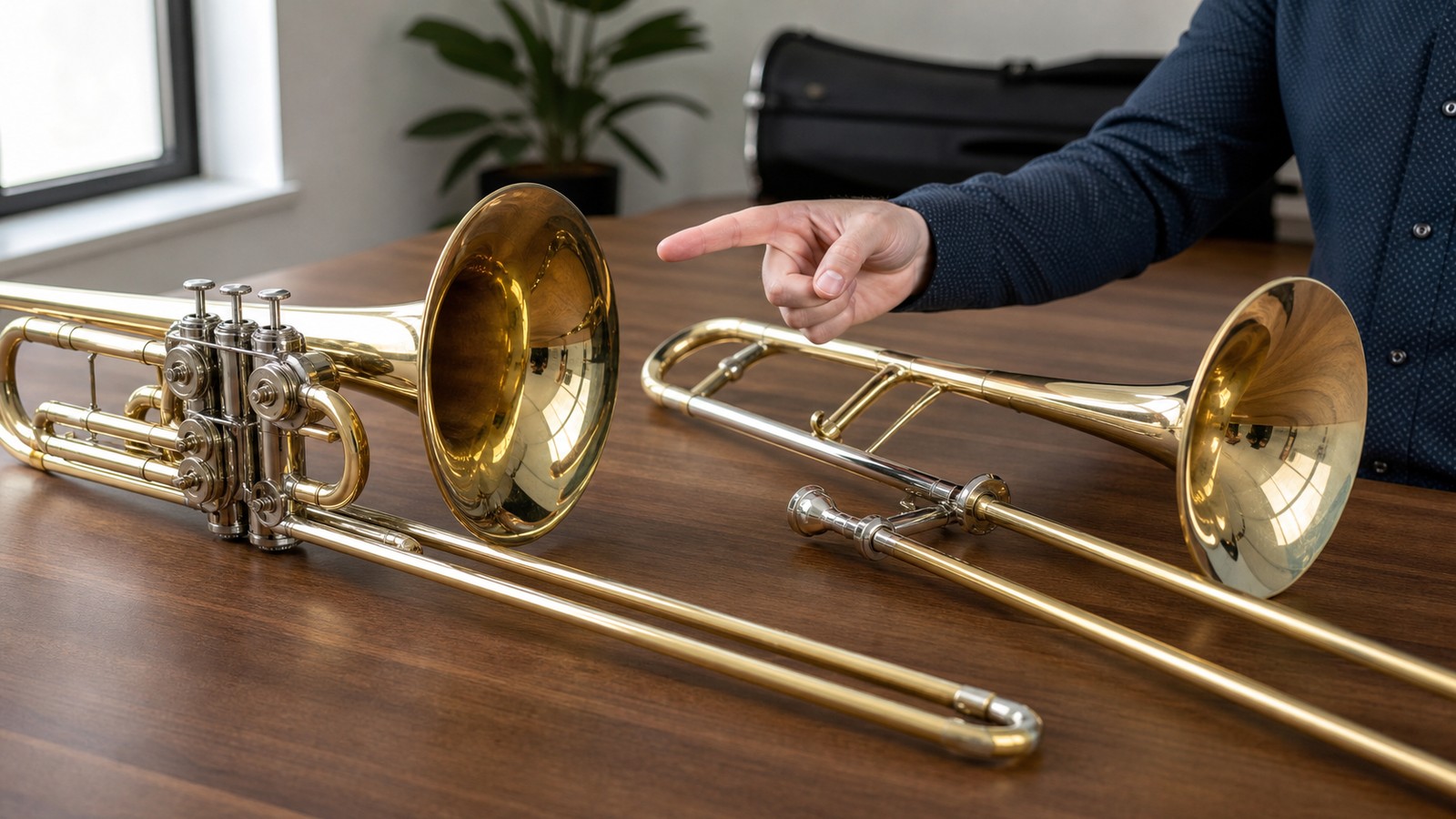
Some students ask about F-attachment trombones because they see older players using them. That extra trigger tubing is useful later, especially for lower range and alternate positions, but it adds weight and cost. A young beginner can learn excellent fundamentals on a straight tenor first, then move to an F-attachment model if their music, teacher, and physical comfort point that way.
Plastic trombones can be fun for travel, outdoor events, or very young players testing interest, but they rarely replace a good brass student trombone for long-term school use. They are lighter and less fragile in some situations, yet the sound, slide feel, and repair expectations are different. For a serious first instrument, brass is still the safer default.
New, Used, or Rental?
Renting makes sense when a child is trying band for the first time and the family is unsure whether the commitment will last. A good rental program also shifts early repair worries away from the family and may include an option to apply payments toward purchase. Buying used can save money, but only when the slide is smooth, the tuning slide moves, the bell is not badly bent, and the brand is worth repairing. Buying new costs more, but it gives the clearest warranty, cleanest maintenance history, and least mystery.
Features That Make Practice Easier
Slide quality matters more than decorative shine. A beginner needs a slide that moves evenly, quietly, and freely across the common early positions. Small dents in the outer slide can feel huge to a new player, and alignment problems can make simple exercises feel inconsistent. Before buying, hold the instrument at playing angle and move the slide slowly; it should not grind, stick, or wobble dramatically.
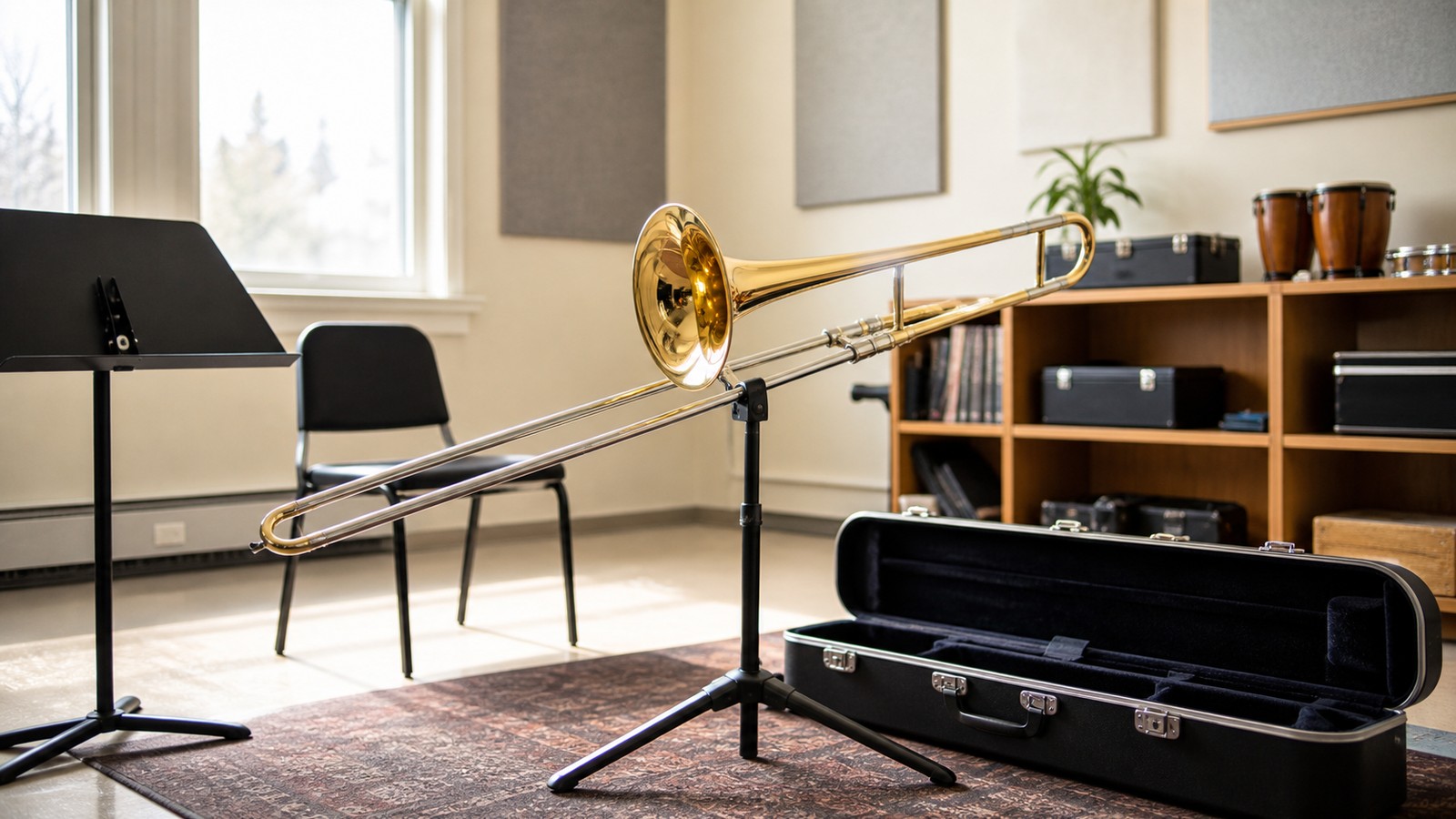
Mouthpiece fit, case quality, and water key function also deserve attention. Most beginner trombones ship with a general student mouthpiece, often similar to a 12C size, which is a workable start for many players. The case should protect the slide and bell separately, close securely, and be manageable for school hallways, buses, and practice-room storage.
Brands and Models Worth Comparing
Yamaha student trombones are popular because they tend to be consistent, repairable, and easy to recommend across school programs. They often cost more than bargain imports, but the resale value and parts support can soften the long-term cost. For many families, that reliability is exactly what they are paying for.
Bach, Conn, King, Jupiter, and Eastman also appear often in school settings, depending on region and dealer support. A brand is not a guarantee by itself, but well-known student lines usually give repair shops a better chance of finding parts and keeping the instrument playable. Local teacher preference matters because that teacher sees which horns survive daily student use.
Avoid choosing only by finish or by a listing that looks impressive online. A clean photo cannot show slide compression, hidden dents, poor alignment, or weak solder joints. If possible, buy from a music store with a return policy, a school-approved rental program, or a seller willing to let a teacher inspect the instrument.
How Parents and Adult Beginners Should Shop
Parents should start with the band director's recommendation, then compare that advice against local repair access and budget. A teacher may know which brands the school can support, which cases fit the storage room, and which models have caused problems for past beginners. That practical information is often more valuable than a national ranking.
Adult beginners can think slightly differently. A full-grown player may appreciate a more responsive intermediate horn sooner, but it is still wise to begin with comfort, slide condition, and tone stability rather than prestige. If the budget allows, testing two or three instruments side by side can reveal whether a higher price actually feels better.
Red Flags to Avoid Before Buying
Be careful with instruments that have sticky slides, missing braces, strong musty case smell, loose water keys, crushed handslides, or no clear brand support. A cheap trombone becomes expensive when repairs cost more than the instrument is worth. If a seller cannot explain the model, age, service history, or return terms, slow down and get a second opinion.
Accessories That Belong in the First Case
A beginner does not need a drawer full of gadgets, but a few basics help the instrument last. Slide cream or slide lubricant, a small spray bottle, a cleaning snake, a soft cloth, and a name tag for the case are practical first purchases. Many students also need a folding music stand at home so practice posture matches the band room.
The mouthpiece should be kept clean and stored safely. Dropping a mouthpiece can bend the shank and make it difficult to remove, while sharing one is a hygiene problem. A small mouthpiece brush and regular rinsing routine are simple habits that prevent unpleasant buildup.
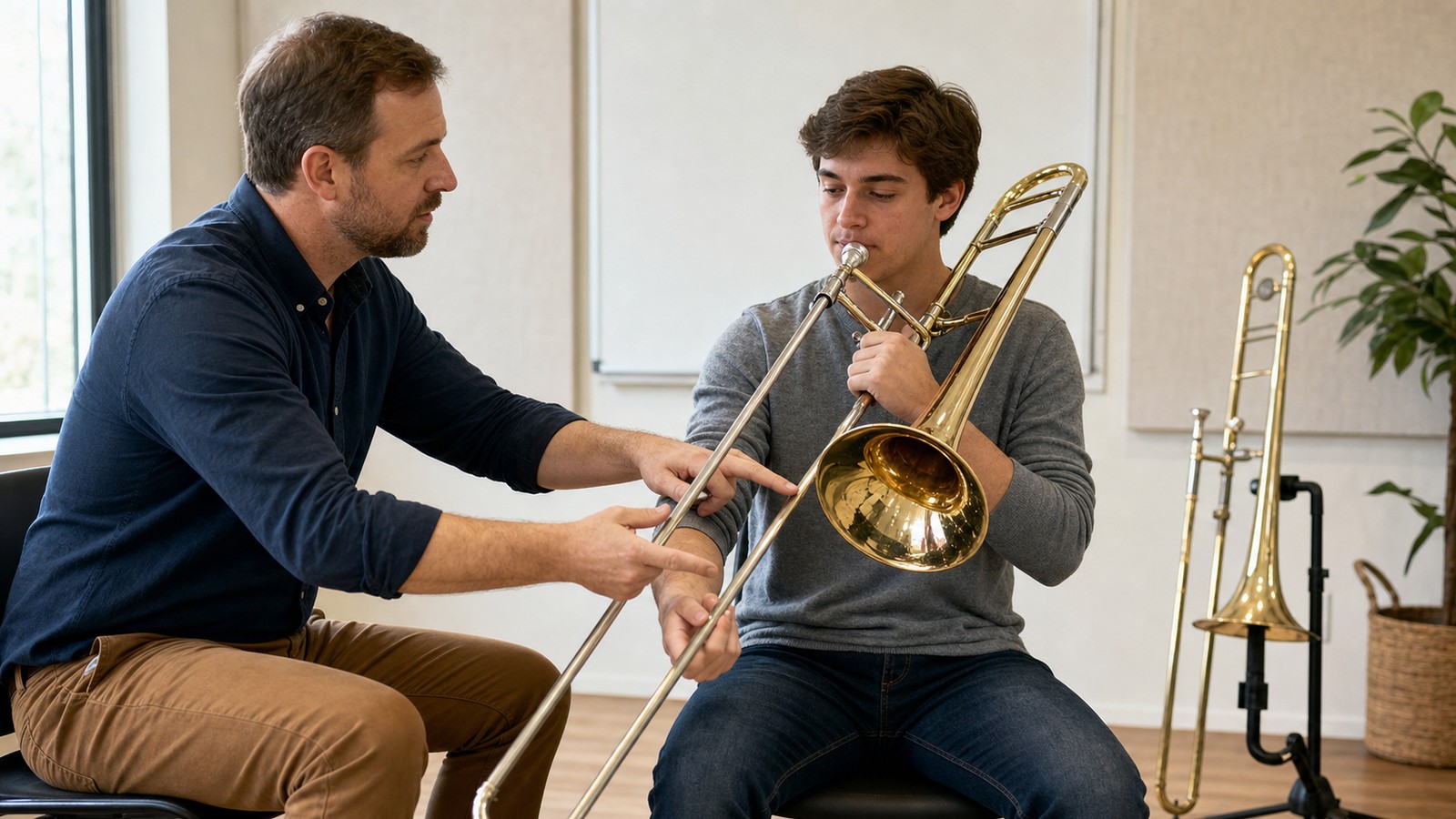
Lessons are not an accessory, but even a short lesson series can save frustration. A teacher can adjust hand position, breathing, slide reach, and embouchure before bad habits settle in. That support often matters more than jumping to a more expensive horn too early.
Final Buying Advice for a First Trombone
The safest beginner choice is a straight tenor trombone from a reputable student line, bought or rented through a source that offers repair support. It should have a smooth slide, sturdy case, comfortable balance, and a tone that responds without heroic effort. If the player can try it under a teacher's ear, even better.
Do not overbuy out of fear, and do not underbuy so far that the instrument discourages practice. The right beginner trombone is the one that fits the player, survives the routine, and leaves room for musical growth. When the horn helps a student show up again tomorrow, it has done its most important job.
How to Test a Beginner Trombone in Person
An in-person test does not need to be complicated. Open the case, check whether the instrument comes out without forcing the slide, and look for obvious dents around the handslide, bell rim, braces, and tuning slide. If a teacher or experienced player is present, ask them to play a few comfortable tones and move through several positions. A beginner may not yet know what a healthy horn should feel like, but an experienced player can quickly tell whether the slide is clean, centered, and worth further consideration. Even a short test can prevent a family from buying an instrument that looks fine but fights the player every day.
When a Slightly Better Horn Is Worth It
Spending a little more can make sense when the upgrade buys reliability rather than decoration. A better case, smoother slide, consistent tuning, and easier repair support all affect the daily experience. Those are practical improvements, not luxury extras. If the student is committed to band and the family can afford the difference, choosing the stronger student model may reduce frustration over several years.
That does not mean beginners need professional equipment. Expensive horns can be heavier, more sensitive, and less forgiving than a sturdy student trombone. A first-year player usually benefits more from an instrument that responds predictably than from one designed for advanced tone color. The sweet spot is a horn that is good enough to grow on but simple enough to manage.
Think about the full ownership period rather than the checkout price alone. A reliable used Yamaha or Bach student horn, for example, may cost more upfront than an unknown bargain, yet hold value better and draw fewer repair surprises. That long view is often where the best beginner value appears.
Matching the Trombone to the Player
The player's size, schedule, and temperament should influence the final decision. A smaller student may need extra help with farther positions, while an adult beginner may be ready for a slightly more responsive horn sooner. A busy student needs a case that travels well; a careful home learner may value tone and slide feel more than ruggedness.
Motivation matters too. If a student loves how the trombone sounds and feels, they are more likely to practice through the awkward first weeks. The best beginner trombone is not only a product choice. It is a tool that makes regular playing feel possible, and that is what gives lessons and school rehearsals something real to build on.
Why Beginner Recommendations Can Differ
Two honest teachers may recommend different beginner trombones because their local situations are different. One school may have a repair shop nearby that stocks parts for certain brands, while another may use a rental fleet built around a different maker. A jazz-focused teacher may care about one response feel, while a concert-band director may care more about durability and section consistency. Those differences do not mean one person is wrong. They mean the best beginner trombone is partly a musical choice and partly a support-system choice.
A Smart Shortlist Strategy
Instead of trying to rank every student trombone on the market, build a shortlist of three or four realistic options. Include one school-approved rental, one reputable new student horn, and one used instrument that can be inspected. This keeps the search focused while still giving the family a fair comparison.
Judge each option by the same standards: slide condition, tone response, case quality, repair support, return policy, and total cost after accessories. A horn that wins only on appearance should not win the purchase. A horn that wins on playability and service support deserves serious attention.
The final decision should feel calm. If the instrument fits the player, has a healthy slide, comes from a trustworthy source, and leaves room in the budget for basic care or lessons, it is probably a strong first trombone. The student can always refine preferences later after real playing experience.