Learning Trombone One Clear Habit at a Time
The trombone looks simple from a distance: breathe in, buzz, move the slide, and sound comes out. In practice, the instrument rewards patience because every good habit depends on another one. Posture affects breathing, breathing affects tone, tone affects pitch, and slide accuracy depends on both the ear and the arm. A beginner does not need to master all of that in one week. The best way to learn trombone is to build a calm routine: assemble the instrument carefully, stand or sit with balance, form a relaxed embouchure, make a steady buzz, learn the first slide positions, and practice short musical patterns every day. Once those pieces feel familiar, songs, scales, and ensemble playing become much less mysterious.
A: Ten to twenty focused minutes is enough at first if the routine is consistent.
A: The hand is learning distances while the ear is learning pitch, so both need slow repetition.
A: Brief buzzing can help, but it should not replace full-instrument tone practice.
A: Start in a comfortable middle range before stretching higher or lower.
A: Yes, especially when paired with careful listening rather than constant needle watching.
A: Use steadier air, rest often, and reset the mouthpiece instead of forcing the sound.
A: Use a short melody with only a few positions and a rhythm the player can count aloud.
A: Balanced posture opens the breath and lets the slide arm move without pulling the horn.
A: Early lessons are valuable because they correct habits before they become automatic.
A: A steady tone, safe handling, basic positions, and a repeatable practice routine.
Start With Safe Assembly and Handling
Before a beginner plays a single pitch, the trombone needs to be handled like two delicate parts that must stay aligned. Hold the bell section securely, attach the slide without twisting, and tighten the slide lock only when the instrument is not being played. The handslide is the heart of the instrument, and even a small dent can make it drag.
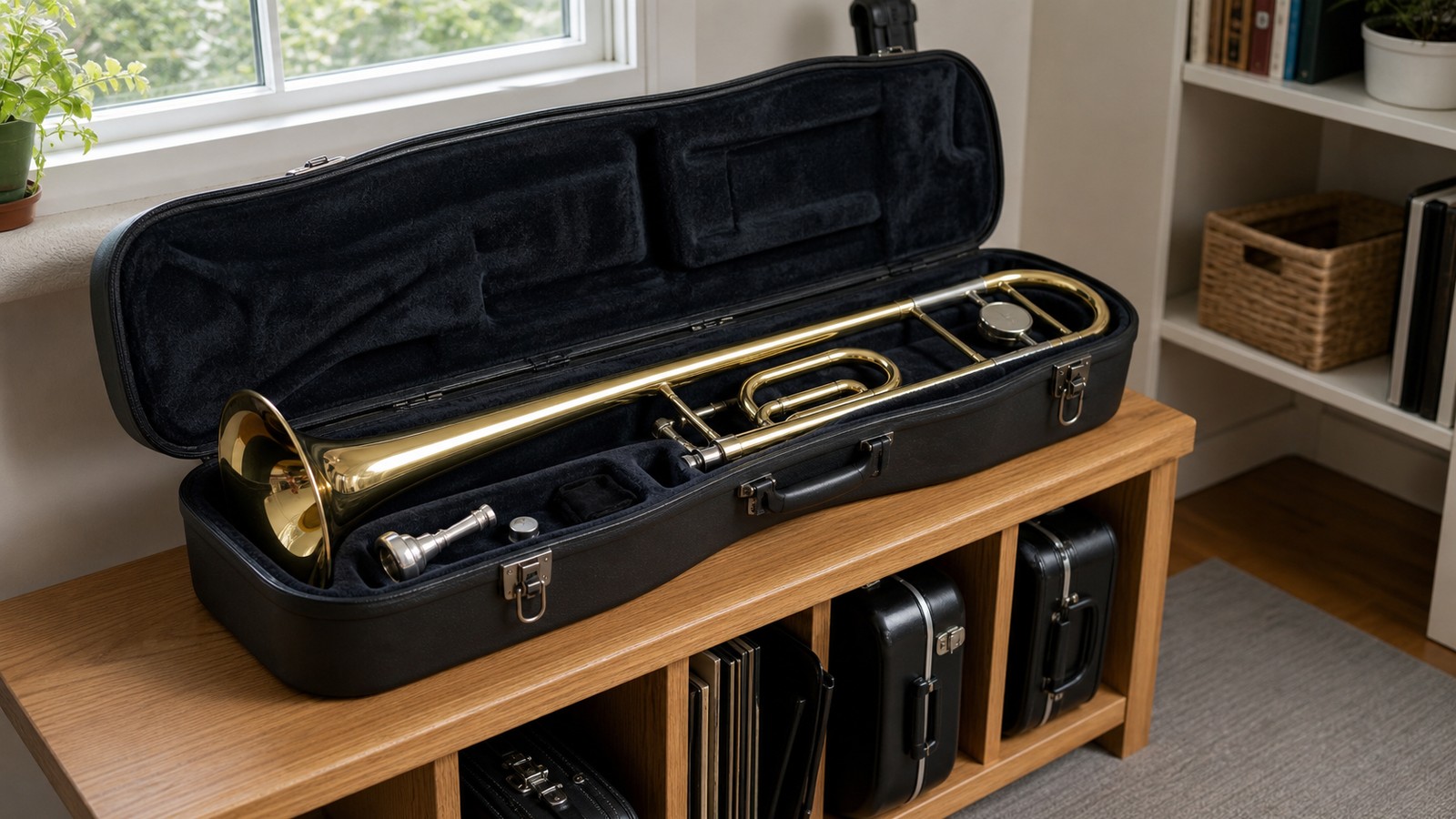
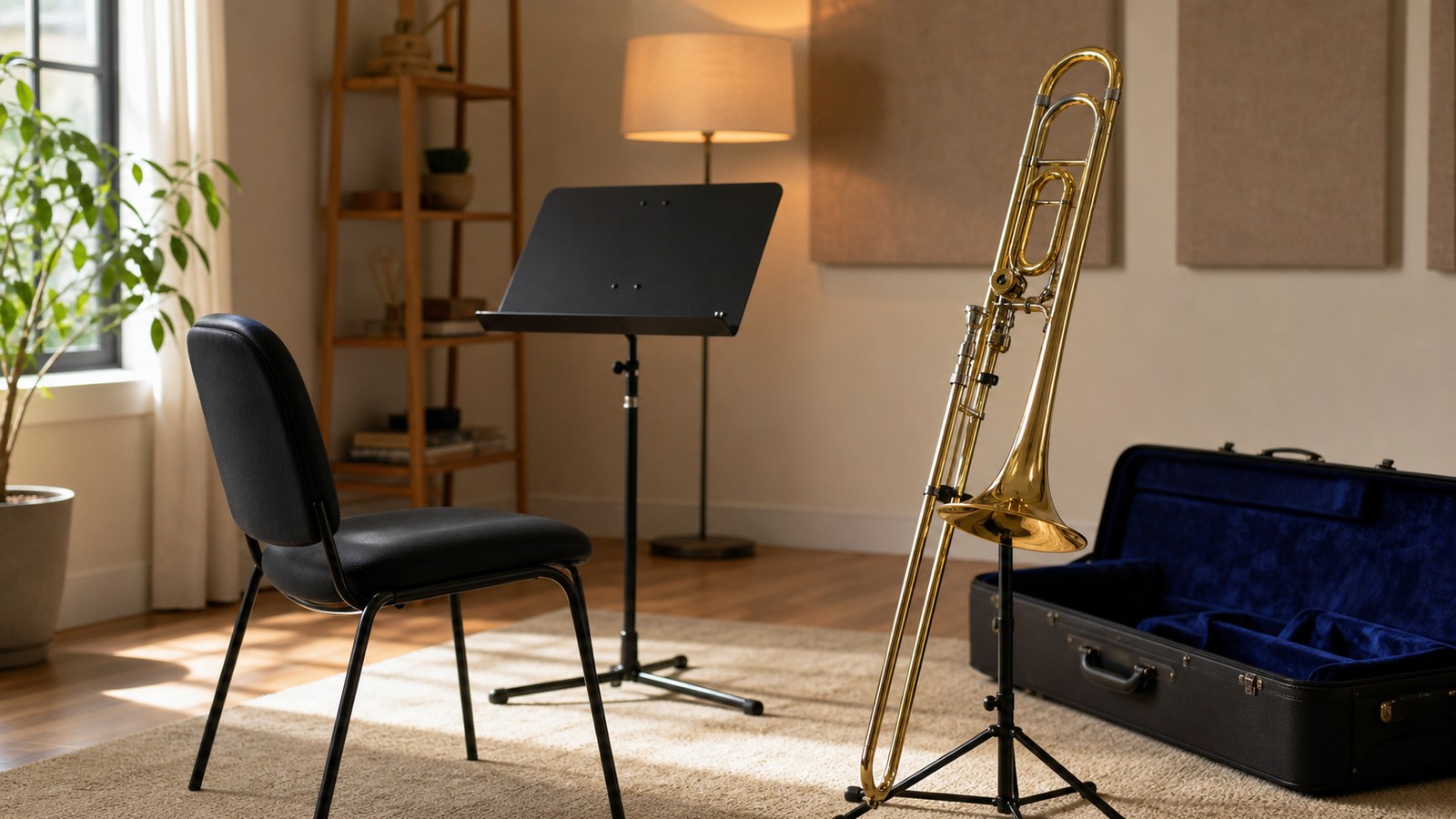
Always rest the trombone on a stand, in the case, or in both hands. Leaning it against a chair is an invitation to a bent slide. Early care habits may feel slow, but they save repairs and teach respect for the instrument.
Set Your Posture Before You Breathe
Good posture gives the air somewhere to go. Sit tall near the front of the chair or stand with both feet steady, shoulders easy, and head level. Bring the mouthpiece to the face instead of pushing the face down toward the mouthpiece. That one habit keeps the throat open and helps the slide arm move freely.
Build a Relaxed First Sound
The first sound begins with air, not pressure. Shape the lips as if saying a firm but relaxed m, place the mouthpiece gently, breathe low and quietly, then release the air with a clean start. The buzz should feel focused, not squeezed. If the sound breaks, use less force and more steady airflow.
Beginners often press the mouthpiece harder when the tone feels weak. That may work for a few seconds, but it causes tension and makes higher playing harder later. A better approach is to reset the corners of the mouth, breathe again, and aim for a centered middle-register tone.
Long tones are the simplest way to train this. Hold one comfortable pitch for four counts, rest for four counts, then repeat. Listen for steadiness from start to finish, and end the sound cleanly instead of letting it collapse.
Learn the First Slide Positions
Unlike valve instruments, the trombone asks the player to place the slide by distance. First position is all the way in, second is a small reach out, third is near the bell, fourth is a little beyond the bell, and the farther positions continue down the slide. A teacher or fingering chart helps, but the ear must eventually guide the final adjustment.
Do not snap the slide randomly and hope the pitch lands. Move with relaxed speed, arrive early, and listen. Many beginners benefit from marking the feel of each position with slow patterns before trying fast songs.
Use Tonguing Without Harsh Attacks
Tonguing is the way players start separate tones clearly. Think of a light dah or tah syllable, with the tongue briefly interrupting the air rather than punching the sound. If every start feels explosive, soften the tongue and keep the air moving through the release.
Practice Rhythm Before Speed
The slide can tempt beginners to rush because the motion looks big. Slow rhythm work prevents that. Clap the rhythm, count aloud, then play it on one pitch before adding slide changes. This separates timing from coordination and makes mistakes easier to hear.
Use a metronome at a comfortable pace, but do not stare at it as if it will solve everything. The goal is to feel an even pulse in the body. Short daily work with quarter notes, half notes, and rests builds the control needed for real music.
When a passage falls apart, reduce it to two beats. Play those two beats correctly several times, add the next two, then connect them. Trombone progress often comes from smaller pieces practiced with more attention.
Connect Ear Training to the Slide
Trombone intonation is physical and musical at the same time. The slide gives continuous adjustment, but that freedom only helps if the player can hear when a pitch is high or low. Matching a piano, drone, tuner, or teacher can train the ear while the hand learns tiny corrections.
A tuner is useful, but beginners should not chase the needle after every sound. Play a stable tone first, then glance at the tuner to confirm what the ear suspects. Over time, the player learns that positions are neighborhoods, not exact painted lines.
Make Daily Practice Short and Specific
Fifteen focused minutes can beat an unfocused hour. A simple routine might include assembly, breathing, long tones, slide-position patterns, one rhythm exercise, and a short song. Write down one goal for the session so practice does not become random repetition.
Common Beginner Problems and Fixes
If the sound is airy, check whether the corners of the mouth are firm enough and whether the air is steady. If the slide feels late, slow the rhythm and move sooner. If the player misses positions, sing or buzz the pattern first so the ear knows where the pitch should go.
Fatigue is also normal. Trombone uses facial muscles that need gradual conditioning. Rest as much as you play in the beginning, and stop before tension turns into pain.
A Simple First-Month Plan
During the first week, focus on setup, posture, breathing, and a steady sound in first position. In the second week, add a few nearby slide positions and easy rhythm patterns. In the third week, connect those positions into short songs or method-book lines. By the fourth week, begin listening more critically for tone quality, pitch center, and clean starts.
Progress will not feel even every day. Some sessions are about discovering a problem, not solving it instantly. The important part is returning to the same clear fundamentals instead of changing everything at once.
A beginner who can assemble the horn safely, make a relaxed tone, count simple rhythms, move to early positions, and practice consistently is already on the right path. From there, lessons, ensemble playing, and better music will have something solid to build on.
How to Read Early Trombone Music
Most beginners meet trombone music through bass clef, simple rhythms, and a small group of comfortable pitches. At first, reading can feel separate from playing because the eyes, breath, tongue, and slide are all working at once. Slow the process down. Say the rhythm, name the slide positions, rehearse the motion in the air if needed, and only then play. This turns the page into a set of manageable decisions instead of a wall of symbols.
Playing With Other Musicians
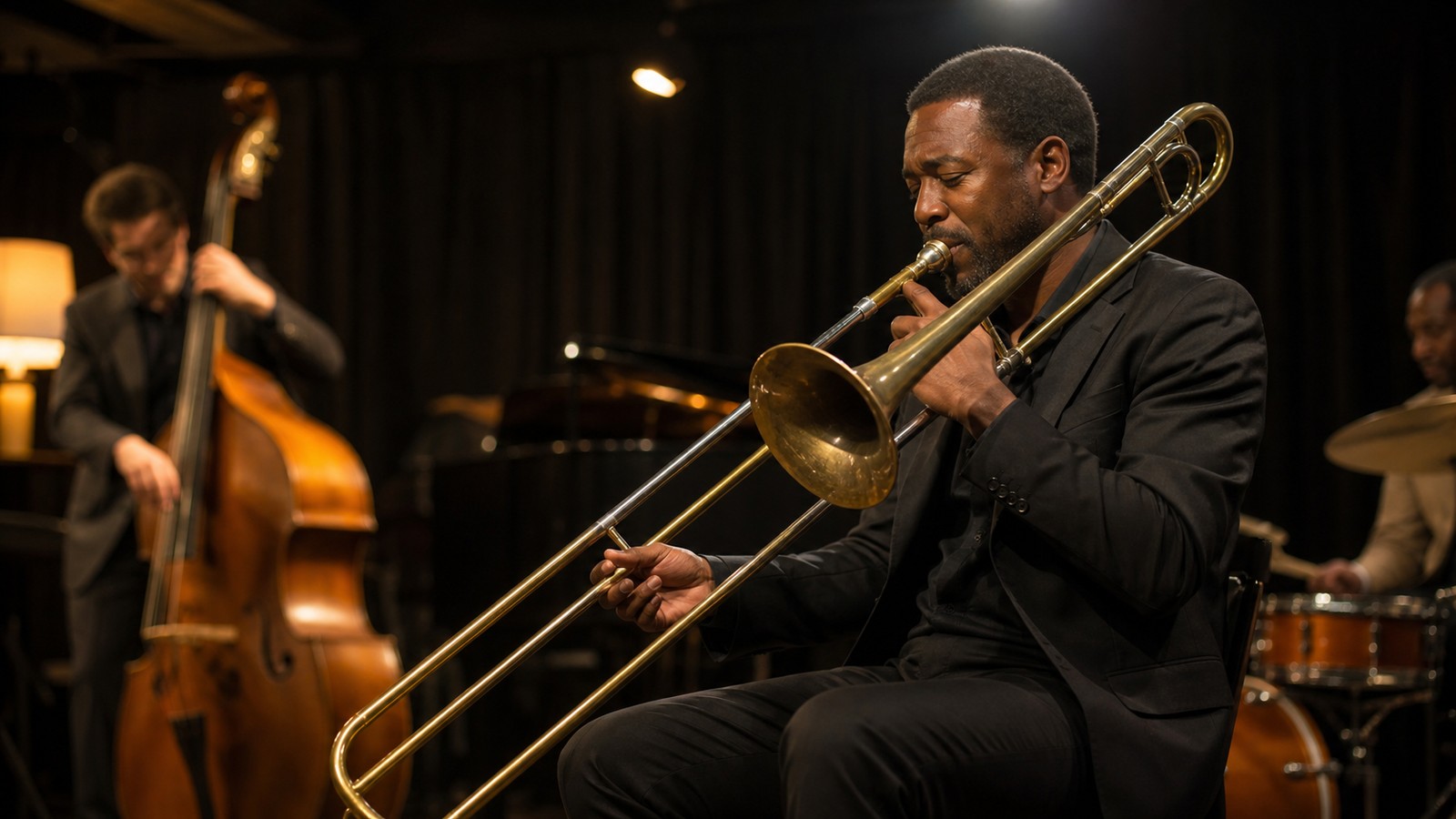
Ensemble playing teaches skills that solo practice cannot. A beginner learns to enter after rests, match volume, listen across the room, and keep going when a small mistake happens. Trombone parts often support harmony, so the player may not always have the tune. That can be a gift because it develops listening and blend early.
In a band room, accuracy also becomes social. A late slide change or loud wrong pitch affects nearby players, which encourages careful counting and preparation. Beginners should not be embarrassed by that pressure. Everyone in the ensemble is learning how personal habits affect the group sound.
The best ensemble habit is to mark difficult spots and practice them at home. A student who fixes two measures between rehearsals makes the next class easier for the whole section. That sense of contribution is one reason school band can be so motivating.
Keeping the Instrument Ready to Play
Daily progress depends on an instrument that works the same way tomorrow as it did today. Wipe the mouthpiece, empty moisture safely, put the slide away locked, and keep the case closed when the horn is not in use. A beginner who learns these habits early spends more time making music and less time dealing with preventable problems.
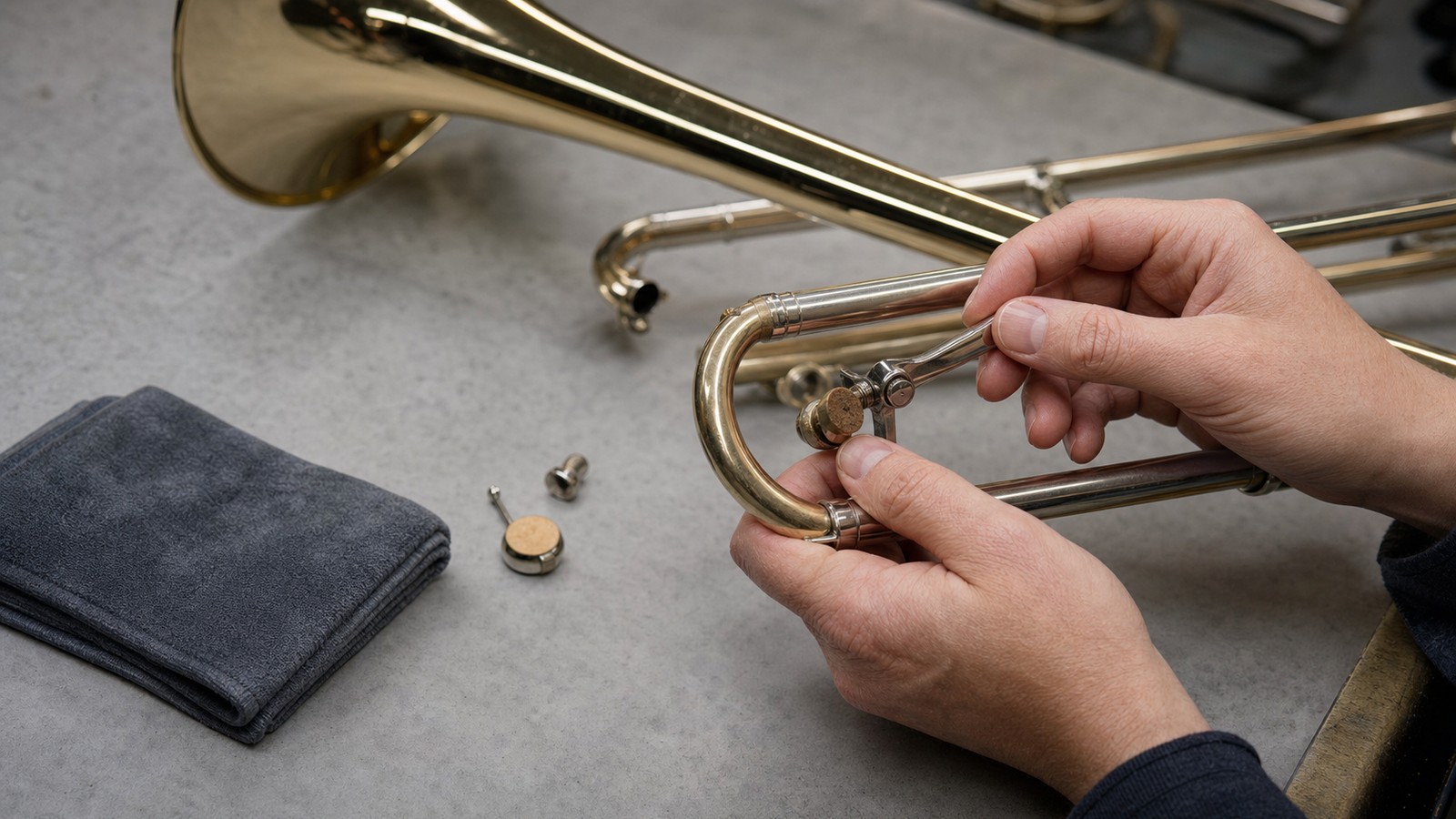
Slide care is especially important because the handslide affects every pitch change. If motion becomes rough, ask a teacher whether cleaning, lubricant, or repair is needed. Do not force the slide through resistance. Forcing it may turn a small maintenance issue into a dent or alignment problem.
When Lessons Make the Biggest Difference
A beginner can learn many basics from school band and careful practice, but lessons speed up the feedback loop. A teacher can hear whether the sound is supported, see whether the slide arm is tense, and correct posture before the player normalizes awkward habits. Even a few early lessons can make home practice more productive because the student knows what to listen for.
Troubleshooting First Songs
When a first song keeps falling apart, do not simply repeat the whole line from the beginning. Find the smallest spot that causes trouble. It may be a rhythm, a breath, a slide change, or a pitch that does not speak cleanly. Practice that one spot slowly, then connect it to the measure before and after.
Many beginners also forget to count rests. On trombone, coming in late can feel like a slide problem because the hand rushes to catch up. Count aloud, tap the pulse, and enter with a prepared breath. A clean entrance often solves more than the player expected.
If the song sounds choppy, practice it on air and slide motion without full volume. Then play it softly, still keeping the rhythm steady. This lets the body learn coordination without the pressure of a big sound. After the motion feels dependable, add more tone.
Adding Range, Scales, and Confidence
Range should grow gradually. Beginners often want higher pitches right away, but forcing them can create pressure habits. Start with comfortable tones, expand by small steps, and keep the sound open. A higher pitch that arrives with strain is not yet a useful skill.
Scales are not just assignments; they are maps of the instrument. A simple B-flat concert scale can teach slide positions, air direction, rhythm, and listening all at once. When scales begin to sound musical instead of mechanical, the player is ready for more challenging songs.
The Habit That Matters Most
The most important beginner habit is returning to the instrument before mistakes feel permanent. A new trombonist will miss positions, crack sounds, forget rhythms, and sometimes feel clumsy. That is normal. The player who calmly resets, breathes again, and practices one small skill at a time will improve faster than the player who only practices when everything feels easy. Consistency also teaches the body that trombone is a familiar routine, not a special event that requires perfect conditions. That quiet familiarity is where confidence begins and keeps growing through each rehearsal.