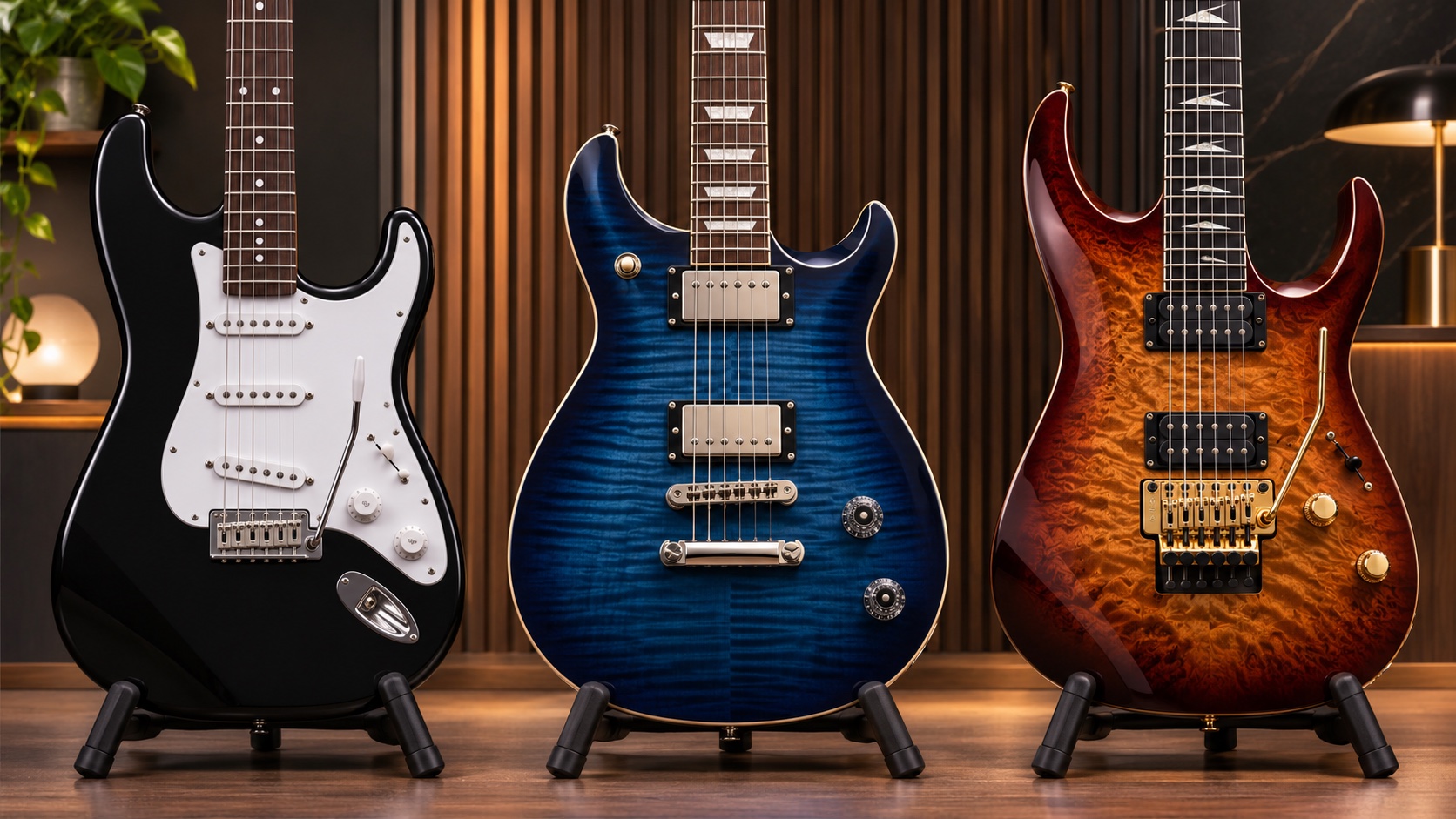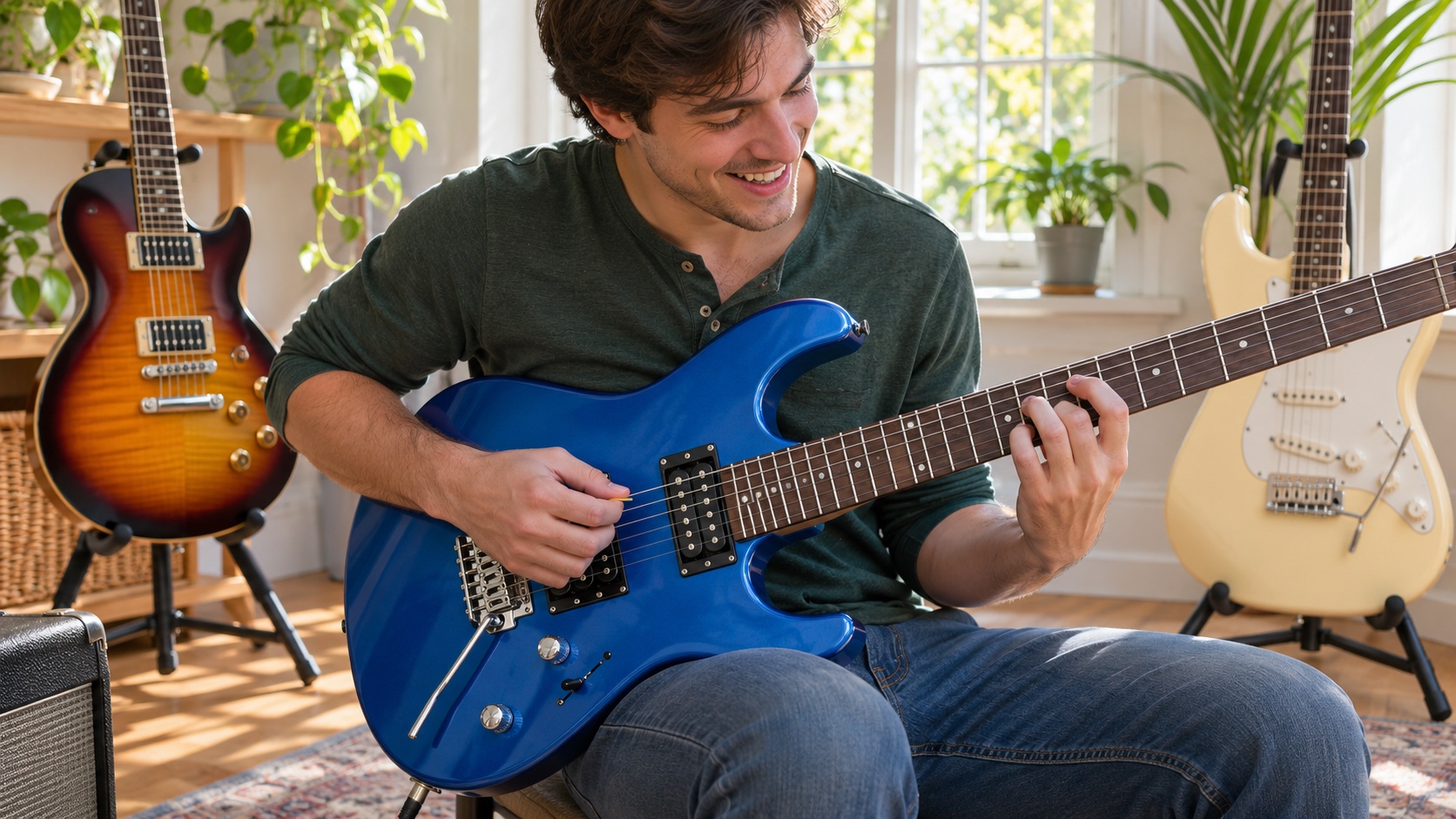
A Good First Electric Guitar Removes Obstacles
The best beginner electric guitar is stable enough to stay in tune, comfortable enough to practice daily, and musically flexible enough to keep curiosity alive. It does not need premium ornament or professional hardware, but it does need competent fretwork, a usable setup, and electronics that make the player’s favorite sounds possible. The models below represent several sensible paths rather than one universal winner. Availability and specifications can change, so compare the current version, play the exact instrument when possible, and reserve part of the budget for setup and amplification.
A: It is versatile, but a simpler layout may better match a focused style.
A: No. Choose size from actual reach, hand spacing, and posture.
A: No. They also serve jazz, blues, pop, and many clean styles.
A: Not necessarily, though it adds setup and tuning considerations.
A: Enough to buy a controllable practice amp that makes the chosen guitar enjoyable.
A: Yes, when its fit, construction, and sounds continue to support progress.
A: Only when the guitar, amplifier, and accessories are each suitable.
A: It adjusts playability, intonation, relief, and hardware for the player.
A: No, but condition and repair costs need informed inspection.
A: The one that best fits the player’s body, music, and complete rig budget.
What Beginners Should Prioritize
Playability comes first. The neck should allow relaxed chords, the fret ends should feel smooth, and the strings should sit at a height that supports clean notes without making the hand work unnecessarily hard. Weight and balance matter because a guitar that slides off the leg or pulls on the shoulder distracts from rhythm and pitch. A qualified setup can correct many issues, but it cannot make an oversized body or unsuitable neck profile fit the player. Choose a pickup layout that covers the music you want to learn. Single coils usually provide clear attack and detailed clean tones, while humbuckers deliver a thicker response and reject much of the electrical hum associated with traditional single coils. HSS layouts place a humbucker at the bridge with single coils elsewhere, giving beginners a broad palette. Simple controls are useful, but versatility can reduce the urge to replace the guitar after the first few months.
Squier Sonic Stratocaster: Accessible Classic Layout
The Sonic Stratocaster is a practical entry into the familiar double-cut design. Its contoured body, C-shaped neck, and five-way switching make it easy to explore clean chords, blues phrasing, pop rhythm, and brighter rock sounds. Versions with three single coils emphasize classic clarity; HSS versions add a fuller bridge sound for distortion. Beginners who enjoy learning how pickup position changes tone get useful variety without complicated controls.
Check the tremolo setup, nut slots, and fret ends on the individual guitar. A vibrato bridge adds expression but also introduces another adjustment point. Players who do not plan to use it can leave the arm off and have the bridge set for stability. The Sonic line is especially compelling when a retailer includes a careful inspection or setup rather than shipping the guitar exactly as it left the carton.
Squier Affinity Telecaster: Simple and Direct
The Affinity Telecaster offers a straightforward two-pickup layout, a comfortable modern neck, and a body shape that sits securely when seated. Its bridge pickup can provide crisp country articulation and cutting rock rhythm, while the neck pickup softens the attack for blues, jazzier practice, and warm melody. The fixed bridge reduces moving parts, which appeals to students who want to focus on tuning, chord changes, and timing. The Telecaster’s body lacks the deep forearm contour found on many Strat-style guitars, so try it against your picking arm. Also listen for electrical noise at your normal practice gain; traditional single coils can hum near lights and computers. That is a characteristic to manage, not necessarily a defect. The model suits players drawn to indie, country, roots rock, punk, and direct clean sounds.
Yamaha Pacifica 112V: A Versatile Step-Up Choice
The Pacifica 112V is frequently recommended because its HSS pickup arrangement covers clear neck sounds, mixed-position rhythm, and a stronger bridge voice. The body contours are approachable, and the controls remain simple enough for a first instrument. Compared with many starter guitars, it offers room to grow into rehearsals, effects, and recording without immediately exposing a major limitation.
Use the bridge humbucker for overdriven rock, then compare the neck and middle positions for cleaner practice. Confirm the current model’s coil-splitting or switching functions because specifications can vary by version and market.
The vibrato should return predictably after gentle use when strings are installed correctly and the nut is prepared. Players who want one guitar for many genres should place the Pacifica high on the audition list.
Ibanez AZES: Comfortable Modern Versatility
The AZES series was designed to make modern Ibanez ideas accessible to beginner and intermediate players. Its 25-inch scale sits between common full and short scales, and the rounded bridge saddles reduce sharp contact points under the picking hand. Switching options provide numerous usable combinations, making the guitar suitable for students interested in pop, worship, funk, alternative rock, and contemporary lessons. More switching choices require a little patience. Beginners should first learn three dependable sounds: a clear neck tone, a balanced rhythm tone, and a stronger bridge tone. Add the remaining combinations after those references become familiar. Inspect the output jack, bridge adjustment, and fretwork as with any mass-produced instrument. The AZES is a strong candidate for a player who values ergonomic details and tonal exploration.
Epiphone Les Paul Special or Studio E1: Thick Sound, Familiar Shape
Entry-level Epiphone Les Paul variants pair two humbuckers with the substantial voice associated with blues and rock. The shorter scale feels slightly softer than many 25. 5-inch designs, and the fixed bridge simplifies tuning changes. A Special-style model keeps cost and controls modest, while a Studio-oriented version may add finish or construction refinements. Both make sense for students who know they prefer warm sustain and overdriven rhythm.
Single-cut bodies can feel different when seated and may place the neck farther from the torso than expected. Weight varies, so try the actual guitar with a strap. Check the angled headstock carefully during ownership and use a stable stand or case. These models reward players whose musical goals center on classic rock, heavier blues, and strong humbucker tones rather than glassy single-coil sounds.
Ibanez GRX70QA: Rock Range With an HSH Layout
The GRX70QA uses humbuckers at the neck and bridge with a middle single coil, providing forceful distorted sounds plus useful intermediate colors. Its slim-feeling neck and sculpted double-cut body appeal to beginners interested in hard rock, metal, lead technique, and fast position changes. The visual maple-style top treatment gives it stage character without moving into premium pricing. A floating or vibrato bridge should be evaluated for tuning stability and adjusted to the player’s intended string gauge. If alternate tunings are a priority, a fixed-bridge model may be easier. High-output sounds can hide uneven technique, so practice clean as well as distorted. The GRX is worth auditioning when a conventional vintage-style guitar feels bulky or sonically restrained.
Squier Mini Stratocaster: A Genuine Small-Scale Option
The Mini Strat’s reduced scale and compact body suit younger students, travelers, and players whose reach makes a full-size neck uncomfortable. Lower string tension can ease early fretting, and the familiar three-pickup arrangement provides several bright tones. A properly sized guitar helps the student maintain a neutral wrist and reach tuning machines without stretching.
Small does not mean temporary for every player, but confirm that the reduced spacing is not too cramped. Adults with broad fingers may prefer a 24-inch guitar rather than a mini scale.
Compact instruments also respond differently to heavier picking and alternate tunings. Select the Mini because it fits the player’s body, not merely because the person is new.
Jackson JS Series Dinky: Beginner Platform for Heavier Music
JS Series Dinky models offer ergonomic double-cut bodies, flatter-feeling fingerboards, and humbucker power aimed at rock and metal. The neck shape supports single-note practice and power-chord movement, while the visual design can motivate a student who does not connect with traditional shapes. Fixed-bridge versions are especially practical for beginners who change tunings or want minimal maintenance. Some variants use tremolo systems, different pickup layouts, or scale lengths, so read the exact specification. Test clean tones even if distortion is the goal; a balanced guitar should produce intelligible notes before gain is added. Players should also compare seated balance because pointed body shapes can contact the leg differently. The right JS model is a focused tool rather than a compromise for a heavy-music student.
Gretsch Streamliner Jet Club: Character Without Excess Complexity
A Jet Club-style Streamliner gives beginners a chambered or weight-relieved single-cut feel, two humbucking pickups, and a distinctive voice that works across rockabilly, indie, blues, and classic rock. The fixed bridge and uncomplicated switching make operation approachable. Its tone can be clearer and more percussive than players expect from a dual-humbucker guitar, which helps rhythm parts stay defined. Because model names and appointments evolve, verify current construction and controls.
Check upper-fret access, neck balance, and the response of both volume settings. A player inspired by retro aesthetics may practice more consistently, but the guitar still needs to pass the same fret, setup, and tuning tests. Style is valuable when it reinforces rather than replaces function.
Budget for the Amplifier and Setup
An electric guitar is only half of the sound. A small modeling amplifier or headphone-capable practice unit lets a beginner hear clean, overdriven, and effect-based sounds at reasonable volume. Spend enough to avoid an amplifier that is noisy, harsh, or difficult to control. A good amp can make a modest guitar enjoyable, while a poor amp can make a capable instrument seem lifeless. Include a cable, tuner, strap, picks, stand, spare strings, and setup. Ask the shop to explain string changes and basic controls. If buying a pack, evaluate each component instead of assuming the bundle is automatically economical. The best first rig is coherent: a comfortable guitar, an amplifier that suits the practice environment, and accessories that remove friction from daily use.
How to Choose Among the Finalists
Select three models that fit the player’s music and body. Tune them, use the same amplifier settings, and play identical chords and single-note exercises. Turn the amplifier gain down so fret noise, weak notes, and pickup balance remain audible.
Compare seated and standing comfort for at least ten minutes. Ask a teacher or experienced technician to identify setup issues without choosing the aesthetic on the student’s behalf. The winner should make basic technique feel manageable and produce at least two sounds the player genuinely wants to use.
Do not buy extra complexity for an imagined future if the present instrument feels awkward. Conversely, avoid the absolute cheapest option when a modest increase clearly improves fretwork, tuning, or comfort. A reliable first guitar creates momentum, and momentum is the feature that keeps a beginner playing.
Do Not Let the Model Name Replace Inspection
Beginner lines are produced in volume, so two guitars with the same name can leave the store with different fret feel, nut height, weight, and setup. Ask to compare more than one example when possible. The best individual guitar may be the less dramatic color or the unopened one a technician has not yet checked. Treat online praise as a reason to audition a model family, not as proof that the box in front of you is ready. After purchase, keep the receipt, model information, and setup notes. Play daily during the return window and test every switch, tuner, and fret. Small issues are easiest to resolve while seller support is immediate. A responsive retailer should distinguish a normal adjustment from a defect and explain the next step clearly.
Let Inspiration Break a True Tie
If two finalists are equally comfortable, stable, and useful, choose the one you most want to pick up.
Visual connection is legitimate after the functional tests pass.