A Bright Bell in the History of Sound
Few instruments have a knack for stealing time the way the trumpet does. It can whisper like a confidant and blaze like a siren. On jazz records, the trumpet is often the voice that makes an album unforgettable—the first phrase you hum, the last note that hangs in the air when the needle lifts. From early hot jazz 78s to boundary-breaking LPs and contemporary digital masterworks, the trumpet has delivered moments that altered the art form. This tour dives into the landmark tracks and the players whose breath turned brass into legend.
A: A memorable motif, distinctive tone, perfect framing by the band and mix, and cultural timing.
A: Absolutely—Harmon whispers secrets, cup adds nostalgia, straight brings classical edge, plunger talks back.
A: Tape saturation and playback chain can emphasize warmth and room, flattering brass transients.
A: Sample one classic from each era, then follow your ear to the player or producer you love most.
A: Both—studio captures nuance; live documents risk and electricity that produce singular peaks.
A: Crucial—ride cymbal pattern, bass feel, and comping density decide how the trumpet breathes.
A: Often—careful remasters can clarify trumpet presence and reveal ambience lost in older transfers.
A: Silence is punctuation; rests heighten tension and make the next phrase iconic.
A: Focus on attack shape, vibrato speed, register use, and favorite articulations or turns.
A: Look for renowned engineers, famous rooms, and rhythm sections—great trumpet moments follow great teams.
Why Trumpet Moments Hit So Hard
The trumpet’s power lies in its contradictions. It’s lyrical yet percussive, singing but sculpted by breath and metal. On record, the horn’s overtone-rich spectrum punctures the mix, letting a single note carry intent, attitude, even philosophy. Producers and engineers learned early how to stage the instrument—placing it just so against piano comping, bass pulse, and cymbal shimmer—so that when the soloist enters, the music seems to tilt toward revelation. The great trumpet moments aren’t just displays of technique; they’re decisions about time, tone, and truth.
Louis Armstrong — The Opening of the Modern Solo
When listeners talk about “the moment the future began,” they often mean “West End Blues” from 1928. Armstrong’s unaccompanied cadenza at the top is a thesis on swing, timbre, and rhythmic freedom. Each burst of sound relocates the bar line, implying a bigger rhythmic grid than the band beneath him. It’s not merely virtuosity; it’s architecture. Later Satchmo sides—like “St. Louis Blues” with that regal lip vibrato and burnished, vocal phrasing—cement the trumpet as narrator, not just section leader. So many later iconic moments—those skyward pickups, that elastic phrase shape—are echoes of Louis.
Dizzy Gillespie — Angles of Fire
Bebop’s harmonic fireworks needed a trumpet that could dance with them, and Dizzy Gillespie made that dance look like a celebration. On records such as “A Night in Tunisia,” the trumpet enters like a comet: crisp articulation, fearless interval leaps, rhythmic displacements that tease the beat and then land it right on the money. Dizzy’s signature upturned bell is a symbol, but the real icon is the sound—diamond-bright, slyly humorous, and fluent in both Afro-Cuban clave and bebop code. Those breaks and tag endings? They taught later players that wit is a color in the trumpet palette.
Miles Davis — The Art of Saying More with Less
It’s hard to crown a single “most iconic” Miles moment; there are too many. But three records define the shape of cool for generations: “’Round About Midnight” (the after-hours glow), “Kind of Blue” (the blueprint of modal lyricism), and “Sketches of Spain” (a cinematic expansion of trumpet tone). On “So What,” Miles places notes like stars, letting the modal harmony breathe so you can hear the negative space. On “Freddie Freeloader,” every bent note and shaded attack turns the blues into philosophy. And when you reach “Concierto de Aranjuez,” the trumpet becomes landscape—horizons inside a bell. Even on the electric pivot of “Bitches Brew,” his wah-filtered stabs and plaintive calls redefine what “lead voice” can mean in a storm of sound.
Clifford Brown — Joy as a Technical Standard
If tone could grin, it would sound like Clifford Brown. His work on “Study in Brown” and “Max Roach + 4” produced trumpet lines that became required reading. “Joy Spring” is a textbook and a love letter at once: graceful eighths, flawless breath support, buttery upper register, and cadences that feel inevitable. Clifford’s recorded legacy is tragically short, but on vinyl it feels inexhaustible—every chorus a new answer to the question, “How do you swing with clarity and warmth at the same time?” His influence threads through Freddie Hubbard, Wynton Marsalis, and anyone who ever practiced a double-time line they hoped would still sing.
Lee Morgan — The Hook That Grooves
Pop crossover and hard bop swagger collide in Lee Morgan’s “The Sidewinder.” That bass line crawls, the drum groove struts, and then the trumpet pops in with a theme you could whistle for weeks. Morgan’s solos define “vocal” phrasing on a horn: slurred pickups that smirk, blues turns that wink, shouts that feel like handclaps. On “Search for the New Land,” he shows a deeper palette, stretching phrases over harmonic plains. The iconic moment isn’t just the famous riff; it’s the way his horn choreographs body language in sound.
Freddie Hubbard — Speed, Fire, and Architecture
Freddie Hubbard’s trumpet on “Red Clay” is a talk of the town that never ended. The title track’s groove is electric without being electronic, and Freddie’s timbre slices like glass with heat behind it. On “Ready for Freddie,” especially “Arietis,” he balances knife-edge high notes with sculpted long tones that seem to pour from the bell. His guest turns—think “Maiden Voyage”—show how a trumpet can be both protagonist and colorist within someone else’s narrative. The iconic Hubbard moment is the sensation of velocity with control, power with poise.
Chet Baker — The Murmur That Became a Chorus
Strip away everything but breath, and you get Chet Baker. On “Chet Baker Sings” and “Chet,” the trumpet is almost whisper-close, the vibrato fine as thread, the lines leaning forward like a confession. “My Funny Valentine” is the moment people remember: trumpet as intimate cinema, where pitch inflection feels like a raised eyebrow. The icon here isn’t volume; it’s persuasion. Chet proved that on a jazz album, a quiet trumpet can take center stage and never give it back.
Kenny Dorham — Velvet with an Edge
Kenny Dorham’s “Quiet Kenny” is a study in understated intensity. His sound is soft-lit but the ideas are flint. On “Blue Bossa” (from Joe Henderson’s “Page One”), Dorham writes a theme for the ages and then solos with conversational logic—every phrase a sentence that lands. Listen for the little articulations—half-valve whispers, off-beat accents—that give the horn a human throat. Dorham’s iconic moment is a paradox: impeccable etiquette with a boxer’s timing.
Donald Byrd — Gospel Light Through a Brass Lens
Donald Byrd’s “A New Perspective” places his trumpet inside a choir and turns the studio into a sanctuary. “Cristo Redentor” is the signature: a melody that unfolds like stained glass in slow motion, while the horn sustains with a haloed edge. Byrd had plenty of hard-bop fire elsewhere, but this is his indelible album moment—a reminder that the trumpet can preach without preaching, just by holding a tone until your chest resonates.
Booker Little — Lightning in the Open Air
Gone too soon and still towering, Booker Little captured a crystalline modernism on “Out Front.” His lines glide yet bristle with harmonic curiosity; wide intervals land as poetry. The title track and “Man of Words” carry that now-and-next feeling—trumpet tone that’s neither old-school burnished nor avant-garde raw, but something lucid, hovering. Hear the way he turns across-the-bar phrases into little questions, and then answers them a chorus later. The iconic moment is the sensation of hearing a future that arrived early.
Thad Jones — Orchestral Intelligence in a Soloist’s Pose
Known for pen and podium, Thad Jones could also put a trumpet solo into the record’s memory bank. On “The Magnificent Thad Jones,” his lines float like arrangements you can hum. Even inside the big-band world he helped define, Thad’s solos gleam with structural wit—turnarounds that sound inevitable, cadences that tuck into the ensemble like a perfectly tailored seam. The iconic Jones moment is elegance that never gets smug.
Wynton Marsalis — Precision as Aesthetic
On “Black Codes (From the Underground),” Wynton Marsalis leans into laser articulation, a trumpet tone that slices and sings with equal conviction. The title track’s brisk architecture, the blues intelligence of “Delfeayo’s Dilemma,” the burnished balladry elsewhere—this album is a modern icon factory. Wynton’s best recorded moments spotlight clarity as drama; a perfectly placed high note can feel like the end of a courtroom summation.
Roy Hargrove — Soul with Skylines
Roy Hargrove brought daylight to everything. On “Earfood,” the tune “Strasbourg/St. Denis” converts from jam to standard right before your ears, the trumpet drawing arcs that feel like city streets—quick turns, sudden vistas, a crowd that knows the chorus by heart. On RH Factor projects, his horn rides neo-soul rhythms as if they were always waiting for a brass lead. The iconic Hargrove moment is the instant groove becomes community.
Ambrose Akinmusire — The Whisper That Redraws the Map
Contemporary trumpet language gained new shadows with Ambrose Akinmusire. On “When the Heart Emerges Glistening,” fragile, speech-like phrasing collides with startling leaps; the horn sounds as if it’s remembering and inventing at the same time. Moments where the tone turns breathy then suddenly lasers into focus have become signposts for a generation of players. Ambrose’s iconic album moments feel like short films shot in a single take—intimate, unsettling, unforgettable.
Tomasz Stańko, Ingrid Jensen, and Avishai Cohen — Global Colors
The modern canon is international. Tomasz Stańko (try “Suspended Night”) paints in fog and glow; the trumpet is a lighthouse in ECM’s cool acoustics. Ingrid Jensen threads lyric fire through groove-forward settings, her recorded solos on projects like “At Sea” breathing with oceanic ebb and flow. Avishai Cohen (on “Into the Silence”) lets pauses speak as loudly as notes, the horn chiseled and intimate. The icon isn’t just a high C anymore; it’s the geography of silence around it.
How These Moments Are Built in the Studio
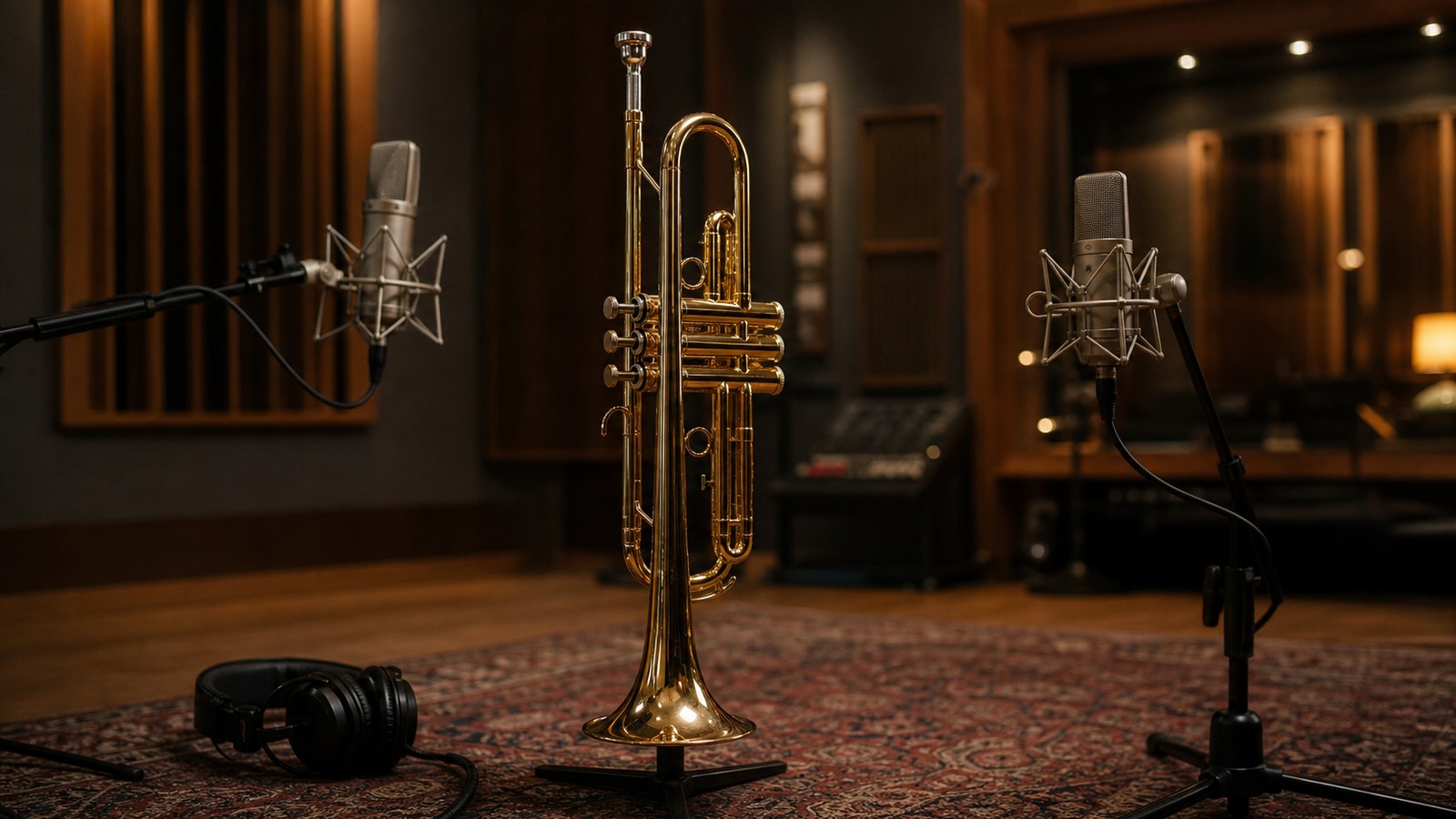
Great trumpet moments on albums are not accidents. They’re framed: the rhythm section leaves pockets, the pianist thins the voicings, the drummer shifts to cymbal metal that flatters the horn’s spectrum. Microphones matter—ribbons for silk, condensers for presence—and so does the room. Producers know the trick: get the first entrance right. If the trumpet’s opening note sits in the listener’s chest, the rest of the solo can levitate. Mix engineers keep the horn forward enough to speak but far enough back that crescendos feel earned.
Themes You Can Feel with Your Hands
Across these albums, certain narrative gestures recur. The unaccompanied cadenza that declares intent. The blue note held a hair flat, then resolved with a sigh. The climb to a high note that doesn’t shout, it rings. The half-valve whisper that turns into a grin. The surprise rest that makes you lean in. These are the touchstones: physical sensations pressed into wax, time after time.
Listening Forward: Finding New Icons
A living art keeps making icons. Today’s trumpet records flex hybrid rhythm sections, electronics folded into acoustic breath, and cross-genre collaborations that treat the horn like a passport. Still, the essential recipe hasn’t changed: a melody worth telling, a room that hears it, a band that believes it, and a player who can turn air into intention. The trumpet remains a compass for jazz albums—pointing to tradition with one hand and tomorrow with the other.
A Coda in Brass
From Louis Armstrong’s blazing thesis to Miles Davis’s modal moonlight, from Lee Morgan’s streetwise hooks to Ambrose Akinmusire’s hushed cinema, the trumpet has given jazz albums their most indelible signatures. The best moments are etched not only in pitch and rhythm but in grain: the human breath catching on a piece of metal and somehow telling your story, too. The record ends, the room is quiet, and you realize the trumpet left the lights on inside your head. That glow is why we press play again.