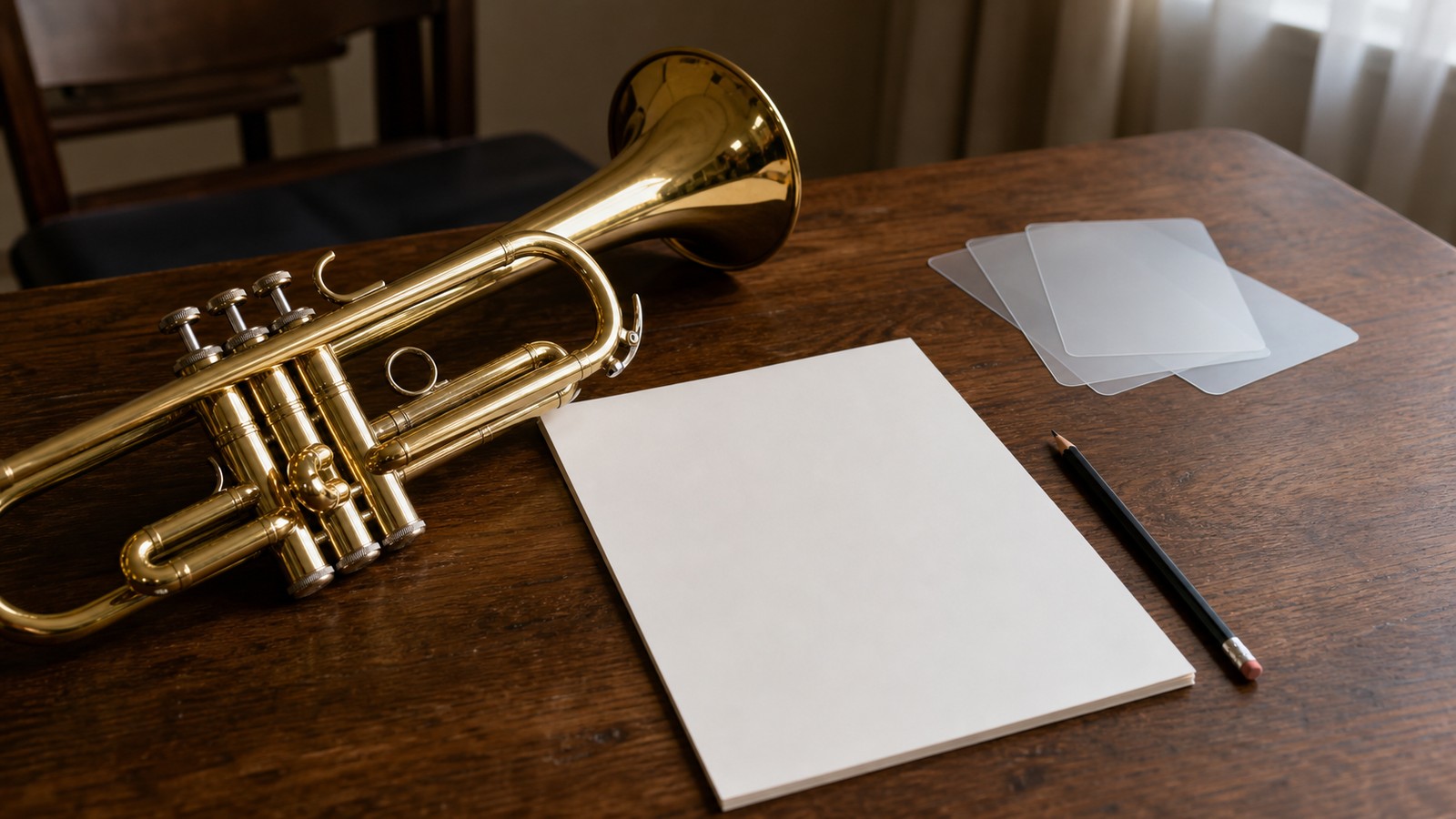
The trumpet may be centuries old, but in pop music, it remains forever fresh. Its ability to cut through a mix with power, clarity, and attitude makes it one of the most versatile instruments in modern music. From the jubilant blasts of Motown to the Latin-infused hits of the 1990s and today’s neo-soul revivals, the trumpet has been the secret ingredient behind countless unforgettable songs. In pop’s landscape—where production trends change rapidly—the trumpet endures. Whether featured as a solo spotlight or tucked into a horn section, its voice brings energy and emotion in equal measure. The trumpet’s journey through pop reflects the genre’s own evolution: adventurous, rhythmic, and rooted in human expression.
A: Just under lead vocal in hooks; tuck lower in verses so lyrics remain primary.
A: Mid–upper staff for clarity; reserve extreme highs for climactic tags and final choruses.
A: One player can stack harmonies; vary mic distance and horn angle for realism.
A: Softer mouthpiece attacks, ribbon mics, and gentle presence EQ keep tone classy.
A: Great for sketching; blend one live trumpet for breath and authenticity.
A: Intros, post-choruses, and turnarounds—avoid crowding lead melodies.
A: Yes—single muted lines add intimacy without bloating the mix.
A: Choreograph horn hits with lighting cues; save horn lifts for final choruses.
A: Short-note accuracy, subdivision drills, and metronome-on-2-and-4 phrasing.
A: Re-introduce horn hooks with small variations; feature a solo once per set for spotlight impact.
Brass Meets the Mainstream: Early Influences
Pop music’s love affair with the trumpet began long before the age of synthesizers and digital beats. In the mid-20th century, the instrument migrated from jazz clubs and big band stages into mainstream radio. Artists like Louis Armstrong and Harry James proved that trumpet melodies could appeal far beyond jazz aficionados.
By the 1950s and 1960s, the sound of the horn section became synonymous with celebration. Bands like Herb Alpert & The Tijuana Brass gave the instrument a new image—sunny, stylish, and irresistibly catchy. Their albums sold millions, and songs like “A Taste of Honey” brought trumpet tone into living rooms around the world.
Motown followed suit. The label’s golden era was defined not only by soulful vocals but also by the brassy punctuation of its horn arrangements. On records by The Temptations, Stevie Wonder, and Martha and the Vandellas, trumpet lines functioned as emotional amplifiers—bright bursts of light within lush orchestral textures.
The 1960s: Horns Go Pop
The 1960s saw the trumpet fully integrated into the pop palette. No longer confined to jazz ensembles, it became an essential color in the modern producer’s toolkit. The Beatles, always sonic innovators, embraced horns to expand their sound. “Got to Get You Into My Life” (1966) pulsed with punchy brass lines inspired by American soul, while “Penny Lane” featured a piccolo trumpet solo that elevated pop instrumentation to an art form.
Meanwhile, Chicago Transit Authority (later simply Chicago) blurred the lines between rock and jazz, embedding trumpet harmonies into their massive arrangements. Songs like “Does Anybody Really Know What Time It Is?” and “25 or 6 to 4” showcased how trumpet sections could carry hooks as memorable as any guitar riff.
The era’s producers learned a vital lesson: when you want emotion and intensity—bring in the trumpet.
The 1970s: Funk, Disco, and Horn Power
As rhythm became the driving force of pop, the trumpet adapted again. The 1970s brought funk and disco, where horn sections were the heartbeat of the groove. Bands like Earth, Wind & Fire, Tower of Power, and Kool & The Gang made brass arrangements an essential part of the dance floor experience.
The trumpet’s precision and flair allowed it to accent beats and explode into syncopated bursts. Listen to “September” by Earth, Wind & Fire: those bright horn stabs aren’t background decoration—they’re rhythmic architecture. Similarly, “Pick Up the Pieces” by Average White Band is practically a trumpet clinic in syncopation and blend.
In disco, the trumpet took on a glamorous sheen. Tracks like Donna Summer’s “Hot Stuff” and Gloria Gaynor’s “I Will Survive” shimmered with brass sections that mirrored the energy of mirror balls and flashing lights. The sound of the trumpet became a sonic emblem of celebration—a perfect match for an era obsessed with joy and movement.
The 1980s: Synths, Sax, and the Brass Revival
The 1980s were dominated by synthesizers, but the trumpet refused to disappear. Instead, it evolved, finding new space alongside electronic production. Pop acts like Phil Collins, Tears for Fears, and Huey Lewis & The News continued to feature live brass to keep their sound organic and powerful.
Huey Lewis’s “The Heart of Rock & Roll” and Phil Collins’s “Sussudio” both relied on bold horn sections for energy and authenticity. Meanwhile, the trumpet took center stage in some of the decade’s most iconic moments—most notably on Paul Simon’s Graceland (1986), which fused American pop with South African rhythms and horn lines.
The rise of ska and new wave also put trumpets back in the spotlight. Bands like The Specials, Madness, and The English Beat brought brass-driven arrangements to punk-inspired pop, giving the trumpet a cool, rebellious edge. These groups reminded listeners that brass wasn’t just for orchestras or jazz clubs—it could drive counterculture too.
The 1990s: Pop Meets Global Sound
In the 1990s, the trumpet became a global traveler, reflecting pop’s increasingly diverse influences. Latin pop exploded into the mainstream, and with it came a new wave of trumpet-powered hits. Ricky Martin’s “Livin’ La Vida Loca,” Gloria Estefan’s “Conga,” and Jennifer Lopez’s early work all leaned on brassy fanfares that captured the excitement of Latin dance music.
Meanwhile, pop producers began sampling classic horn riffs from soul and funk records. The trumpet’s legacy sounds resurfaced in tracks like Mark Morrison’s “Return of the Mack,” and even hip-hop producers—from Dr. Dre to The Fugees—used sampled brass as sonic shorthand for sophistication and swagger.
Perhaps no 1990s moment captured trumpet’s pop appeal better than the resurgence of swing. The Brian Setzer Orchestra and Big Bad Voodoo Daddy revived big-band energy for a new generation, turning trumpet solos into acts of showmanship once again.
The 2000s: The Brass Renaissance
The new millennium brought another wave of trumpet-driven pop. Amy Winehouse’s Back to Black (2006), produced by Mark Ronson, helped reignite mainstream love for horn sections. Songs like “Rehab” and “You Know I’m No Good” blended retro brass swagger with modern sensibility, inspiring countless imitators.
Similarly, Ronson’s later hit “Uptown Funk” with Bruno Mars became one of the most successful trumpet-fueled tracks of all time. Its punchy brass hooks and syncopated groove revived 1970s funk in a slick, contemporary package. The track’s trumpet riff became a cultural earworm—proof that brass could still dominate global pop charts.
Artists like Adele, Michael Bublé, and even Beyoncé began weaving trumpet textures into their arrangements for extra flair and drama. The horn section, once an afterthought, was suddenly essential again—an expressive counterpoint to digital perfection.
Iconic Songs That Defined the Sound
Some songs have made the trumpet impossible to ignore. Here are a few of the most influential examples that show how this instrument shaped pop through melody, rhythm, and attitude:
“Penny Lane” – The Beatles (1967)
The piccolo trumpet solo by David Mason redefined what brass could do in pop—lyrical, virtuosic, and unforgettable.“Sledgehammer” – Peter Gabriel (1986)
The Memphis Horns deliver funky, soulful lines that turn the track into a celebration of rhythm and texture.“Uptown Funk” – Mark Ronson ft. Bruno Mars (2014)
A modern masterclass in brass-driven pop production—tight, bright, and built for movement.“Rehab” – Amy Winehouse (2006)
Vintage-style trumpet riffs power the song’s retro soul aesthetic, adding grit and charisma.“Sir Duke” – Stevie Wonder (1977)
While primarily sax-driven, its trumpet accents and jubilant horn arrangement embody pure joy.
Each of these songs demonstrates how the trumpet can elevate a pop track from catchy to timeless. Its presence adds texture, excitement, and emotional depth.
The Modern Sound: From Bedroom Studios to Global Stages
In the era of digital production, one might expect live brass to fade away—but the opposite has happened. The trumpet has found new life in pop through a hybrid of acoustic recording and digital manipulation. Producers now blend live trumpet lines with sampled textures to create lush, cinematic soundscapes.
Artists like Harry Styles (“Music for a Sushi Restaurant”), Lizzo (“Juice”), and Dua Lipa (“Break My Heart”) feature horn sections that bridge nostalgia and modernity. Even electronic artists—like Daft Punk, Disclosure, and Calvin Harris—have turned to trumpet lines for warmth and human energy.
Social media and sample-based platforms have also helped independent artists record brass remotely, democratizing access to the instrument. The result is a new era where trumpet sounds can appear anywhere—from viral TikTok hits to cinematic pop ballads.
Why the Trumpet Still Matters in Pop
The trumpet’s endurance in pop isn’t nostalgia—it’s necessity. The instrument’s emotional range makes it irreplaceable. It can shout triumphantly, cry softly, or dance with playful swagger. Few sounds can communicate excitement and soul as effectively in a three-minute song.
Moreover, the trumpet connects listeners across genres. It links the groove of funk to the romance of ballads, the celebration of Latin rhythms to the sophistication of jazz-inspired pop. In an age of synthetic textures, the trumpet reminds us that human breath and brass still move hearts.
When used well, it can be both vintage and futuristic—a sound that grounds pop music while propelling it forward.
The Future of Brass in Pop
Looking ahead, the trumpet’s pop presence shows no signs of fading. With the resurgence of live instrumentation and “organic pop” aesthetics, modern artists are rediscovering the thrill of real brass. Collaborations between pop acts and jazz musicians—like Lady Gaga and Tony Bennett’s projects—have reignited respect for horn artistry.
Producers like Jacob Collier, Anderson .Paak, and Tom Misch continue to integrate trumpet flourishes into their arrangements with sophistication and flair. As technology evolves, expect to hear more creative blends—live brass layered with synth brass, vintage microphones paired with modern effects.
The trumpet will continue to thrive because it offers something few instruments can: instant emotion. Whether it’s a triumphant fanfare or a muted whisper, the trumpet speaks directly to the listener’s pulse.
The Final Note: Pop’s Brightest Voice
The trumpet’s role in pop music is a story of reinvention. It has crossed styles, cultures, and decades without losing its charm. From the infectious grooves of Uptown Funk to the tender nostalgia of Penny Lane, it remains a beacon of color in an ever-changing soundscape.
More than just an instrument, the trumpet is a storyteller. Its voice has powered revolutions in jazz, ignited disco dance floors, and brought depth to pop ballads. In every era, it finds new ways to speak, proving that brass will always have a place in the soundtrack of our lives.