
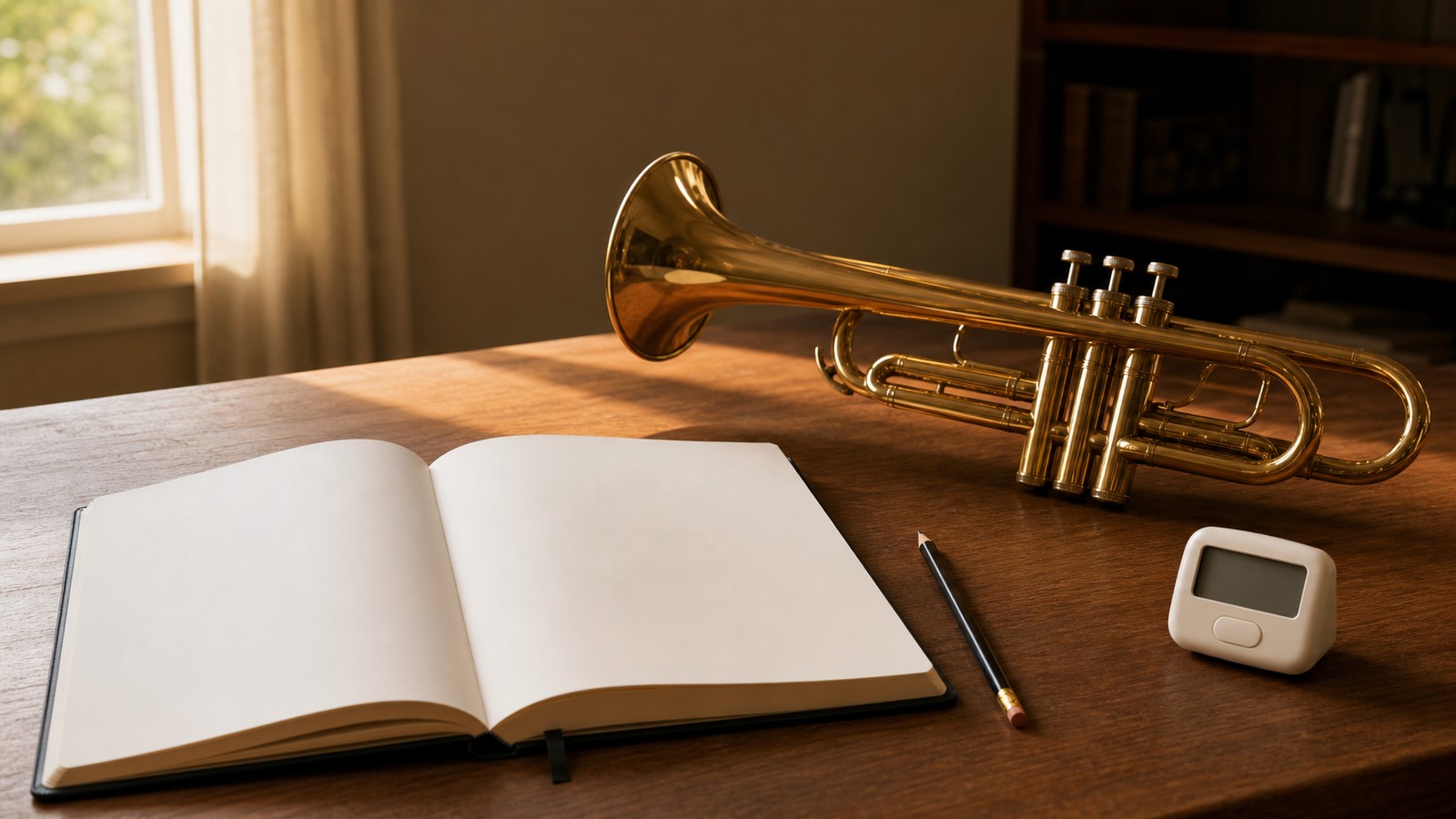
A Practice Journal Works When It Is Easy to Use
A trumpet practice journal template should make practice clearer, not heavier. The best version gives players a simple place to record what they practiced, how it felt, what improved, what still needs attention, and what to do next. It can be printed, kept in a lesson folder, or copied into a notebook, but it only works when the prompts are short enough to use every day. A good trumpet journal turns scattered practice into visible progress without making students feel like they are filling out homework after every note.
A: Yes. A simple journal helps students see goals, habits, progress, and next steps.
A: Most entries should take less than two minutes after practice.
A: Beginners can record date, minutes, material practiced, one improvement, and one next step.
A: Only if it does not encourage forcing. Comfort and control are better range notes.
A: No. It supports lessons by making practice patterns easier to discuss.
A: Either works if the student uses it consistently and can review it easily.
A: A weekly review is enough for most students to spot useful patterns.
A: Write honestly, choose one small next step, and avoid turning the entry into self-criticism.
A: Sometimes, but encouragement and routine support usually matter more than signatures.
A: It stays short, specific, easy to use, and connected to tomorrow's practice.
What the Template Should Track
A useful trumpet practice journal tracks date, total time, main goal, warmup, technical work, music studied, tempo notes, tone observations, and the next step. Those fields give enough information to see patterns without overwhelming the player. The page should tell a quick story of the session.
For trumpet, the journal should also leave room for physical details. Players may need to record endurance, range comfort, breath control, mouthpiece pressure, lip fatigue, or recovery after a hard rehearsal. Those notes help prevent practice from becoming only a count of minutes. They also help students notice when progress is being limited by practice order, overplaying, or lack of recovery instead of effort.
Keep the Page Light
A crowded journal page will not last. If a student has to write a paragraph after every exercise, they may stop using it within a week. The template should rely on short fields, checkboxes, quick ratings, and one or two reflection lines.
White space matters. A clean page feels less like a worksheet and more like a tool. Students should be able to write while standing at a music stand or sitting beside a case without balancing too many details.
The template should also work when practice is imperfect. A five-minute session can still be recorded honestly. That habit keeps the journal useful during busy school weeks, travel, or recovery days. Students who only write down perfect sessions miss the real value of the tool, which is seeing how ordinary days connect over time.
Start With Date and Goal
The date gives the journal its timeline, but the goal gives the session its purpose. A strong goal is specific enough to guide decisions, such as cleaner low-register attacks, steadier sixteenth notes, smoother slurs, or better breath planning in a solo. The goal should be small enough that the player can recognize progress before the session ends.
Record Warmups Honestly
Warmup notes can reveal how the player is responding that day. A trumpet may feel open, stiff, bright, tired, centered, or resistant depending on sleep, rehearsal load, hydration, and previous practice. Writing that down helps students avoid judging every day as success or failure.
The warmup field does not need to be long. A few words about tone, airflow, flexibility, or range comfort can guide the rest of the session. If the warmup feels strained, the player may choose softer fundamentals instead of forcing demanding music immediately.
Separate Technique From Music
Trumpet players often practice scales, lip slurs, articulation drills, range work, etudes, ensemble music, solos, and sight-reading in the same session. A journal template should separate technical work from repertoire so progress does not blur together.
Technique fields show what the body and fundamentals are learning. Music fields show how those skills are being used in real phrases. Keeping them separate makes lesson conversations easier because the teacher can see whether a problem is technical, musical, or both.
This separation also helps students practice with intention. A player working on double tonguing can connect that work to a band passage, while still recording the exercise and the piece in different places.
Track Tempo Without Chasing Speed
A tempo box is helpful when used carefully. Students can write the starting tempo, clean tempo, and goal tempo for a scale, etude, or difficult passage. The journal should reward clean control, not just higher metronome numbers. If the student writes only the fastest attempt, the record can become misleading. A clean tempo shows what the player can repeat with good tone, rhythm, and relaxation.
Include Tone Notes
Trumpet tone changes from day to day, and players need vocabulary for what they hear. A template can include quick tone words such as centered, airy, pinched, bright, dark, spread, focused, thin, resonant, or uneven. Over time, those words reveal patterns.
Tone notes should not become self-criticism. They are observations. If the tone was airy after a long rehearsal day, the journal can point toward rest, softer practice, or better breath setup rather than frustration.
Log Range and Endurance Carefully
Range tracking can be useful, but it should be handled with maturity. Writing the highest note of the day may encourage pushing if the student treats it like a score. A better field asks whether the usable range felt comfortable, forced, stable, or tired.
Endurance notes are even more valuable. A player may begin with a good sound but fade after twenty minutes, or feel strong through fundamentals but tire during ensemble excerpts. The journal can capture where fatigue appears.
These details help teachers adjust assignments. If a student is consistently worn out before solo work, the practice order may need to change. If fatigue arrives after loud band rehearsals, recovery routines may matter more than extra drills.
Leave Room for Teacher Comments
A practice journal becomes stronger when teachers can write directly in it. One short teacher comment can turn a vague week into a clear assignment. The template should leave space for lesson focus, assigned tempos, listening tasks, or reminders about tone and posture. When that comment sits beside the student's own notes, the assignment feels connected to actual practice rather than handed down from somewhere else.
Use Reflections That Lead to Action
The reflection box should ask for something practical. Instead of a broad question about how practice felt, use prompts such as what improved today, what needs the next repetition, and what should start tomorrow's session. Action-oriented reflection prevents vague answers.
Students should keep the language simple. A useful entry might say that attacks were cleaner at a slower tempo, the solo still needs breath marks, or soft playing felt more stable after long tones. Those notes make the next session easier to begin.
Weekly Review Matters
A daily journal shows individual sessions, but a weekly review shows direction. At the end of the week, the student can circle repeated problems, name one improvement, and choose one focus for the next week. That turns practice history into a plan.
Weekly review is especially helpful for students who feel stuck. They may not notice that tempo, tone, or endurance improved gradually across several days. Seeing written evidence can keep motivation alive.
Parents and teachers can also use weekly review without micromanaging. A simple check of goals, minutes, and next steps gives support while still leaving ownership with the player.
Avoid Turning the Journal Into a Chore
The journal should take less than two minutes after practice. If it takes longer, the template probably asks for too much. The goal is to make practice visible, not to replace playing with paperwork. Short entries are easier to continue during concert season, exams, sports schedules, or any week when practice time is already tight.
Printable Layout Ideas
A strong printable trumpet practice journal can fit one week on a page, with small daily boxes and a larger weekly review space. Another option is one session per half page for students who need more detail. The right layout depends on age and practice maturity.
For younger students, large writing spaces and simple checkboxes work best. For older students, include tempo, repertoire, technical focus, and reflection fields. The template should grow with the player instead of staying locked at one level.
Digital and Paper Options
Paper journals are easy to keep in a trumpet case or lesson folder. They also let teachers write quickly during lessons. The physical page can become part of the routine: play, reflect, close the folder, and know what comes next.
Digital journals are useful for students who already use tablets or shared lesson notes. They can attach recordings, link assignments, or search previous entries quickly. The risk is distraction if the device pulls the student away from focused practice.
Either format can work. The important part is consistency. A messy paper notebook used every day is more valuable than a beautiful digital system that is opened once a month.
How Beginners Should Use It
Beginners should keep the journal simple: date, minutes, what was practiced, one thing that sounded better, and one thing to try next. At this stage, the habit matters more than detailed analysis.
What Intermediate Players Add
Intermediate players can add tempo targets, range comfort, articulation notes, etude assignments, ensemble excerpts, and recording reflections. They are ready to connect the journal to specific musical problems instead of only tracking time.
This is also the stage where patterns become useful. If every entry says that soft attacks are unstable, the student has a clear practice theme. If fatigue appears after range work, the order of practice may need to change.
Add Recordings Without Overcomplicating It
A journal can include a small recording checkbox or file-name line for students who record excerpts, scales, or solos. The point is not to archive every practice session. It is to connect listening evidence with written observations, especially when tone, rhythm, or releases feel different to the player than they sound across the room.
Make the Template Age Appropriate
Young players need friendly prompts and quick wins. A beginner template might ask what sounded better today and what should be repeated tomorrow. That is enough to build awareness without making the student write like an advanced musician.
Older students can handle more precise categories, but they still need restraint. A high school player preparing auditions may benefit from tempo logs, excerpt notes, recording comments, and endurance tracking. Even then, the page should point toward better practice, not become a diary of every mistake.
Use It Before Motivation Drops
The best time to write a journal entry is while the session is still fresh. Waiting until bedtime or the next lesson often leads to vague guesses. A quick entry right after playing preserves useful details and gives the next practice session a clear starting place.
A Strong Journal Habit
The best trumpet practice journal is the one the player actually uses. It should be clear enough for a beginner, flexible enough for an advancing student, and practical enough for a teacher to review quickly. Fancy formatting cannot replace honest entries.
Use the template as a conversation with tomorrow's practice session. Write down what happened, what changed, and what deserves the next attempt. That small habit can make practice feel less random and more encouraging.
Over weeks and months, the journal becomes a record of effort that students can see. It shows that better tone, cleaner articulation, stronger endurance, and more confident music rarely appear all at once. They grow through repeated, thoughtful sessions.


