The Best Trumpet Starting Age Is About Readiness
Many children can begin trumpet around age nine to eleven, but the best age to start learning trumpet depends more on readiness than a number. The player needs enough physical size to hold the instrument, enough front-tooth stability for comfortable mouthpiece placement, enough breath control to make a sound, and enough attention to practice in short focused sessions. Some students are ready earlier with careful guidance, while others do better waiting until middle school. Adults can start at almost any age if they practice patiently. The right starting point is the one that makes learning healthy, encouraging, and sustainable.
A: Some can explore gently, but many children are more comfortable waiting.
A: Yes, fifth grade is a common and practical starting point for many students.
A: They can, because mouthpiece comfort depends partly on front-tooth stability.
A: Yes, teenagers can begin successfully with patient fundamentals and steady practice.
A: No, adults can start if they build strength gradually and practice consistently.
A: Short focused sessions are better than long tiring practice.
A: Often yes, unless the child has strong interest and good individual guidance.
A: Test physical fit with a teacher before committing to trumpet.
A: Not necessarily; older beginners may focus and understand practice better.
A: The student wants to try again after an imperfect first sound.
Why Age Alone Is Not Enough
Age gives a rough starting point, but it does not tell the whole story. Two children of the same age may have different hand size, tooth development, attention span, breathing coordination, and interest in music. Trumpet asks for a mix of physical and mental readiness.
A child who is excited but not physically ready may become frustrated if the instrument feels too heavy or the mouthpiece feels uncomfortable. A child who starts a little later may progress faster because they can focus, listen, and follow practice routines more easily.
Parents should think of readiness as a set of signals. If several signals are present, starting can go well. If most are missing, waiting is not failure; it is preparation.
Typical School Starting Ages
Many school band programs begin brass instruction in fourth, fifth, or sixth grade. That often places new trumpet players around nine to twelve years old. This timing works because students are usually large enough to hold the instrument and mature enough to follow group instruction.
Physical Fit and Hand Size
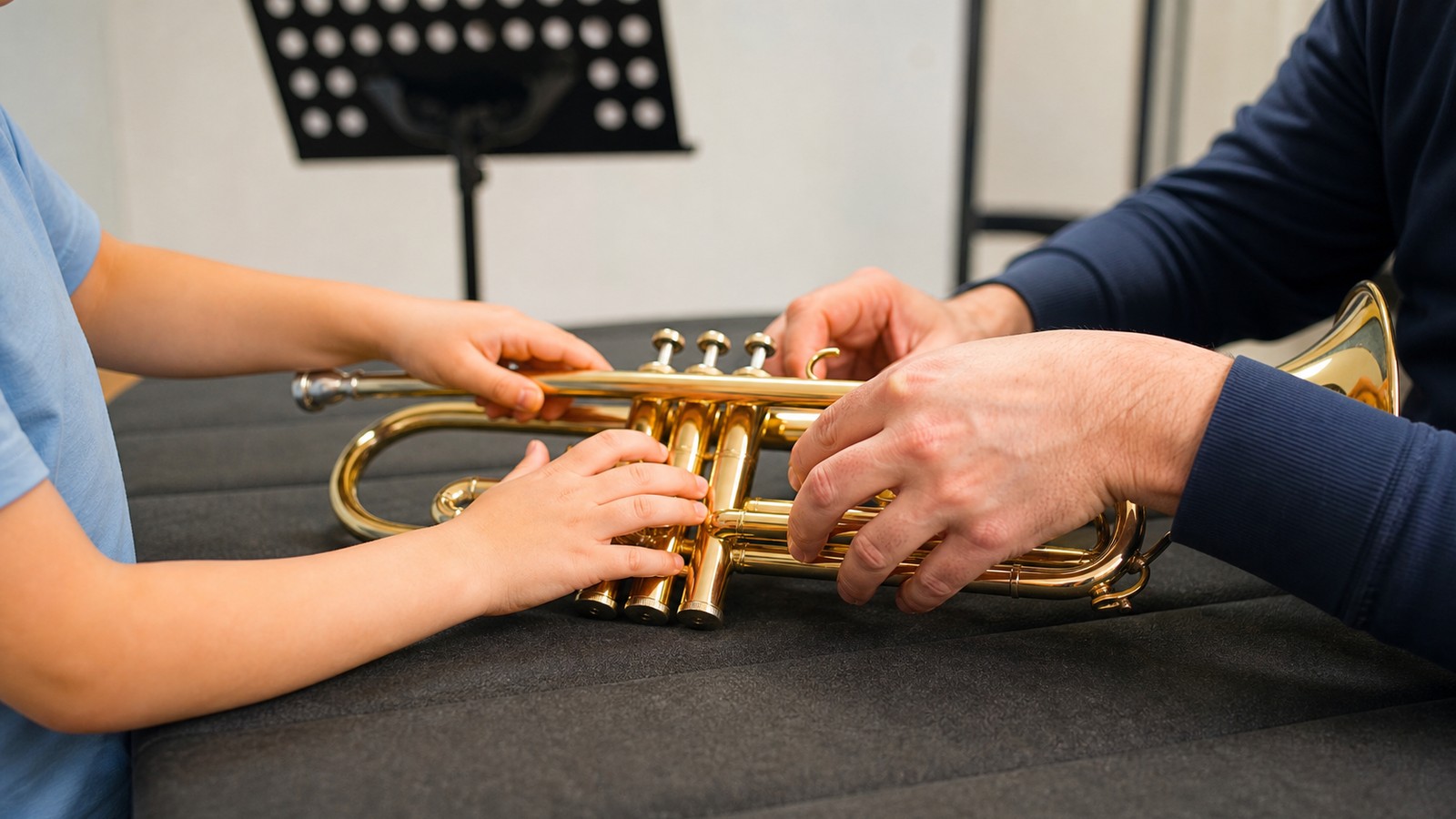
The student should be able to hold the trumpet with relaxed shoulders and reach the valves without strain. The right fingers should curve naturally over the valve buttons, and the left hand should support the instrument securely. If the bell droops or the elbows lock, the player may not be physically ready.
A lighter student trumpet can help, but the instrument still needs proper posture. A teacher can show whether the child can bring the trumpet to the face instead of leaning the face down to the mouthpiece.
Teeth, Braces, and Mouthpiece Comfort
Front teeth matter because the mouthpiece rests against the lips in front of them. Children who are losing baby teeth or dealing with unstable front teeth may find trumpet uncomfortable for a while. Waiting until the mouth feels more settled can prevent unnecessary frustration.
Braces do not make trumpet impossible, but they require patience and guidance. Students may need time to adjust pressure, mouthpiece placement, and endurance. A private teacher can be especially helpful during dental changes.
Pain is not a normal requirement for learning trumpet. Mild awkwardness is expected, but sharp discomfort should be taken seriously. Healthy playing should feel controlled, not punishing.
Breath and Attention Span
Trumpet beginners need enough breath control to blow steadily for short notes and simple long tones. They also need enough attention to repeat small tasks. A child who can focus for ten calm minutes may be ready for a gentle start.
Starting Before School Band
Some children can begin before the school band starting year if they have strong interest and individual guidance. Early lessons should be short, positive, and built around sound exploration rather than pressure. The goal is curiosity, not fast advancement.
Parents should avoid turning early trumpet into a daily battle. If the child enjoys making sounds, learning rhythms, and caring for the instrument, early lessons can be useful. If the child resists constantly, waiting may protect motivation.
Starting in Middle School
Middle school is a strong starting time for many trumpet players. Students are often physically ready, socially motivated by ensemble participation, and able to understand practice expectations. They may also have access to school instruments, directors, and peers learning at the same pace.
The challenge is patience. Middle school students sometimes compare themselves quickly, especially if classmates have prior experience. A good teacher keeps the focus on steady tone, rhythm, and daily progress.
Starting in middle school is not late. Many successful players began there and built strong foundations through consistent practice.
Teenagers Starting Later
Teenagers can absolutely begin trumpet. They may learn concepts faster because they understand goals, listen critically, and practice more independently. The main task is building embouchure strength gradually rather than trying to catch up overnight.
Adults Starting Trumpet
Adults can start trumpet at any age if they approach it patiently. Adult beginners often bring discipline, listening skills, and musical taste. They may also bring tension, high expectations, or limited practice time, so short consistent sessions work best.
Adult learners should choose comfortable equipment and consider lessons early. A teacher can prevent pressure habits and help the player build range slowly. Progress may feel uneven, but that is normal for brass.
Signs a Child Is Ready
A ready child can hold the trumpet safely, follow simple instructions, handle short practice, and show genuine interest in the sound. They do not need to be unusually talented. They need enough curiosity and patience to return to the instrument after imperfect attempts.
Parents can test readiness with a trial lesson or rental period. Watch how the child responds to feedback. A student who can laugh off cracked notes and try again may be ready even if the first sound is rough.
The best signal is voluntary return. If the child wants to open the case again, the age question becomes much easier.
When Waiting Helps
Waiting helps when the child is physically uncomfortable, uninterested, overwhelmed by instructions, or in the middle of dental changes. A few months can make a large difference. During that time, the child can sing, clap rhythms, listen to trumpet music, or learn basic music reading.
A Healthy First-Year Goal
The first-year goal is not high notes or impressive speed. It is a clear tone, steady rhythm, relaxed posture, basic fingerings, and a positive relationship with practice. Starting at the right age means the student can build those habits without feeling defeated.
Parents should choose the age that supports consistency. A child who starts when ready is more likely to enjoy the instrument, trust the teacher, and keep playing beyond the first concert.
What Younger Starters Need
Younger starters need careful pacing. They may love the trumpet but still tire quickly, forget fingerings, or become discouraged by cracked notes. Lessons should make room for movement, listening, singing, and short playing attempts.
Parents can help by keeping practice calm. Five minutes of cheerful review may be better than twenty minutes of negotiation. A young student who ends practice feeling successful is more likely to return willingly.
The adult's role is to protect curiosity. Trumpet can become demanding later, but the earliest stage should feel like discovering sound rather than passing a test.
What Older Starters Need
Older beginners need reassurance that starting later is legitimate. They may understand music quickly but still need time for the lips and breathing muscles to adapt. Physical development cannot be rushed just because the mind understands the assignment.
Trial Lessons and Rentals
A trial lesson can answer more than an age chart. The teacher can watch posture, breathing, attention, and response to feedback. The child can discover whether the trumpet feels exciting after the first awkward attempts.
A short rental period can serve the same purpose. Families do not need to predict the next five years before the first month begins. They only need enough information to start safely.
Motivation and Musical Exposure
Children are more likely to start well when they have heard trumpet in music they enjoy. That might be school band, jazz, mariachi, movie music, worship music, or a family member's playing. A clear sound goal gives practice meaning.
Exposure can happen before lessons begin. Listen together, watch performances, clap rhythms, and talk about what the trumpet is doing. These small experiences make the instrument feel familiar.
A child who recognizes the sound may accept early practice challenges more easily. They know the rough first notes are part of a path toward something they already like.
Family Schedule and Practice Support
The best starting age also depends on the household. A child needs a place to practice, a routine that does not feel chaotic, and adults who can encourage without hovering. If the family schedule is overloaded, waiting may make the first year better.
Best Age in Plain Terms
For many children, nine to eleven is a practical window. For some, earlier exploration works. For others, twelve or thirteen is ideal. The number matters less than whether the student can hold the trumpet, breathe steadily, listen patiently, and stay curious.
A ready student at any age has the same advantage: they want to try again. That willingness turns lessons into progress.
How Parents Can Support the First Weeks
Parents do not need to become trumpet experts to help. They can protect a regular practice time, make sure the instrument is stored safely, and praise effort rather than only good sounds. Early trumpet practice can be noisy and uneven, so encouragement matters.
It also helps to ask simple questions after practice. What felt easier today? What should the teacher explain next time? These questions keep the student reflective without turning the parent into a second instructor.
The first weeks should build trust. A child who feels supported is more likely to accept slow progress and keep returning to the instrument.
Signs the Start Was Too Early
A start may be too early if the child consistently complains of discomfort, cannot hold the trumpet safely, cries through ordinary practice, or loses interest immediately after lessons begin. Those signs do not mean the child lacks musical ability. They may simply need more time.
A Gentle Restart Plan
If trumpet begins too early, pause without making the child feel they failed. Keep music present through listening, singing, rhythm games, or another age-appropriate instrument. The trumpet can return later when the body and attention span are more ready.
A gentle restart often works better than forcing a difficult first attempt. When the student comes back with more readiness, the instrument feels less like a struggle and more like an opportunity. Parents can use the pause to keep music positive: attend a concert, listen to favorite brass recordings, or let the child explore rhythm away from the mouthpiece. That way the trumpet remains associated with curiosity rather than pressure. When lessons resume, the student brings a stronger body, a calmer mind, and a better sense of why the instrument is worth learning. This approach also protects the relationship around practice. The child learns that waiting is a smart musical choice, not a punishment or a permanent no. A patient start can preserve enthusiasm for years. It can also make the first teacher-student relationship healthier because lessons begin with readiness, not resistance. That healthier beginning often matters more than starting early, especially for children who need confidence before challenge and steady encouragement from adults at home daily.