Trombones Have Long Served Outdoor Music, Ceremony, and Motion
A timeline of trombone use in military and marching bands is really a story about projection, ceremony, movement, and ensemble identity. The trombone's slide made it visually striking and musically flexible, while its strong tone helped carry lines outdoors. Across centuries, its role shifted from civic and military signaling traditions toward concert bands, school marching bands, parade units, and modern field shows.
A: Their strong tone, clear articulation, and harmonic range helped music carry in public spaces.
A: The slide requires space, consistent carriage, and awareness of nearby players.
A: Compact valved instruments can simplify drill, staging, and uniform movement.
A: Yes, when directors want their specific color, visual identity, and slide effects.
A: Use centered air and clear rhythm instead of forcing the tone.
A: They provide bold riffs, strong harmony, and expressive slide character.
A: Safe slide spacing, stable carriage, consistent horn angle, and musical tone outdoors.
A: No. They work best when the arrangement and style call for them.
A: They added visual design, drill spacing, and selective feature moments to the instrument's role.
A: Trombones stayed relevant by adapting to ceremony, movement, education, and entertainment.
Outdoor Brass Traditions Came First
Long before modern marching shows, wind and brass instruments were used outdoors because they could carry sound over distance. Trombones fit that world naturally. Their tone could support ceremony, announce public occasions, and reinforce harmony in settings where softer instruments would disappear.
The earliest part of the timeline is therefore not about football fields or competition. It is about public sound.
That public function shaped how listeners understood brass. A trombone outdoors could feel official, serious, and communal.
Civic Music Overlapped With Military Needs
Civic and military music often shared players, instruments, and practical habits. Town events, processions, guard ceremonies, and organized public gatherings all needed music that could project. The trombone's range and slide flexibility made it useful in that shared soundscape.
Because these settings were functional, instrument choices were shaped by availability, durability, volume, and the ability to fit the ensemble. The trombone survived because it could do real work.
Military Bands Formalized Brass Roles
As military bands became more organized, brass sections gained clearer roles. Trombones could reinforce middle and lower harmonies, strengthen cadences, and add weight to ceremonial music. They were not always melodic stars, but they gave the band body and authority.
The Slide Was Both Strength and Challenge
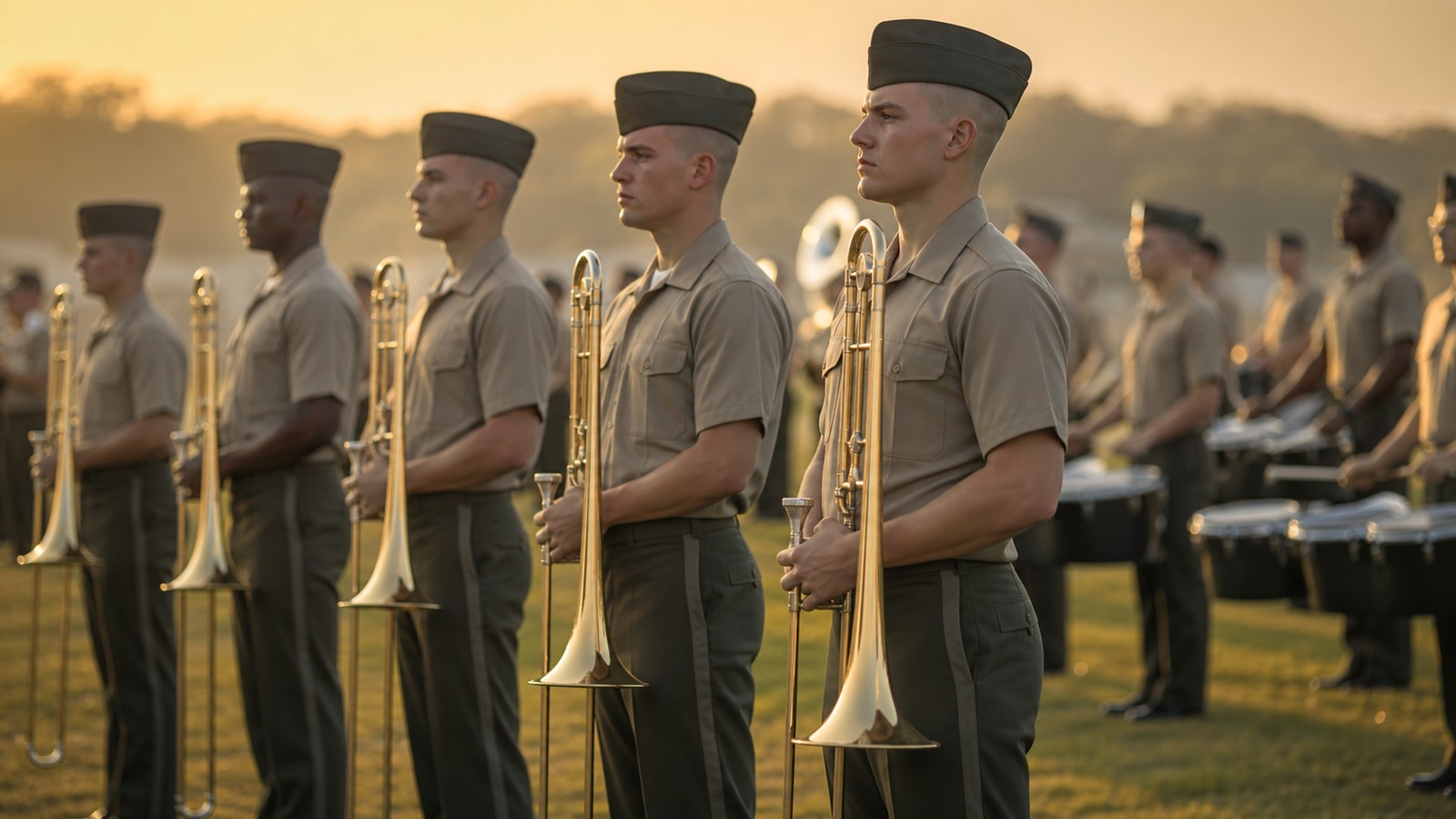
The slide gave the trombone its signature pitch control, but marching with a slide required awareness. Players needed room in front of the body, clean hand motion, and enough formation spacing to avoid collisions. This made the instrument visually impressive but physically demanding in motion.
Directors had to account for that movement. A slide section could look powerful when aligned, but it needed disciplined spacing and consistent carriage.
The challenge did not remove the trombone from marching use. It simply made technique and drill design important parts of the instrument's timeline.
Valve Brass Offered Alternatives
Some ensembles used valved brass to cover similar ranges when compact movement was preferred. Valve trombones, baritones, euphoniums, and other low brass could simplify marching logistics. Even so, the slide trombone remained attractive because of its recognizable color and visual identity.
This tension between slide character and marching practicality appears again and again. It helps explain why different bands choose different instruments for similar musical jobs.
Concert Band Writing Strengthened the Section
Military and civic band traditions fed into concert band development. As band music became more sophisticated, trombone parts gained harmonic, rhythmic, and melodic importance. The section could provide chorales, counterlines, bass support, and dramatic accents.
Parade Bands Kept the Trombone Visible
Parades gave trombones a natural stage because the slide is easy to see. A line of trombones moving together can make a section look unified and energetic. The instrument's sound also carries well down a street, especially when players use clear articulation and steady air.
Parade playing demands endurance. Players must maintain posture, time, tone, and slide accuracy while moving. That combination turns basic technique into a public performance skill.
For many communities, parade trombones became part of the image of a band. The instrument looked and sounded like motion.
School Bands Expanded Participation
School bands helped make marching trombone familiar to many young players. Students learned how to carry the instrument, align slides, memorize music, and balance sound outdoors. The school setting turned older public-band habits into a common educational experience.
This expansion also created practical teaching needs. Directors had to explain horn angles, slide safety, breathing while marching, and how to project without forcing.
Football Fields Changed the Visual Job
Field marching moved the trombone into a more visual environment. Instead of only proceeding forward in parade blocks, players now changed direction, formed pictures, and coordinated music with drill. The slide became both an expressive tool and a spacing concern.
Drum Corps and Competitive Marching Refined Expectations
Competitive marching cultures increased demands for uniformity, projection, and visual precision. Some groups leaned toward bell-front low brass for consistency and staging, while others kept slide trombones for color or tradition. The choice often reflected scoring priorities, show design, and available players.
The trombone's role in these settings has never been fixed. It can be central, occasional, featured, or replaced depending on the ensemble's concept.
That flexibility is part of the modern timeline. The trombone remains an option directors choose for specific musical and visual reasons.
Jazz and Big Band Influence Entered the Field
Marching and pep bands often borrow from jazz, funk, and big band language. In those styles, trombones can punch, smear, shout, and provide bright harmonic support. The slide becomes a source of character rather than only a logistical problem.
This influence made the marching trombone feel more playful and aggressive in many school and college settings. A section could become a recognizable voice within the band.
Pep Bands Highlighted Personality
Pep bands often use trombones for short riffs, strong bass lines, and crowd-facing energy. The parts may be less formal than concert band writing, but they demand rhythm, stamina, and style. Players learn how to sound bold without losing control.
Slide Effects Became Visual and Musical Features
Glissandos, falls, scoops, and coordinated slide movements can make trombones stand out. In marching and pep contexts, these effects can be both musical and visual. Used tastefully, they give the section identity.
Overusing slide effects can make the instrument sound unserious, so good writing matters. A smear works best when it supports the style rather than interrupting it.
The timeline shows this balance clearly. The same slide that creates logistical challenges also creates signature moments.
Military Ceremony Still Values Low-Brass Authority
Formal military ceremonies often need music that feels ordered, grounded, and clear. Trombones can support that feeling through strong harmony and controlled projection. Their role may be less flashy than in a pep band, but it remains important.
The sound must be disciplined. Outdoor ceremonial playing rewards steady tempo, clean releases, and balanced tone.
Modern Marching Design Uses Trombone Selectively
A modern marching show may feature trombones for a specific visual moment, a jazz-influenced section, or a color change inside the brass book. Directors do not need to use the instrument constantly for it to matter. A short, well-placed trombone feature can define an entire production.
Carriage Technique Protects Sound and Safety
Good marching trombone starts with carriage. The instrument should sit consistently, the slide path should be clear, and the player should avoid twisting the upper body every time the feet change direction. Stability keeps both sound and safety intact.
Students should practice slide positions while marking time before adding complex drill. This builds awareness of how far the slide travels in real space.
A clean visual line comes from shared technique. If every player holds the horn differently, the section loses both appearance and efficiency.
Outdoor Tone Requires Smart Air
Players often try to force sound outdoors because there are fewer walls returning resonance. That approach can make tone spread and endurance collapse. Marching trombonists need generous air, firm rhythm, and a centered sound rather than constant pressure.
The best outdoor tone carries because it is organized. Volume grows from support and resonance, not panic.
Music Memory Changes the Experience
Marching players usually memorize music, which changes how they relate to the part. Instead of reading positions from a stand, they must internalize slide movement, breathing, and phrasing. This can make the player more confident if the preparation is steady.
The Timeline Is Not a Straight Replacement Story
It would be too simple to say trombones were used, then replaced, then revived. Different ensembles made different choices at different times. Some favored slide trombones, some preferred compact low brass, and some used both depending on the music.
The better timeline is a set of overlapping uses: ceremony, parade, concert band, school marching, military band, pep band, and modern field design.
The trombone moved among those settings because it remained useful. Its exact role changed, but its identity stayed recognizable.
Directors Choose Trombone for Color and Character
A director may choose trombones because they want a brassy edge, a strong visual line, a jazz gesture, or a low-brass color that feels different from euphoniums. The instrument's strengths are specific. Good arranging uses those strengths deliberately.
That deliberate use prevents the section from becoming only louder middle brass. It gives trombones a reason to be heard.
Students Should Learn the Tradition
Knowing the history of trombone use in bands can make practice feel more meaningful. A student is not just learning slide positions on a field. They are joining a long tradition of outdoor brass, public ceremony, and ensemble discipline.
Modern Marching Still Needs Musical Standards
Visual demand should not excuse poor sound. Marching trombonists still need clean articulation, centered tone, accurate positions, and balanced releases. The field may be noisy, but the musical standards remain real.
Directors can help by teaching the section to separate big sound from harsh sound. A powerful trombone line should still have shape.
When the section plays musically, the visual effect becomes stronger because the sound has authority behind it.
The Trombone's Public Identity Endures
The trombone continues to work in marching and military settings because it looks and sounds public. The slide draws the eye, the tone carries, and the range supports strong ensemble writing. Few instruments combine those traits so clearly.
That identity explains why the instrument keeps returning even when alternatives exist. It brings a recognizable presence.
A Living Timeline Keeps Adding Chapters
Today's bands keep reshaping the trombone's role. Some use it traditionally in full sections, some feature it for a single effect, and some blend it with other low brass for a specific show design. Each choice adds another chapter to the timeline.
From Ceremony to Field Shows
The trombone's path through military and marching bands shows how an instrument can adapt without losing its identity. Its early outdoor strength led naturally to civic ceremony, military bands, parades, school programs, pep bands, and modern field productions.
The slide created challenges, but it also created character. The sound carried, the visual line stood out, and the section could shift from solemn support to bold entertainment.
That combination explains why trombones still belong in marching traditions. They connect practical outdoor sound with a visual and musical personality that remains hard to replace.
The timeline also helps directors make better choices today. Instead of asking whether trombones are old-fashioned or automatically necessary, they can ask what the music, staging, and students need. When the answer calls for visible slide energy, grounded brass weight, or a direct link to outdoor band history, the trombone earns its place with purpose and gives the show a sound players can recognize from the stands during real performance and rehearsal.