The First Trombone Decision Depends on Commitment, Support, and Timing
Deciding whether to buy or rent your first trombone is partly a budget question, but it is also a timing question. A brand-new student may not know whether trombone will become a long-term instrument, and a family may not yet know which model the school prefers. Renting can reduce risk and provide maintenance support while the student gets started. Buying can make sense when the student is committed, the horn has been inspected, and the total cost is clear. The best choice is the one that gives the beginner a playable instrument immediately without creating avoidable stress around repairs, upgrades, or resale.
A: Not if it provides flexibility, maintenance, and time to confirm commitment.
A: Buying makes sense when the student is committed and the horn has been inspected.
A: Yes. School guidance can prevent model, repair, or program mismatches.
A: They can be excellent values if the slide and structure are in good condition.
A: The family may buy an unsuitable horn before understanding the student's needs.
A: Yes, if the service support and flexibility justify the total cost.
A: Yes. Case, mouthpiece, lubricant, and cleaning supplies affect real cost.
A: Renting reduces risk, while a good used purchase may still be resold.
A: For committed students, owning an appropriate horn can encourage responsibility.
A: Ask the director, compare total costs, and choose the option with support.
Renting Buys Time
Renting is useful because it gives a beginner time to learn what trombone playing actually feels like. The student can discover whether the slide, mouthpiece, practice routine, and ensemble setting are enjoyable before the family commits to ownership. That trial period can be especially helpful for younger students starting band for the first time.
A good rental also reduces early repair anxiety. Many school or shop rental programs include maintenance support, which matters when a family does not yet know how to judge slide problems, stuck tuning slides, or normal wear.
Buying Can Save Money Later
Buying may cost more upfront, but it can be cheaper over time if the student continues. A solid used student trombone can hold value and serve for several years. Ownership also allows the student to keep the same instrument instead of changing horns when a rental term ends.
Ask the Band Director First
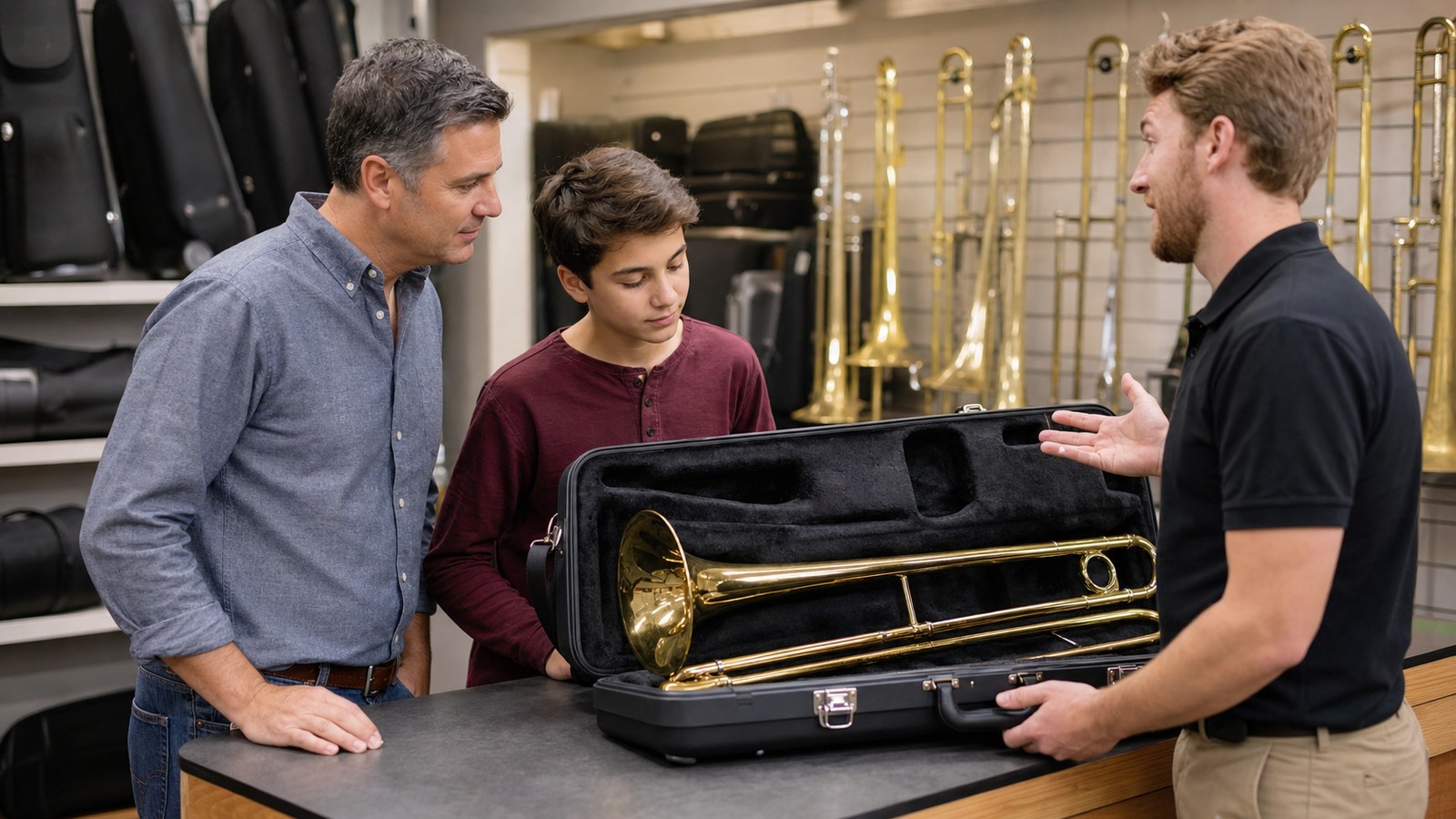
Before renting or buying, ask the school band director what the program recommends. Some programs have preferred rental partners, approved instrument types, or school-owned horns. Others may warn families away from certain bargain instruments that frequently cause problems.
This conversation can prevent a mismatch. A family might buy a horn that seems reasonable online, only to discover that the school expected a different setup or that local repair support is weak. One quick question can save time and money.
Directors also understand the student's immediate environment. A sixth-grade beginner in a large program may have different needs than an older student starting private lessons.
Think About the Student's Commitment
If the student is unsure, renting is usually safer. The first few months will reveal whether practice becomes part of the routine and whether the student likes the trombone's role in band. A rental keeps options open while that answer becomes clearer.
If the student already plays another brass instrument, has chosen trombone intentionally, or is committed to lessons, buying may make sense sooner. Commitment does not guarantee the perfect purchase, but it makes ownership less risky.
Compare Total Costs
Rental payments, maintenance coverage, purchase credits, used-horn prices, accessories, and repair costs all belong in the comparison. A low monthly rental may become expensive if it continues for years. A cheap purchase may become expensive if it needs repairs immediately.
Use Rent-to-Own Carefully
Rent-to-own programs can be helpful when they include service and a clear path to ownership. They can also cost more than buying a comparable used instrument outright. Read the terms carefully and compare the final ownership cost with local used options.
The value of rent-to-own is convenience and support. If those benefits matter to the family, the higher total cost may be acceptable. If the student is already committed and a good used horn is available, buying may be better.
Do Not Buy a Problem to Save Time
Families sometimes buy the first affordable trombone they find because the school deadline is close. That urgency is understandable, but a poor instrument can slow the student's first semester. A sticky slide or weak case becomes part of every practice session.
If there is not enough time to inspect a used horn, renting for a short period can be the wiser move. It gives the student a working instrument now and gives the family time to shop with better information.
A delayed purchase is not a failure. It is often a smart way to avoid buying blind.
Consider Maintenance Confidence
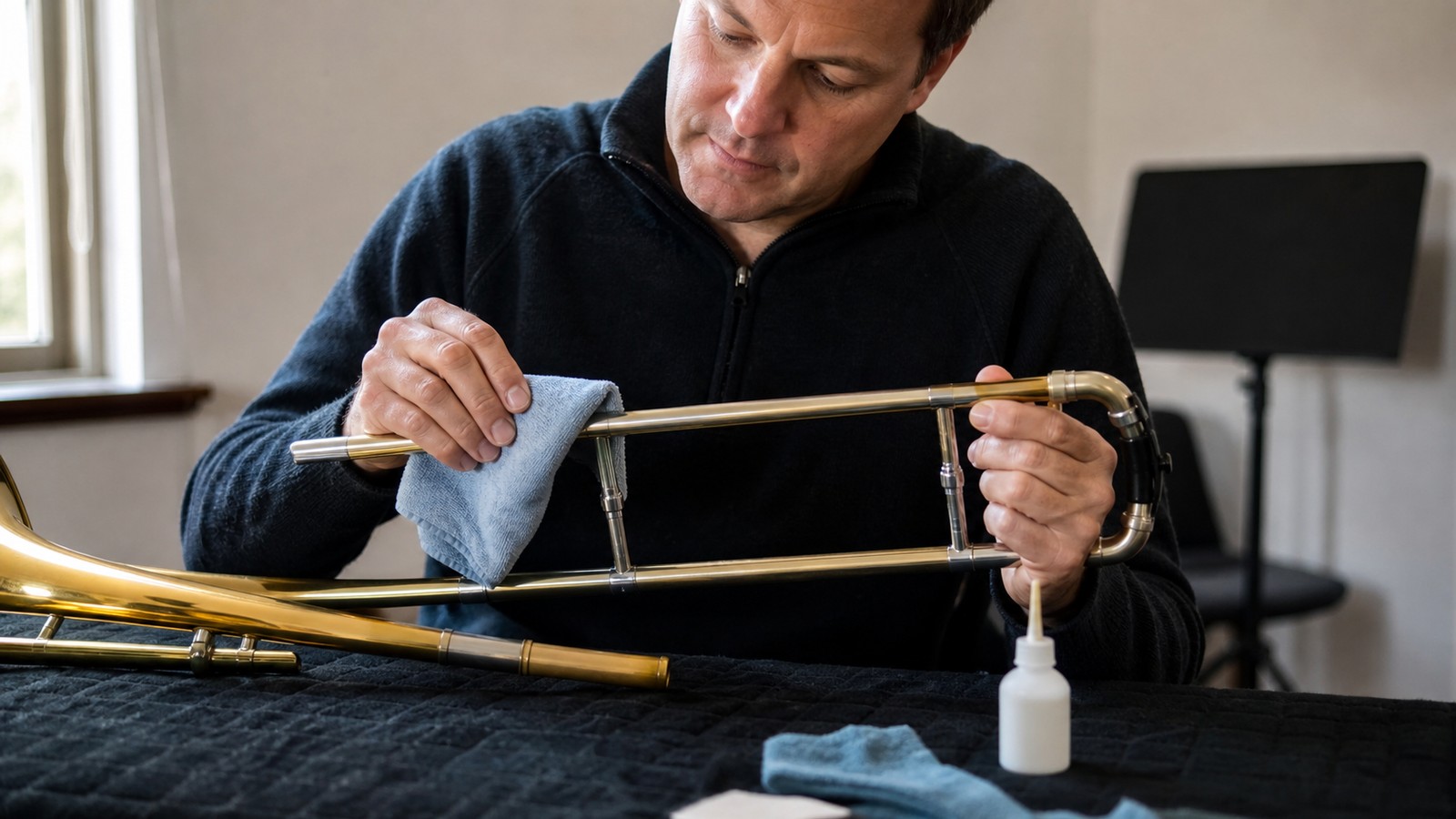
New trombone families may not know what healthy slide action feels like. A rental program with service support can bridge that learning curve. The family can learn cleaning, lubrication, and safe handling before owning the full repair responsibility.
Buying Used Requires Inspection
A used student trombone can be the best value, but only if it is playable. Inspect slide alignment, tuning slide movement, braces, bell condition, water key, mouthpiece fit, and case protection. If possible, have a teacher or repair shop test it.
Cosmetic scratches are not necessarily a problem. Mechanical issues are. A scratched horn with a smooth slide may be better than a shiny horn that fights the player.
Renting Helps With Growth and Switching
Young students change quickly. They may switch instruments, move to a different ensemble role, or need a different setup after a year. Renting keeps those possibilities easier. It also reduces pressure on a student who is still discovering musical preferences.
Ownership Can Encourage Responsibility
Buying a trombone can help a committed student feel invested. The instrument becomes part of the student's identity and routine. Ownership can encourage careful maintenance, consistent practice, and pride in progress.
That benefit works best when the horn is appropriate. A student should not be asked to feel responsible for a fragile or poorly chosen instrument that makes learning harder.
A good first purchase is a tool, not a trophy. It should support the student's next stage without creating unnecessary pressure.
Plan the Upgrade Path
The first trombone does not have to be the last trombone. Many students start with a rental or student model and upgrade later if they become serious. Thinking this way can reduce pressure to buy the perfect instrument immediately.
If buying, choose a horn that can be resold or kept as a marching/practice instrument later. A reliable student trombone often remains useful even after an advanced horn enters the picture.
Use the First Month as a Test
Whether renting or buying, the first month should be treated as a test of fit. Does the student practice? Does the slide move well? Does the case protect the horn? Does the school approve? Are there repair problems? These answers are more useful than assumptions made before the first lesson.
Choose Based on Risk, Not Pride
Some families feel that buying shows commitment and renting feels temporary. That emotional framing can get in the way. A rental can be a responsible first step, and a purchase can be smart when the conditions are right. Neither choice proves how serious the student is.
The better question is which choice lowers risk while supporting daily practice. Beginners need working instruments, clear support, and encouragement.
If the student continues, there will be plenty of time to make a more permanent instrument decision. The first choice should help the student start well.
Make the Decision Reversible When Possible
Return windows, short rental terms, trial periods, and teacher approval all make the first decision safer. A reversible choice is valuable because beginners learn quickly what they actually need. Build flexibility into the plan whenever possible, especially if the student is new to brass playing.
Think About the First Repair
Sooner or later, a first trombone may need a slide adjustment, water-key cork, cleaning, or case repair. Renting often makes that first repair less intimidating because the shop or school program already has a process. Buying puts more responsibility on the family to know where to go.
That does not make buying wrong. It simply means the family should identify a repair shop before a problem appears. A playable horn is only as useful as the support around it.
Include the Student in the Choice
A first trombone belongs in the student's hands, so their comfort matters. Let the student hold the case, assemble the horn with guidance, move the slide, and notice whether the instrument feels manageable. A family budget decision still needs the player's physical feedback.
Avoid Punishing Curiosity
Some students need a semester to discover whether trombone is their instrument. Renting can support that curiosity without making the student feel trapped by a purchase. Buying can support curiosity too when the family chooses a reliable used horn with resale potential.
The healthiest decision keeps the student open to learning. If every practice session feels weighed down by cost anxiety, the equipment choice is not helping.
Review the Choice After a Semester
The first semester gives better information than the first week. By then, the family can see practice habits, repair needs, teacher feedback, ensemble plans, and the student's interest level. A rental can become a purchase decision. A purchase can become a confirmed good fit or a candidate for upgrade later.
Keep the Goal Simple
The first trombone decision should help the student start successfully. It does not need to solve every future equipment question. If renting provides a clean start, rent. If buying a tested horn provides value and stability, buy.
Parents and students can revisit the decision as musical needs become clearer. That mindset reduces pressure and makes both options feel practical.
A beginner who has a working instrument, a clear practice routine, and supportive adults is already in a strong position.
Separate Short-Term Need From Long-Term Value
Sometimes the immediate need is simply getting a reliable trombone for the first rehearsal. Long-term value can be considered later, after the student has played enough to understand the instrument. This separation is helpful because rushed long-term decisions are often where families make expensive mistakes.
Let Experience Inform Ownership
After a few months, the student will know more about slide care, case handling, practice habits, and ensemble expectations. That experience makes a later purchase smarter. The family will also know whether the student's interest is growing or fading.
If the student becomes enthusiastic, buying can feel like a natural next step instead of a gamble. If interest remains uncertain, continuing to rent may preserve flexibility. Either outcome is easier to judge after real playing time.
Protect the Student's First Impression
The first instrument shapes how a beginner feels about practice. A smooth, supported rental can make trombone seem possible, while a poor purchase can make the same student feel clumsy for reasons that are not their fault. A solid purchase can also create pride and consistency when the horn is truly playable. Choose the path that gives the student the best first impression of the instrument, because confidence during the first month often affects whether practice becomes a habit.
Use Support as Part of the Value
A slightly more expensive option can be the better value if it includes quick help, clear service, and a person who will answer questions. Beginners need support around the instrument as much as they need the instrument itself.
When comparing rent and buy choices, ask who will solve the first problem. If that answer is easy, the choice is safer. If no one knows, the bargain may carry hidden stress.