The Trombone Gives the Orchestra Weight, Line, and Ceremony
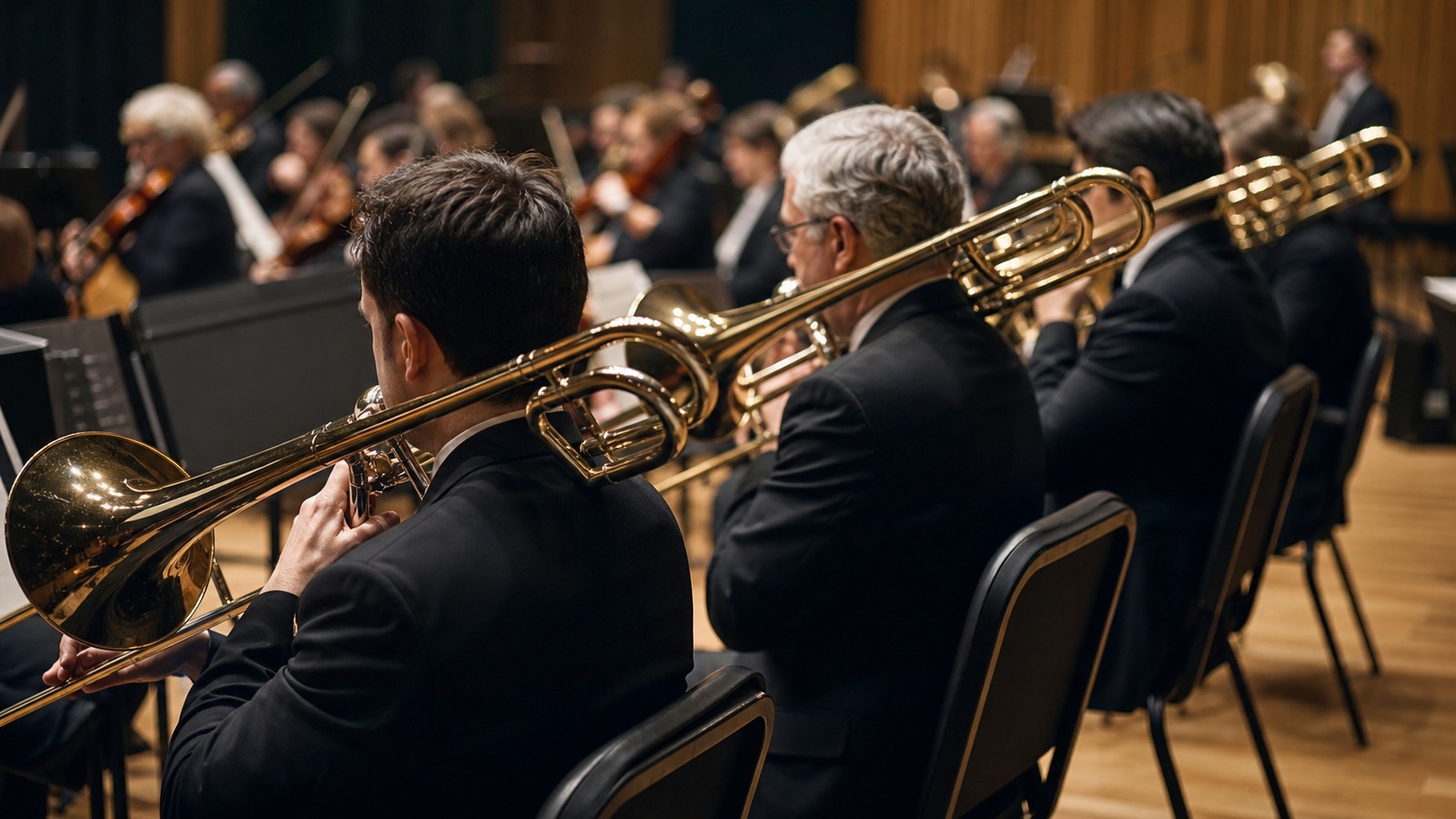
The role of the trombone in classical and symphony music is broader than simply playing loudly behind the orchestra. Trombones can add sacred weight, noble chorales, stormy drama, heroic power, dark color, and quiet support. They often enter at moments when the music needs a new kind of authority. Because the slide allows precise pitch adjustment and vocal phrasing, the instrument can blend with choirs, double low voices, strengthen brass climaxes, or speak as a solemn section. In orchestral writing, the trombone is not just volume. It is character.
A: Their color is powerful, so composers often save them for important structural or dramatic moments.
A: No. Soft chorales, support lines, and blended textures are central orchestral roles.
A: Depth, low-brass weight, and a foundation for the section.
A: Players must stay focused so exposed entrances after silence are accurate.
A: It allows continuous pitch adjustment inside chords.
A: Yes. Mutes create distinct colors that composers use carefully.
A: Function: support, color, climax, blend, drama, or harmonic foundation.
A: Essential. A trombone section often needs to sound like one unified voice.
A: Yes. Tone control, pitch, and discipline transfer across styles.
A: Its mix of slide precision, vocal weight, and brass authority.
A Brass Voice With Historical Gravity
Trombones entered classical traditions with older associations already attached. Earlier sacred and ceremonial uses gave the sound a feeling of seriousness. When composers brought trombones into orchestral music, they could draw on that memory without explaining it.
This is why a trombone entrance can feel important even before it becomes loud. The color itself carries weight.
Not Every Piece Uses Trombones Constantly
Many symphonic works use trombones selectively. Long rests are part of the job. The section may wait for pages and then enter at a structural turning point.
Chorale Writing Shows the Noble Side
Trombone sections can sound like a brass choir inside the orchestra. When written in close harmony with careful balance, they create a stable, vocal sonority. This is one of the instrument's most dignified classical roles.
Good chorale playing requires control, not force. The players must match pitch, tone, articulation, and release so the section feels like one breathing body.
Students who only think of trombone as a loud instrument miss this tradition. Some of the most beautiful orchestral trombone playing is restrained.
The Section Supports Harmonic Foundation
Trombones often strengthen harmony in the middle and lower brass register. They can support tubas, horns, bassoons, cellos, and basses depending on the orchestration. Their sound can make a harmonic arrival feel grounded.
This support role is powerful because it may not draw attention to itself. The listener feels the floor become stronger.
Dynamics Must Be Managed Carefully
A trombone can overpower quickly in an orchestra. Classical playing demands awareness of hall size, orchestration, conductor preference, and the sound around the section. The best players understand that a written forte is not permission to cover everyone; it is a request for the right amount of energy in the full texture.
Blend Matters More Than Bravery
Young players may associate orchestral trombone with heroic volume, but professional section playing begins with blend. The principal, second, and bass trombone parts must line up in pitch and tone. A powerful section that does not blend becomes distracting.
Blend also changes by passage. A trombone may need to match horn warmth, trumpet clarity, choral smoothness, or low-brass darkness.
Bass Trombone Anchors the Color
The bass trombone often provides the depth of the section. It can reinforce low harmonic motion, add menace, support tuba lines, or complete a trombone choir. Its role is not merely lower tenor trombone.
In symphonic writing, the bass trombone player must combine weight with clarity. Too much edge can dominate; too little core can disappear.
The section depends on that low voice to make climaxes feel complete.
Trombones Can Sound Supernatural
Composers have long used trombones for scenes of fate, death, judgment, ritual, or otherworldly power. The association comes from history, register, and the instrument's ability to sound both human and monumental.
Soft Playing Is a Serious Skill
Soft orchestral trombone playing can be more difficult than loud playing. The player must keep air steady, pitch centered, and tone alive without leaning on volume.
Quiet entrances expose preparation. A nervous or unsupported attack can spoil a carefully built moment.
Slide Intonation Is an Advantage
The slide lets trombonists adjust pitch continuously. In orchestral music, this allows the section to tune chords with great precision. That flexibility is one reason trombones can create such stable harmonic blocks.
The advantage requires listening. A player who relies only on fixed positions will miss the fine adjustments that make chords ring.
Great orchestral trombone playing is ear-led as much as hand-led.
Articulation Changes the Character
A trombone line can be broad, clipped, solemn, biting, smooth, or martial depending on articulation. Classical music uses all of these possibilities. The tongue shapes not only clarity but identity.
Trombones Often Mark Structural Moments
When trombones enter after long silence, the music may be announcing a new section, climax, judgment, or change of emotional scale. Their entrances can feel architectural.
Listeners can train their ears for these moments. Notice not only that the trombones enter, but why the composer saved them until that point.
The Orchestra Requires Patience
Trombonists in symphonic settings need patience, counting skill, and mental focus. A part may include long rests followed by exposed, important notes. The player must stay engaged while not playing.
This discipline surprises students who expect constant activity. Waiting well is part of orchestral professionalism.
The entrance after silence must sound as if the player has been participating the whole time.
Mutes Add Additional Colors
Straight, cup, bucket, and other mutes can change the trombone's role. Muted trombones may sound distant, nasal, veiled, comic, or sharply colored depending on the context.
Trombones Connect Brass and Voices
The trombone's smooth slide and vocal register help it bridge instrumental and vocal sound worlds. It can blend with singers in choral-orchestral works and still return to the brass section with authority.
This dual identity is one of the instrument's classical strengths. It can be human and ceremonial at the same time.
A Good Section Thinks Like One Instrument
In symphonic music, the trombone section succeeds when individual players agree on style. They match note lengths, vibrato choices, attacks, releases, and dynamic shapes. Three separate strong players must become one musical voice.
That agreement takes rehearsal and listening. It is not automatic just because the instruments are similar.
The result can be one of the most satisfying sounds in the orchestra.
Classical Study Builds Versatile Players
Studying orchestral trombone helps players develop tone control, rhythm, intonation, blend, and patience. These skills transfer to band, jazz, chamber music, and studio work. Classical playing is not a narrow specialty; it is a foundation for control.
Listen for Function, Not Just Sound
The next time trombones appear in a symphony, ask what job they are doing. Are they supporting harmony, announcing drama, blending with voices, strengthening a climax, or darkening the color?
That question turns listening into understanding. The trombone's role becomes clearer when heard as a musical decision, not just a brass event.
Why the Role Still Matters
Modern orchestras still rely on trombones because the sound remains irreplaceable. Other instruments can be loud, low, or brilliant, but few combine slide precision, vocal gravity, and brass authority in the same way.
The instrument's classical role is therefore both historical and practical. It brings a color composers continue to need.
For players, that history is a responsibility. Every entrance should honor the weight the instrument can carry.
Notice Register Choices
Composers choose trombone register carefully. A middle-register chorale can feel human and blended, while low writing can darken the orchestra and high writing can create urgency. The same section changes meaning as it moves through range.
Follow the Composer's Restraint
Some of the strongest trombone writing works because the composer waits. The section may stay silent until the music needs unmistakable gravity. Players should respect that restraint by entering with purpose rather than impatience.
This also affects practice. A player should rehearse quiet counting, quick readiness, and controlled first notes, not only the loud climax that follows.
Prepare Like Chamber Musicians
Even in a large orchestra, trombone sections often function like chamber groups. They tune triads, balance inner voices, and agree on phrase endings. The section must hear itself clearly before it can serve the full ensemble.
This chamber mindset prevents overplaying. When each player knows their harmonic role, the section can sound powerful without becoming heavy.
The best orchestral trombone moments often feel inevitable because the internal section work is so clean.
Learn From Choral Writing
Singing chorales, or at least thinking like singers, helps trombonists shape classical lines. Breath, vowel-like tone, and unified releases all connect orchestral brass playing to vocal tradition.
Respect the Hall
Trombone sound changes from room to room. A dry rehearsal room may tempt players to push, while a resonant hall may reward less effort. Classical players must adjust to the acoustic instead of using one default volume.
Listening from recordings or asking trusted ears in the hall can help the section understand how much sound is actually reaching the audience.
Carry the Role Into Practice
A student can practice orchestral role even outside orchestra. Long-tone chorales, soft attacks, drone tuning, and recorded excerpts all build the control that classical trombone demands.
The point is to practice function, not just notes. Ask whether a phrase should support, lead, darken, or blend.
That mindset turns symphonic trombone from a style label into a way of listening.
Study Entrances After Silence
Trombone parts often matter most after long rests. Practicing those entrances separately helps players manage breathing, counting, and confidence. The note should sound prepared even if the instrument has been silent for several minutes.
Understand Low Brass Relationships
The trombone section rarely exists alone. It works beside tuba, horns, trumpets, bassoons, low strings, and voices. Knowing which family the section belongs to in a passage helps the player choose color.
Sometimes the trombones should blend downward into the bass foundation. At other times they should stand above the texture with ceremonial clarity.
Learn Repertoire Through Recordings and Scores
Recordings help students hear famous moments, but scores show how those moments are built. Looking at the surrounding orchestration reveals why the trombones enter, what they double, and which voices they must not cover.
Even without full score study, players can mark cues in their parts. Knowing what happens before an entrance makes the role less mysterious.
This preparation turns orchestral playing into participation rather than waiting.
Let Authority Stay Musical
The trombone's classical authority should never become bluntness. Its strongest orchestral moments combine weight with shape, direction, and listening. Power without line is only noise; power with purpose is why composers keep returning to the section.
Watch How Conductors Use the Section
Conductors often treat trombone entrances as moments that need preparation. A breath, cue, or held gesture may show how much weight the section should bring. Players who watch carefully can understand the role before the sound begins.
This visual connection matters because trombone sound can change the whole balance of the orchestra. The cue is not only about timing; it is about character.
Hear the Silence Around the Sound
Trombone writing gains force from contrast. Long silence before an entrance can make the section feel larger, while silence after a chord can leave the audience feeling the resonance of the moment.
Players should therefore value rests as part of the phrase. The music includes what the trombone does not play.
That awareness is one of the quiet skills that separates orchestral playing from simply reading notes.