A Good Glissando Is Controlled, Not Careless
Learning glissandos is one of the great joys of playing trombone because the slide can connect pitches in a way most instruments cannot. The effect can sound funny, bold, jazzy, spooky, theatrical, or deeply expressive depending on the music. Still, a glissando is not just waving the slide and hoping the sound lands somewhere nearby. Good glissandos need stable air, clear start and end pitches, a smooth slide path, and enough taste to match the style. When those pieces work together, the trombone's signature sound becomes musical instead of messy.
A: The slide can connect pitches audibly, creating a continuous effect that valves usually cannot match.
A: No. The smoothest glissandos usually stay on the same partial.
A: The slide motion, air flow, or partial change may be uneven.
A: Holding the target is a useful drill because it confirms pitch and tone.
A: No. They appear in jazz, theater, film, orchestral writing, and comedic effects.
A: The speed should match the rhythm, style, and written marking.
A: Yes. Light articulation can clarify starts or arrivals when the music needs it.
A: The right arm may be pulling from the shoulder or the left hand may not be stabilizing the instrument.
A: They can, as long as they first use easy notes, good slide control, and clear targets.
A: A simple recording device gives quick feedback on timing, smoothness, and landing pitch.
Know the Start and Destination
A clean glissando begins before the slide moves. The player should hear the first pitch, know the target pitch, and understand how quickly the slide must travel. Without that plan, the glissando can become a vague smear that lands late or out of tune.
Practice the two endpoint notes separately first. Play the start, stop, play the destination, and listen for tone quality at both places. Then connect them slowly. The slide movement should serve the pitches rather than replace them.
Keep the Air Moving Through the Slide
The slide creates the audible sweep, but the air carries the sound across it. If the air stops, the glissando breaks into bumps or weak spots. Think of one continuous line passing through several changing slide positions.
Use Relaxed, Direct Slide Motion
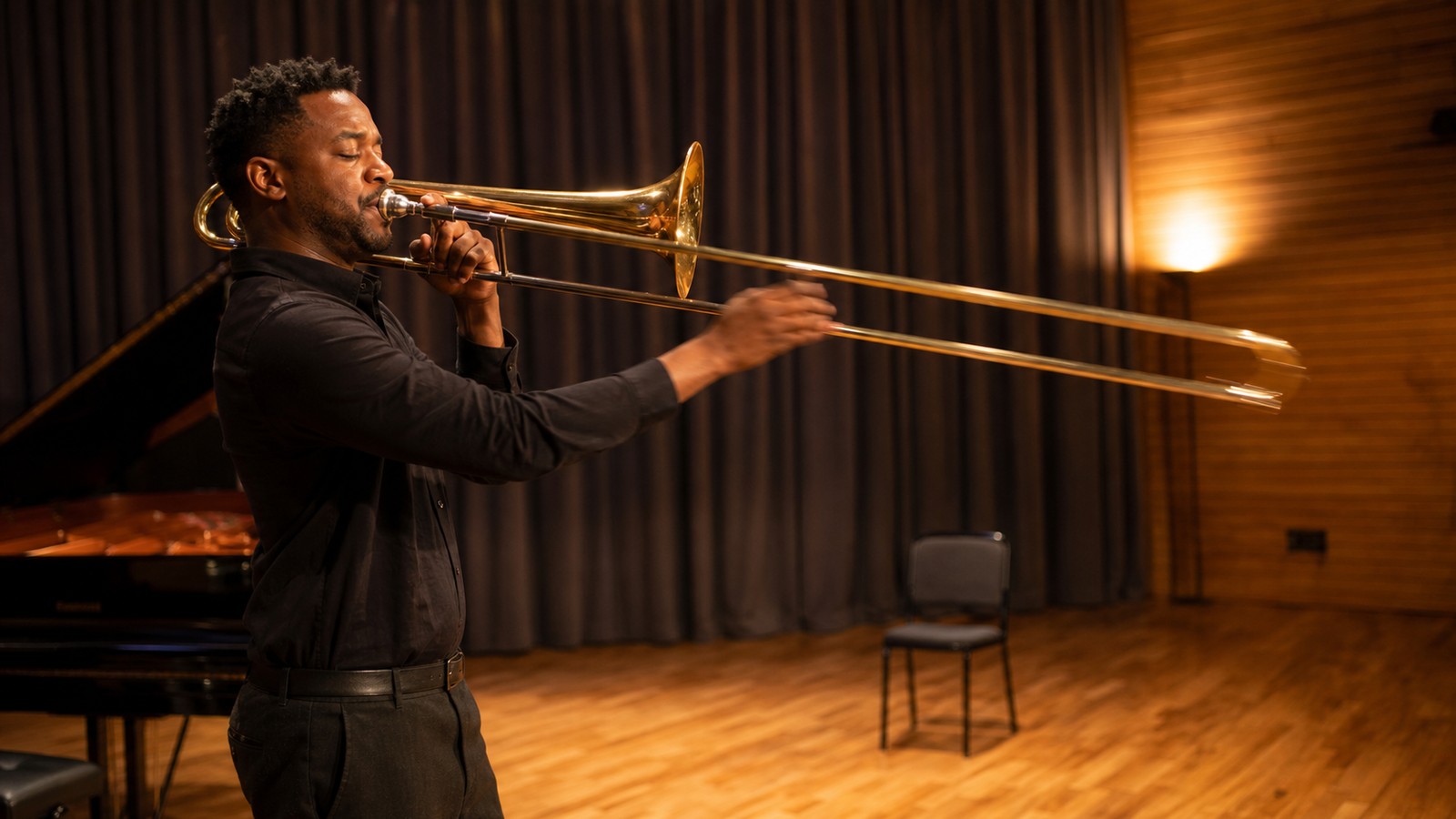
A glissando asks the slide hand to move smoothly without tightening the shoulder. The arm should travel in a direct path, and the wrist should stay loose enough to avoid jerks. Fast glissandos especially need a relaxed setup because tension makes the motion uneven.
Slow practice helps the hand feel the route. Move from one position to another while sustaining a comfortable note and listen for bumps. The goal is not to hide the slide change; it is to make the movement intentional.
Avoid snapping the slide into place unless the style specifically calls for a sharp comic effect. Most musical glissandos benefit from a controlled arrival that lets the destination pitch speak clearly.
Understand Partial Limits
Not every written slur or scoop is a true slide glissando. On trombone, the easiest glissandos happen when the start and destination sit on the same partial and can be connected by slide movement. If the line crosses partials, the player may need a lip slur, light articulation, or a stylized effect rather than a seamless slide sweep.
This is why some glissandos sound natural and others feel interrupted. The instrument's harmonic series determines how the slide can connect notes. Learning those limits makes the effect more predictable.
Match the Style of the Music
A jazz fall, a Broadway smear, a classical portamento, and a cartoon slide effect do not ask for the same sound. Some need speed and attitude. Others need elegance and restraint. Before playing the effect, decide what character the passage needs.
Practice Slow Glides for Control
Slow glissandos are unforgiving in the best way. They reveal uneven air, hesitant slide motion, and a weak destination pitch. Start with easy intervals in the middle register and move at a tempo slow enough to hear the whole line.
Use a drone when possible. A drone makes the target pitch easier to hear and keeps the glissando from becoming only a physical movement. The ear should guide the hand toward the destination.
Practice Fast Glissandos for Timing
Fast glissandos are about timing as much as sound. The slide must leave on time, travel cleanly, and arrive exactly where the next rhythm needs it. A fast sweep that arrives late will disrupt the phrase even if it sounds exciting.
Count through the effect instead of treating it as a free gesture. Clap or speak the rhythm first, then add the slide motion without playing. Once the timing feels clear, play the glissando at a comfortable dynamic.
Tempo should increase gradually. Rushing into full speed often teaches the arm to flail. Clean rhythm at a slower tempo builds the trust needed for a confident fast effect.
Avoid Dragging the Horn With the Arm
A wide glissando can pull the instrument if the player grips too hard or reaches from the shoulder. Keep the left hand stable and let the right arm move the slide independently. The instrument should remain balanced at the embouchure.
Use Articulation When Needed
Some effects need a clean attack before the slide moves. Others need a re-articulated target note so the destination does not disappear. Light articulation can clarify the phrase without ruining the glissando character.
Listen to recordings in the style you are playing. The best choice is often obvious when you hear how experienced trombonists shape the same kind of passage.
Make the Destination Beautiful
The end of the glissando is where many players lose control. They focus on the sweep and forget that the arrival note still needs pitch, tone, and length. Practice holding the destination after each glissando so the ear expects a real note, not just an effect.
Use Glissandos Tastefully
Because the glissando is so recognizable, it can easily become too much. In written music, follow the marking and style carefully. In improvised or informal playing, use the effect when it adds character rather than whenever the slide happens to allow it.
Tasteful glissandos make people notice the phrase. Overused glissandos make people notice the trick. The difference is musical intent.
A strong player can make a glissando humorous, elegant, bold, or subtle. The technique is the same family of movement, but the purpose changes the sound.
Record and Refine the Effect
Recording short attempts is one of the fastest ways to improve glissandos. From behind the horn, the slide motion may feel smooth even when the sound has bumps. A recording gives honest feedback about timing, tone, and arrival.
Listen for the start, the travel, and the landing separately. If the start is unclear, fix the attack. If the middle is uneven, slow down the slide path. If the landing is out of tune, isolate the target. Breaking the effect into parts makes improvement much easier.
Mark the Shape in Your Part
A glissando marking can be interpreted several ways, especially when the printed part does not show exact timing. Add a small personal reminder about where the motion begins, where it lands, and whether the effect should be broad or subtle. The mark should help your memory without cluttering the page. Clear preparation makes the effect feel less like a surprise when it arrives in rehearsal.
Blend With the Section
In ensemble music, a glissando may need to match other trombones or brass players. Length, volume, arrival pitch, and character should be discussed or copied from the lead player. A beautiful individual sweep can still sound wrong if it arrives before everyone else.
Section practice should begin with the endpoints. Tune the beginning and ending notes, then add the motion between them. This keeps the group from treating the effect as decoration outside the phrase.
Use Falls and Doits With Care
Falls and upward scoops are related effects, but they have their own style. A fall may release away from a pitch without a precise destination, while a doit may flick upward with attitude. Even these freer effects need rhythm and tone. The audience should hear personality, not a player losing control of the slide.
Avoid Letting Volume Replace Character
Because glissandos are exciting, players often make them too loud. Volume can be useful, but it is not the only way to create drama. Speed, shape, tone color, and timing can make the effect speak without covering the ensemble.
Practice the same glissando at several dynamic levels. A softer version teaches control, while a fuller version teaches confidence. When both are available, the player can choose the right color for the music.
Clean the Slide Before Blaming Technique
A sticky slide makes every glissando harder. If the slide grabs, chatters, or slows down unevenly, basic cleaning and lubrication should happen before the player assumes the arm is the only problem. Technique still matters, but equipment condition can make smooth motion impossible.
Turn the Effect Back Into a Phrase
After the glissando works by itself, put it back into the musical line. Play two measures before it and two measures after it. Notice whether the breath, rhythm, and tone stay connected. This step prevents the glissando from feeling like a separate stunt inserted into the piece.
The best version often feels smaller than expected from the player's side of the bell. In the room, the effect carries strongly. A recording or teacher can help decide how much motion and color the phrase actually needs.
When the phrase leads the effect, the glissando becomes expressive. When the effect leads the phrase, the music can lose direction. Keep the gesture tied to the line.
Practice Without the Horn First
For difficult timing, move the slide silently while counting the rhythm. This separates the arm motion from tone production and lets the player discover whether the gesture itself is organized. If the hand cannot arrive on time without playing, adding sound will usually make the problem harder to hear.
Choose the Right Register for Learning
Beginners should start glissandos in a comfortable middle register where the tone is stable. That register makes it easier to hear the effect, maintain air, and control the slide. Very low glissandos can spread, while high glissandos may tighten before the slide motion is understood.
Once the movement feels natural, move the same idea into other registers slowly. The shape may need small adjustments because the instrument responds differently across partials. Let the sound guide the transfer rather than assuming every register will feel identical.
Let Silence Frame the Gesture
A glissando often sounds cleaner when the notes before and after it are not crowded. Practice entering from a rest, leaving space after the arrival, and then fitting the effect into busier music. Silence teaches the player to hear the whole shape instead of only the noisy middle of the slide movement.
Check the Character From the Audience Side
The player hears the trombone from behind the bell, so the effect can feel different than it sounds in the room. Record from several feet away or ask a listener to describe the character. The glissando might need less slide speed, a clearer arrival, or a different dynamic than expected.
This outside perspective keeps the technique honest. The goal is not to make the player feel busy. The goal is to make the listener hear the intended sweep, joke, sigh, lift, or dramatic color.
Keep the Slide Sound Intentional
The trombone can make a slide effect almost accidentally, so intention matters. Before repeating a glissando, decide whether it should sound smooth, comic, lazy, urgent, elegant, or brassy. That word changes the breath, speed, arrival, and volume. A player who can name the character before playing is much more likely to create an effect that belongs in the music rather than one that simply announces the slide. Intention turns the slide from a novelty into a voice with musical purpose.