A Clean Slide Makes Every Trombone Skill Easier
Learning how to lubricate and clean your trombone slide is one of the most important maintenance skills a player can build. A smooth slide supports accurate positions, relaxed posture, clean articulation, and confident practice. A dirty or dry slide encourages force, late movement, and frustration. The process is not complicated, but it does require care: support the slide, wipe the inner tubes, remove old residue, use the right lubricant, avoid household shortcuts, and pay attention to how the slide feels afterward. Good slide care protects both the instrument and the player's technique.
A: Lubricate when motion feels dry or slow, and follow your product's directions.
A: Yes. Fresh lubricant works best after old residue and dirt are removed.
A: No. Use products intended for trombone slides and follow safe guidance.
A: There may be alignment problems, dents, worn parts, or residue inside the outer slide.
A: No. Too much product can make the slide sluggish and messy.
A: Use both hands, work over a towel, move slowly, and ask for help when unsure.
A: Never force it. Stop and get help if gentle cleaning does not solve the issue.
A: Yes. Sticky motion can cause late positions, tension, and poor practice habits.
A: It should move smoothly, predictably, and without grinding or catching.
A: Ask for inspection when cleaning and proper lubricant do not restore smooth action.
Understand What the Slide Needs
A trombone slide needs clean surfaces, proper lubrication, and careful handling. Lubricant cannot fully overcome dirt, dents, misalignment, or old residue. If a slide is rough, the first question is whether it is clean and undamaged.
Players sometimes keep adding more product to a dirty slide. That can create buildup and make the action worse. Cleaning and lubrication work together.
Work Over a Safe Surface
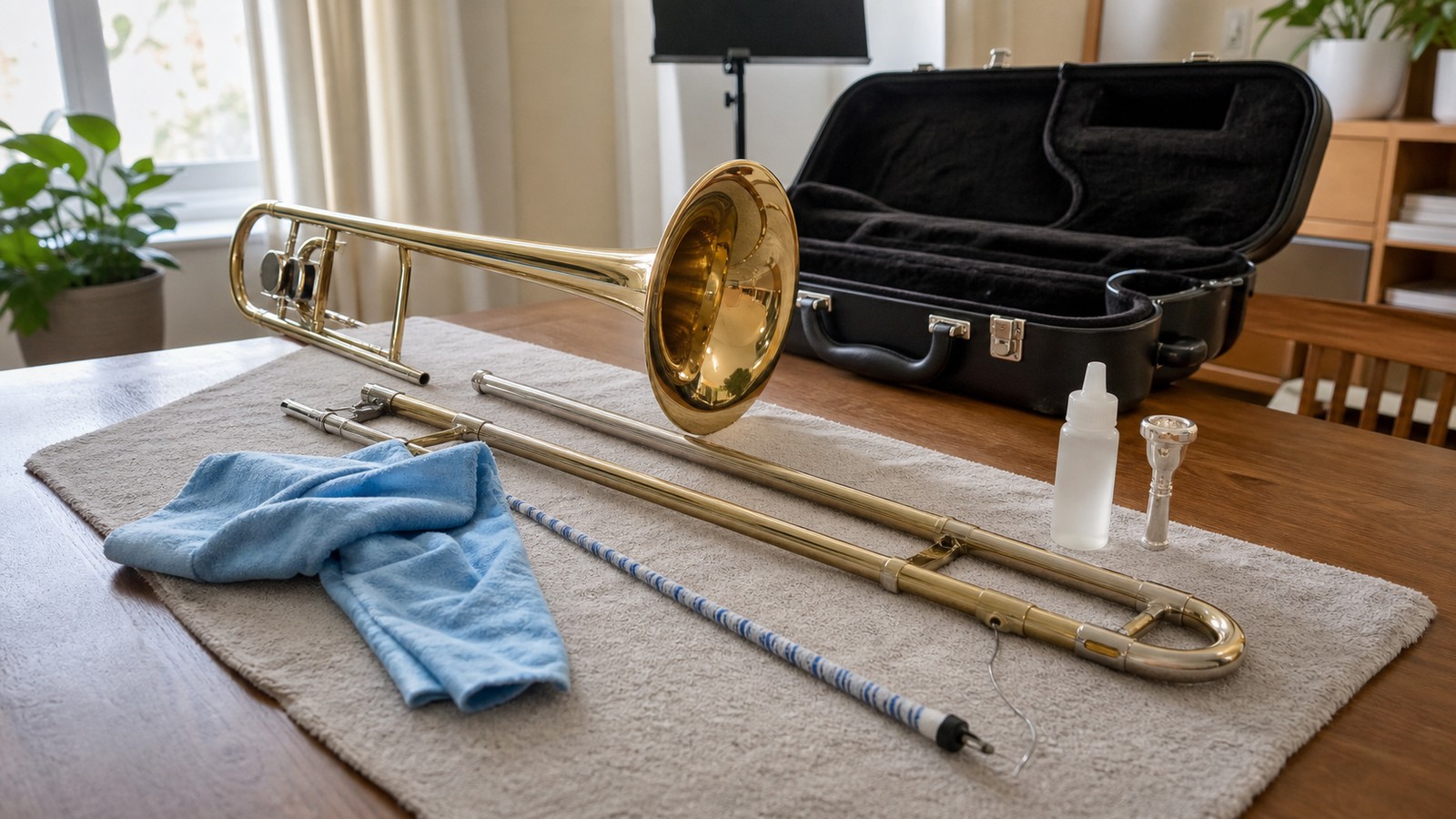
Before removing or cleaning the slide, set up a safe workspace. Use a clean towel on a table or bench so parts do not roll, scratch, or drop. Keep the bell section away from edges and make sure the slide is fully supported.
Separate the Slide Carefully
Unlock the slide if needed and separate it from the bell section gently. Hold the slide with both hands and avoid twisting. The inner and outer slide tubes are precise parts, and careless handling can create alignment problems.
Never set the slide on a hard floor or lean it where it can fall. If you are working with a young student, supervise this step until careful handling becomes automatic.
A good habit is to move slowly whenever the slide is off the horn. Speed is not worth the repair risk.
Wipe the Inner Slide Tubes
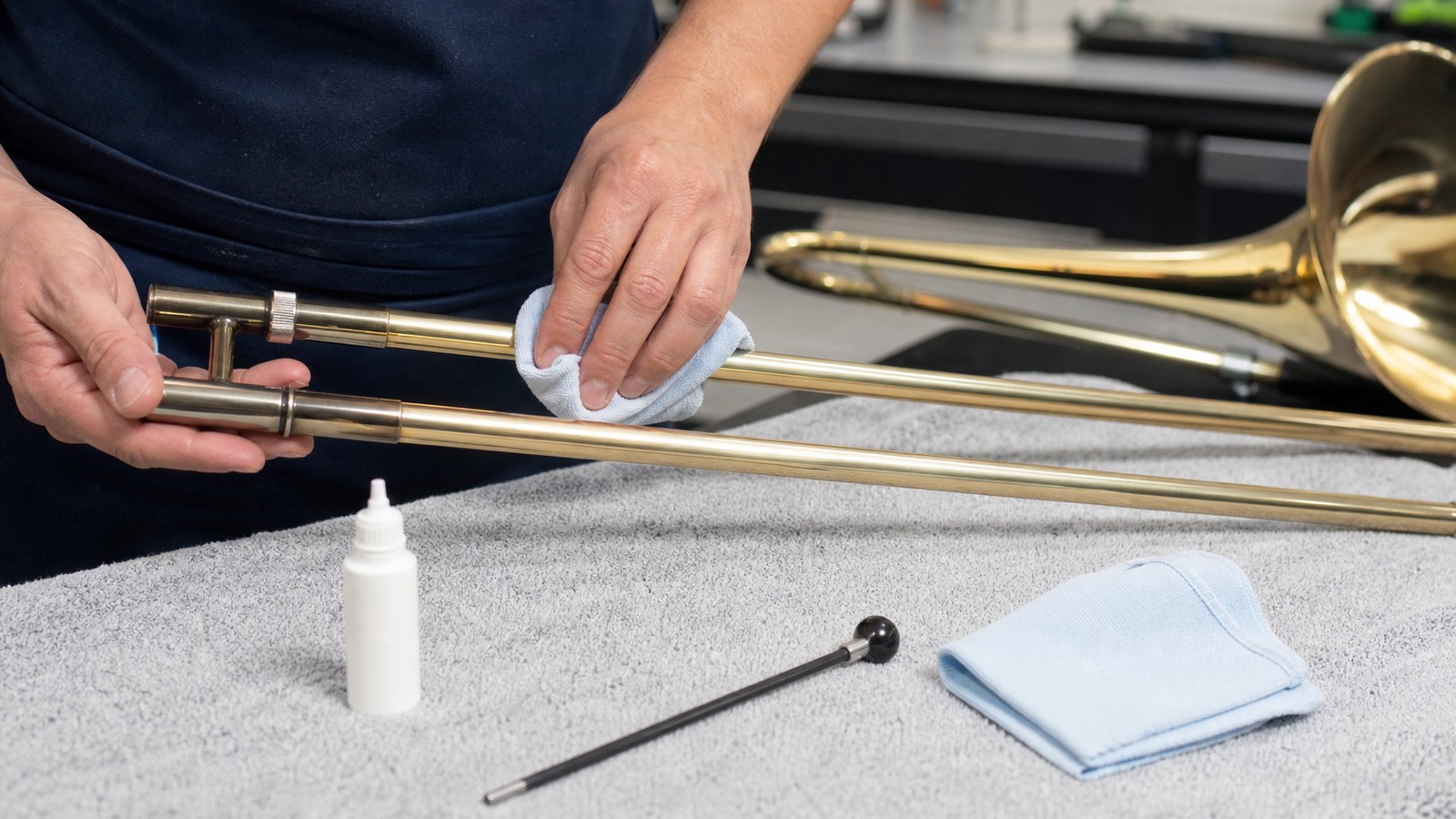
Use a clean, soft cloth to wipe old lubricant, moisture, and residue from the inner slide tubes. Move along the length of the tube rather than scrubbing harshly. The surface should feel clean and even.
If the cloth comes away dirty, keep wiping with a clean area. Old residue can interfere with new lubricant and make the slide feel uneven.
Clean the Outer Slide When Needed
The outer slide can collect residue inside. A proper cleaning rod with cloth, a flexible cleaning tool, or manufacturer-approved method can help remove buildup. Be careful not to use anything that scratches the inside of the tubes.
Choose the Right Lubricant
Different players use slide cream, liquid lubricants, or two-part systems depending on preference and instrument needs. Follow the product directions and teacher or repair-shop guidance. More product is not automatically better.
Avoid household oils, petroleum products not designed for slides, or random substitutes. The wrong material can create buildup, attract dirt, or damage finishes and components.
Apply a Small Amount Evenly
Apply lubricant sparingly and evenly to the appropriate areas of the inner slide. Too much can make the slide sluggish or messy. Too little can leave the slide dry. The goal is a thin, consistent layer that supports smooth motion.
After applying, assemble the slide carefully and move it slowly through the positions to distribute the product.
If using a water-activated product, mist lightly as directed. Drenching the slide can create drips and mess without improving action.
Test the Slide Gently
Once assembled, test the slide with gentle motion. It should move smoothly without grinding, catching, or requiring force. Do not slam the slide to prove it is fast. Smoothness matters more than drama.
Know When Cleaning Is Not Enough
If the slide still sticks after cleaning and proper lubrication, the problem may be alignment, dents, worn stockings, or damage. Adding more lubricant will not fix those issues. A repair technician should inspect persistent problems.
A slide that catches in the same spot repeatedly is especially suspicious. That pattern often points to a physical issue rather than ordinary dryness.
Avoid Common Shortcuts
Do not use cooking oil, lotions, heavy grease, or mystery lubricants. Do not polish the slide tubes aggressively. Do not force a stuck slide. Do not clean with abrasive materials. These shortcuts can turn a small maintenance issue into a repair.
Build a Simple Routine
For many players, a quick wipe and lubrication check before regular practice is enough. Deeper cleaning can happen on a schedule based on use, climate, and teacher guidance. The important part is consistency.
Students in marching band, outdoor rehearsals, or dusty spaces may need more frequent attention. Players who practice indoors in stable conditions may need less.
The slide will tell you a lot. If it starts feeling slow, gritty, or uneven, maintenance should happen before bad movement habits form.
Keep Water and Dirt Under Control
Moisture and dirt are normal, but they should not be ignored. Empty the water key appropriately, wipe residue, and avoid placing the slide where lint or grit can stick to lubricant. Small particles can make the slide feel rough.
Teach Young Players Safe Handling
Young trombonists should learn slide care slowly. Show them how to support both slide tubes, where to place the slide, how much lubricant to use, and when to ask for help. Maintenance is part of musicianship.
A student who learns safe handling early is less likely to damage the slide while trying to fix it.
Listen to Playing Results
A clean, lubricated slide should improve more than physical motion. Position changes become calmer, articulation lines up more easily, and the player can hold posture without reaching forcefully. Maintenance supports technique.
After cleaning, play slow scales and simple position patterns. Notice whether motion feels relaxed and accurate.
If the slide feels better, reinforce that connection. Good maintenance should make good playing easier.
Ask a Technician When Unsure
If you are unsure whether the slide is dirty, dry, damaged, or misaligned, ask a repair technician. A quick professional look can prevent accidental damage from over-cleaning or forcing. Teachers can also help beginners understand normal slide feel.
A well-maintained trombone slide should feel predictable. When it does not, the safest choice is to diagnose the cause rather than guessing. Good slide care is simple, but the slide itself is precise. Respect that precision and it will reward your playing.
Store the Slide Clean
Before putting the trombone away, make sure the slide is not covered in excess product or grit. A clean storage habit keeps residue from hardening and reduces the work needed at the next practice session.
Use the Right Amount of Water
Some slide products need a light mist of water to activate properly. Light is the key word. Too much water can drip, dilute product unevenly, and make a mess inside the case or on the floor. Follow the product directions and adjust only after listening to how the slide responds.
Players should also know whether their lubricant is designed for water activation at all. Different systems work differently. Mixing methods without understanding them can create sticky residue.
Notice Changes After Cleaning
After cleaning and lubricating, pay attention to whether the slide feels smooth immediately and whether it stays smooth through practice. If the improvement disappears within minutes, there may be old buildup, hidden dirt, or a mechanical issue.
Keep Supplies Clean Too
A dirty cloth or contaminated lubricant bottle can put grime back on the slide. Store cleaning supplies in a clean pouch or container, replace cloths when they become dirty, and keep bottle tips away from dusty surfaces. Clean supplies make slide care more effective.
This small habit matters for students who carry supplies in backpacks or cases. Maintenance tools should not become another source of grit.
Learn the Slide's Normal Feel
Every trombone has a slightly different slide feel. Some are naturally very light, while others have a bit more resistance. The player should learn what normal feels like on their own instrument so changes are noticed early. A sudden gritty spot, slow return, or uneven movement should not be ignored.
Avoid Cleaning as Guesswork
Slide care should be deliberate. If the slide is dry, use appropriate lubricant. If it is dirty, clean it before adding more product. If it catches in one place, stop and inspect rather than scrubbing harder. Guesswork often creates more residue or risks physical damage.
A simple checklist helps: safe surface, wipe inner tubes, clean outer slide when needed, apply a small amount, distribute gently, test slowly, and listen while playing. Following the same order makes maintenance calmer and easier to teach.
Connect Maintenance to Better Practice
A smooth slide makes practice more honest. When the slide moves freely, missed positions are more likely to come from hand accuracy or listening rather than equipment drag. That clarity helps the player fix the right problem.
Check the Slide Before Important Playing
Before concerts, auditions, lessons, or long rehearsals, check slide action early enough to fix small issues calmly. Waiting until the warmup room creates pressure, and pressure leads to sloppy maintenance. A quick wipe and test at home can prevent a distracted start.
This habit also teaches players to notice changes. If the slide felt smooth yesterday and rough today, something changed. Catching that early protects both the instrument and the player's confidence.
Avoid Turning Maintenance Into Force
Cleaning should make the slide easier to move, not become a rough physical workout. If wiping, lubricating, and gentle testing do not help, forcing the slide is not the next step. Stop and get better information.
Respecting that boundary prevents damage. The slide is precise enough that patience is cheaper than repair.
A player who learns to stop at the right moment will save money and frustration over the life of the instrument.
Make Slide Care Routine, Not Dramatic
Slide maintenance works best when it is ordinary. A quick check before practice, a careful wipe when needed, and correct lubricant used sparingly will prevent many problems. Waiting until the slide barely moves turns a simple habit into an urgent repair question. Calm routine care is easier on the instrument and easier on the player.
Let Smooth Motion Shape Better Habits
A clean slide encourages relaxed playing. The hand can arrive on time, the shoulder can stay quiet, and the player does not need to shove the instrument into position. Good motion makes good technique easier to feel.
That is why slide care belongs in regular musicianship. It protects the horn, but it also protects the player's sense of ease. When maintenance is consistent, practice can focus on sound and music instead of fighting the slide. Over time, that consistency teaches the player to notice small changes before they become emergencies. A clean slide feels ordinary in the best way: dependable, quiet, and ready whenever the music asks for movement. That reliability supports lessons, rehearsals, and daily confidence, while helping the player trust every position change during slow practice and performance without building extra tension. Smooth maintenance gives the hand permission to stay relaxed and accurate across the full slide, even when the music moves quickly in rehearsal or under concert pressure too.