Trombone Cleaning Works Best as a Rhythm
How often you should clean your trombone depends on how much you play, where you play, and what kind of cleaning you mean. A quick wipe after practice is different from mouthpiece cleaning, slide maintenance, tuning slide grease, or a deeper bath-style cleaning. The mistake is waiting until the instrument smells, sticks, or sounds strange. A better approach is to build a rhythm: small care often, focused cleaning weekly or monthly, and deeper cleaning when use or symptoms call for it. Consistency matters more than dramatic rescue cleaning.
A: Do quick moisture and wipe-down care after playing, but deeper cleaning is less frequent.
A: Weekly is a practical baseline for many students, with extra cleaning after illness or sharing.
A: Not entirely. Slide feel should guide cleaning and lubrication.
A: Gentle care is fine, but aggressive scrubbing or harsh products can cause damage.
A: When buildup, odor, sticking, or unknown history makes home cleaning uncertain.
A: Usually yes, because outdoor use adds dust, sweat, weather, and rushed packing.
A: Clean sooner and consider professional help if the odor remains.
A: Follow the rental agreement and ask before doing anything beyond normal care.
A: Clean cloths, mouthpiece brush, slide product, and safe cleaning tools.
A: Moisture after playing, mouthpiece weekly, slide by feel, deeper cleaning as use demands.
Separate Daily, Weekly, and Deep Cleaning
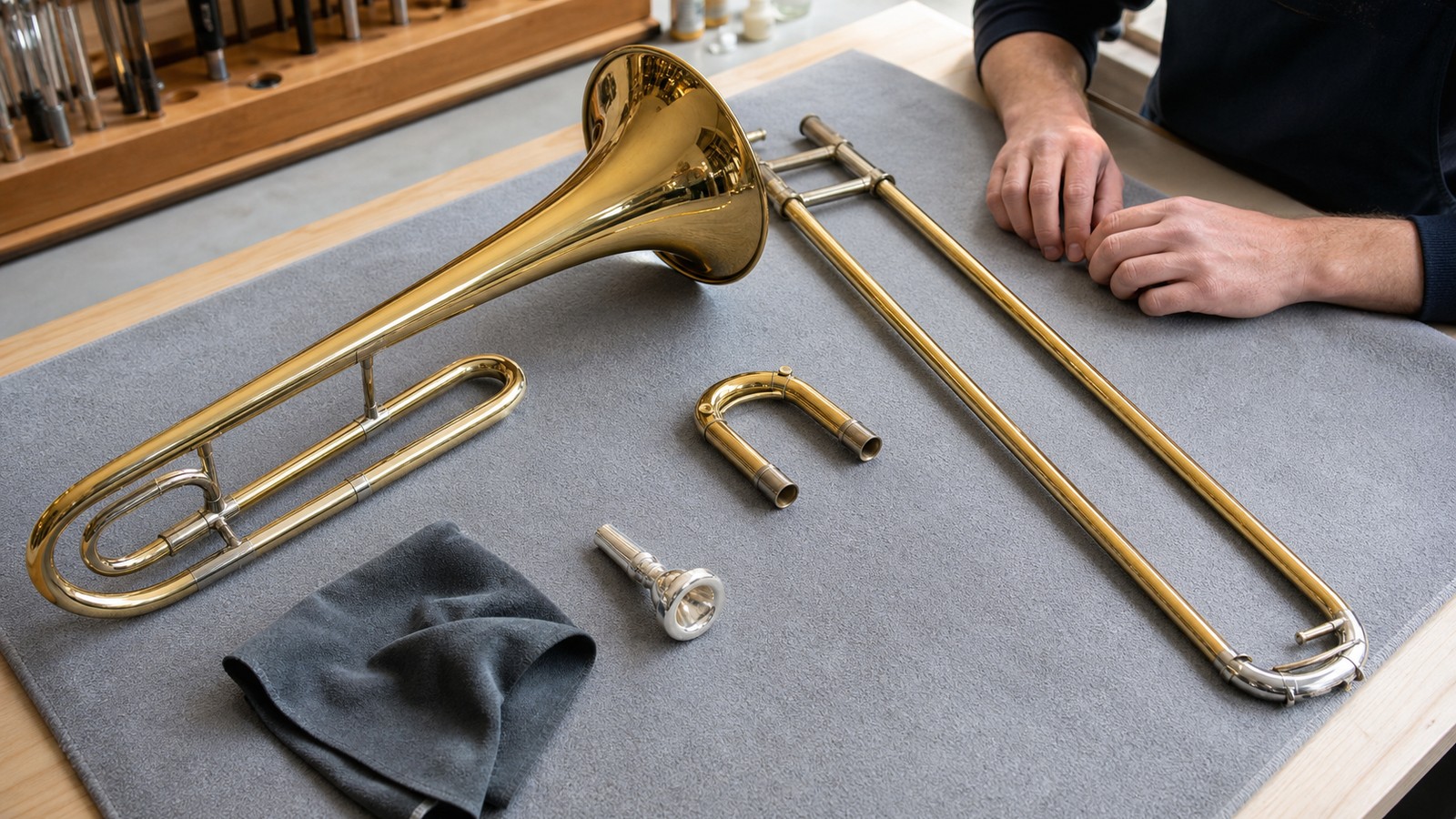
Daily cleaning is mostly moisture control, wiping, and safe packing. Weekly cleaning may include mouthpiece care, slide inspection, and checking supplies. Deeper cleaning reaches tubing and areas that collect residue over time.
Players get confused when all of this is called cleaning. Naming the level helps the routine feel manageable instead of overwhelming.
Handle Moisture Every Time You Play
After playing, empty moisture appropriately and avoid putting a wet, dirty instrument straight into a cluttered case. This small habit prevents odors, residue, and surprise problems before the next session.
Wipe Contact Areas Often
Hands leave oils and dirt on braces, slides, and lacquer. A soft clean cloth after practice keeps the instrument looking better and reduces grime around touch points. This does not need to become a polishing ritual every day.
The cloth itself should be clean. A dirty case rag can move old lubricant and grit around the horn instead of cleaning anything.
Students should learn that wiping is not about perfection. It is about preventing buildup from becoming the normal surface of the instrument.
Clean the Mouthpiece Weekly
For many students, weekly mouthpiece cleaning is a sensible baseline. Warm water, mild soap when needed, and a proper mouthpiece brush can keep residue from collecting in the throat and backbore.
Clean more often after illness, sharing, camps, or heavy playing. The mouthpiece touches the face, so hygiene should not wait until it looks unpleasant.
Check Slide Lubrication by Feel
The slide should be cleaned and lubricated as often as needed to stay smooth, not according to a rigid calendar. If it feels dry, gritty, slow, or uneven, address the cause before practicing through tension.
Do a Light Slide Reset Regularly
A light reset might mean wiping inner tubes, removing obvious residue, applying the correct product sparingly, and testing the slide gently. For frequent players, this may happen several times a week. For casual players, it may happen less often.
The key is to clean before piling on more lubricant. Repeated layers can create the very sluggishness the player is trying to fix.
Schedule Deeper Cleaning by Use
A trombone used daily in school band, marching season, or private lessons will need deeper cleaning more often than one played occasionally at home. Heavy use brings more moisture, more hand contact, more residue, and more case traffic.
Some players plan a deeper cleaning every few months, while others time it around concert cycles or school breaks. The exact schedule should fit the instrument and the player's ability to clean safely.
If deeper cleaning feels intimidating, ask a teacher or repair shop to demonstrate. A poorly handled bath can cause more trouble than it solves.
Let Symptoms Move the Schedule Up
Bad smells, sticky slides, visible residue, sluggish tuning slides, gurgling that returns quickly, or a mouthpiece that feels unpleasant are all signs that cleaning should happen sooner. The instrument is giving feedback.
Clean More During Marching Season
Outdoor rehearsals add dust, sweat, weather changes, and rushed packing. Trombones used outside should be wiped and checked more often. The slide may need extra attention because grit and residue can build quickly.
Marching players should also inspect the case. Field use often brings grass, dirt, and loose items into storage areas.
Do Not Overclean Aggressively
Cleaning is helpful, but aggressive cleaning can damage finishes, scratch tubing, or bend parts. More scrubbing is not automatically better. Use proper tools and gentle methods.
Avoid abrasive materials, strong chemicals, and force inside tight tubing. Brass instruments need care, not punishment.
The best routine keeps the horn clean enough that harsh rescue cleaning is rarely needed.
Use Professional Cleaning When Needed
If the trombone has heavy buildup, mystery odors, stuck slides, valve issues, or years of neglect, a professional cleaning may be wise. Repair shops can clean while also checking alignment, corks, solder joints, and wear.
Build a Student-Friendly Calendar
Students do better with simple routines: wipe after playing, clean the mouthpiece weekly, check the slide before rehearsals, and schedule deeper cleaning around breaks. A complicated calendar is less likely to survive real school life.
Parents can help by keeping supplies visible and asking about the feel of the slide rather than only asking whether cleaning was done.
Adjust for Shared or Rental Instruments
Shared instruments deserve more frequent mouthpiece cleaning and careful contact-area wiping. Rental instruments should be cleaned within the rules of the rental agreement. If something seems unsafe or stuck, report it instead of forcing it.
A player who inherits an older school horn should ask when it was last professionally cleaned. Unknown history changes the cleaning conversation.
Good cleaning protects both the current player and the next person who may use the instrument.
Keep Supplies Ready
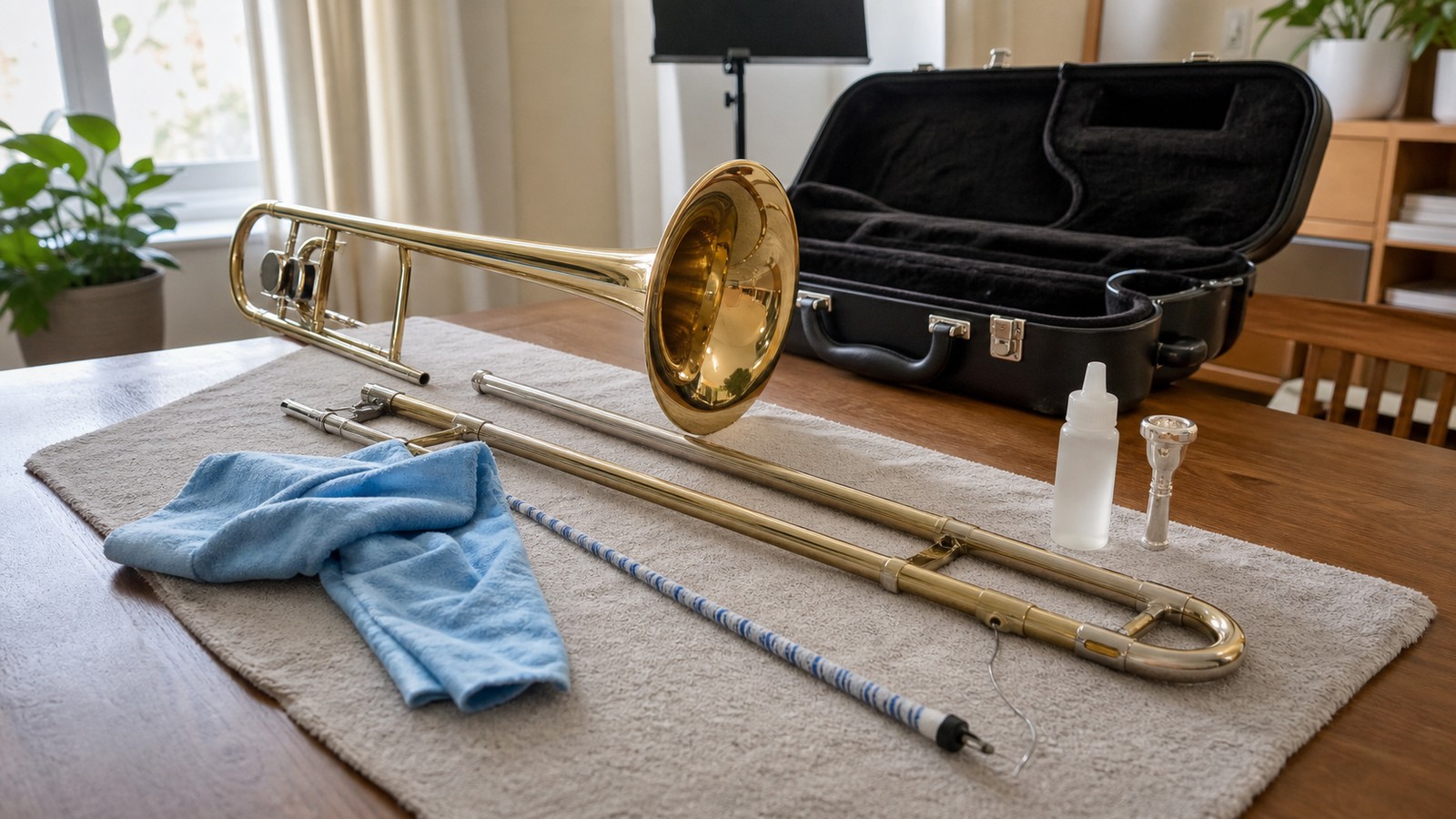
A routine fails when supplies are missing. Keep clean cloths, mouthpiece brush, slide product, and safe cleaning tools where they can be found. Replace dirty cloths and leaking bottles before they create new mess.
Learn the Instrument's Normal Feel
Cleaning frequency becomes easier when players know what normal feels like. A healthy slide, clean mouthpiece, and smooth tuning slide create a baseline. Changes from that baseline tell the player what needs care.
Beginners may need a teacher to help define normal. Once they feel the difference, maintenance becomes less abstract.
Make Cleaning Part of Musicianship
A clean trombone does not automatically create good tone, but it removes unnecessary obstacles. Smooth slides, clear mouthpieces, and safe storage let players spend more energy on listening, rhythm, and sound.
The right frequency is the one that keeps the instrument dependable without turning maintenance into anxiety.
Small, steady care wins. It is easier to keep a trombone healthy than to rescue one that has been ignored for months.
Use Concert Cycles as Reminders
Concerts, auditions, chair tests, camps, and school breaks create natural moments to review cleaning. The best time is not five minutes before walking onstage. A week or two earlier gives the player time to clean gently, replace supplies, and ask for help if something feels wrong.
Notice How Long Cleaning Benefits Last
After cleaning the mouthpiece, wiping the slide, or refreshing lubricant, notice how long the improvement lasts. If the slide is smooth for several practices, the routine is probably working. If it becomes rough again within minutes, deeper cleaning or repair may be needed.
This turns cleaning frequency into feedback rather than superstition. The instrument tells the player whether the current routine is enough.
Coordinate Cleaning With Practice Load
A player practicing fifteen minutes twice a week does not create the same maintenance demands as a student rehearsing daily, marching on weekends, and taking private lessons. More playing means more moisture, more hand contact, and more chances for residue to collect.
Practice load also changes during the year. A light summer schedule, intense camp week, and concert-season push may all require different cleaning attention. The routine should flex with the musician's actual life.
Thinking this way prevents both neglect and overreaction. Cleaning becomes proportional to use.
Keep Mouthpiece Care Personal
Even when a school provides instruments, the mouthpiece routine should feel personal. The mouthpiece touches the face, so students should understand how to clean it, where to store it, and why sharing without cleaning is not a casual habit.
Ask Teachers to Check the Baseline
Beginners often do not know whether their slide is normal, their mouthpiece is clean enough, or their tuning slides need attention. A teacher can establish a baseline by feeling the slide, looking at the mouthpiece, and explaining what healthy maintenance feels like.
Once that baseline is clear, students can notice change more accurately. They stop cleaning only because a calendar says so and start responding to real instrument feedback.
Avoid Letting Supplies Become the Problem
Cleaning supplies can create mess when they are neglected. A leaking bottle, dirty cloth, bent brush, or grimy pouch can make the case less clean than before. A maintenance routine should include checking the tools themselves.
Replace items that are no longer helping. A fresh cloth or new mouthpiece brush costs far less than playing through weeks of residue because the old supplies looked familiar.
Keeping supplies clean also makes the routine more appealing. Players are more likely to care for the horn when the kit feels organized.
Let Reliability Be the Goal
The point of cleaning frequency is not to win a maintenance contest. The point is a trombone that opens easily, smells normal, moves smoothly, and lets the player begin music without equipment distractions. If that reliability is present, the routine is probably close to right.
Build a Post-Playing Reset
A post-playing reset can be simple: empty moisture, wipe contact points, remove the mouthpiece, check the case, and put supplies away. This is not deep cleaning. It is the small routine that keeps tomorrow's practice from starting with yesterday's mess.
Students who rush out of rehearsal may need this reset written into the last minute of practice. The habit works best when it is expected, not optional.
Use Smell and Feel as Early Warnings
The trombone often warns the player before a problem becomes obvious. A stale smell, gritty slide, sticky tuning slide, or unpleasant mouthpiece feel means the routine needs attention. These warnings should move cleaning earlier.
Players should avoid treating odor as normal. Instruments collect moisture, but they should not smell neglected. Cleaning sooner is easier than apologizing for a horn that announces its condition from across the room.
Feel matters just as much. A slide that no longer feels predictable is asking for care.
Clean Before Switching Products
If slide lubricant seems to stop working, clean the slide before changing brands. Otherwise the new product is being tested on top of old residue, and the player may blame the wrong cause.
Keep a Simple Family Routine
Families can support cleaning without turning it into a nightly argument. Keep supplies in one place, choose one weekly mouthpiece-cleaning time, and ask whether the slide feels normal. Simple questions build better habits than vague reminders.
As the student matures, responsibility should shift toward the player. The goal is an independent musician who notices when the instrument needs care.
Review the Routine After Problems
When a slide sticks, a mouthpiece smells bad, or a case becomes messy, use the problem as feedback. Something in the routine was missing, unclear, or too hard to repeat.
Adjust the system rather than simply promising to try harder. Move the cloths, replace the brush, clean sooner after marching rehearsal, or schedule a repair-shop check.
A cleaning schedule improves when it responds to real problems and then prevents them from returning.