Most Trombone Dent Repair Is a Repair-Shop Job
Trombone dent repair is tempting to search for because dents look simple from the outside. A small ding in the bell, a crease in the slide, or a bump near a brace can make players wonder whether they can press it out at home. The honest answer is that most dent repair belongs with a technician, especially anywhere near the slide, tuning slides, braces, valve tubing, or solder joints. What players can do at home is identify the type of damage, stop making it worse, protect the instrument, and decide when professional repair is necessary.
A: You can inspect and protect the horn, but metal reshaping usually belongs to a technician.
A: Not always. Some are cosmetic, while creases or brace-area dents need closer attention.
A: The slide depends on precise alignment, so small dents can affect movement.
A: Not unless you are trained. The wrong tool can damage tubing or finishes.
A: Stop, lock the slide, case the horn, document the damage, and ask for repair advice.
A: It can, especially when it affects airflow, slide movement, or structural alignment.
A: Sometimes function matters more than perfect appearance, depending on the damage.
A: Yes. Report them promptly and avoid home repair attempts.
A: Yes. Poor supports or loose accessories can press into the instrument.
A: When the slide sticks, air leaks appear, parts shift, or playing response changes.
Start by Locating the Dent
The location matters more than the size. A small dent in a bell flare may be mostly cosmetic, while a tiny dent in the hand slide can ruin playability. Before deciding what to do, identify whether the dent is on the bell, slide tubes, tuning slide, braces, mouthpiece receiver, or valve section.
Use good light and look from several angles. Do not press, twist, or rub the damaged area while inspecting it. Your first job is observation, not repair.
Treat Slide Dents as Serious
The trombone slide depends on straight, parallel, smooth tubes. Even a small dent can create drag, scraping, or a repeating catch. Home dent repair on a slide is risky because the tubes are easy to bend out of alignment.
Do Not Push Dents With Household Objects
Spoons, screwdrivers, broom handles, dowels, pliers, and random rods can scratch brass, stretch metal, crack lacquer, or create new dents beside the old one. Brass repair tools are shaped for specific tubing and used with controlled support. Household tools are guesses with hard edges.
A dent that might have been a small repair can become more expensive if the metal is gouged or the tubing is distorted. The repair shop then has to fix both the original damage and the home attempt.
If a player is already frustrated, wait before touching the instrument. Repair decisions made in panic are rarely gentle.
Bell Dings Are Not All Equal
A shallow bell flare ding may not affect sound much, but a sharp crease, folded rim, or dent near a brace can be different. Bell repairs can require rolling, burnishing, or careful shaping so the metal returns without stretching badly.
Players should avoid trying to massage bell metal by hand. The bell may look flexible, but uneven pressure can create waves that are harder to remove than the original dent.
Check Whether Anything Moves Differently
After a bump, test only normal movement gently. Does the slide still move smoothly? Does the tuning slide still pull straight? Does the mouthpiece still fit normally? Does the water key close? These checks tell you whether the dent is cosmetic or functional.
Protect the Instrument Immediately
Once you notice a dent, stop carrying the trombone loosely. Lock the slide, place the horn in its case, and remove loose accessories that might press on the damaged area. The next hour should prevent more damage, not continue the accident.
If the case itself caused the dent, photograph or inspect the case layout. A broken support, loose mouthpiece, or crowded pocket may keep damaging the horn until the packing problem is fixed.
Know What You Can Do at Home
At home, players can clean the instrument gently, document the damage, check basic movement, and make a repair appointment. They can also change the habit that caused the accident, such as leaning the trombone against a chair or packing accessories loose in the case.
They should not reshape brass, push tools through tubing, heat the instrument, clamp parts, or bend braces. Those actions move from maintenance into repair work.
The boundary is simple: if the metal shape needs to change, a technician should probably be involved.
Photograph the Damage
Clear photos help teachers, parents, and repair shops understand what happened before the instrument is moved again. Take one wide photo showing the part of the trombone and one close photo of the dent. Use natural light if possible and avoid dramatic angles that make the damage hard to judge.
Describe the Accident Honestly
Repair technicians are not there to scold the player. They need accurate information. A dropped slide, stepped-on case, stuck mouthpiece attempt, or chair bump each points toward different hidden problems.
Honesty saves time. If the slide was dropped, the technician may check alignment even if the visible dent is somewhere else. If a mouthpiece was forced, the receiver may need attention too.
Watch for Hidden Alignment Problems
A dent is sometimes only the visible part of the accident. The instrument may also have a bent brace, shifted solder joint, or slide alignment issue. A horn can look mostly fine and still feel different in the hands.
This is why playability matters. If the slide catches, the bell angle changed, or the horn feels tense to hold, the repair should not be judged by appearance alone.
A technician can check relationships between parts, not just the dented spot.
Avoid Heat and Adhesives
Heat, glue, epoxy, tape, and soldering attempts do not belong in casual home repair. Brass instruments use specific materials and techniques, and finishes can be damaged quickly. Covering a problem may also make the real repair harder.
Ask About Repair Cost Before Assuming
Players sometimes avoid repair shops because they assume every dent repair is expensive. Some small repairs are surprisingly manageable, especially when handled early. Others are costly because the dent affects the slide or structural parts.
Ask for an estimate and explain the playing symptoms. The decision should be based on the instrument's value, the player's needs, and the real repair scope.
Prioritize Student Instruments Differently
A school-owned or rental trombone may have rules about repairs. Report damage promptly instead of trying to hide it. Directors and rental companies would usually rather know early than discover a worsened dent at return time.
Students may feel embarrassed, but accidents happen. The responsible response is to stop playing through a damaged slide, protect the instrument, and tell the adult in charge.
Trying to fix a rental at home can violate agreements and create a more expensive problem.
Prevent the Next Dent
Most dents begin with storage and handling habits. Do not lean the trombone on chairs, leave the slide unlocked, set the horn on the floor, or pack hard accessories against brass. Safe routines are cheaper than repair.
Inspect the Case After Any Dent
Cases can hide the cause of damage. A torn pad, loose compartment, broken latch, or crowded pocket may press on the instrument every time the lid closes. If the case no longer supports the horn correctly, dent repair alone will not solve the problem.
Look for marks inside the case that line up with the dent. That evidence can reveal whether the damage happened during storage rather than during playing.
Use Repair Shops as Partners
A good repair technician can explain what matters now, what can wait, and what is purely cosmetic. That perspective helps players spend wisely. Not every mark needs urgent repair, but every functional problem deserves attention.
The best home response is careful triage. Protect the horn, gather information, avoid risky fixes, and let trained hands reshape the metal when reshaping is needed.
That approach keeps the instrument playable and keeps the player from turning a dent into a bigger story.
Compare Cosmetic and Functional Damage
A cosmetic dent changes appearance. Functional damage changes how the trombone plays, moves, seals, or fits in the case. Players should learn that those categories are not the same. A small ugly mark may be less urgent than a nearly invisible slide dent that slows every position change.
Do a Gentle Playing Check
If the instrument can be played safely, use a gentle check rather than a full practice session. Play comfortable notes, move the slide slowly, and listen for sudden response changes. Stop immediately if movement feels rough or if any part seems unstable.
This check is not meant to prove the horn survived. It is meant to gather information for a teacher or technician. The player should avoid loud testing, fast slide throws, or anything that turns inspection into stress.
Understand Why Brass Repairs Look Specialized
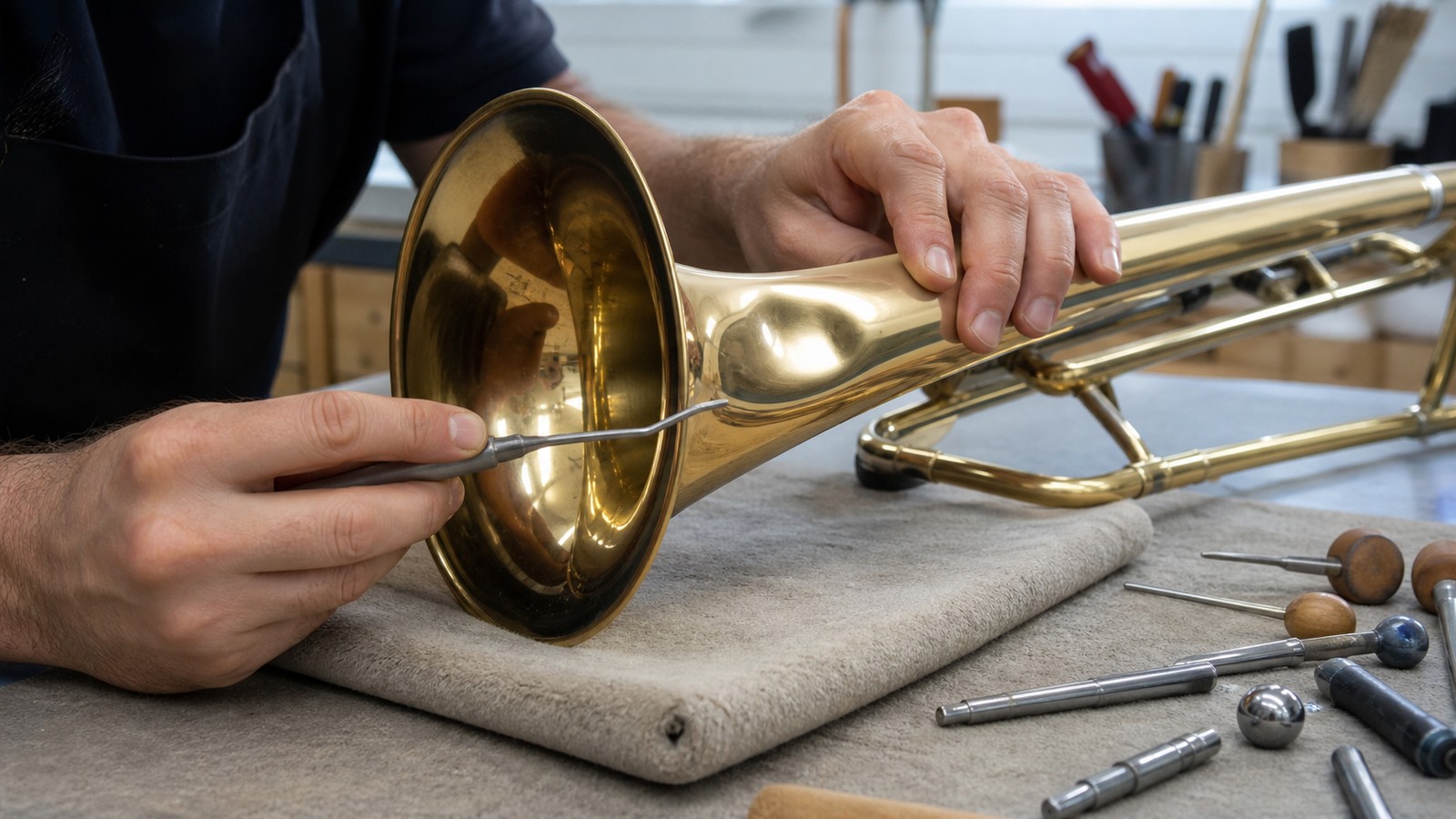
Dent repair tools are not magic, but they are specialized for a reason. Technicians use shaped mandrels, dent balls, magnets, burnishers, and supports that match the instrument's tubing and metal. They also know how much pressure the brass can tolerate.
The same tool in untrained hands can cause new damage. Skill matters because the technician is not only pushing metal outward. They are controlling roundness, surface marks, alignment, finish risk, and the relationship between nearby parts.
That is why watching a repair video does not make the job safe at home. Seeing the motion is not the same as feeling the metal respond.
Protect Finish While Waiting
Until the repair appointment, keep the damaged area clean and dry. Do not polish aggressively around the dent, because polishing can highlight uneven metal or create finish wear. Store the trombone so nothing presses against the spot.
Make a Repair Decision by Use
A professional player, advancing student, rental beginner, and casual hobbyist may make different repair decisions. A dent that matters before an audition may be less urgent for a backup horn that still plays normally. Context matters.
The decision should still be informed. Ask whether the dent affects sound, slide action, tuning slide movement, seals, case fit, or future resale. Those questions are more useful than asking whether the dent looks annoying.
Teach the Accident Lesson Without Shame
Young players learn best when adults separate responsibility from embarrassment. A student who dropped a slide needs to understand what went wrong, but shame can make them hide future damage. Calm repair handling teaches honesty.
After the repair plan is made, identify one habit to change. Maybe the slide must be locked before walking, the case needs a clear shelf, or accessories need a separate pouch. One concrete habit is better than a vague warning to be careful.
That lesson can prevent more damage than the repair itself. Instruments survive longer when players know exactly which routines protect them.
Review the Horn After Repair
When the trombone comes back from repair, play it gently and notice what improved. Check slide action, tuning slide movement, water-key seal, and case fit. If the technician gave instructions, follow them carefully. The repair is not just an ending; it is a chance to rebuild better handling habits.
Balance Appearance and Playability
Players often notice appearance first because dents are visible. The repair decision should begin with playability. If the slide is smooth, the horn seals, and the bell damage is shallow, the repair may be less urgent than it looks.
That does not mean cosmetic dents never matter. Appearance can affect pride, resale, and school inventory standards. The point is to separate feelings about the mark from the instrument's actual function.
Avoid Testing Repairs With Force
After a dent is repaired, do not test the horn by moving the slide aggressively or pressing on the repaired area. Gentle playing gives better information. Force only proves that the player is anxious.
Use familiar music and normal dynamics. Notice whether the instrument feels predictable across the range and whether any old symptom remains.
If something still feels wrong, return to the technician with specifics. A clear follow-up is more helpful than trying to adjust the repair at home.
Keep Records for Rentals
For rentals and school instruments, keep repair receipts, photos, and notes about what happened. Clear records protect the player and help the next adult understand the horn's condition.
Make Prevention Visible
After a dent incident, change the environment in a visible way. Move the case to a safer shelf, add an accessory pouch, repair a latch, or create a specific break-time location. Visible changes remind the player that the accident taught something practical.
A repaired trombone should not return to the exact setup that damaged it. Prevention is the quiet final step of dent repair.