The Best Slide Lubricant Is the One Your Trombone Responds To
The best slide creams and lubricants for smooth action are not chosen by brand loyalty alone. A trombone slide has its own condition, age, tolerance, cleaning history, and player preference. Some players like traditional slide cream with water. Others prefer two-part systems, modern liquids, or fast all-in-one products. A beginner may need something forgiving and easy to apply, while an experienced player may care about a specific feel during long rehearsals. The right choice keeps the slide clean, controlled, and predictable without creating buildup or hiding repair problems.
A: Not universally. Cream, liquid, and systems work differently on different slides.
A: A simple, teacher-approved product that is easy to apply correctly.
A: Usually no. Too much product can make the slide heavy or dirty.
A: Yes. Start with a clean slide so the new product gets a fair test.
A: Buildup, dirt, climate, or mechanical issues may be interfering.
A: No. Use products intended for trombone slides.
A: Sometimes. Slide condition and alignment affect what feels best.
A: Clean the slide, apply one product correctly, and test through real playing.
A: Only briefly. Repeating catches or scraping still need diagnosis.
A: The slide stays smooth while the player thinks about music instead of friction.
Start With a Clean Slide
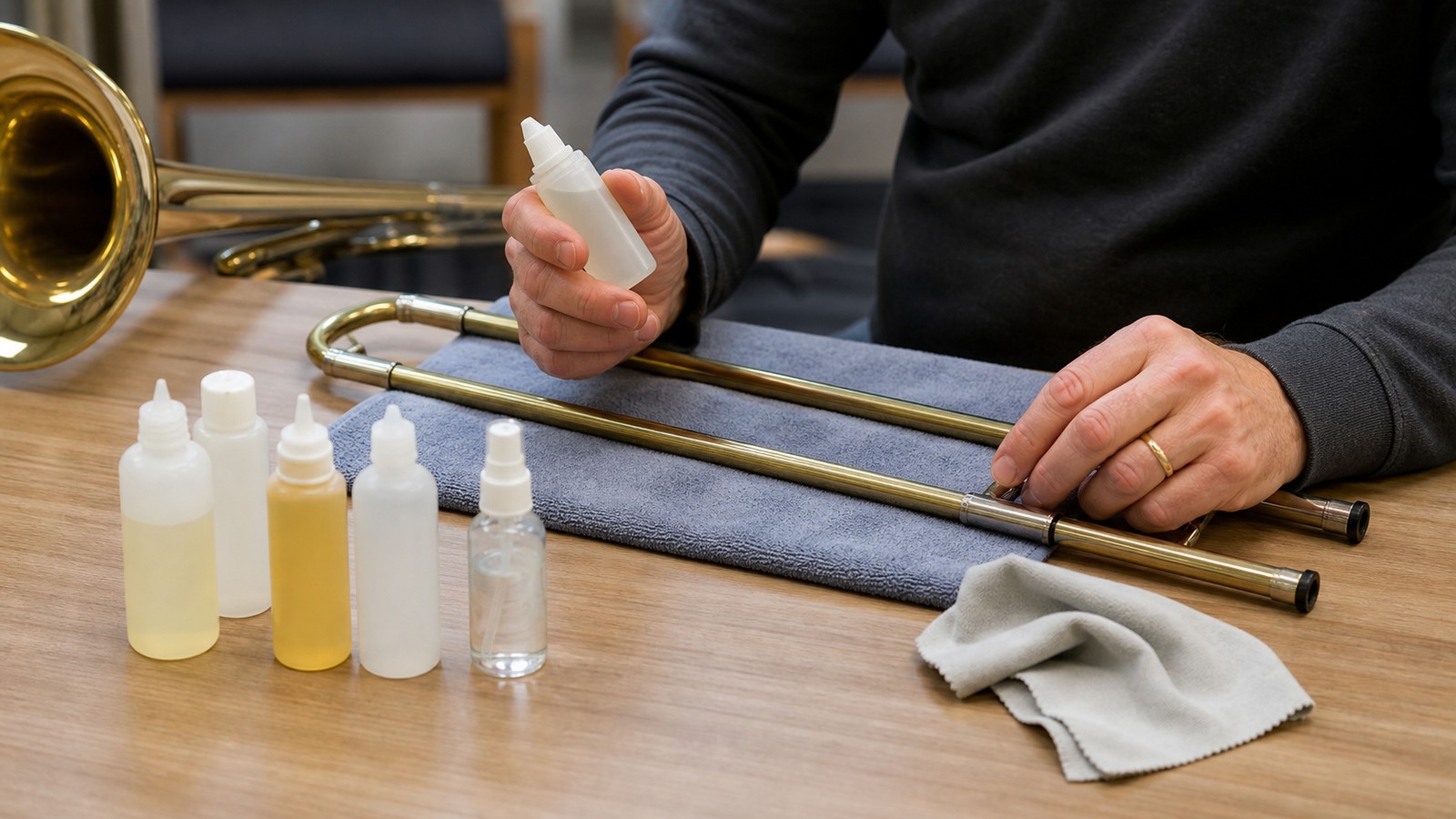
No product performs well on a dirty slide forever. Old residue, dust, and lint can make even a respected lubricant feel heavy or inconsistent. Before judging a cream or liquid, wipe the inner tubes and make sure the outer slide is reasonably clean.
A clean baseline matters because players often blame the bottle when the real problem is buildup. That reset makes product comparisons honest.
Understand Traditional Slide Cream
Traditional slide cream is applied in a small amount and usually activated with water. It can give a smooth, cushioned feel when used correctly. Many players like it because it can last well and gives the slide a controlled glide rather than a slippery rush.
The challenge is application. Too much cream can make the slide sluggish, and too little may not last. Students need clear guidance so they do not coat the slide heavily and wonder why it slowed down.
Cream also rewards patience during setup. The player may need to spread it evenly, work the slide slowly, and use a light mist before the action settles. That extra minute can be worthwhile for players who like a stable feel, but it should be part of the routine rather than a rushed guess before tuning begins.
Consider Liquid Lubricants
Modern liquid lubricants are popular because they are quick, clean, and easy to reapply. Some are designed as single-bottle solutions, while others work as part of a system. They can feel fast and convenient, especially for school players who need a reliable routine before rehearsal.
Liquid products still need clean surfaces. If a player keeps adding drops over residue, the slide may eventually feel uneven.
Look at Two-Part Systems
Some players use two-part slide systems that combine separate products for smoothness and durability. These can be excellent, but they require the player to follow directions. The benefit is often a refined feel; the tradeoff is slightly more attention during application.
A two-part system may suit advancing students, serious ensemble players, and anyone who already has a consistent cleaning habit. It may be less ideal for a forgetful beginner who just needs a simple pre-rehearsal routine.
The player should also consider whether the system is easy to replace locally or online. A refined routine loses its advantage if one bottle runs out before a concert and the player cannot find the matching product. Reliability includes supply, not just feel.
Match Product to Player Experience
Beginners usually need a product that is hard to misuse, easy to explain, and reliable through a normal class period. Teachers may prefer something students can apply without turning the band room into a maintenance session. Advanced players may want a more customized feel.
There is no shame in choosing convenience. A product that gets used correctly is better than a refined system that stays in the case because it feels complicated.
Think About Slide Age and Condition
A newer, well-aligned slide may respond beautifully to a light liquid. An older slide with a slightly different feel may prefer cream or a product with more cushion. The condition of the slide matters as much as the marketing description.
If a product seems necessary just to make the slide barely move, the instrument may need cleaning or repair. Lubricants should support good action, not rescue a damaged slide.
This is where advice from a teacher or technician can prevent wasted purchases. They can often feel whether the slide wants a different product, a deeper cleaning, or mechanical adjustment. Buying another bottle is easy, but it is not always the most honest diagnosis.
Use Product Names as Starting Points
Common trombone slide options include products such as Yamaha slide lubricant, Slide-O-Mix systems, Trombotine-style cream, Superslick-style cream, and other brass-maintenance liquids. These names give players useful starting points, but they should not replace testing on the actual instrument.
Availability also matters. A student should be able to replace the product easily, understand the directions, and keep it stored without leaking inside the case.
Test Feel in Real Playing
A slide can feel wonderful during five slow movements and still disappoint during a full rehearsal. Test the product with scales, position changes, soft entrances, fast passages, and ordinary breaks between playing. Notice whether the slide stays smooth or begins to gum up.
The best test is musical. If the hand relaxes and the player stops thinking about the slide, the product is doing its job.
Testing should also include pauses. Some products feel excellent immediately after application but change after the horn sits for a few minutes. A rehearsal includes rests, instructions, and waiting, so the slide should remain trustworthy beyond the first excited test.
Watch for Buildup
Any lubricant can create buildup if applied repeatedly without cleaning. Buildup may appear as dark residue on the cloth, uneven motion, or a slide that feels heavy after several sessions. The solution is not to keep changing products immediately. First, clean the slide and reset the routine.
Be Careful Mixing Products
Mixing creams, liquids, sprays, and older residue can produce unpredictable feel. If switching products, clean the slide first. This prevents a new lubricant from being judged against whatever was left behind by the old one.
Students should label their routine mentally even if bottles are unlabeled in the case: clean, apply the chosen product, mist if required, test, and stop.
Keep Water Use Sensible
Some products need water to activate, but water should be used lightly. Drenching the slide can create drips, dilute product unevenly, or make a mess in the case. A small mist is usually more controlled than pouring or splashing.
If a product does not call for water, do not add it just because another player does. Follow the directions for the specific lubricant.
The water bottle itself should stay clean too. A mist bottle that rolls around the case collecting lint can put grime back on the slide. Maintenance supplies need their own small amount of maintenance if they are going to help.
Choose for the Setting
Marching band, concert band, jazz rehearsal, pit work, and home practice can create different demands. Outdoor playing may add dust and temperature changes. Long rehearsals may reward durability. Quick school transitions may reward speed of application.
A player may even keep one trusted main product and a small backup for emergencies. The backup should still be a real trombone product, not a household substitute.
Avoid Product Hoarding
Trying every bottle in the store can become a distraction. Choose one appropriate product, learn to apply it correctly, keep the slide clean, and evaluate over several practices. Constant switching makes it hard to know what actually works.
If the slide remains unreliable across multiple good products, the issue is probably not the shopping list.
Give one product enough time to prove itself under normal conditions. A fair trial might include several practices, one long rehearsal, and a cleaning reset before making a decision. That approach keeps the player from confusing novelty with improvement.
Ask Teachers and Technicians
Teachers know what works for students in real rehearsal settings. Repair technicians know what different products leave behind and how various slides respond. Their advice can save money and prevent maintenance habits that create buildup.
Bring the actual instrument when asking. Product advice is better when the person can feel the slide rather than speaking in generalities.
Judge Success by Calm Playing
A good slide cream or lubricant makes the trombone feel dependable. The player should be able to move without shoving, arrive at positions without panic, and trust the slide through a normal session. Smoothness should feel controlled, not slippery in a way that causes overshooting.
The best product is the one that supports that confidence on your instrument, in your setting, with a routine you will actually maintain.
That final phrase matters because maintenance lives in real life. A beautiful product that requires more steps than the player will follow becomes inconsistent. A simpler product used correctly every time may produce better musical results than a sophisticated choice used badly.
Store Products Cleanly
Slide products should not leak into the case, collect dust around the cap, or press against the instrument. Keep bottles upright when possible, close caps firmly, and use a small pouch if the case pocket is crowded. Clean storage protects both the product and the trombone.
Review the Routine Seasonally
A routine that works in a climate-controlled practice room may need adjustment during marching season, summer camps, winter travel, or dry indoor heat. Review the slide feel when conditions change instead of assuming the product has suddenly failed.
Seasonal review does not mean constant shopping. It means cleaning the slide, checking the product amount, noticing the environment, and making small adjustments before frustration builds.
Balance Cost With Consistency
Slide products are usually small purchases compared with instruments, cases, and repairs, but cost still matters for students and school programs. A slightly more expensive product may be worthwhile if it lasts longer, leaks less, and helps players maintain a consistent routine. A cheaper product may be perfectly sensible if it works well and is easy to replace.
The real waste is buying products without learning how to use them. A player who owns four bottles but never cleans the slide may have worse action than a player with one simple lubricant and a disciplined routine. Consistency often beats variety.
For families, the practical choice is the product the teacher trusts, the student can apply correctly, and the local shop can replace without confusion. Smooth slide action is the goal; the bottle is only the tool.
Keep One Reliable Backup
A backup lubricant is useful when the main bottle runs out, leaks, or gets left at home. The backup should be familiar enough that the player knows how it feels and how much to apply. Emergency products work best when they are not mysterious.
Let the Slide Decide
Brand reputation can point players toward good options, but the slide's response is the final authority. If the instrument stays clean, moves easily, and lets the hand remain relaxed through real music, the product is serving its purpose.
That practical result matters more than owning the trendiest bottle. A quiet, dependable slide is the whole reason to choose carefully, especially when rehearsals are long, rooms are dry, and the player needs the same smooth response every time the hand moves through demanding music and quick technical passages confidently.