F-Attachment Trombones Add Options, Weight, and Responsibility
The best F-attachment trombones give advancing players more flexibility without making the instrument feel slow, heavy, or complicated. The valve allows alternate positions, smoother low-register access, and easier technical solutions in concert band, orchestra, pit, and solo literature. It also adds tubing, maintenance, cost, and ergonomic decisions. A good F-attachment trombone should feel balanced in the hands, respond naturally through the valve register, and keep the open horn's tone quality intact. Reviewing these instruments means looking beyond the trigger itself to bore size, wrap design, valve feel, slide action, repair support, and the player's actual musical needs.
A: It adds tubing through a trigger, lowering the instrument and creating alternate positions.
A: Most beginners are better served by a lighter, simpler straight tenor.
A: Neither is automatically better. The best choice depends on response, feel, and preference.
A: Test valve notes, trigger comfort, slide action, balance, and familiar repertoire.
A: They can be good buys, but valve action, tubing, linkage, and slide condition must be checked.
A: It can make many low notes and alternate positions more practical.
A: Only if the player uses it to avoid learning standard positions and intonation.
A: Very important, because discomfort slows technique and increases tension.
A: Often no, because straight tenors are lighter and simpler for field use.
A: Connected valve sound, comfortable trigger use, reliable slide action, and useful repertoire fit.
Know What the F Attachment Does
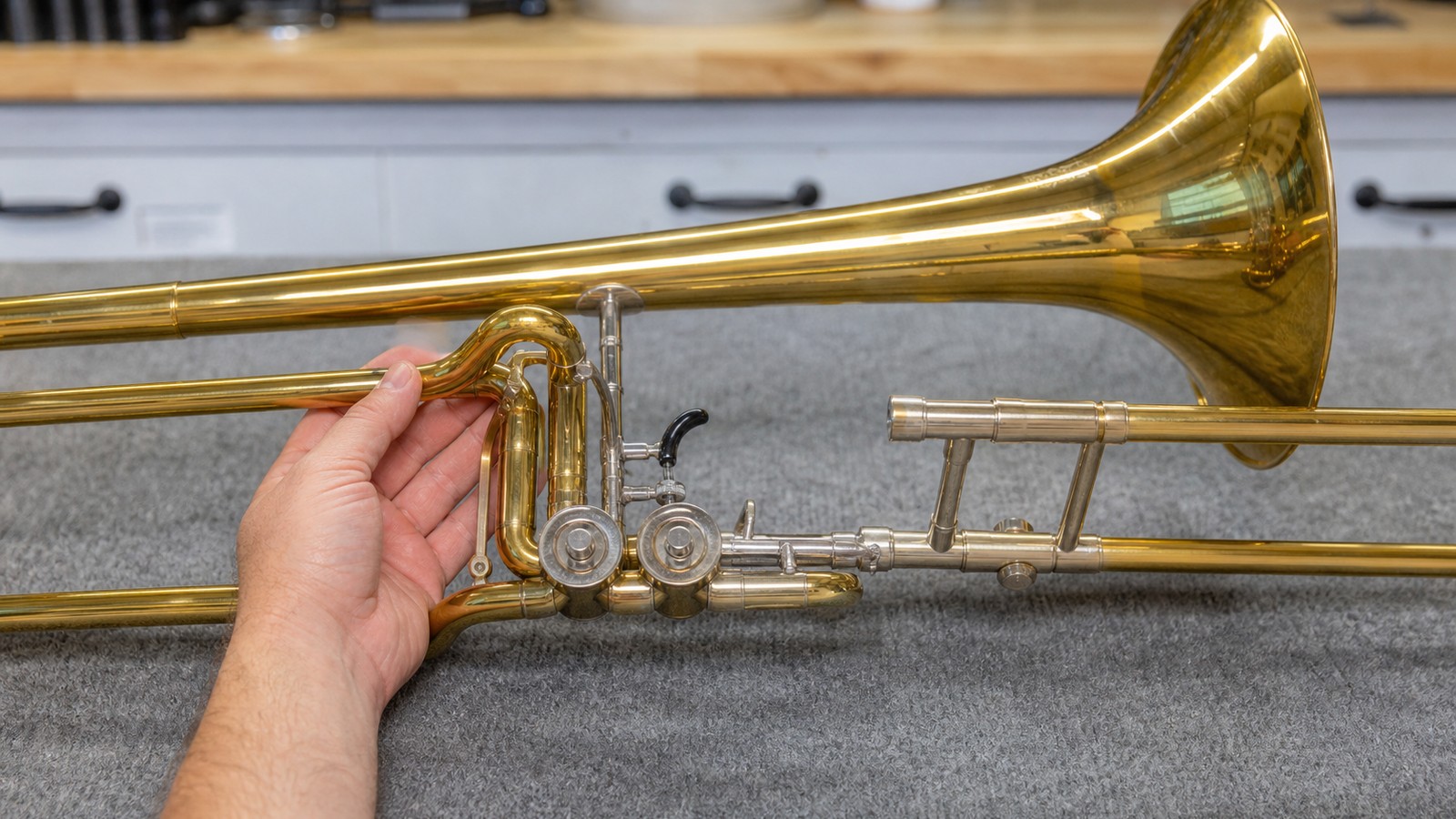
An F attachment lowers the tenor trombone by engaging extra tubing with a trigger. This gives the player alternate positions and expands practical access to lower notes. It can reduce long slide reaches and make some passages smoother, especially in advanced ensemble music.
The attachment does not replace learning standard slide positions. It adds options. Players still need a strong ear, good slide technique, and clear pitch awareness to use the valve musically.
Do Beginners Need One?
Most true beginners do not need an F-attachment trombone. A straight tenor is lighter, simpler, and less expensive. Beginners should first build tone, rhythm, slide accuracy, and basic range before adding valve choices.
When the Attachment Becomes Useful
The F attachment becomes more useful when a player encounters music with low C, B natural, technical passages in sixth or seventh position, or fast lines where alternate positions help. It also supports many school, honor band, youth orchestra, and advanced lesson materials.
A teacher may recommend an F-attachment horn when the student's repertoire begins to demand it. That timing is better than buying one simply because it looks more advanced.
The attachment should solve real musical problems. If the player never uses it, the extra weight and maintenance may not be worthwhile yet.
Open Wrap Versus Closed Wrap
Open-wrap F attachments place the extra tubing in a more open shape and are often described as freer blowing. Closed-wrap designs are more compact and may feel more protected or focused. Both can work well, and player preference matters.
The best way to compare wrap styles is to play the same valve notes, slurs, and passages on both. The difference may be obvious to one player and minor to another.
Valve Type Matters
Traditional rotors, axial-flow valves, Hagmann-style valves, and other designs can all appear on F-attachment trombones. Each design affects feel, maintenance, airflow, and cost. The question is not which valve is fashionable. The question is which one responds naturally for the player.
Check the Valve Register Carefully
Some trombones sound excellent open but feel stuffy, uneven, or dull when the valve is engaged. Test sustained valve notes, slurs through the trigger, low-register articulations, and alternate-position passages. The valve register should feel connected to the rest of the horn.
A little difference in feel is normal because extra tubing is involved. A dramatic change that makes the player avoid the trigger is a warning sign.
Think About Bore and Player Level
Many F-attachment trombones are large-bore instruments intended for advancing or serious players. Large-bore horns can provide a broad sound, but they also require mature air support. Younger or smaller players may find them tiring if they move up too soon.
Intermediate F-attachment models can bridge the gap for students who need the trigger but are not ready for a fully professional setup.
The instrument should challenge the player appropriately without making daily practice feel like heavy labor.
Evaluate Trigger Comfort
The trigger should sit naturally under the thumb or finger depending on design. If the hand has to stretch awkwardly, trigger use will be slow and tense. Comfort is especially important for students who are still developing hand strength and coordination.
Review Common Buying Categories
Student/intermediate F-attachment trombones focus on reliability, manageable cost, and school use. Professional models focus on response, tone, valve feel, customization, and long-term performance needs. Used horns can fit either category if condition is strong.
Well-known makers offer different approaches to F-attachment design, from school-friendly large-bore tenors to modular professional systems. Instead of ranking by name alone, compare how each horn handles the player's repertoire.
Inspect Used F-Attachment Horns Closely
A used trigger trombone has more to inspect than a straight tenor. Check the slide, valve action, linkage noise, tubing dents, tuning slides, water keys, braces, and case. Repairs in the valve section can be more involved than basic cosmetic work.
Test Alternate Positions
The F attachment is valuable because it gives alternate routes. Test notes and passages where the trigger should make life easier. If the alternates feel awkward, out of tune, or slow to respond, the horn may not deliver its main benefit.
Use a tuner or drone sparingly but thoughtfully. The goal is to learn whether the valve notes slot predictably and adjust musically.
A good trigger horn should make certain passages feel more fluid, not merely more complex.
Consider Maintenance Habits
Valves need appropriate care. Linkage, rotor oil, tuning slides, and cleaning routines become part of ownership. A player who is not ready to maintain the attachment may be happier staying with a straight tenor for now.
Maintenance is not difficult when taught correctly, but it should be respected. A neglected valve can become noisy, slow, or unreliable.
Do Not Let the Trigger Hide Weak Fundamentals
The F attachment can reduce awkward slide reaches, but it should not become a way to avoid learning the instrument. Players still need to understand standard positions, intonation, and slide timing. The trigger is a tool, not a shortcut around musicianship.
Match the Horn to Ensemble Demands
Concert band, orchestra, brass ensemble, musical theater, and solo repertoire may all reward F-attachment use differently. A player who mainly plays school band may need a sturdy intermediate horn. A serious classical player may need a professional large-bore tenor with refined valve response.
Talk with the teacher about current and future repertoire. Buying for the next realistic stage is wiser than buying for a distant imagined need.
A good review should ask what music the horn helps the player play today and next year.
Make the Final Review Personal
The best F-attachment trombone for one player may feel wrong to another. Hand size, air support, tone concept, repertoire, and budget all shape the answer. Reviews can narrow the field, but the player still needs to test.
Choose the horn that makes trigger notes sound connected, keeps the slide reliable, feels balanced, and fits the player's real musical path. If the trigger adds confidence instead of complexity, the match is strong. An F attachment should open musical doors. It should not make the player feel as if the instrument suddenly became harder to trust.
Revisit the Choice After Lessons
If possible, play a candidate horn for a teacher before buying. A teacher can hear whether the valve register blends, whether the horn is too large for the player, and whether the trigger is solving real problems. That outside perspective is especially valuable because F-attachment horns can feel exciting simply because they are new.
Practice Open and Trigger Versions
After buying or testing an F-attachment trombone, practice passages both open and with trigger options. This comparison teaches when the attachment actually improves the line. Some passages become smoother with the valve, while others sound clearer with standard positions.
The goal is choice. A player who knows both routes can decide based on tone, intonation, slide motion, and phrase shape rather than habit.
Listen for Color Changes
Valve notes can subtly change color because the air moves through extra tubing. That change is not automatically bad, but it should be controlled. Sustain open and trigger notes at similar dynamics and listen for whether the sound family stays connected.
Think About Case Fit
F-attachment trombones often need larger or more specific cases than straight tenors. A poor case can press on the valve tubing, fail to support the bell, or make transport awkward. Case fit should be reviewed as part of the purchase, especially for students carrying the horn to school.
A comfortable case also affects whether the player brings the instrument safely to lessons and rehearsals. Protection is part of ownership, not an accessory afterthought.
Build Trigger Use Gradually
New trigger players sometimes use the attachment constantly because it feels novel. Better practice introduces trigger notes gradually and pairs them with listening. Learn the valve positions, tune them, and apply them to passages where they clearly help.
Respect the Added Weight
The extra tubing and valve can change balance more than expected. Players should test long rehearsals, standing posture, and mute use before assuming the weight is harmless. A horn that is too heavy may create shoulder tension or embouchure pressure.
If the attachment improves repertoire but harms posture, the setup may still be wrong. Comfort and function have to work together.
The best F-attachment trombone feels like an expanded tenor, not a burden attached to one.
Compare Valve and Open Tuning
A strong F-attachment horn should tune predictably both open and through the valve. Test the same pitch choices in different ways and listen for how much adjustment is required. Some tendencies are normal, but the player should understand them before buying.
Avoid Buying the Trigger Too Early
The trigger can make a trombone look more advanced, which tempts some students to upgrade before they need it. If the player's current music, teacher, and physical setup do not require the attachment, waiting can be wise. More equipment is not the same as faster progress.
When the musical need appears, the upgrade will make more sense. The player will also be better prepared to judge whether the valve register, weight, and trigger feel are actually helpful.
Judge the Attachment by Usefulness
The best F-attachment review question is simple: does the trigger make important music easier while keeping the horn comfortable and resonant? If the answer is yes, the attachment is doing its job. If the player avoids the trigger because the response feels dull, the hand position hurts, or the added weight changes posture, the horn may not be the right match. Usefulness should decide the review, not the fact that the instrument has extra tubing.
Make the Trigger Part of Musicianship
Once a player chooses an F-attachment trombone, the trigger should become part of thoughtful musicianship. Use it where it improves line, tuning, position choice, or low-register access. Avoid it where the open horn sounds cleaner.
That judgment grows with practice. The best review after purchase is whether the attachment becomes a natural musical option rather than a gadget the player forgets or overuses.
Keep Listening After the Upgrade
The first weeks with an F attachment should include careful listening. Notice whether valve notes blend, whether standard positions stay accurate, and whether posture remains relaxed. A good upgrade should broaden choices while keeping the player's core sound recognizable.