Short Practice Works When Every Minute Has a Job
The best trombone practice routines for 15-30 minutes daily are not miniature versions of a two-hour conservatory session. They are focused plans that protect tone, touch the most important fundamentals, solve one realistic problem, and leave the player ready to play again tomorrow. A short routine has no room for wandering, but it also should not feel rushed. The goal is a repeatable structure that helps beginners, returning players, and busy students make steady progress with the time they actually have. When each minute has a job, even a brief session can keep sound, slide, rhythm, and musicianship moving forward.
A: Yes, if the session is focused and includes tone, one skill target, and music.
A: It should include tone, slide accuracy, flexibility or articulation, and meaningful repertoire work.
A: Keep a familiar structure, but rotate the main focus so practice matches current needs.
A: In a short session, warmups should be efficient and directly connected to the day's work.
A: Play an easy sound check, one focused drill, and one short musical phrase.
A: A simple note about goals, problems, and next steps can make practice much more consistent.
A: Scales can sit after tone work and before repertoire, especially when they support the music.
A: Yes. Rest keeps the embouchure fresh and improves the quality of repetitions.
A: Rotate focus areas and end with music that feels worth playing.
A: The player returns tomorrow with better focus, more reliable sound, and clearer next steps.
Begin With a Sound Check
Every short routine should start by finding the day's sound. Play a few comfortable notes at a moderate volume and listen for response, tone, and ease. This is not a long warmup. It is a quick check that tells you how the body and instrument are arriving.
If the first notes feel tight, keep the opening gentle. If they feel clear, move into the plan. The sound check prevents a player from launching into hard material before the setup is ready.
Use a 15-Minute Minimum Plan
A useful 15-minute routine can include three minutes of tone, four minutes of slide-and-pitch work, four minutes of articulation or slurs, and four minutes of music. The exact order can change, but the session should include both fundamentals and something musical.
Expand Thoughtfully to 30 Minutes
A 30-minute routine gives enough room to develop ideas without losing focus. You might use five minutes for tone, five for slide accuracy, five for flexibility, five for articulation, and ten for music. Another day might emphasize scales, range, or an audition passage.
The added time should not simply double every drill. Instead, it can deepen one area while keeping the others touched lightly. If slide accuracy is the week's priority, spend extra time there and keep range work short.
This approach keeps routine from becoming stale. The framework stays familiar, but the emphasis changes according to the music and the player's needs.
Rotate the Main Focus
Short daily practice benefits from rotation. Trying to fix tone, range, speed, scales, sight-reading, articulation, and repertoire every day can make the session shallow. Choose one main focus for the day and let the rest of the routine maintain basic skills.
A weekly pattern might place tone and intonation on one day, slide speed on another, articulation on another, and repertoire on another. The categories can repeat, but the specific exercises should match current goals.
Keep Fundamentals Connected to Music
Fundamentals improve faster when they return to real music. If you practice legato tonguing for three minutes, use it immediately in a phrase. If you practice third-position accuracy, find a measure that uses that motion and apply the same listening.
Plan Before the Timer Starts
A short session loses value when the first several minutes are spent deciding what to do. Before playing, choose the routine type, the main focus, and the music excerpt. Place the materials nearby so the practice time is actually spent practicing.
This planning can happen in under a minute. The point is not bureaucracy; it is reducing friction. A player who starts with a clear plan is more likely to finish with a useful result.
Use Micro Goals
A micro goal is small enough to finish during the session. Instead of saying, improve intonation, choose to tune the F major scale slowly with a drone. Instead of saying, get better at the piece, choose two measures and fix the slide timing.
Micro goals create momentum because they produce visible progress. They also keep frustration low. When the goal is specific, the player can tell whether the practice worked.
Write the goal in a notebook if that helps. The note does not need to be fancy. A single line can make tomorrow's session easier to start.
Leave Space for Rest
Even a short routine needs rest. Trombone practice can tire the embouchure and the slide arm when every minute is filled with playing. A few quiet breaths between drills help the next repetition sound better.
Do Not Let the Routine Become a Cage
A routine should guide practice, not prevent musical thinking. If the player discovers a clear problem during the session, it is reasonable to adjust. If the tone is unusually tired, the planned range work can wait. If a rehearsal deadline is close, repertoire may deserve more time.
The best routine is steady but flexible. It gives the player a starting structure and enough judgment to adapt.
End With Something Musical
Ending with music reminds the player why the fundamentals matter. Play a short melody, a phrase from band music, a duet line, or a favorite excerpt. It does not need to be perfect. It should reconnect the session to expression.
Track Patterns Over the Week
Daily practice can feel random unless the player notices patterns. Write down what improved, what stayed difficult, and what should come next. Over a week, those notes show whether the routine is balanced.
If every entry mentions weak attacks, articulation deserves more attention. If tone starts strong and fades quickly, rest or endurance may need adjustment.
Tracking also helps busy players stay honest. Missing a day is not a disaster, but seeing the pattern makes it easier to restart without pretending nothing happened.
Choose Consistency Over Hero Sessions
A focused 20 minutes most days usually helps more than one exhausting marathon. Consistency lets the body remember good coordination and gives the mind regular contact with music. It also reduces the temptation to cram before rehearsals.
When time is limited, show up for the smallest useful version of the routine. Play a tone check, one focused drill, and one musical phrase. That small session keeps the habit alive and makes the next full practice easier.
Match the Routine to the Player's Level
A beginner routine should not look exactly like an advanced routine. New players need more time with sound, slide positions, simple rhythms, and short musical examples. Advanced players may use the same 30 minutes for excerpts, range control, advanced articulation, or style work. The routine should meet the player where the current bottleneck actually lives.
Prepare Two Versions in Advance
It helps to have a normal routine and a tired-day routine. The normal routine can include a full set of fundamentals and repertoire. The tired-day version might include easy tone, gentle flexibility, slow slide accuracy, and one musical line.
Having both plans prevents all-or-nothing thinking. A player who feels short on time or energy can still practice without turning the session into a grind. That small continuity is often what keeps long-term progress alive.
Use Repertoire as the Organizer
The music on the stand should influence the routine. If the piece has dotted rhythms, the routine can include subdivision. If it has outer-position shifts, slide accuracy belongs near the beginning. If it has soft entrances, tone and breath control should be part of the plan.
Keep Setup Friction Low
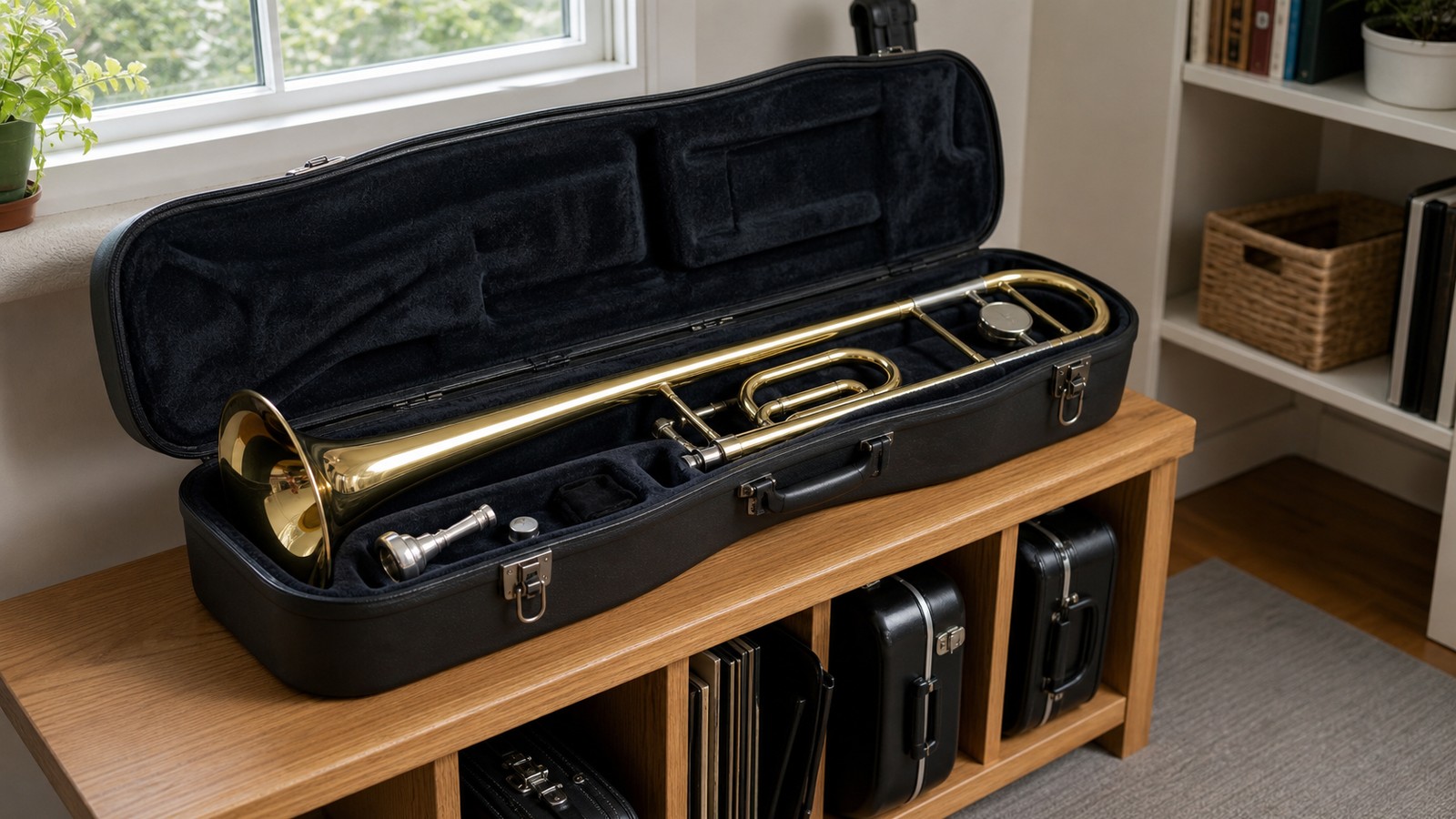
Short practice is easier when the environment is ready. A safe stand, a clean mouthpiece, nearby lubricant, a pencil, and the right music can save several minutes. The less energy spent preparing the space, the more likely the player is to begin.
This does not mean leaving the trombone somewhere unsafe. It means creating a predictable routine around unpacking, assembling, warming up, and putting the instrument away. Good logistics support good habits.
Include Listening Away From the Horn
Some practice can happen without playing. Listening to a recording, singing a phrase, counting a rhythm, or studying a part can make the next playing session more efficient. This is especially useful when the embouchure is tired but the mind is still ready to work.
Review Before Adding More Material
Short routines fall apart when every day adds something new without reinforcing yesterday's work. Begin the main focus by reviewing the previous goal for one or two minutes. If it holds, move on. If it does not, the review becomes the day's most important work.
This habit gives practice continuity. It also prevents the player from collecting half-solved problems. The routine becomes a chain of improvements instead of a stack of unrelated drills.
Progress often feels quiet in the moment. Review makes it visible because the player can tell when yesterday's hard passage has become today's manageable one.
Keep Technique Blocks Short Enough to Stay Honest
A five-minute articulation block can be more useful than fifteen minutes of fading concentration. Stop the block while the ears are still engaged and the sound still gives reliable feedback. Short blocks also make it easier to rotate skills without turning the routine into a checklist that never reaches music.
Make Missed Days Easy to Recover
Every player misses practice sometimes. The routine should make restarting simple instead of dramatic. After a missed day, return with an easy tone check, one familiar fundamental, and a small musical goal. Avoid trying to repay the missed time in one intense session.
This attitude helps younger players and busy adults stay consistent. Practice is a habit, not a punishment system. The faster a player can restart calmly, the less damage one missed day does to progress.
Use the Last Minute for a Decision
The final minute of practice should answer one question: what comes next? That answer might be tomorrow's measure, a scale that needs slower work, or a note to ask a teacher about. Ending with a decision makes the next session easier and turns daily practice into a continuous conversation with the music.
Protect Enjoyment Inside the Structure
A routine should make practice easier to start, not drain all personality from it. Leave a little space for a favorite melody, a duet line, or a sound experiment that keeps the instrument inviting. Enjoyment is not a distraction from discipline when it helps the player return consistently.
This is especially important for students who already have many assignments. A short routine that always feels like homework may be abandoned, while a focused routine with one satisfying musical moment can become sustainable. Progress needs structure, but it also needs a reason to come back.
Build a Closing Habit
A short closing habit makes the whole routine feel complete. Empty the water key, wipe what needs attention, put the trombone away carefully, and make one quick note about the next step. This closing minute protects the instrument and the player's memory. It also prevents practice from ending in a scattered rush, which matters more than many players realize. A calm finish makes tomorrow's start feel easier. It also gives the player one final moment to recognize what improved, what still needs attention, and how the instrument should feel when it is cared for well. Those tiny rituals make consistency less dependent on willpower and keep the practice space ready for the next focused session without extra friction or searching through scattered materials before the horn comes out properly.