A Sticky Trombone Slide Is a Symptom
A trombone slide can start sticking for several reasons, and the first answer is not always more lubricant. Dryness is common, but so are dirt, old buildup, tiny dents, misalignment, worn stockings, rough handling, and products that do not match the instrument. The best response is to diagnose the pattern before adding anything else. Notice where the slide catches, how it feels after cleaning, whether it changes with temperature, and whether the problem appears suddenly or slowly. A careful diagnosis protects the slide from both neglect and overzealous repair attempts.
A: Not always. Clean residue and identify the pattern before adding more product.
A: A repeating catch may indicate a dent, bend, alignment issue, or localized residue.
A: Yes. Temperature can change how products feel and how quickly a slide responds.
A: Yes. Players may learn to shove, grip, or arrive late in positions.
A: No. Slide alignment should be handled by a qualified repair technician.
A: Hidden buildup, product mismatch, or mechanical issues may still be present.
A: No. Use products intended for trombone slide maintenance.
A: Say where it catches, when it began, and what maintenance was tried.
A: As soon as the slide remains sticky after normal cleaning and lubrication.
A: Smooth, predictable, controlled, and free from scraping or repeated catches.
Start With the Feel of the Problem
A sticky slide may feel slow, gritty, uneven, dry, heavy, or physically blocked. Those sensations point to different causes. Dryness often feels uniformly slow. Grit may feel scratchy. A dent or alignment issue may catch in the same place every time.
Before cleaning or lubricating, move the slide gently and pay attention. Do not slam the slide outward to test speed. A precise problem needs a precise observation, and rough testing can make the problem worse.
Check for Ordinary Dryness
If the slide was smooth yesterday and simply feels slower today, it may need appropriate lubrication or a light mist if the product uses water activation. This is the easy version of the problem. Clean surfaces and a small amount of correct product often restore normal motion.
Look for Dirt and Old Residue
Slide products attract dust, lint, and residue over time. When old product collects on the inner tubes or inside the outer slide, adding new lubricant can create a thicker mess. The slide may feel worse even though the player used more product.
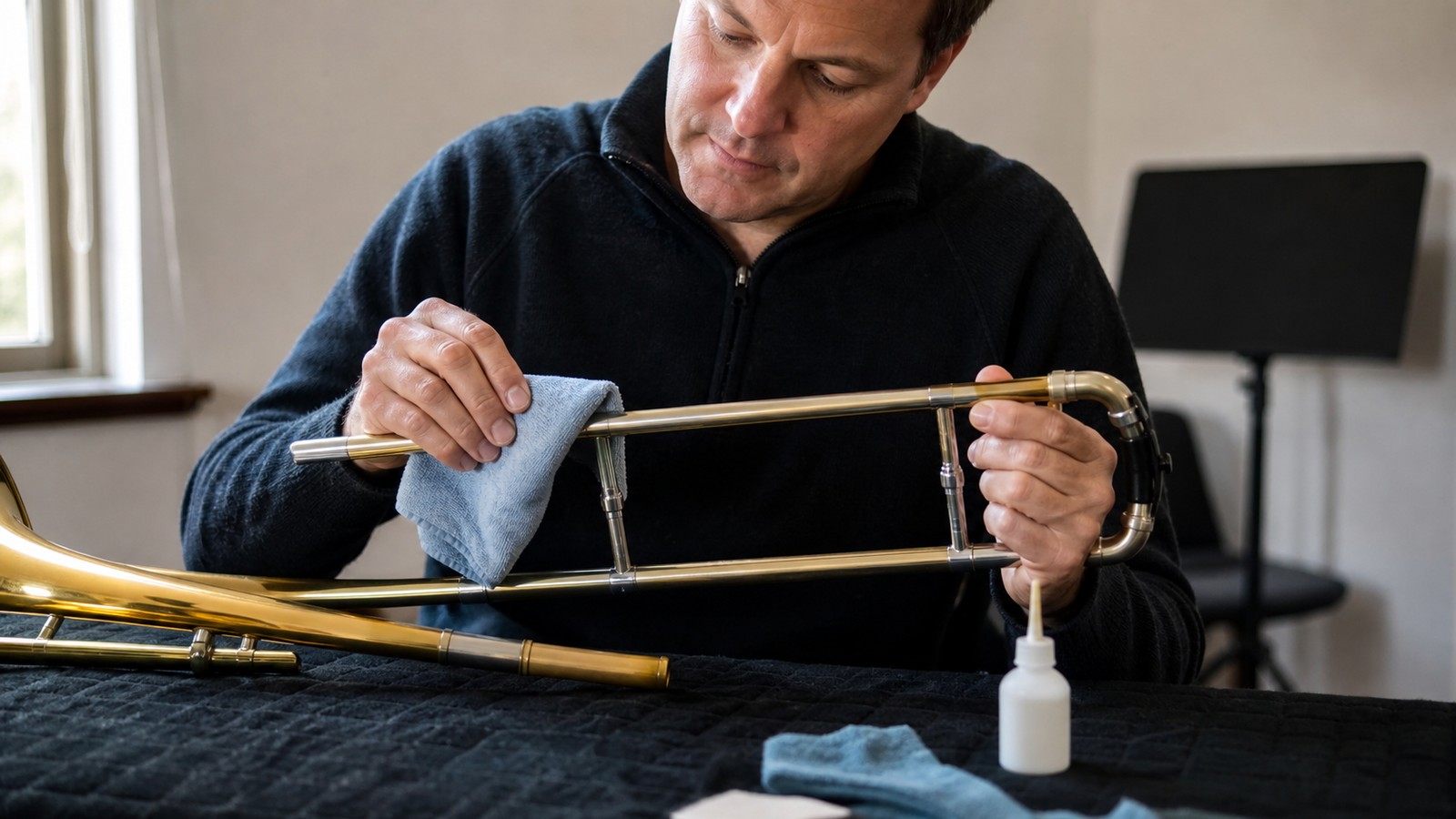
Wipe the inner tubes with a clean soft cloth and inspect what comes off. If the cloth shows old film or dirt, cleaning matters more than another layer of lubricant. A clean slide gives new product a chance to work.
Residue inside the outer slide can be harder to see. Use proper cleaning tools and safe methods rather than improvised objects that might scratch the tubes.
Notice Repeating Catch Points
A slide that catches at the same position again and again may have a dent, slight bend, or alignment issue. Lubricant may temporarily disguise the problem, but it will not correct the physical cause. This is when a repair technician's eye becomes valuable.
Tiny dents can be difficult for beginners to spot. The slide does not need to look crushed to behave poorly. Even a small disruption can affect the smooth relationship between inner and outer tubes.
Think About Recent Events
Ask what happened before the sticking began. Was the slide bumped, dropped, packed with loose accessories, carried unlocked, used outdoors, stored in a cold car, or cleaned with a new product? The timeline often narrows the cause faster than guessing.
Use the Right Amount of Product
Too little lubricant leaves friction. Too much product can slow the slide, collect dirt, and create an uneven feel. The best amount depends on the product and the instrument, but the goal is a thin, even working surface rather than a visible coating everywhere.
Follow the product directions and teacher guidance. If the slide improves for a few minutes and then becomes sluggish, buildup or mismatched product may be involved.
Avoid Household Substitutes
Cooking oils, lotions, petroleum products, heavy greases, and mystery liquids are not reliable trombone slide solutions. They can attract grime, react poorly with existing product, or create residue that is harder to clean later. A sticky slide needs proper maintenance, not kitchen chemistry.
If the correct product is not available, it is usually safer to pause and ask for help than to apply something that will create a second problem.
This is hard for students because a rehearsal may be about to start and the urge to fix the slide immediately is strong. Still, a bad substitute can leave residue that takes far longer to remove than the original dryness would have taken to solve. A short-term inconvenience is better than turning one sticky day into a week of cleaning.
Check Slide Alignment Gently
A slide can stick when the inner and outer tubes no longer line up perfectly. This might happen after a drop, pressure in the case, or years of handling. Alignment is not something most players should bend back by hand.
If the slide feels tight even when clean and lightly lubricated, professional adjustment may be needed. The repair is often straightforward for a technician, but risky for a player guessing with force.
Consider Worn or Damaged Stockings
The stockings near the ends of the inner slide tubes help the slide move correctly inside the outer slide. Wear, damage, or residue around these areas can affect action. Players do not need to diagnose every detail, but they should know that slide feel depends on precise surfaces.
A repair shop can evaluate whether the slide is simply dirty or whether the mechanical surfaces need attention.
Players should be especially careful if the slide used to feel excellent and then changed after a single incident. Wear usually develops gradually, while impact problems often appear suddenly. That timeline does not prove the cause by itself, but it gives a technician useful information and helps the player avoid blaming the wrong maintenance habit.
Watch Climate and Storage Conditions
Temperature and humidity can change how product behaves. A slide that felt smooth in a lesson room may feel different after a cold bus ride or outdoor rehearsal. Dusty environments can also make lubricant collect grit faster.
This does not mean the instrument is broken. It means the maintenance routine may need a quick check before playing in a new environment.
Do a Clean Reset
When the cause is unclear, a clean reset helps. Wipe the inner tubes, clean the outer slide safely if needed, apply a small amount of proper product, distribute it gently, and test slowly. This gives the player a fresh baseline.
If the slide is still sticky after a clean reset, stop adding product. The problem has moved beyond ordinary lubrication.
A clean reset also gives the player a better story to tell. Instead of saying the slide feels bad, they can say it was wiped, cleaned, lubricated lightly, tested slowly, and still caught near the same area. That kind of detail makes repair conversations faster and more accurate.
Listen While You Play
Sticky slides affect music before they completely fail. Late position changes, tense shoulders, clipped articulations, and poor intonation may all appear when the hand is fighting friction. If technique suddenly feels harder, check the equipment before blaming the player.
Do Not Practice Through a Bad Slide
Practicing through a sticky slide teaches the body to shove, grip, and compensate. That habit can linger even after the instrument is fixed. It is better to pause for maintenance than to build a tense motion pattern.
This is especially important for beginners. They may assume trombone is supposed to feel awkward when the real problem is equipment care.
When a Technician Should See It
Bring the instrument to a technician if sticking repeats in one place, the slide scrapes after cleaning, the outer slide was dropped, the slide lock no longer lines up, or the player feels tempted to bend anything. A quick inspection can prevent a small issue from becoming expensive.
Teachers can help decide whether the problem is routine maintenance or repair. The important part is not waiting until the slide barely moves.
Early repair attention is often cheaper because the technician is correcting a small alignment issue or cleaning problem before the player has forced the slide repeatedly. Waiting can add scratches, stress, and bad habits. The slide is too central to trombone playing to let a known problem linger.
Turn the Problem Into a Maintenance Habit
A sticky slide is frustrating, but it can teach a useful routine. Notice the feel, clean before adding more product, use the right lubricant sparingly, protect the slide in the case, and ask for repair help when the pattern points to damage.
When the slide moves freely, the player can focus on sound, rhythm, and pitch. Smooth slide action is not a luxury. It is part of basic trombone technique.
Track the Pattern Over Several Days
A one-time sticky moment may come from a dry slide or a rushed setup. A pattern over several days is more meaningful. Write down whether the slide feels worse at the start of practice, after ten minutes, outdoors, after adding product, or after sitting in the case overnight. Patterns keep the player from chasing random fixes.
Connect Slide Feel to Musical Results
The slide does not exist apart from playing. If position changes are late, legato lines feel bumpy, or the player avoids certain passages, the slide problem is already affecting musicianship. That makes maintenance a musical priority rather than an optional chore.
Teachers can use short familiar phrases to test the issue. A scale, slur pattern, or simple melody may reveal whether the hand is moving freely or compensating for drag.
Keep the Diagnosis Calm
Sticky slides frustrate players because they interrupt the most physical part of the instrument. Panic makes the hand rougher and the judgment worse. The calm sequence is to observe, clean, lubricate correctly, test gently, and ask for help if the problem remains.
That order prevents most bad decisions. It keeps household products away from the horn, keeps players from bending tubes, and keeps attention on the real cause rather than the loudest guess.
When the slide finally returns to normal, remember what fixed it. That memory becomes part of the player's maintenance skill.
Write Down Repair Advice
If a technician or teacher explains what caused the sticking, write it down. The note might mention dried residue, a small dent, alignment, product buildup, or case pressure. That information helps the player avoid repeating the same pattern and gives parents or directors a clearer picture of what the instrument needs next time.
Protect the Slide After It Is Fixed
A repaired or freshly adjusted slide should be treated with extra care. Use the slide lock, pack the case neatly, keep accessories away from the tubes, and avoid testing the repair with rough movement. Let the slide prove itself through normal playing instead of dramatic throws.
This final step matters because many slide problems return when the original handling habit never changes. Smooth action is maintained by the whole routine: careful packing, clean supplies, proper lubricant, and early attention when the feel changes. Players should also notice how they carry the slide during breaks, how quickly they assemble under pressure, and whether the case actually supports the repaired area. Prevention is not glamorous, but it keeps the repair from becoming a repeat appointment.
Return to Easy Playing Gradually
After a sticky-slide problem is solved, start with slow relaxed motion before jumping into fast excerpts. The hand may still expect resistance, so the player needs a few minutes to trust the instrument again.
Use simple scales, easy slurs, and familiar phrases to rebuild confidence. The goal is to let good equipment feel normal again.
That reset helps the player separate old tension from the slide's current condition.