The Water Key Is Small, but It Affects Daily Playing
Trombone spit valve care is really water key care, and it matters more than many beginners expect. The valve releases moisture from the instrument, but it also needs to seal properly, move freely, and stay protected from bending. A leaking water key can make notes feel weak. A noisy spring can distract the player. A cork or pad that no longer seals can turn a simple moisture habit into a response problem. Good care is simple: use the water key regularly, avoid bending the lever, keep the area clean, and know when small parts need a technician.
A: Mostly condensation and moisture from playing, though players often use the old nickname.
A: The cork, pad, spring, or lever alignment may no longer seal properly.
A: Yes. Even a small leak can make response feel weak or airy.
A: Some experienced players can, but beginners should ask a teacher or technician.
A: Only hard enough to open it cleanly while the instrument stays supported.
A: Have it inspected instead of bending it back by hand.
A: Sometimes a tiny amount helps, but over-oiling can collect dirt.
A: Condensation has collected enough to interrupt airflow inside the tubing.
A: Yes. Accessories or poor slide placement can press on the mechanism.
A: When the key leaks, rattles, closes slowly, or looks misaligned.
Understand What the Water Key Does
As a player blows warm air through the trombone, moisture collects inside the tubing. The water key lets that moisture out at a designed drainage point. Many players call it a spit valve, but most of what comes out is condensation mixed with ordinary moisture from playing.
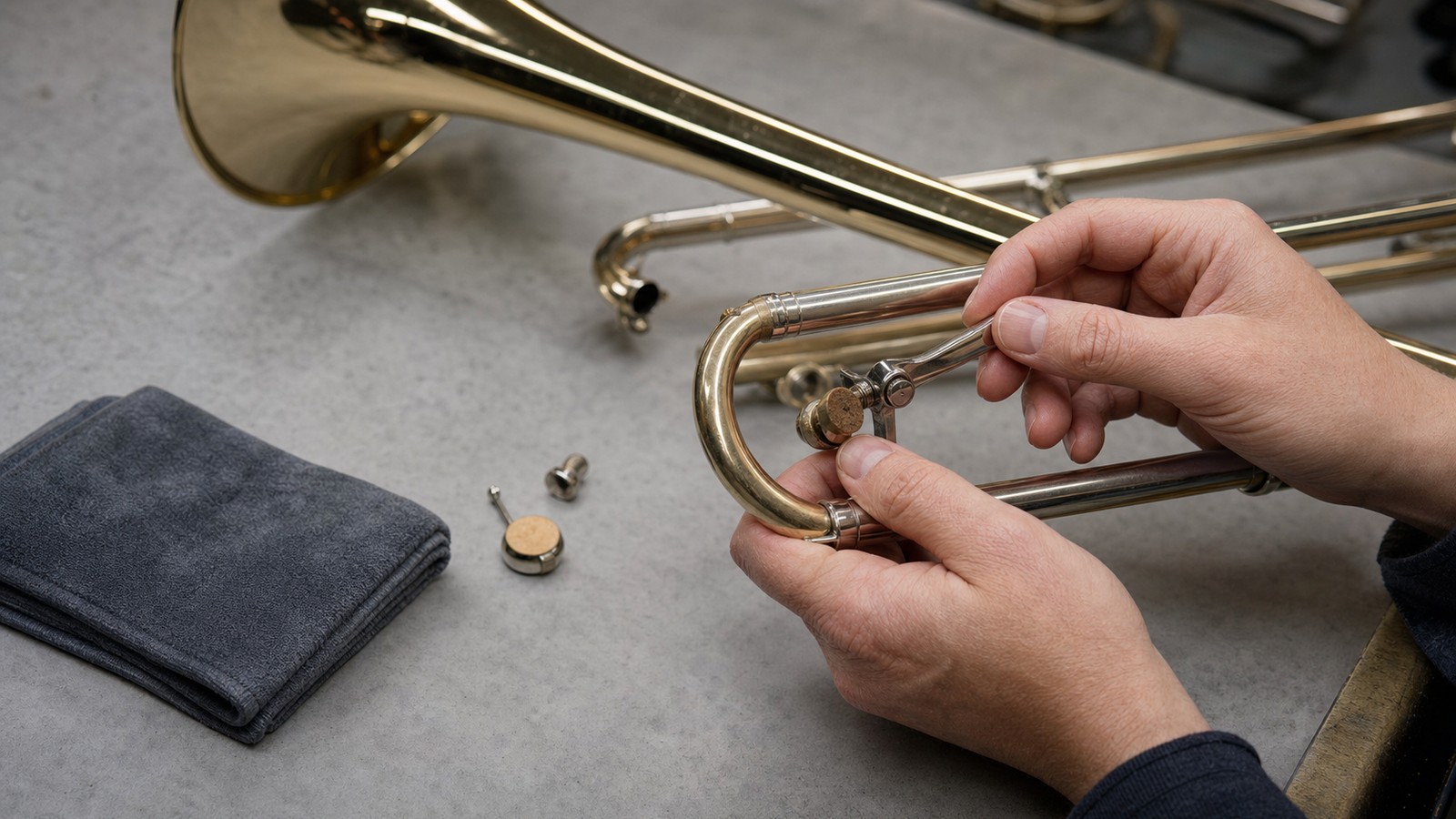
The mechanism is small: a lever, spring, and sealing material such as cork or a pad. When everything works, it opens easily and closes completely. When it leaks, bends, or sticks, the instrument may not respond normally.
Because the part looks simple, players sometimes underestimate it. A water key is not just a drain. It is also an air seal in the instrument's tubing. If that seal fails, the trombone can feel less centered even when the slide, mouthpiece, and player are all doing their jobs.
Empty Moisture Before It Becomes a Problem
Use the water key during practice whenever moisture begins to gurgle, interrupt airflow, or make attacks feel unfocused. Do not wait until the sound is obviously disrupted. Regular emptying keeps the instrument more predictable.
Open the Lever With Control
Press the water key lever only as far as needed. Snapping it open, pulling it sideways, or treating it like a handle can bend the hardware. The lever is designed to open a small seal, not carry the weight of the slide.
Beginners should practice the motion slowly. The hand should stay relaxed, and the instrument should remain supported while the valve opens.
Check for Leaks
A water key that does not seal can make the trombone feel airy, weak, or strangely resistant. Sometimes the leak is audible. Sometimes the player simply notices that notes do not speak the way they should.
Look at the cork or pad area. If it appears missing, torn, compressed, crooked, or dry, the seal may be compromised. Do not try to fix the seal with tape or random household material.
A repair technician can replace a cork or pad quickly. It is a small repair, but it makes a real difference.
Keep the Area Clean
Moisture, lint, and old residue can collect around the water key. Wipe the area gently with a clean cloth after playing, especially if the instrument has been used outdoors or handled by a young student. The goal is cleanliness without bending anything.
Avoid pushing cloth into the mechanism aggressively. If something looks stuck under the key, ask for help rather than prying.
Listen for Spring Trouble
The spring should return the lever to a sealed position. If the lever stays open, closes slowly, rattles, or feels loose, the spring may need attention. A weak spring can create intermittent leaks that confuse players because the problem comes and goes.
Protect the Valve in the Case
Water keys can be bent by poor packing. If the slide section is not seated correctly or accessories press against the lever, the key may shift out of alignment. Always check that the slide rests in its proper channel before closing the case.
Loose mouthpieces, pencils, small bottles, and cleaning tools should not be able to press on the water key. Case organization is part of maintenance.
Avoid Over-Oiling the Mechanism
Some water key hinges may benefit from a tiny amount of appropriate lubricant if they squeak, but more is not better. Excess oil can collect dirt and spread onto nearby surfaces. If the mechanism is stiff, ask whether it needs cleaning, adjustment, or repair rather than flooding it with oil.
Use products intended for instrument maintenance and apply them sparingly. A small hinge does not need a dramatic amount of anything.
If the lever squeaks only after outdoor rehearsals or dusty storage, cleaning around the area may matter as much as lubrication. The goal is a free-moving hinge and a clean seal. A wet, dirty hinge is not an improvement over a dry one.
Know When the Cork or Pad Is Worn
Corks and pads compress with use. When the sealing surface no longer contacts the opening properly, moisture or air can escape. The player may notice bubbling, hissing, weak response, or a lever that looks closed but does not seal.
This is not a moral failure in maintenance. Small consumable parts wear out. Replacing them is normal.
Use Good Etiquette When Emptying Moisture
Empty the water key in an appropriate place. In rehearsal, angle the instrument safely and avoid splashing people, stands, bags, or shared surfaces. Keep a cloth nearby when the setting requires more care.
This is especially important in school settings. Good etiquette helps maintenance feel professional rather than awkward.
Players can also learn to empty moisture before it becomes loud. Waiting until the instrument gurgles in the middle of a phrase creates a bigger interruption than a quick, quiet release during a rest. Timing is part of good ensemble manners.
Do Not Confuse Water Key Trouble With Slide Trouble
A leaky water key affects air response, while a dirty slide affects physical motion. Players sometimes describe both as the horn feeling bad. Separate the symptoms: if the slide hand is fighting friction, check slide care. If notes feel weak or airy, check for leaks.
Watch for Bent Hardware
A bent lever may not close at the right angle. It may also scrape, rattle, or sit visibly away from the tone hole. Do not bend it back casually. The metal can break, and the seal still may not align correctly.
A technician can adjust the lever, spring, and cork together. That combined view matters because the parts work as a small system.
Build Water Key Checks Into Cleaning
When wiping the slide or packing the horn, glance at the water key. Is the lever straight? Does it close? Is the cork present? Is the area clean? These quick checks prevent surprises in rehearsal.
The habit takes seconds. It also teaches players to notice small hardware before it becomes a performance problem.
This check belongs with ordinary slide care because the two parts live near each other in daily handling. A player who wipes the slide can also glance at the water key, confirm the lever is not bent, and make sure no case debris is sitting against the seal.
Help Beginners Use It Correctly
Young trombonists may not know when to empty moisture or may press the lever too hard. Demonstrate the motion and explain the sound of moisture in the instrument. Students often understand the habit once they hear the difference.
They should also learn that the water key is not a toy or a grip point. Treating it gently from the beginning protects the mechanism.
Respect the Small Part
The water key is easy to overlook because it is small, but it sits at the border between maintenance and playing response. When it works, no one notices. When it leaks or bends, the whole instrument can feel less trustworthy.
Regular moisture release, clean handling, safe packing, and quick repair attention keep the part doing its quiet job. That is good trombone care in miniature.
When students understand that small parts affect big results, they become more observant players. They stop treating maintenance as a separate chore and start seeing how the instrument's condition shapes every entrance, slur, and long note.
Check After Outdoor Playing
Outdoor rehearsals can expose the water key area to dust, grass, temperature changes, and hurried packing. After marching practice or a field event, take a moment to wipe around the lever and make sure the cork or pad still closes cleanly. Outdoor use does not require fear, but it does reward a slightly closer look.
Explain Leaks to Students
A beginner may not connect a tiny leak with weak sound. They may think they are suddenly playing badly. Demonstrate the difference if possible, or have a teacher inspect the horn while the student plays a simple note.
Clear explanation prevents frustration. When students learn that equipment leaks can affect response, they become better at reporting problems instead of silently compensating.
Plan Small Repairs Early
Water key repairs are often small compared with slide or bell damage, but they still matter. A new cork, spring adjustment, or lever alignment can restore confidence quickly. Waiting until the key rattles through rehearsals only makes the player more irritated.
School programs should include water keys in routine instrument checks. A drawer full of student trombones can hide many flattened corks and bent levers. Finding them before concert week saves stress for everyone.
Individual players can do the same on a smaller scale. If the key looks wrong, sounds wrong, or fails to close, put repair advice on the schedule instead of hoping it disappears.
Keep Moisture Habits Polite
Good water key care includes awareness of the room. Emptying moisture is normal, but players should still think about floors, chairs, other musicians, and shared rehearsal spaces. Polite habits make maintenance invisible in the best way.
Separate Moisture Sounds From Air Leaks
Moisture often creates a bubbling or gurgling sound that changes immediately after the water key is used. An air leak may remain even after the instrument is emptied. Learning that difference helps players describe the problem accurately instead of using one word for every strange response.
A simple test is to empty the horn, play a comfortable note, and listen again. If the response clears, moisture was likely the main issue. If the note still feels airy or unfocused, the seal or another leak deserves attention.
Treat Rattles as Information
A rattle near the water key may come from a loose spring, worn hinge, bent lever, or nearby case damage. It may seem minor, but repeated noise can distract the player and may signal a part that is no longer secure. Rattles should be located, not ignored.
Do not chase the sound by tightening random screws or bending the lever. Ask someone experienced to inspect the mechanism while the instrument is still otherwise playable. Early attention is calmer than emergency repair before a concert.
When the water key is quiet, sealed, and easy to use, the player can forget about it and concentrate on music. That is exactly what good maintenance should accomplish.
Check the Repair After the First Rehearsal
If a cork, spring, or lever has just been repaired, check it again after the first full rehearsal. Moisture, handling, and case packing will show whether the fix is seated correctly. A quick follow-up protects the repair and gives the player confidence that the small mechanism is ready for regular use.