Professional Trombones Must Be Consistent Under Pressure
The best professional trombones for performance and studio use are not chosen by prestige alone. They need to produce a dependable sound under pressure, respond cleanly at different dynamics, tune predictably, record well, and support the player's main musical work. A symphonic player, commercial studio player, jazz specialist, pit musician, and low-brass freelancer may all need different setups. Professional horns from respected makers can be excellent, but the final decision should come from testing response, color, ergonomics, valve feel, slide action, and how the instrument behaves in the room where the player actually works.
A: Consistency, response, intonation, tone flexibility, build quality, and ergonomic reliability.
A: They can be when they solve specific needs, but a strong production horn may fit better.
A: Yes. Recording can reveal tone and response details that the room hides.
A: No. It depends on repertoire, style, ensemble setting, and player preference.
A: Very important, because awkward trigger use affects speed, endurance, and accuracy.
A: Yes, if condition, slide wear, valves, and repair history are checked.
A: They can provide ideas, but your work and sound should decide.
A: Bring real excerpts, etudes, muted passages, and music from your main work.
A: Enough to hear meaningful differences without getting lost in endless options.
A: The horn makes demanding work feel clearer, more reliable, and more musical.
Define Professional Use First
Professional is not one category. A principal orchestral player may need a large-bore tenor with broad sound and stable F attachment. A studio player may need quick response, microphone-friendly color, and flexibility across styles. A pit musician may need reliability, compact handling, and fast mute changes.
Before testing horns, write down the work the instrument must do most often. That list prevents a player from buying a horn that impresses in a showroom but does not match the actual calendar.
Large-Bore Tenors Serve Many Classical Players
Large-bore tenor trombones remain common for orchestral, wind ensemble, and serious classical work because they can produce a broad, centered sound. Many professional players compare instruments in the Bach 42, Conn 88H, Yamaha Xeno, Getzen, Edwards, Shires, Rath, and similar families depending on preference and availability.
Studio Work Rewards Fast Adaptation
A studio trombone has to adapt quickly. One session may require warm pad-like playing, another crisp commercial attacks, and another exposed solo lines. The instrument should respond at soft dynamics, hold pitch under a microphone, and change color without making the player fight.
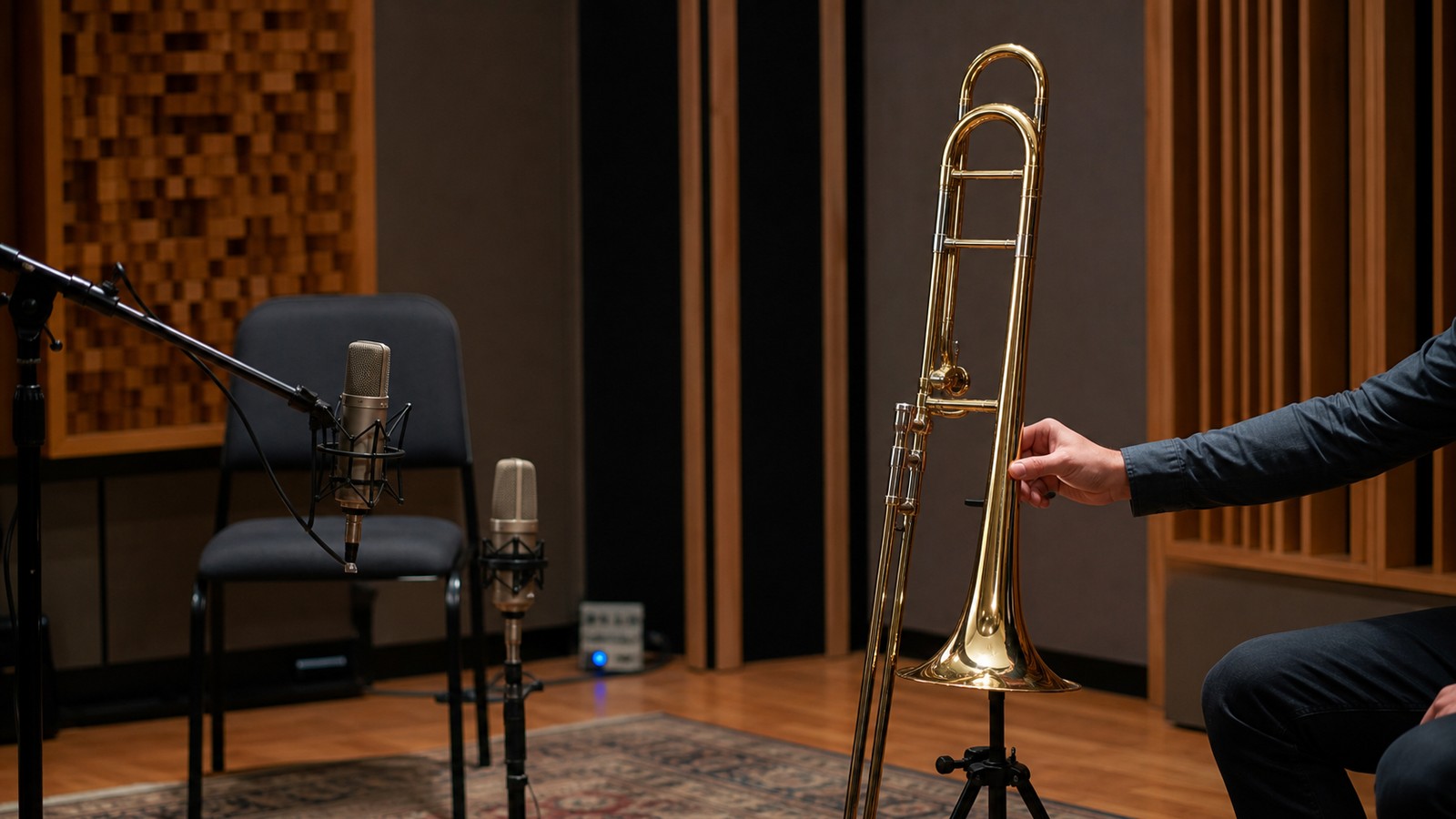
Recording can reveal details that are easy to miss in a live room. A horn that feels powerful behind the bell may sound too bright or too covered on playback. Testing with a microphone is valuable for players who record often.
Studio reliability also includes ergonomics. Long sessions punish awkward trigger placement, unstable intonation, and slides that require constant attention.
Test the Dynamic Range
Professional instruments should speak at whisper-soft volumes and remain composed at full volume. Many horns sound good in the middle dynamic range. The extremes reveal whether the instrument supports real performance pressure.
Play soft attacks, crescendos, loud entrances, and releases. Listen for whether the tone keeps its core. A professional horn should not require the player to choose between control and color.
Evaluate Valve and Trigger Feel
For F-attachment tenors and bass trombones, valve feel matters. The trigger should be comfortable, quiet, and predictable. The valve register should not feel like a separate instrument. Open-wrap, closed-wrap, axial, rotor, and other designs each have supporters, but the player's hand and ear must approve.
Do Not Assume Custom Is Always Better
Custom and modular trombones can be outstanding because they let players match bells, slides, tuning slides, valves, and leadpipes. They can also overwhelm players who do not yet know what they are trying to solve. A well-matched production horn may outperform a poorly chosen custom setup.
Use customization to answer specific needs. If the player wants a quicker slide, a different bell response, or a more open valve register, modular options make sense. If the player is simply chasing prestige, testing should slow down the decision.
Bring Real Repertoire
Testing a professional trombone only with comfortable long tones can be misleading. Bring excerpts, etudes, section passages, solos, and stylistic material that represent real work. The instrument should handle the player's actual demands.
Include awkward entrances and quiet notes, not only impressive phrases. Professional work often exposes the least glamorous parts of playing.
A horn that makes difficult but common tasks easier is worth more than one that only shines on favorite licks.
Listen From the Room
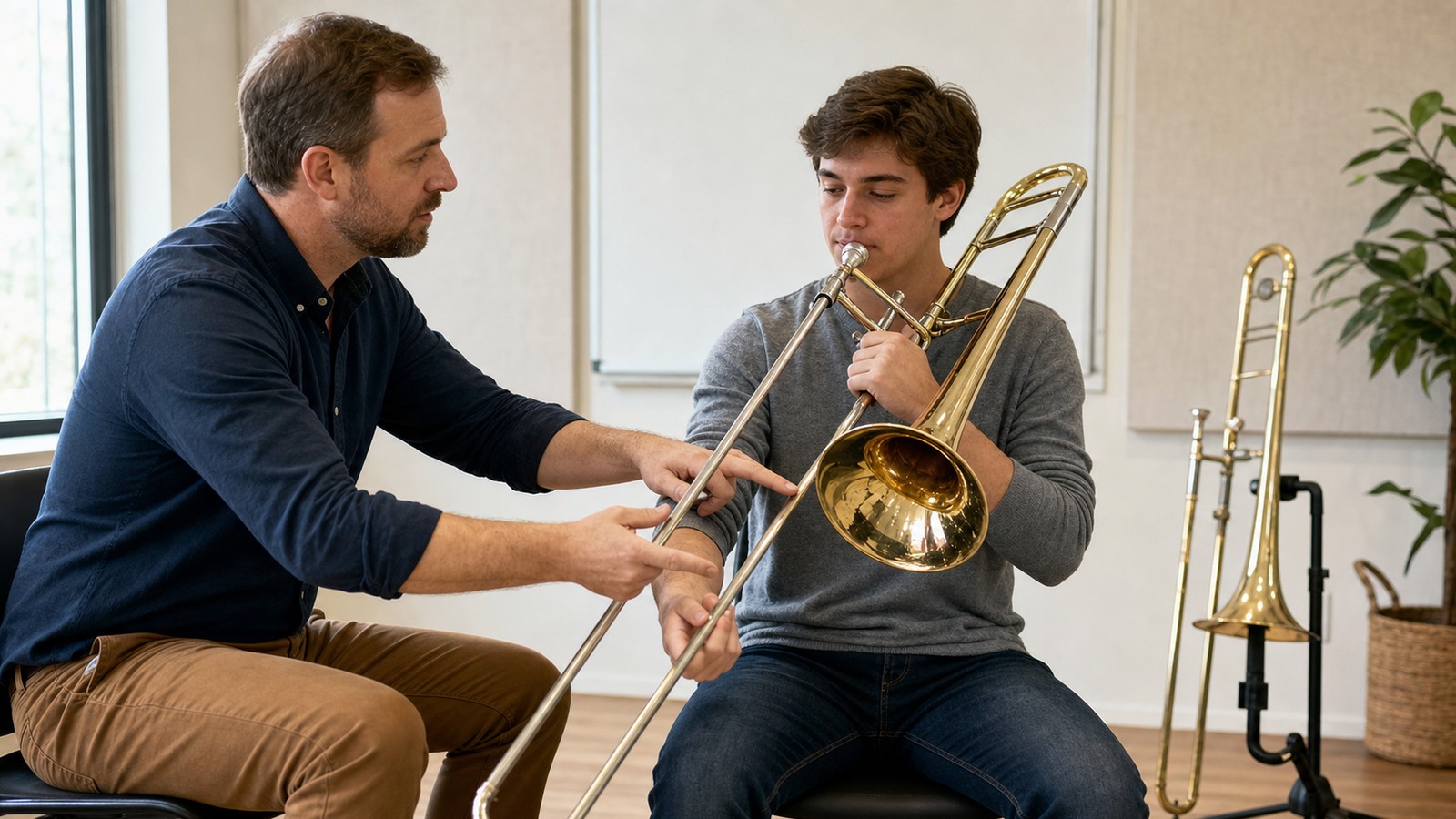
Behind the bell, a trombone can feel different than it sounds to listeners. Bring a trusted player, teacher, or colleague who can listen from the room. Better yet, trade places and listen to someone else play the horn if possible.
Check Intonation Tendencies
Every trombone has pitch tendencies, but professional players need predictable ones. Test partials, alternate positions, valve notes, soft entrances, and loud sustained notes. A horn that forces constant rescue may not be worth its tone color.
Use drones, tuner checks, and ensemble-style intervals. Intonation should be evaluated as a musical behavior, not only a mechanical reading.
Think About Repair and Parts Support
Professional trombones are long-term tools. Repair access, parts availability, maker support, and technician familiarity matter. A wonderful horn becomes risky if basic service is difficult in the player's region.
Balance Sound With Ergonomics
A horn that sounds gorgeous but hurts the hand, strains the shoulder, or makes trigger use awkward may become a liability. Professional players spend hours with their instruments. Comfort affects endurance, accuracy, and long-term health.
Check balance while standing, sitting, using mutes, and moving between registers. A small discomfort in the shop may become significant after a long rehearsal.
Ergonomics should not be dismissed as softness. They are part of professional reliability.
Compare New, Used, and Demo Horns
New professional trombones offer warranty support and the chance to choose exactly. Used or demo horns can provide excellent value, especially from reputable shops. Condition and setup matter more than whether the horn is new.
Used professional horns should be checked for slide wear, valve noise, alignment, previous repairs, and tuning slide condition. A repair estimate should be part of the buying math.
Record the Same Passage
For studio use, record the same passage on each candidate horn. Keep the microphone placement similar and listen later with fresh ears. Differences in articulation clarity, tone density, and note fronts may become clearer after the excitement of testing fades.
Avoid Buying for Someone Else's Career
Famous players influence equipment choices, but their needs may not match yours. A horn that suits a major orchestral player may not be ideal for a commercial freelancer. A jazz player's setup may not fit a classical audition path.
Use artist choices as information, not as a command. The best professional trombone supports your work, your body, and your sound.
A confident personal match matters more than copying a celebrated setup.
Make the Final Test Practical
A professional trombone should pass a practical test: can you play your real repertoire more confidently, tune predictably, record honestly, and finish long sessions with less fight? If the answer is yes, the horn deserves serious consideration.
If the answer is only that the horn feels impressive, keep testing. Professional tools should reduce friction. They should make the player's work clearer. The best choice often feels less dramatic after a few days because it simply lets the musician do the job. That quiet confidence is a very good sign.
Take Time Before the Purchase
Professional trombones are expensive enough to deserve patience. If possible, play the horn on more than one day, in more than one room, and with at least one trusted listener. A second session can confirm whether the first impression was real or just the thrill of something new.
Separate Audition Needs From Daily Work
An audition setup may emphasize certain colors, articulations, and projection goals. Daily professional work may require broader versatility. Players should be honest about which need dominates. A horn chosen only for one excerpt can become frustrating if most paid work asks for something else.
This does not mean ignoring auditions. It means weighting the decision carefully. If the player spends equal time in orchestra, studio, and teaching demonstrations, the most flexible professional horn may be the smarter investment.
Test With Fatigue in Mind
A horn can feel excellent for five minutes and less helpful after ninety. Professional players need instruments that remain predictable when the face is tired and the room is demanding. Long tones, repeated entrances, and extended passages can reveal whether the horn supports endurance.
Notice How Mutes Respond
Professional settings often require quick mute changes and reliable muted tone. Test straight, cup, practice, and specialty mutes if they are part of the player's work. A horn that sounds superb open but awkward with common mutes may create problems in sessions or pits.
Mute response affects pitch and articulation as well as color. The right professional horn should keep those changes manageable.
Budget for Setup Work
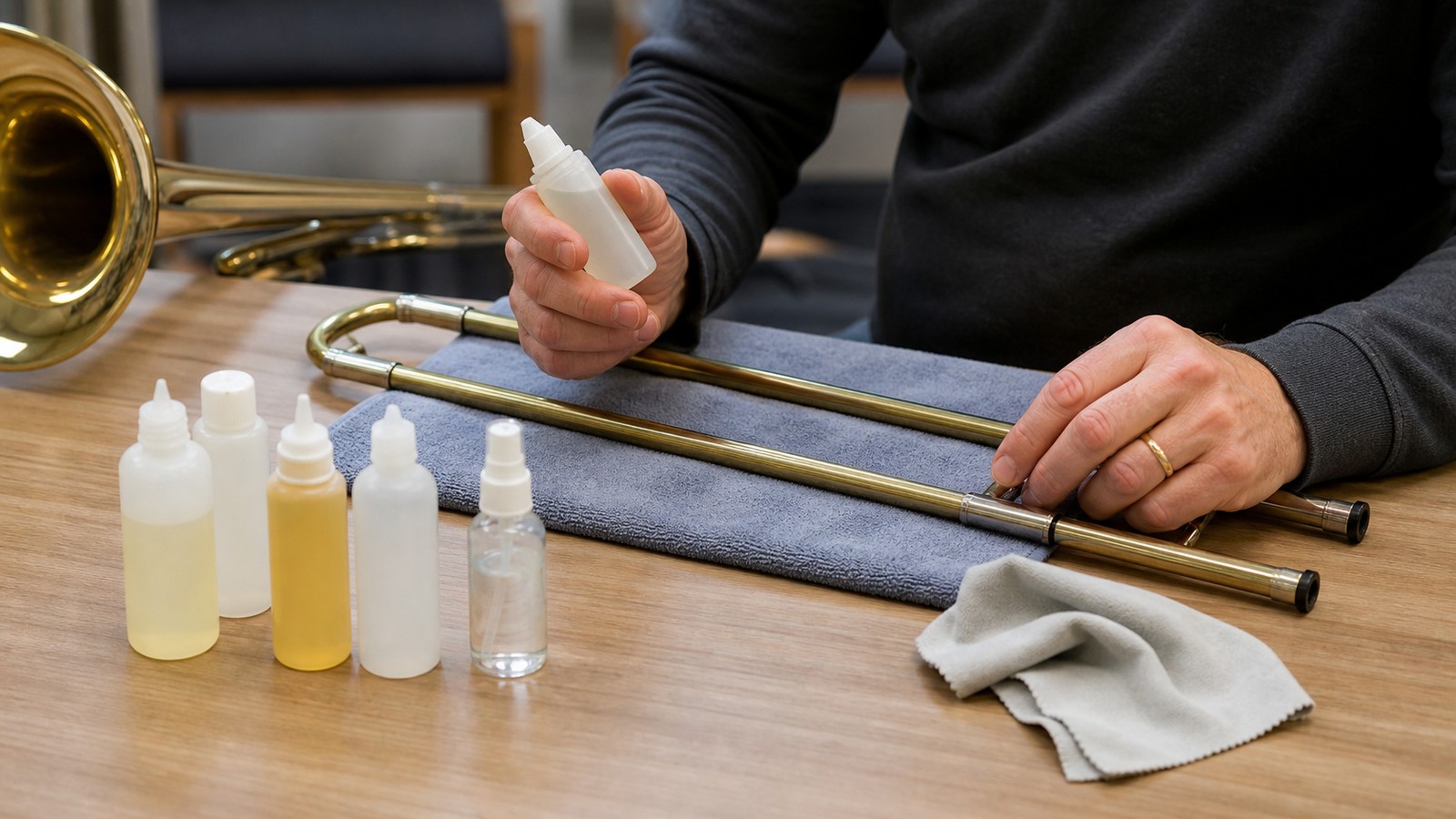
A professional purchase may still need small setup adjustments. Slide service, valve alignment, trigger adjustment, leadpipe experimentation, or mouthpiece matching can refine an already good horn. Those costs should be considered part of the ownership plan rather than surprises.
Choose Confidence Over Novelty
New equipment can be exciting, but professional confidence is quieter. The right trombone should make the player trust soft attacks, exposed entrances, valve notes, and long phrases. It should help the musician stop thinking about the instrument and start thinking about the music.
If a horn keeps demanding attention for the wrong reasons, the excitement may fade quickly. If it disappears into the work, it may be exactly right.
Professional value lives in that trust. It is built one rehearsal, take, lesson, and performance at a time.
Bring a Trusted Mouthpiece
Testing a professional trombone with an unfamiliar mouthpiece can confuse the result. Bring the mouthpiece you know best, then experiment only after establishing a baseline. This makes it easier to hear what the horn itself is doing.
Ask What the Horn Makes Easier
A professional horn should make something important easier: soft control, projection, valve register, blend, articulation, recording consistency, or endurance. Name that improvement clearly. If the benefit cannot be described, the purchase may be driven by excitement rather than need.
The answer may be different for every player. One musician may need a broader orchestral sound, while another needs a quicker commercial response. The best professional choice solves the player's recurring problems.
Let the Instrument Earn Trust Slowly
A professional trombone earns trust through repeated situations: the quiet entrance after a long rest, the loud passage near the end of rehearsal, the exposed studio take, the valve note that has to tune immediately, and the soft release that cannot bump. A horn that keeps succeeding in those ordinary high-pressure moments becomes more valuable than one that only impresses during a short trial. Give the instrument enough musical tests to prove that trust before making the final decision.
Compare With Your Current Horn
The clearest professional test often comes from comparing a candidate against the horn you already know. Play the same passages back to back and ask what improves, what weakens, and what simply feels different because it is new.
A new horn should win for musical reasons, not only novelty. If the current instrument still solves the work better, the smarter choice may be maintenance, setup adjustment, or waiting.
Expect the Choice to Feel Specific
The right professional trombone rarely feels generically good. It feels good for a reason: steadier attacks, better valve color, easier recording, stronger blend, or more reliable endurance. When the reason is specific, the purchase becomes easier to defend after the novelty wears off.