The Valve Trombone Began as a Practical Brass Experiment
The origins of the valve trombone sit inside a larger period of brass invention, when makers and players were trying to make chromatic playing quicker, smoother, and more dependable. Instead of replacing the slide trombone everywhere, the valve version offered a different answer to the same musical problem: how to keep trombone tone while using valve fingerings for fast passages, compact spaces, and particular ensemble traditions.
A: They offered trombone-range playing with compact fingered movement for fast, crowded, or valved-brass-centered settings.
A: No. Slide trombones remained central because their tone, glissando, and intonation flexibility stayed valuable.
A: Bands often valued projection, practical handling, and matching technique across valved brass sections.
A: It can make some passages easier, but it adds fingering, tuning, and valve-response challenges.
A: Not always. Design and player concept can make it close, but the mechanism changes response and connection.
A: It appears in some band, theater, Latin, regional, and doubling situations.
A: The slide gives flexible tuning, familiar orchestral blend, and the classic trombone color composers expect.
A: They may adapt musically, but the fingering map and tuning habits require separate practice.
A: Compare articulation, pitch movement, tone color, and how each mechanism supports the phrase.
A: It shows how brass design responds to practical musical needs instead of abstract invention alone.
Valves Arrived During a Brass Innovation Boom
The valve trombone did not appear as an isolated novelty. It grew from the same early modern brass curiosity that shaped cornets, tubas, and keyed or valved experiments across Europe. Makers were exploring how to give brass instruments full chromatic access without asking players to rely only on lip adjustment, hand position, or long slide movement.
For trombone players, that question was especially tempting because the slide already solved chromatic pitch with remarkable accuracy. The challenge was not whether a trombone could play every note. The question was whether valves could make some passages easier while preserving enough of the familiar trombone character.
The Slide Was Already a Strong Solution
The older slide trombone remained successful because it offered continuous pitch control, clean glissando effects, and a direct connection between ear and intonation. Any valve version had to justify itself against an instrument that was already musically flexible, mechanically clear, and deeply established in churches, courts, theaters, civic bands, and orchestras.
Valves Offered Speed and Compact Movement
Valves appealed to players who wanted shorter physical motion between pitches. A fast chromatic figure that required large slide travel could be fingered in place on a valve trombone. That difference made the instrument attractive in settings where agility, space, or marching practicality mattered more than the slide's continuous tuning advantage.
The valve trombone also reduced the visual and physical sweep of the instrument. In crowded pits, tight band formations, or compact theater spaces, the absence of a moving slide could be useful. That did not make the instrument better in every musical situation, but it gave it a practical identity.
The tradeoff was immediate. Valve fingerings introduced the tuning tendencies and resistance patterns that brass players know from other valved instruments. The valve trombonist still had to listen carefully, but the kind of adjustment changed.
Military and Civic Bands Helped the Idea Spread
Bands were natural homes for brass experiments because they needed strong outdoor projection, reliable parts, and instruments that could support public ceremonies. A valve trombone could serve the trombone range while behaving more like the other valved brass around it. That familiarity made it easier to place in certain ensembles.
In some band cultures, the instrument became more than a curiosity. It could sit beside cornets, horns, and tubas as part of a coordinated brass family. The slide trombone stayed important, but the valve version had a real job where the ensemble sound and logistics favored it.
Orchestras Were More Selective
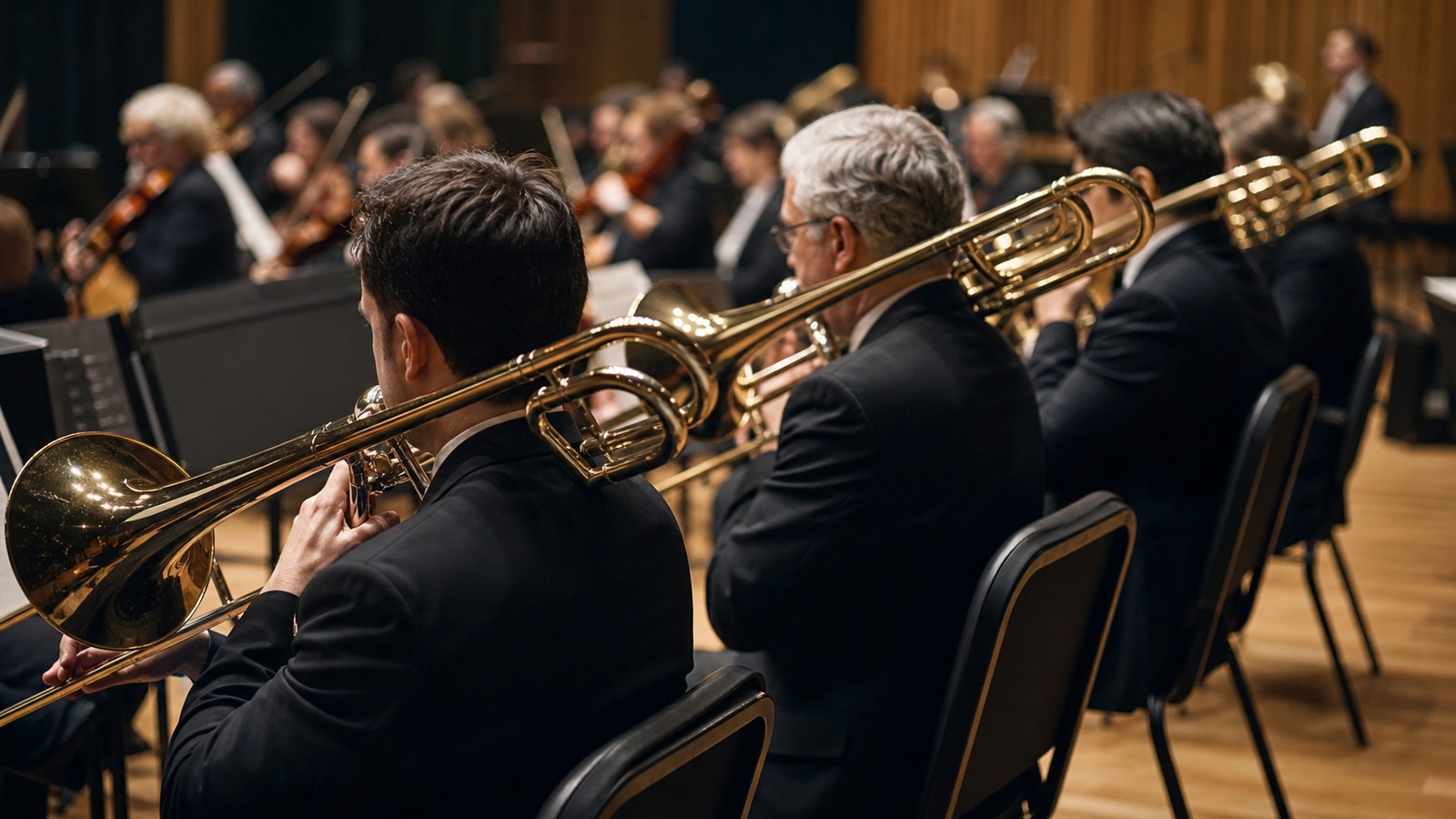
Orchestral traditions tended to keep the slide trombone because composers and players valued its blend, intonation flexibility, and established sound. When the valve trombone appeared in orchestral or theater use, it often reflected local tradition, practical need, or a particular player's equipment rather than a universal replacement of the slide.
Tone Was the Central Argument
The valve trombone had to persuade listeners that it still sounded like a trombone. Bore design, bell shape, mouthpiece choice, and player concept all influenced that result. Some valve trombones could sound broad and convincing, while others leaned toward a more compact valved-brass response.
This is why discussions of the instrument can become passionate. Players are not only comparing mechanisms. They are comparing what the word trombone means in the ear: weight, edge, vocal line, slide clarity, and the slight flexibility that makes the instrument feel alive.
A useful view is to treat valve trombone tone as its own branch. It shares family traits with slide trombone, but it does not need to erase every mechanical difference to be musically valid.
Valve Systems Changed the Player's Technique
A slide trombonist thinks in positions, alternate positions, and small continuous corrections. A valve trombonist thinks in fingering combinations, valve response, partials, and slide-like musical phrasing without a slide. The ear remains central, but the physical map changes completely.
That difference can surprise players who assume the valve trombone is simply easier. It may remove long slide shifts, yet it adds valve coordination, fingering accuracy, and a different approach to pitch tendencies. Ease depends on the passage and on the player's background.
Opera and Theater Work Gave It Practical Uses
Theater pits and opera settings could reward instruments that fit tight spaces and respond quickly. A valve trombone allowed a player to cover trombone lines without extending a slide into stands, scenery, or neighboring musicians. In busy accompaniment figures, fingerings could also feel more compact.
Some Traditions Kept It Alive
The valve trombone survived most strongly where local musical habits gave it a continuing reason to exist. Certain band, opera, and popular styles made room for its sound and technique. In those places, the instrument was not a failed replacement. It was a practical member of the brass section.
Latin, banda, theater, and regional brass traditions have all helped modern listeners encounter valve trombone in ways that do not feel antique. The instrument can move quickly, articulate brightly, and blend with valved brass while still occupying a trombone range.
That ongoing life matters because it prevents the history from becoming a simple invention-and-decline story. The valve trombone changed roles, but it did not vanish.
The Instrument Shows How Brass Design Responds to Real Work
Instrument design often changes when musicians face repeated practical pressures. The valve trombone answered pressures around speed, space, ensemble matching, and player familiarity. Its origin makes more sense when viewed as a working solution rather than as a challenge issued to the slide trombone.
That practical background also explains why opinions differ. A symphonic player may value the slide's control above all else, while a theater or band player may appreciate the valve instrument's compactness. Both views can be honest.
It Did Not End the Slide Trombone
The slide trombone remained central because its strengths were not accidental. Smooth pitch adjustment, distinctive glissando, and direct intonation control continued to matter. Composers, conductors, and players heard those qualities as part of the instrument's identity.
Modern Players Can Learn From the Comparison
A modern student does not need to choose one mechanism as the only legitimate answer. Comparing slide and valve trombones teaches how design shapes phrasing, tuning, articulation, and ensemble role. The exercise can sharpen a player's ear because the two instruments reveal different habits.
On slide trombone, a player may notice how much pitch correction happens between named positions. On valve trombone, the same player may notice how clean valve coordination affects line shape. Each mechanism exposes a different kind of discipline.
That is the best reason to study the valve trombone's origins. It shows that musical tools are never neutral. They guide the body, the ear, and the choices a player makes under pressure.
The Name Can Be Misleading
The phrase valve trombone can make the instrument sound like a simple trombone with a part swapped out. In reality, the mechanism changes the player's relationship to pitch, articulation, and movement. The bell may say trombone, but the playing experience sits between familiar brass categories.
That in-between identity is part of its charm. It invites slide players, euphonium players, trumpet players, and low-brass specialists to hear the trombone range from a different physical angle.
Makers Balanced Familiarity and Change
Builders had to decide how much of the slide trombone to preserve. Bell flare, tubing proportions, wrap, valve quality, and mouthpiece compatibility all influenced whether the instrument felt convincing. Too much change could make it lose the trombone profile; too little could make the valves feel awkward.
The Best Use Depends on Context
A valve trombone may not be the first choice for a symphonic chorale that needs slide intonation and blended sectional breathing. It may be very useful in a compact band arrangement, a fast theater part, or a style where valved-brass articulation is part of the sound. Context decides whether the design feels like a compromise or a strength.
That context-based thinking is healthier than ranking mechanisms as winners and losers. Instruments survive because musicians find situations where their traits make sense.
When a player hears a valve trombone used well, the question should be what job is it doing here, not why is it failing to be a slide trombone.
Listening Reveals the Difference Faster Than Reading
Students should listen to examples in several styles before forming an opinion. A valve trombone in a band, a theater part, and a Latin brass setting can feel very different. Listening across contexts shows how the instrument's history became multiple musical pathways rather than one fixed sound.
Try focusing on articulation first, then on pitch movement, then on tone color. The valve mechanism may reveal itself in the way notes connect and in the way fast lines sit under the fingers.
Slide Players Need a Different Map
A slide player who picks up valve trombone must resist treating fingerings as a shortcut around musicianship. The instrument still demands a singing line, strong time, clean attacks, and attentive pitch. Valves simply move the work into a different coordination system.
The Origin Story Is Really About Options
The valve trombone came from a musical world that wanted more options. Brass players were expanding chromatic ability, ensemble color, and practical stage use. The instrument belongs to that wider search for flexibility.
Seen that way, its history is not a footnote. It is a reminder that instrument families evolve through experiment. Some ideas dominate, some remain regional, and some wait for the right musical setting to sound newly useful.
The slide trombone kept its central place, but the valve trombone earned a distinct lane. That lane explains why the instrument still attracts curious players and why its origins remain worth understanding.
Equipment Curiosity Should Stay Musical
Players can become fascinated by mechanisms and forget the musical result. The better approach is to ask what each design encourages. Does it support the line, the blend, the rhythm, or the practical situation? The origin of the valve trombone points back to those grounded questions.
A well-used valve trombone is not an apology for lacking a slide. It is a tool chosen for a purpose.
Beginners Should Still Start With Clear Goals
A beginner interested in valve trombone should know why they want it. If the goal is standard school band trombone technique, slide trombone remains the usual starting point. If the goal involves a specific ensemble, regional style, or doubling need, the valve instrument may be sensible.
Teachers Can Use It as a Comparison Tool
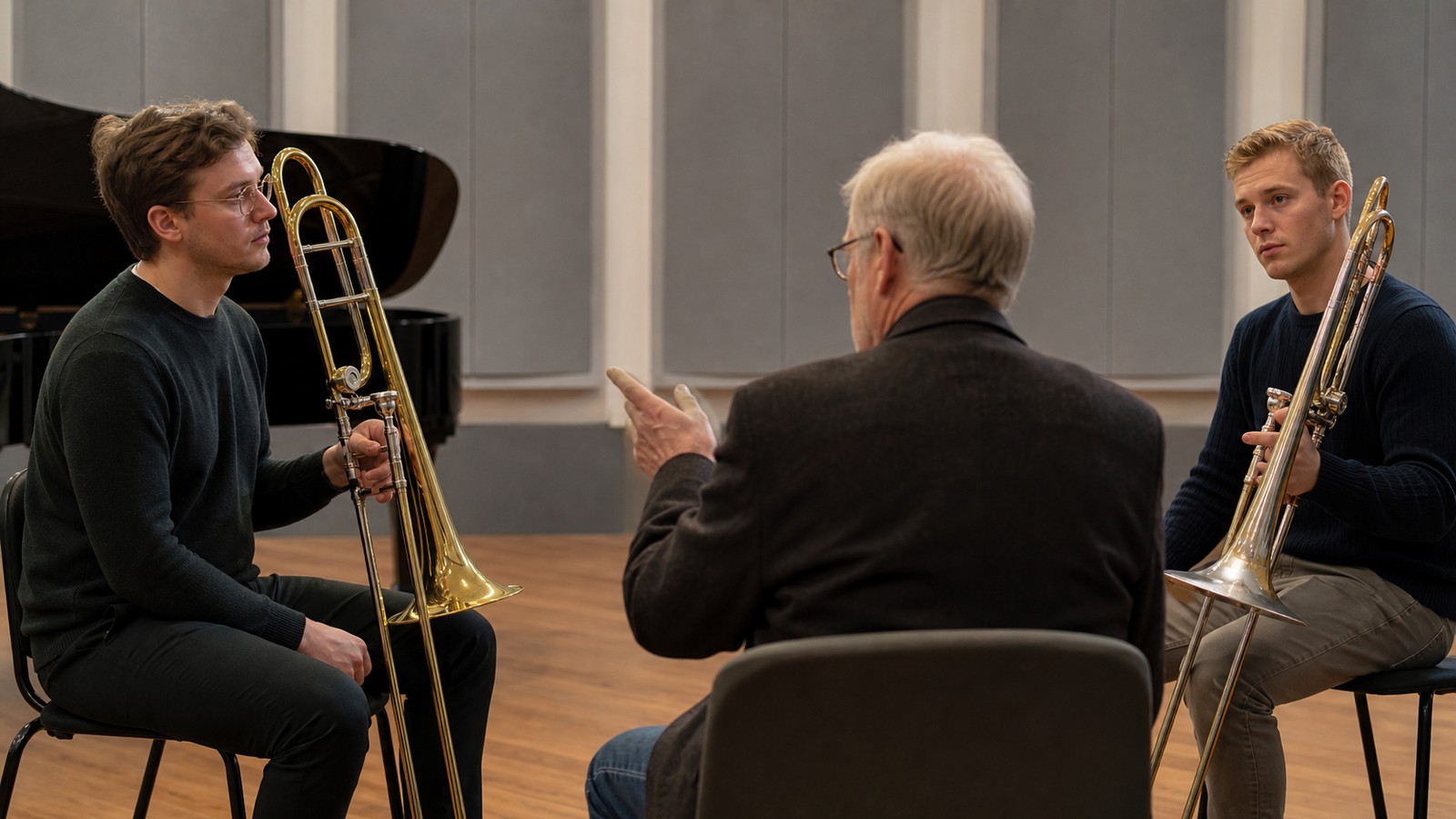
Teachers can use the valve trombone to help students understand that pitch systems shape habits. A short demonstration can show why slide positions feel fluid, why valves have tuning tendencies, and why tone concept matters across mechanisms.
This comparison also helps students respect instruments they do not personally play. Low brass history becomes more vivid when learners see makers trying different ways to solve similar musical problems.
That respect is valuable. It keeps the conversation from shrinking into a simple claim that one version is authentic and the other is secondary.
Collectors Preserve the Mechanical Story
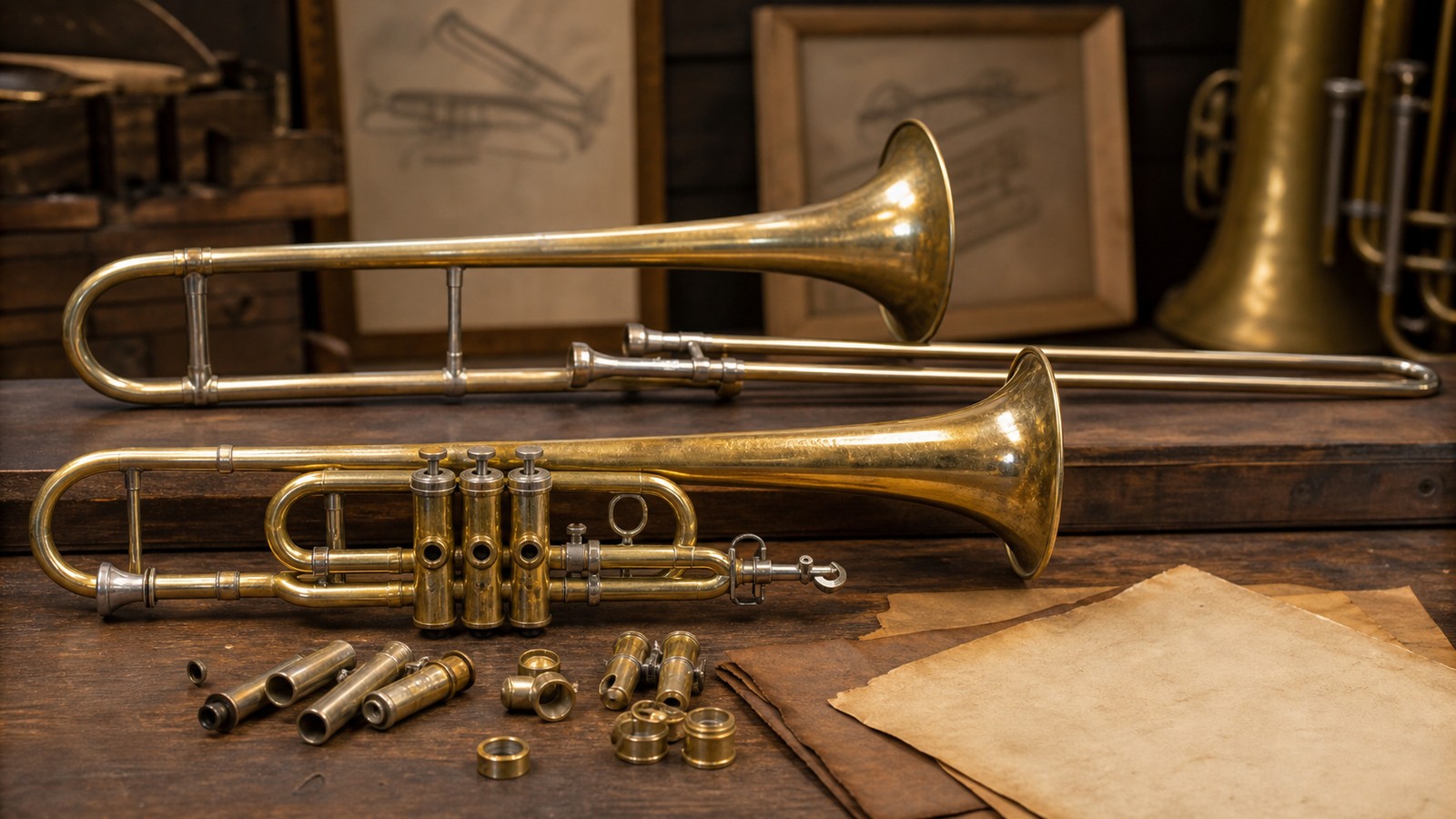
Historic valve trombones also interest collectors because they show how makers tested layouts, valve placements, and bell designs. An older instrument can reveal local preferences and workshop assumptions that are not obvious from modern catalogs.
Those surviving examples turn history into something tangible. A player can see how much design thinking was packed into a single brass body.
The Valve Trombone Remains a Useful Detour
For many trombonists, the valve trombone will remain a detour rather than a primary instrument. That is fine. A good detour can still teach technique, history, and listening. It can also prepare players for doubling situations where a broader brass vocabulary is useful.
Its Origins Still Explain Its Appeal
The valve trombone began because musicians wanted the trombone register with a different mechanism. That simple idea opened questions about speed, tone, compactness, tradition, and ensemble fit. Those questions are still the same ones players ask today.
Understanding the instrument's origin does not require choosing sides. It requires hearing how a practical invention became a real musical voice.
That balanced view gives the valve trombone its proper place: not a replacement for the slide, not a mistake in the family tree, but a historically meaningful answer to specific musical needs.