The Sackbut Is the Trombone's Early Voice
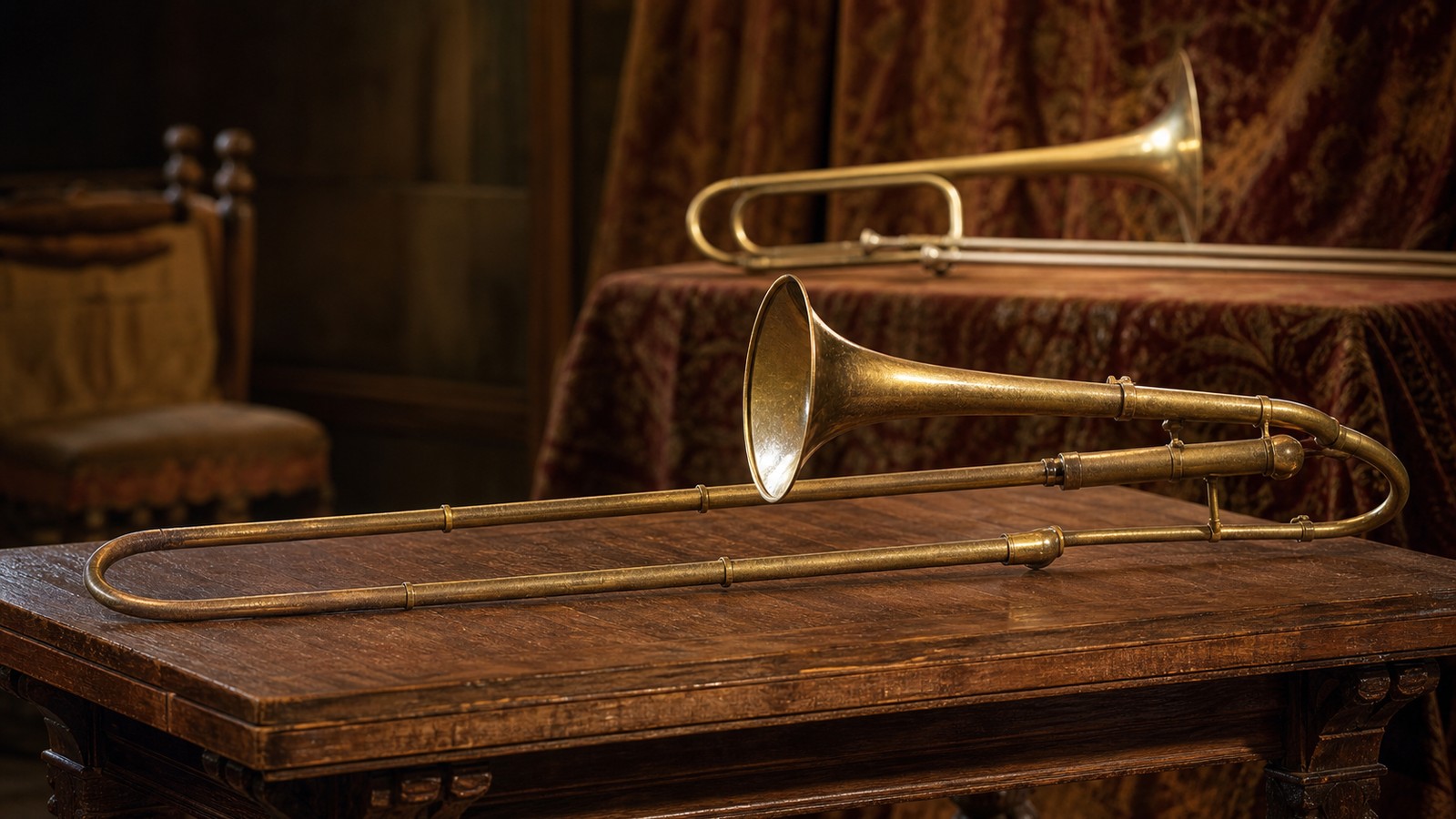
The sackbut, often described as an ancient trombone, is better understood as the trombone's early historical form from Renaissance and early Baroque music. It used a slide, a smaller bore, and a more vocal blend than many modern trombones. Learning about the sackbut helps players hear the trombone family before modern orchestral weight became the default sound.
A: It is an early form of the trombone family, but its build, response, and sound concept are different.
A: The phrase helps beginners identify it, though Renaissance or early trombone is usually more accurate.
A: Its focused, blended tone could support vocal lines without overpowering text.
A: No. It was a refined working instrument suited to the music and ensembles of its time.
A: Yes. It teaches restraint, vocal phrasing, efficient air, and sensitive ensemble tuning.
A: It appeared in sacred music, civic ceremonies, processions, courts, and mixed instrumental ensembles.
A: Smaller proportions, different mouthpieces, and historical playing style all contribute to the color.
A: They often use them because the color and balance fit older repertoire better than modern trombones.
A: Listen for blend, line clarity, gentle articulation, and how the instrument supports voices.
A: Its sacred and ceremonial roles helped give the trombone family a lasting sense of gravity.
Ancient Is a Useful but Imperfect Shortcut
Calling the sackbut an ancient trombone helps modern readers place it quickly, but the phrase can blur the actual history. The sackbut belongs mainly to early modern European music rather than to the ancient world of classical antiquity. It is old, but it is not ancient in the same way a Roman trumpet is ancient.
The Slide Made It a True Ancestor
The sackbut's strongest family connection to the modern trombone is the slide. Its moving slide allowed chromatic playing and flexible tuning, which gave it a direct musical lineage that brass players can still recognize. A modern trombonist looking at a sackbut sees a familiar idea in a lighter frame.
That continuity matters because the instrument was not merely a decorative predecessor. It solved real musical problems and supported sophisticated ensemble writing.
Its Sound Was Built for Blend
The sackbut was valued for a tone that could blend closely with voices, cornetts, organs, and other early instruments. Compared with many modern trombones, it often speaks with a narrower, more transparent color. That quality made it useful in sacred and ceremonial music where clarity and dignity mattered.
Modern players sometimes expect early trombones to sound weak because they are smaller. That is the wrong expectation. The sackbut can project with focus, but it often projects through clarity rather than sheer mass.
This blended sound helps explain why composers and ensembles used it in vocal contexts. It could reinforce a line without covering the text or dominating the texture.
Civic Music Gave the Sackbut Public Work
Cities used wind and brass players for ceremonies, processions, towers, feasts, and official occasions. The sackbut could take part in those public sounds because it carried outdoors and could pair with other loud instruments. It was dignified enough for ceremony and flexible enough for practical ensemble writing.
Sacred Music Gave It Serious Weight
In church settings, the sackbut often supported voices and helped shape solemn textures. Its ability to blend with sung lines gave it a role very different from the later stereotype of trombone as only a dramatic orchestral force. The instrument could sound restrained, devotional, and almost choral.
That sacred association stayed important for the trombone family. Even in later orchestral writing, trombones often carried a sense of ceremony, gravity, or judgment. The memory of early uses helped shape how listeners heard the instrument.
The Design Was Lighter Than a Modern Trombone
Sackbuts generally used smaller proportions than many modern trombones. The bell was less flared, the tubing felt lighter, and the overall response encouraged a different approach to sound. A player cannot simply bring a modern big-orchestra concept to the instrument and expect the style to work.
The mouthpiece and bore also shape the response. Because the instrument does not invite the same kind of broad force, players often learn to use efficient air, clean articulation, and careful line direction.
Those design features are not limitations. They point toward the music the instrument was built to serve.
The Sackbut Was Not Primitive
It is easy to assume older instruments were rough drafts of modern ones. The sackbut challenges that assumption. It was capable of expressive, accurate, and refined playing when handled by skilled musicians. Its differences reflect different musical priorities, not a lack of development.
Players Needed Strong Ears
The slide allowed detailed pitch adjustment, but it also demanded careful listening. In early ensembles, where temperament, voices, and instruments could vary, a sackbut player needed to fit the surrounding sound. The player had to listen horizontally to the line and vertically to the harmony.
That skill remains familiar to modern trombonists. The equipment has changed, but the need to place pitch inside a living ensemble has not.
Articulation Followed Speech and Song
Sackbut articulation often needs to feel closer to language than to modern heavy brass attack. Because the instrument frequently doubled or supported vocal lines, the start of each note had to respect phrasing and text-like motion. A clean beginning mattered, but so did elegance.
This makes early-music playing an excellent study for modern trombonists. It asks the player to remove unnecessary weight and find shape through line.
A sackbut part can teach restraint without dullness. The best playing feels alive because the articulation carries meaning.
Ensemble Placement Changed the Role
The sackbut could support lower voices, reinforce inner lines, or add ceremony to a texture. Its role depended on the ensemble around it. In a vocal consort, it might blend gently; in an outdoor civic group, it might speak more boldly.
That flexibility helped the instrument endure across different musical settings. It was not limited to one narrow job.
Modern Reconstructions Require Taste
Today's players often perform on reproductions or carefully preserved instruments. The goal is not only to own a historically shaped object. The goal is to make musical decisions that fit the repertoire, pitch level, ensemble balance, and acoustic.
Early Music Changed Modern Trombone Thinking
When modern players study sackbut, they often return to the modern trombone with a lighter ear. They notice how much sound is truly needed, how clearly a line can speak, and how articulation can support expression without extra force. The older instrument becomes a teacher.
It also broadens the player's sense of history. The trombone family is not only a story of bigger bells and louder orchestras. It is also a story of vocal blend, civic presence, and sacred color.
That broader story helps students avoid treating modern orchestral sound as the only valid trombone identity.
The Sackbut Helps Explain Later Trombone Symbolism
Later composers often used trombones for solemn, supernatural, or ceremonial moments. Those associations did not appear from nowhere. The early use of sackbuts in sacred and civic music gave the family a cultural memory that later listeners and composers could recognize.
Understanding that background makes later orchestral writing feel less mysterious. The trombone's seriousness has roots.
The Instrument Rewards Smaller Gestures
A sackbut does not usually ask for the same physical approach as a modern large-bore trombone. Smaller gestures, clearer articulation, and more immediate response can produce a convincing sound. Overplaying often makes the instrument less beautiful.
Students Should Listen Before Judging
A modern student may hear sackbut for the first time and wonder why it does not sound like a symphony trombone. That reaction is understandable, but it should not end the conversation. The better question is what kind of beauty the instrument is trying to make.
Listen for blend with voices, the clarity of inner lines, and the way the instrument supports harmony without pulling attention away. Those qualities reveal why composers and ensembles valued it.
Once that sound world becomes familiar, the sackbut stops seeming like a weaker trombone. It becomes a different expression of the same family.
Performance Practice Shapes the Result
Pitch standards, tuning systems, articulation, ornamentation, and ensemble layout can all change how sackbut music feels. A historically informed performance is not only about the instrument. It is about the whole musical environment that gives the instrument meaning.
That is why the sackbut rewards patient study. Its best use depends on context, not just hardware.
The Slide Connection Remains Inspiring
Modern trombonists can feel a direct kinship with sackbut players because the slide remains central. The player's hand still maps pitch through motion. The ear still guides tiny adjustments. The physical link across centuries is unusually clear.
The Sackbut Was Both Functional and Expressive
Some historical instruments survive in modern imagination as museum objects. The sackbut deserves more than that. It was a working instrument used by skilled musicians who needed blend, projection, precision, and expressive shape.
That working identity keeps the history grounded. The instrument did not exist to look old or unusual. It existed because musicians found it useful.
When performed well today, it still feels useful. It can make old music speak with color that modern substitutes do not quite match.
Terminology Can Open the Door
The word sackbut may sound strange to beginners, but it simply names a real branch of trombone history. Once students connect the name to the slide, the sound, and the music, the term becomes less intimidating.
Good terminology helps players respect the instrument on its own terms. It prevents the old trombone from being treated as a costume version of the modern one.
Modern Ensembles Use It to Recover Color
Early-music ensembles use sackbuts because the color helps restore balance that modern trombones can overpower. The goal is not historical decoration. The goal is to make the texture breathe in a way that matches the repertoire.
The Instrument Teaches Restraint
Restraint is not the same as playing timidly. On sackbut, restraint means choosing the right amount of energy for the line, the room, and the surrounding voices. A focused sound can carry without becoming heavy.
That lesson transfers beautifully to modern trombone. Many players improve their orchestral and chamber playing after studying earlier styles because they learn to separate intensity from volume.
The sackbut's invention and use therefore matter beyond historical curiosity. They continue to shape musical habits.
Its History Connects Players to a Longer Line
A trombonist who studies the sackbut meets the instrument family before many modern categories hardened. Sacred music, civic ceremony, vocal blend, and instrumental craft all meet in that earlier sound. The result is a richer understanding of what trombone can mean.
That longer line makes the modern instrument feel deeper. Today's trombone is not only a band or orchestra tool; it is part of a centuries-long brass voice.
The Sackbut Still Has Something to Say
The sackbut remains compelling because it is both familiar and unfamiliar. The slide links it to today's trombone, while the tone and repertoire invite a different kind of listening. That tension makes it one of the most rewarding historical brass instruments to study.
Ancient Trombone Is Only the Beginning
Using the phrase ancient trombone can help a beginner find the topic, but the real story is more interesting. The sackbut was a refined, practical, expressive instrument with its own settings and expectations.
It helped shape the trombone family's reputation for dignity, blend, and ceremony. It also reminds modern players that power is only one part of brass expression.
For students, listeners, and performers, the sackbut opens a doorway into a subtler trombone history. Step through that doorway, and the modern instrument becomes easier to hear with fresh ears.
That wider perspective is especially useful for young players who mostly hear trombones in bands, jazz ensembles, or modern orchestras. The sackbut shows that the family also has a chamber-like, vocal, and ceremonial side. Knowing that history can make every later style feel less isolated and more connected.