Bass Trombone Is More Than a Lower Tenor Trombone
What makes the bass trombone different is not only that it plays lower notes. Bass trombone has a larger sound concept, a bigger role in low-brass writing, different equipment, wider bore tendencies, larger mouthpieces, and often one or two valve attachments. It can support the trombone section, reinforce tuba lines, cover powerful orchestral parts, drive big band writing, and add dramatic weight in studio music. A tenor trombonist can understand the basics quickly, but playing bass trombone well requires a distinct approach to air, response, articulation, balance, and musical responsibility.
A: No. It has different equipment tendencies and a distinct musical role.
A: Not always, but many modern professional bass trombones do.
A: They have a foundation, but air, equipment, and role expectations change.
A: No. It supports harmony, color, rhythm, and section balance.
A: It often needs a broader air concept, but not uncontrolled force.
A: They can be more involved because of valves and extra tubing.
A: Orchestras, wind ensembles, jazz bands, brass groups, film scores, and studios.
A: Usually they start on tenor unless a teacher recommends otherwise.
A: Larger mouthpieces help support low-register sound and response.
A: Clear low sound, strong listening, controlled power, and section responsibility.
The Role Is Different
Bass trombone often functions as the foundation of the trombone section. It may connect tenor trombones to tuba, reinforce low harmonies, or provide a dark edge in ensemble writing. The part is not simply tenor trombone transposed downward.
The player needs to think about support, clarity, and weight at the same time.
The Sound Concept Is Broader
Bass trombone sound usually needs more breadth and depth. It can be powerful, but it should not become unfocused. The best sound has core inside the width, so the ensemble receives pitch and rhythm clearly instead of only a large low-brass cloud.
Bore and Bell Tend to Be Larger
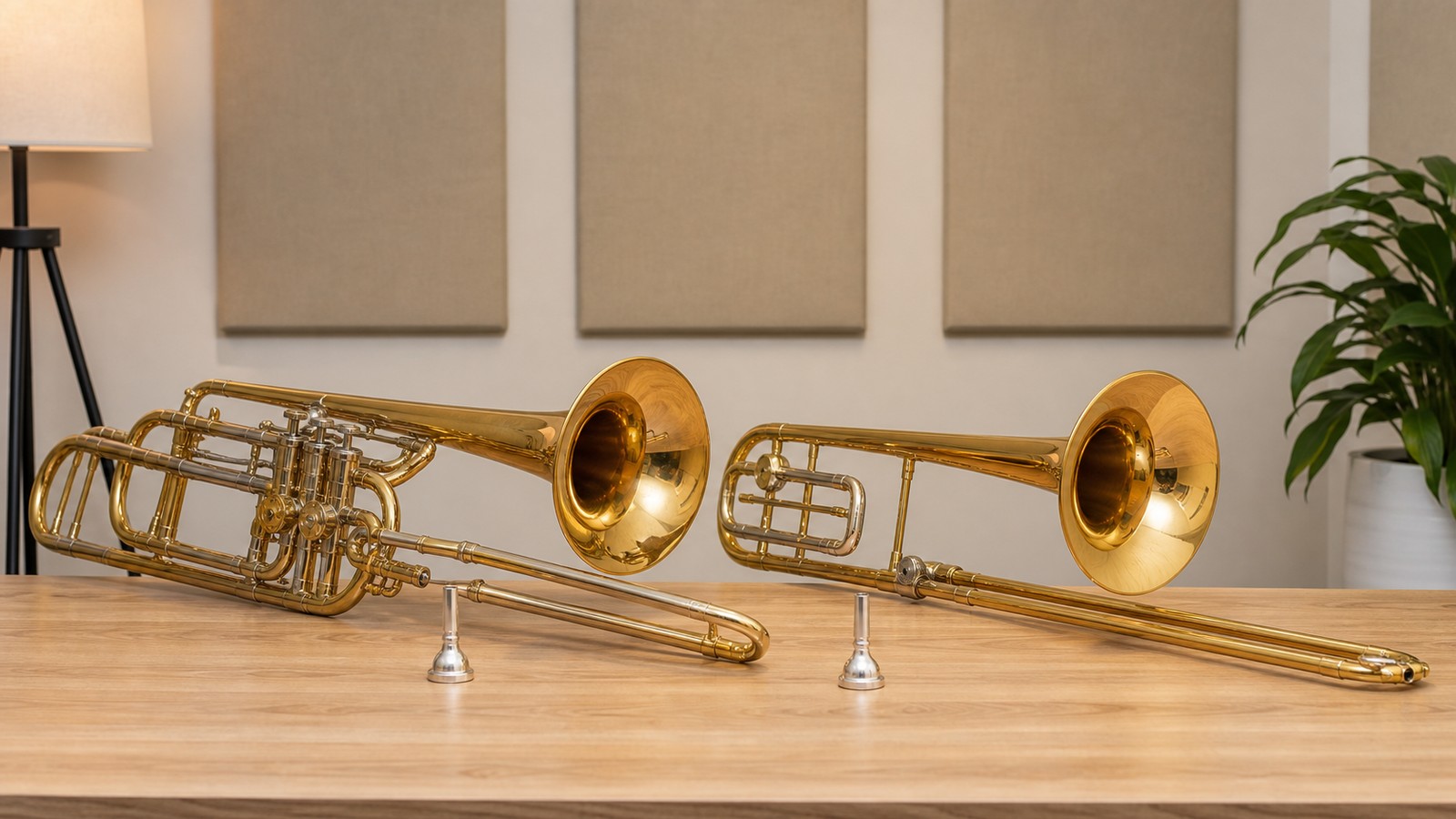
Many bass trombones use larger bores and bells than standard tenor trombones. This helps support low-register playing and a broader sound. The larger setup can demand more air and a different sense of resistance.
The difference is not only physical size. The instrument responds differently under the face and in the hands.
Players moving from tenor should expect an adjustment period.
Valve Systems Expand Low Options
Bass trombones commonly use valve attachments, often with two valves on modern professional instruments. These valves provide alternate tubing for low notes and technical passages that would be awkward or impossible on open slide alone.
Independent and dependent valve systems offer different layout possibilities. The best choice depends on repertoire, player preference, and repair support.
Mouthpieces Are Usually Larger
Bass trombone mouthpieces are generally larger than tenor mouthpieces. They help support low range, but they also require efficient air and embouchure control. A larger mouthpiece can make low notes feel more available, yet it can also expose weaknesses in support, clarity, and endurance if the player only chases size.
Air Support Feels Different
Bass trombone playing often asks for a larger, slower, more supported air concept. Players should avoid simply blowing harder. The goal is resonant air, not force.
Good bass trombone sound comes from relaxed capacity, open resonance, and clear articulation.
Low Register Clarity Matters
Low notes must still speak clearly. A bass trombone that sounds huge but unclear will not serve the ensemble. Articulation, pitch, and rhythm remain just as important as size.
The instrument's low range can tempt players to overblow. That often makes the sound wider but less useful.
Control is what makes low power musical.
The Bass Trombonist Balances Upward
A bass trombonist listens up to the tenor trombones and down to the tuba or bass line. The job is often to connect registers. That requires flexible tone, not one volume all the time.
Big Band Bass Trombone Has Its Own Style
In jazz ensembles, bass trombone can anchor section voicings, punch low figures, and add personality to ensemble hits. The style may be more rhythmic and commercial than orchestral bass trombone.
Players need time feel, section blend, and the ability to project without sounding clumsy.
Orchestral Bass Trombone Carries Drama
Orchestral writing may ask bass trombone for darkness, power, solemnity, or massive low-brass support. The part can be exposed even when it is not melodic.
The player must handle long rests, sudden entrances, and large dynamic ranges.
A strong bass trombone entrance can change the entire orchestra's color.
Studio Work Rewards Flexibility
Film, television, and commercial recording may ask bass trombone to move from subtle texture to aggressive low brass quickly. Precision matters because studio time is expensive and cues can change fast.
Tenor Skills Still Matter
A bass trombonist still needs slide accuracy, tone, rhythm, reading, listening, and musical phrasing. The larger instrument does not excuse sloppy fundamentals, because unclear low playing can damage the entire section's time and pitch.
Tenor experience can help, but bass trombone adds range, equipment, and role expectations. The switch should build on fundamentals rather than replace them.
The Instrument Can Be Physically Demanding
Bass trombones can be heavier and more complex to hold. Valve sections, larger bells, and bigger tubing affect balance. Players should pay attention to posture and hand comfort.
A tense setup can make the instrument feel harder than it needs to be.
Good ergonomics support better sound.
Maintenance Is More Involved
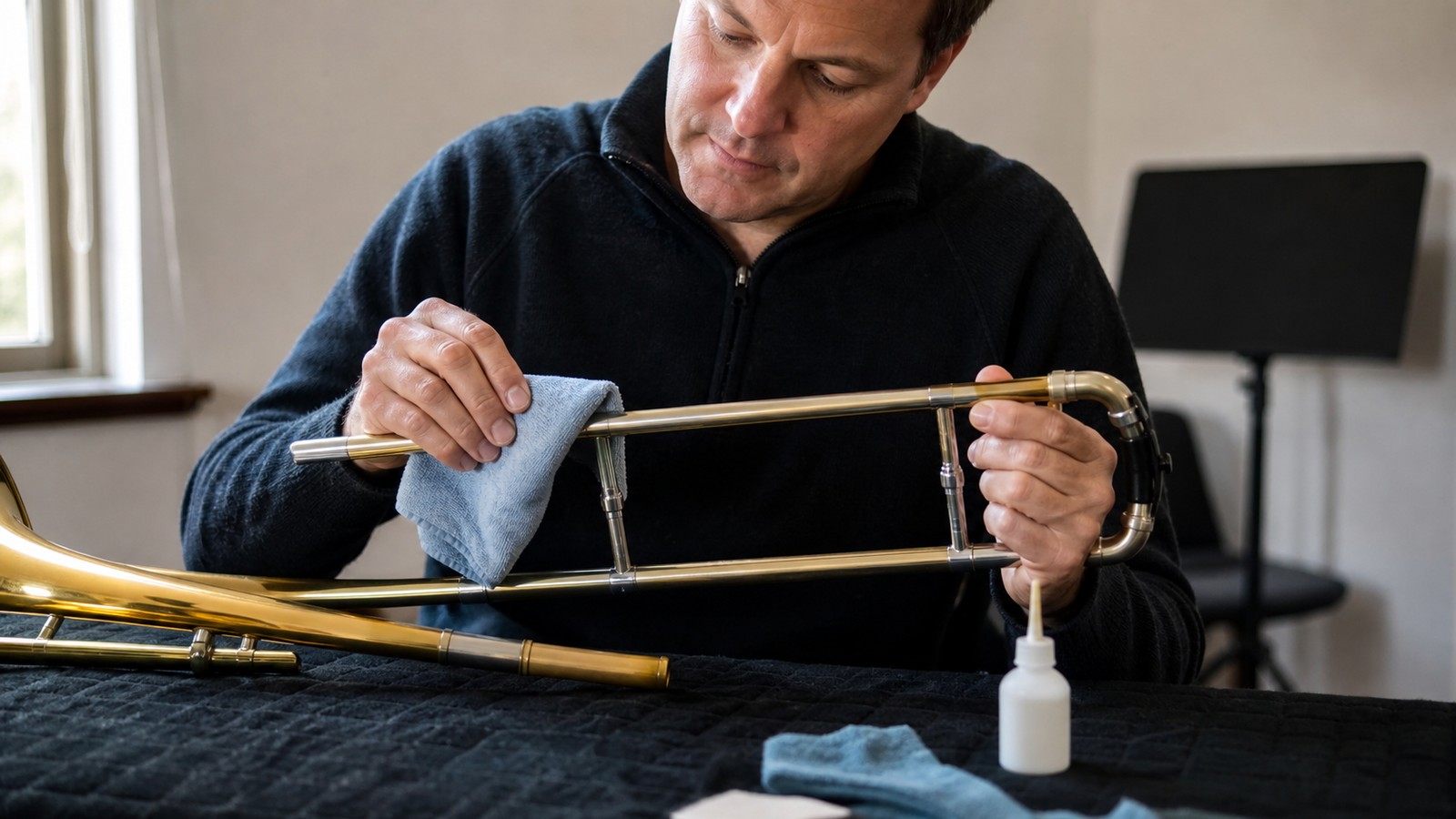
More valves and tubing mean more maintenance. Rotors, linkages, tuning slides, and water keys all need care. A bass trombone player should be comfortable with routine maintenance and quick problem spotting.
Students Should Switch for a Reason
A student should not switch to bass trombone only because low notes seem fun. The switch makes sense when the ensemble needs the role, the player has enough foundation, and the teacher can guide equipment and technique.
The instrument rewards players who like responsibility inside the section.
Equipment Costs Can Be Higher
Bass trombones often cost more than student tenor trombones because of larger construction and valve systems. Cases, mouthpieces, repairs, and maintenance may also be more involved.
Buying used can be smart, but valve condition and slide action should be inspected carefully.
The purchase should match the player's commitment and ensemble needs.
Listening Helps Define the Role
Students interested in bass trombone should listen to orchestral low brass, big band sections, film scores, and solo bass trombone recordings. The instrument's identity becomes clearer when heard in context.
The Difference Is Musical
The bass trombone is different because the musical job is different. It supports, anchors, colors, and sometimes dominates with purpose. Equipment helps, but role defines the instrument.
A good bass trombonist brings power with judgment. That judgment is what separates low playing from real bass trombone playing.
Why Bass Trombone Matters
Without bass trombone, many low-brass textures feel incomplete. The instrument adds a voice that can be dark, grounded, agile, and commanding while still blending with tenor trombones, tuba, and the broader ensemble.
It is one of the most satisfying brass roles because it combines foundation and character. A good bass trombonist can make a section feel secure without demanding attention in every measure.
For the right player, bass trombone is not a backup path. It is a serious musical identity.
Pedal Register Requires Patience
Bass trombone players often spend more time developing low and pedal registers. Those notes need relaxed air, accurate slide choices, and a sound concept that stays clear. Forcing the low register usually makes it less dependable.
Valve Choices Affect Slide Strategy
Valves are not just extra buttons. They change slide position options and help players avoid awkward long reaches. Bass trombonists learn when a valve combination improves sound, tuning, or technical ease.
That strategy takes time. A new player may know the valve fingerings before they truly understand when each option sounds best.
Section Leadership Can Come From Below
The bass trombone often influences the confidence of the entire low brass section. A centered low entrance gives tenor trombones and tuba something stable to relate to. Poorly timed low notes can unsettle everyone.
Leadership from the bass chair is not always visual. It is rhythmic, harmonic, and tonal.
That quiet leadership is one reason experienced bass trombonists are valued.
Articulation Must Stay Clean
Large equipment can tempt players toward broad, slow articulation. Bass trombone still needs clear fronts to notes, especially in big band figures, film cues, and rhythmic low passages.
Doubling Requires Honest Adjustment
Players who double tenor and bass trombone should not expect one setup to feel like the other. Mouthpiece size, air, resistance, and role all change. Switching well means accepting the difference rather than fighting it.
Warmups and practice plans should respect the instrument being played that day.
Choose Bass Trombone for the Job
A bass trombone is right when the music needs its color and range. It is not a trophy for low-note enthusiasm or a shortcut around tenor challenges.
The best players choose it because they love the responsibility of foundation, power, and blend.
That musical reason makes the equipment meaningful.
Balance With the Tuba
Bass trombone and tuba often share low-brass responsibility, but they do not do the same job. The bass trombone can add edge, articulation, and harmonic definition where the tuba supplies breadth. Listening between the two parts is essential.
Develop Middle Register Too
Bass trombonists still need a strong middle register. Many parts move through the staff or sit in a range where blend with tenor trombones matters. A player who practices only low notes becomes less useful.
Middle-register clarity also helps low notes because the same air and articulation principles apply.
Learn to Use Weight Sparingly
The instrument can produce enormous sound, but constant heaviness tires the player and dulls the ensemble. Bass trombone color is most effective when the player can choose weight rather than live there permanently.
Sometimes the correct sound is compact and rhythmic. Sometimes it is broad and dark. The difference depends on the music.
Judgment is the real advanced skill.
Respect the Extra Hardware
More valves and tubing create more possibilities, but they also create more places for noise, resistance, water, and maintenance problems. Good bass trombone playing includes caring for the machine.
Think Like a Foundation Player
Bass trombone often gives other players something to stand on. That foundation may be rhythmic, harmonic, or emotional. The role requires confidence without ego and power without constant dominance.
A good foundation player listens more than they announce themselves. The section feels stronger because the bass voice is reliable.
Grow Into the Instrument Gradually
Switching to bass trombone should be a process. Players need time to build air efficiency, valve coordination, low-register clarity, and comfort with the heavier setup.
Rushing the change can create tension or unfocused sound. A teacher can help the player add range and equipment demands in a healthy order.
When the adjustment is patient, bass trombone becomes a natural extension of musicianship rather than a physical struggle.
Let the Part Define the Sound
The best bass trombone sound changes with the part. A chorale, swing chart, film cue, and wind ensemble line may all need different weight, edge, and length. Players who listen to the job in front of them become more valuable than players who bring the same huge sound to every measure.
Confidence Comes From Control
Bass trombone can feel thrilling because of its size and low range, but lasting confidence comes from control. Clear attacks, centered pitch, reliable valves, and balanced dynamics make the sound useful.
When those fundamentals are secure, the instrument's power feels earned. The player can support the ensemble without guessing how much sound is enough in rehearsals, auditions, recordings, or concerts with demanding low-brass writing and fast ensemble changes.