American and European Trombone Styles Are Tendencies, Not Rules
Comparing American vs European trombone styles can be useful as long as the comparison stays flexible. Players, schools, orchestras, and eras differ widely, so no continent owns a single sound. The real value is learning how traditions shape tone, articulation, equipment choices, vibrato, section blend, and expectations inside different musical settings.
A: No. The label covers many teachers, orchestras, regions, genres, and individual artists.
A: No. European playing includes many national and regional traditions with different priorities.
A: Listen for sound, articulation, vibrato, blend, equipment, repertoire, and context before labeling.
A: Equipment influences response and color, but player concept and ensemble expectations matter more.
A: Auditions reward expected sounds, so students often train toward those regional expectations.
A: Jazz adds many separate style languages, making a simple continent-based comparison less useful.
A: Yes. Modern players often study internationally and borrow sounds that fit the music.
A: Avoid deciding that one broad style is better without listening to specific players and contexts.
A: A dry or resonant hall changes how much core, attack, and sustain a player needs.
A: It expands a player's musical vocabulary and improves listening flexibility.
Start With Caution
Broad style labels can help students notice patterns, but they can also flatten real musicians into stereotypes. American and European trombone playing each contain many regional, orchestral, jazz, band, and conservatory traditions. A single player may combine influences from several places.
The safest way to compare styles is to treat them as listening categories, not fixed identities. Ask what a sound seems to emphasize, then look for context.
This approach keeps the comparison useful. It lets students discuss sound without pretending that every American or European player sounds the same.
Sound Concept Often Frames the Difference
In many American orchestral traditions, students often hear a broad, centered, projecting sound with strong clarity and a stable core. In many European traditions, listeners may notice more variety between national schools, sometimes with a leaner or more vocal color. These are tendencies, not laws.
Equipment Can Encourage Style
Instrument setup influences how a player approaches sound. Bore size, bell material, mouthpiece choice, valve design, and section equipment can all guide response. A large orchestral setup may encourage breadth and depth, while a lighter setup may invite more nimble color changes.
Equipment never replaces musicianship. Two players can sound different on the same horn because their air, concept, articulation, and training differ. Still, equipment choices often reflect what a musical culture expects.
Students should therefore compare both the sound and the tools behind it. The equipment tells part of the story, but not the whole story.
Training Traditions Shape the Ear
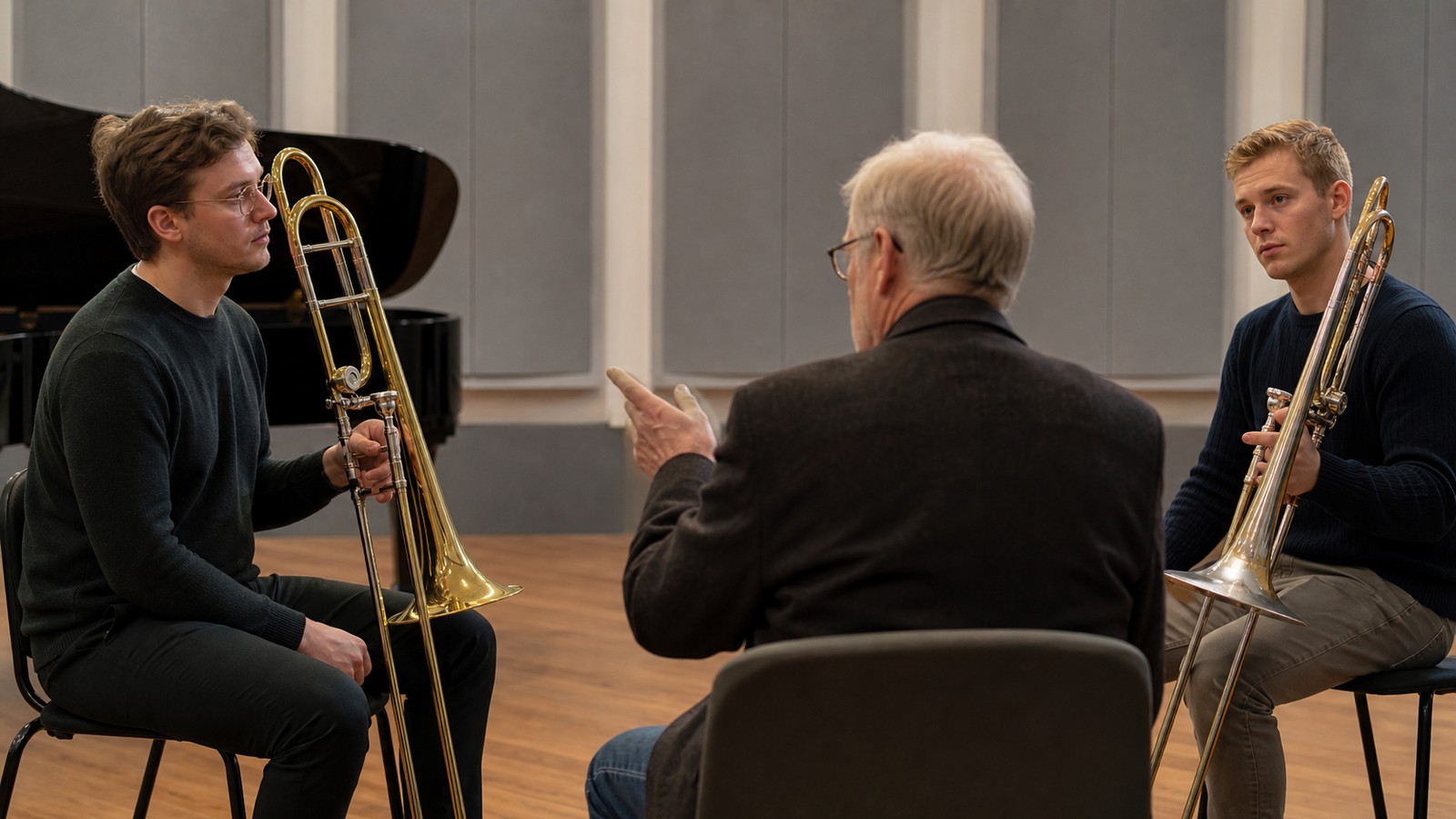
Teachers pass on more than exercises. They pass on ideas about blend, vibrato, phrase shape, section balance, and acceptable brightness. Over time, those ideas create recognizable schools of playing, especially inside conservatories and professional orchestras.
A student trained in one tradition may hear another tradition as too heavy, too light, too direct, or too flexible. Those reactions often reveal training habits more than universal truth.
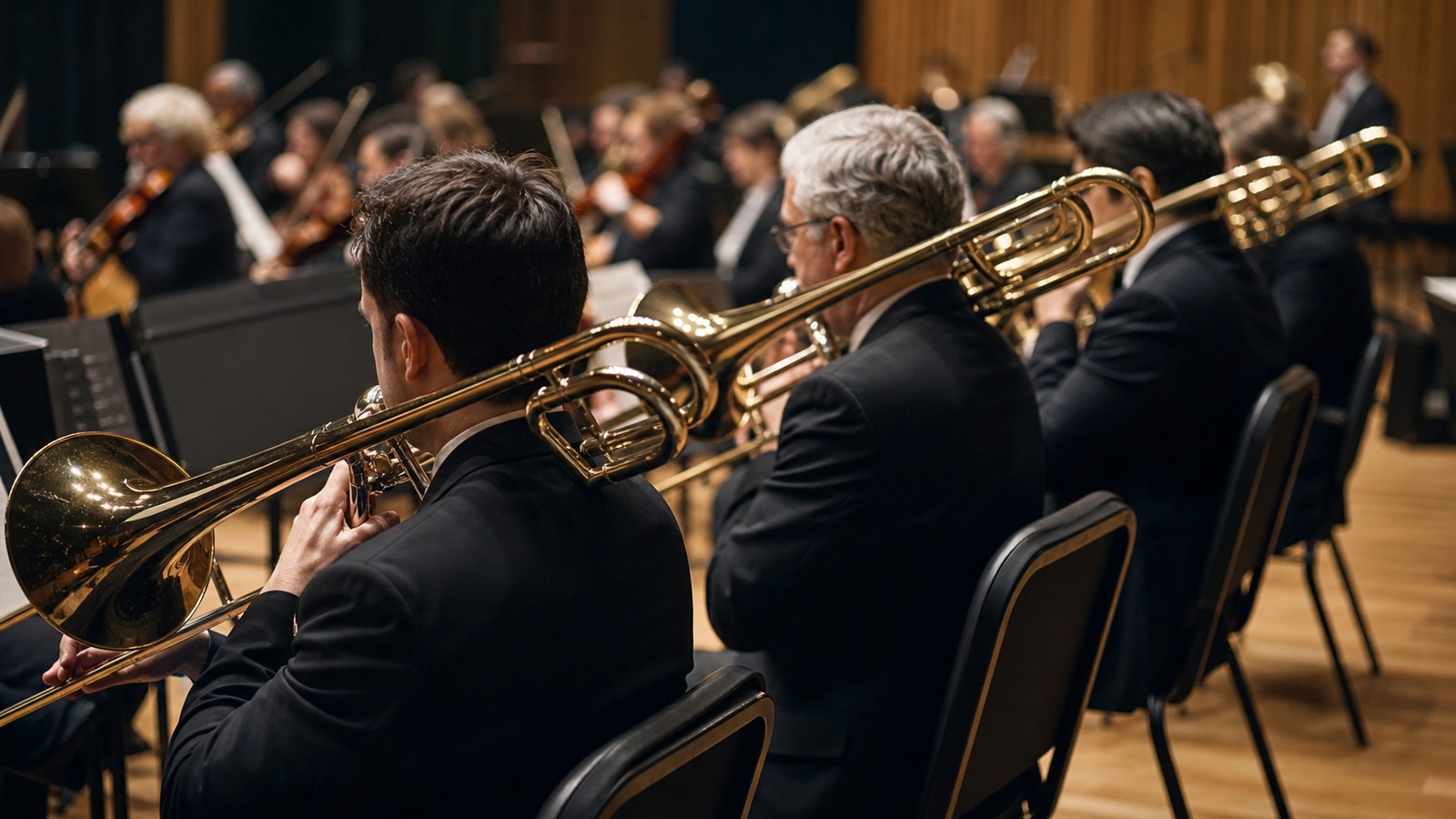
Orchestral Sections Create Local Expectations
A trombonist does not play style alone. The section, conductor, hall, repertoire, and brass colleagues all shape choices. A sound that fits one orchestra may feel wrong in another because the surrounding texture asks for a different balance.
Vibrato Expectations Vary by Setting
Vibrato is one of the clearest places where listeners notice style differences. Some traditions use very little vibrato in orchestral section playing, reserving it for solo or expressive moments. Other contexts may allow a warmer or more vocal shimmer, especially in lyrical lines.
The comparison becomes more complicated when jazz, brass band, opera, and solo repertoire enter the picture. A player's vibrato choice may reflect genre more than geography.
For students, the key is control. A player should be able to use vibrato intentionally, reduce it when blend requires stillness, and avoid letting habit decide every phrase.
Articulation Reveals Musical Language
American-style section playing often prizes clean fronts, strong rhythm, and a clear arrival in the sound. Some European schools may lean toward speech-like articulation, lighter fronts, or a more varied palette depending on repertoire. Again, the differences are not universal.
Listening for articulation helps students hear style without relying only on tone size. The beginning of each note can reveal how a tradition thinks about language, energy, and ensemble precision.
Hall Acoustics Change What Works
A dry hall may require more sustain and core, while a resonant hall may reward a leaner attack and careful release. European and American halls can differ greatly, but so can two halls in the same city. Acoustic reality often matters as much as cultural tradition.
Repertoire Pushes Players Toward Different Colors
A player performing German Romantic repertoire, French orchestral writing, American film music, British brass band music, or contemporary chamber work may adjust sound and articulation. Style comparison should follow the repertoire rather than impose a fixed label first.
The same trombonist might choose one color for a Bruckner chorale and another for a lighter opera passage. That adaptability is not inconsistency. It is good musicianship.
Students who study only a national label miss this practical truth. Repertoire often tells the player what kind of tradition to draw from.
Jazz Complicates the Map
American trombone style cannot be discussed without jazz, but jazz itself contains many approaches. Big band lead playing, bebop, salsa, studio work, and modern improvisation all ask for different sounds. European jazz trombonists also contribute major voices and do not simply imitate American models.
This means the American-versus-European frame works best for certain classical and orchestral comparisons. Outside that frame, style becomes a wider musical conversation.
Brass Band Traditions Add Another Layer
British and European brass band traditions can shape tone, vibrato, blend, and section identity in ways that differ from American school-band or orchestral habits. A trombonist moving between brass band and orchestra may need to adjust more than volume.
Section Blend May Matter More Than Individual Sound
A beautiful individual sound can still fail if it does not blend with the section. Different traditions define blend differently. Some want a unified wall of sound, some value clearer individual voices, and some adjust by repertoire.
Good players listen across the section before insisting on their preferred style. The goal is not to display an accent; it is to serve the music.
This is why professional sections can sound distinctive even when every player is technically excellent. Shared listening creates a style.
Pitch Approach Can Feel Different
Trombonists everywhere use the slide to adjust pitch, but traditions may differ in how they balance pure chord tuning, equal temperament, melodic direction, and ensemble habit. Some sections favor very active chord adjustment. Others prioritize consistent placement against fixed-pitch instruments.
Students should learn to hear both approaches. Intonation is not only a tuner reading; it is a musical agreement inside a moment.
Auditions Can Preserve Style Expectations
Auditions reward what committees expect to hear. If a region's orchestras favor a certain tone, articulation, or excerpt style, students preparing for those auditions will learn that vocabulary. Over time, the audition system helps preserve local ideas.
Recordings Can Mislead Without Context
A recording captures a player, room, microphone, repertoire, and production choice. It may not represent an entire national school. Comparing recordings can be useful, but students should avoid drawing sweeping conclusions from one famous section or soloist.
Better listening uses multiple examples. Compare different decades, orchestras, conductors, and venues. Notice what changes and what remains consistent.
That broader listening habit turns style comparison from opinion into study.
Students Can Practice Style Flexibility
A practical exercise is to play the same lyrical excerpt with three different goals: broad and centered, lean and vocal, then blended and restrained. The point is not to caricature a country. The point is to discover how air, attack, and resonance change the result.
Recording those attempts gives useful feedback. Students often hear style differences more clearly on playback than while playing.
Language and Singing Influence Phrasing
Some teachers connect instrumental phrasing to spoken language or national singing traditions. A line can feel more syllabic, more legato, more vertical, or more rhetorical depending on the model. These influences are subtle but real.
Do Not Ignore Individual Artists
Individual players often matter more than broad categories. A great trombonist may reshape expectations in their orchestra, school, or country. Students should study artists by name, not only by region.
That habit keeps style comparison human. It reminds learners that traditions are carried by musicians making choices, not by maps.
The best comparisons therefore move from broad listening to specific players. Start with tendencies, then find the people who complicate them.
Modern Players Borrow Freely
Travel, recordings, online lessons, international study, and global auditions have made style boundaries more porous. A student in the United States may study European orchestral clips daily, and a European student may train with American teachers. Modern style is increasingly mixed.
This blending does not erase local traditions, but it changes how players encounter them. Influence moves faster than it once did.
A Useful Comparison Needs Specific Questions
Instead of asking which style is better, ask what kind of sound the phrase needs. Is the player aiming for breadth, clarity, warmth, transparency, bite, or vocal shape? That question leads to better listening and better practice.
Teachers Should Frame Style as Vocabulary
Style is most useful when treated as vocabulary. A player who knows several sound worlds can choose the one that fits the job. A player who knows only one sound may be excellent in one setting but limited in another.
Teachers can help by assigning contrasting recordings and asking students to describe what they hear without ranking it immediately.
That kind of guided comparison builds ears. It also builds respect for traditions that feel unfamiliar at first.
Listeners Can Hear More by Naming Less
Sometimes the best listening avoids national labels for the first pass. Hear the attack, length, resonance, vibrato, blend, and balance before deciding what tradition it resembles. This keeps the ear active and prevents the label from doing too much work.
After that, labels can help organize patterns. They should never replace hearing.
Comparison Should Lead to Better Playing
The point of comparing American and European trombone styles is not to collect stereotypes. It is to expand the player's choices. When students learn how different traditions solve musical problems, they gain more tools for tone, articulation, phrasing, and ensemble awareness.
Style Is a Living Conversation
American and European trombone styles continue to influence each other. Recordings cross borders, players study internationally, and ensembles hire musicians with mixed backgrounds. The comparison is still useful, but it must stay alive.
A flexible listener can hear tendencies without turning them into walls. A flexible player can borrow ideas without losing personal sound.
That balance is the real lesson. Style is not a badge. It is a set of musical choices shaped by history, training, equipment, acoustics, repertoire, and the people in the room.
The Best Players Translate Rather Than Imitate
Imitation can begin the learning process, but mature style requires translation. A student may borrow a European recording's lighter release or an American section's centered breadth, then adapt that idea to their own body, instrument, ensemble, and repertoire. Copying the surface alone rarely works.
Translation also keeps respect at the center of comparison. The goal is not to collect accents like costumes. The goal is to understand why a musical choice works in its native setting and then decide whether that choice serves the phrase in front of you.
Personal Sound Still Has to Survive
A player who studies many traditions should still sound like a coherent musician. Style flexibility works best when it grows from a stable basic tone, reliable time, and honest listening. Without that foundation, borrowed colors can feel scattered rather than expressive in real ensemble work.