Valve Trombones Trade Slide Expression for Fingering Speed
The best valve trombones are not simply slide trombones with a shortcut attached. They are different instruments that use trumpet-like valves with trombone-range tubing and a trombone-style bell voice. For some players, that combination is useful: trumpet or euphonium doublers, salsa and Latin players, pit musicians, marching contexts, and anyone who needs valve-style fingering in a trombone register. For others, the loss of slide technique, glissando character, and traditional trombone phrasing makes the instrument less appealing. The question is not whether valve trombones are legitimate. They are. The question is whether their strengths match your music.
A: It may feel easier for valve players, but it has its own tuning, tone, and style challenges.
A: Doublers, Latin players, pit musicians, and players with a clear valve-trombone use case.
A: Sometimes for specific jobs, but it does not replace traditional slide language.
A: Only some do. Always ask the band director before choosing one for school band.
A: The fingering logic is similar, though the instrument, range, and tone concept differ.
A: Not true slide glissandos. Some effects can be imitated, but the continuous slide is absent.
A: Valve action, compression, tuning slides, dents, response, and repair history.
A: It can be, especially when the player understands the style and sound.
A: Usually no unless a teacher or director has a specific reason.
A: It solves a real musical need better than a slide trombone for that player.
Understand What a Valve Trombone Is
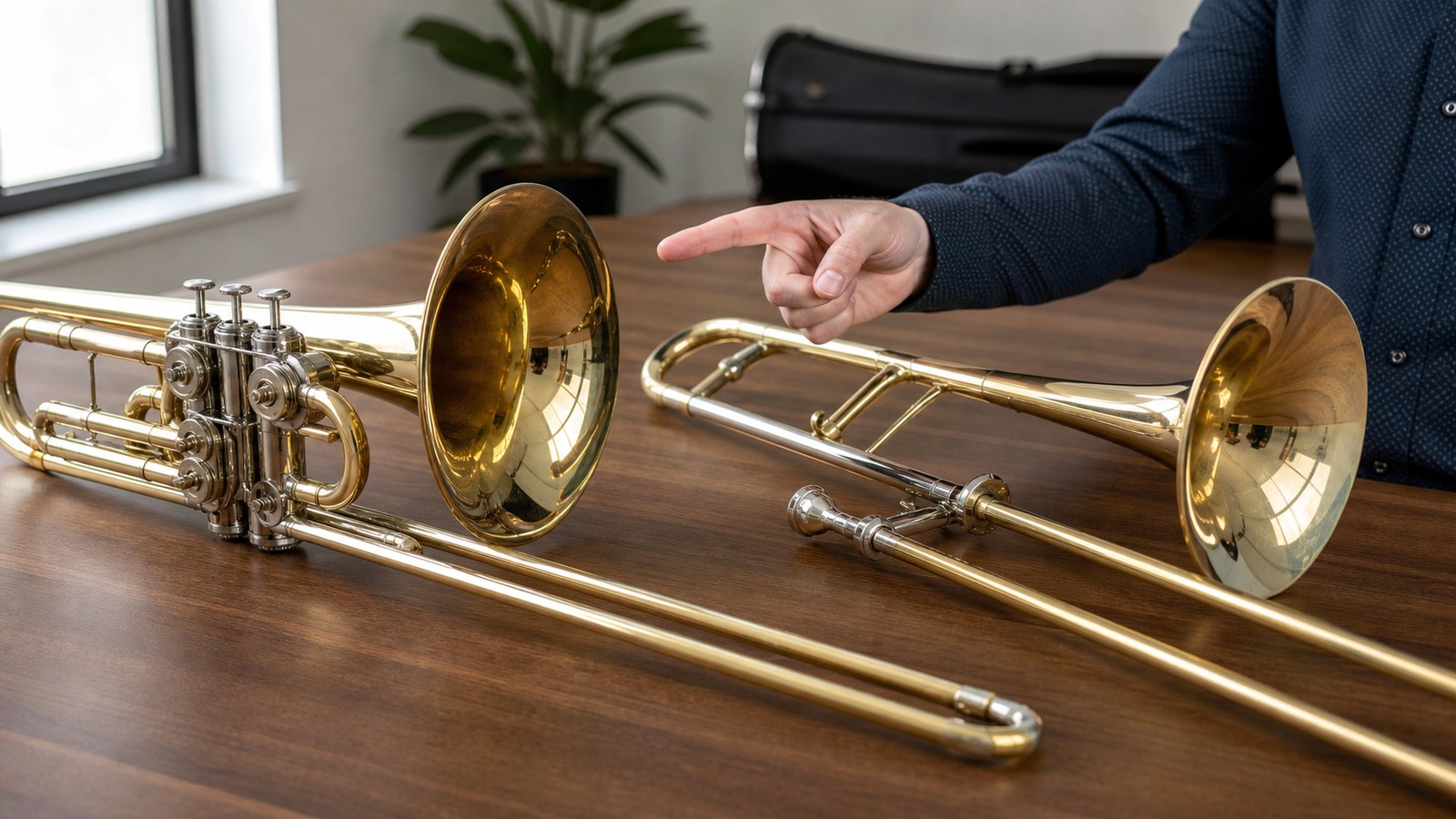
A valve trombone uses valves instead of a hand slide to change notes. The instrument usually plays in the same general range as a tenor trombone, but the technique feels closer to trumpet, baritone, or euphonium fingering. The sound can resemble trombone, though the articulation and line shape often feel different.
Because the slide is absent, the player loses true slide glissandos and the physical position system that defines standard trombone playing. That tradeoff should be understood before buying.
Valve Trombones Help Doublers
Trumpet, euphonium, and baritone players may adapt to valve trombone quickly because the fingering logic is familiar. This can be useful in pit work, commercial music, and certain school or community settings where a player needs to cover trombone-like parts without becoming a full slide specialist.
They Are Not a Beginner Shortcut for Everyone
A valve trombone may look easier because it removes slide positions, but it does not remove musicianship. Players still need tone, breath support, intonation, articulation, reading, and ensemble skills. Valve fingering introduces its own tuning tendencies and maintenance needs.
For students assigned to trombone in school band, a slide trombone is usually the better default unless the director specifically recommends otherwise. Learning slide technique is part of the instrument's identity.
A valve trombone can be right for specific reasons, but it should not be chosen merely to avoid learning the slide.
Latin and Commercial Settings Can Fit Well
Valve trombone has a respected place in some Latin, salsa, and commercial traditions. Fast valve passages, punchy articulations, and compact handling can be useful. The sound and phrasing still need style knowledge, but the instrument can serve those settings naturally.
Players interested in these styles should listen to recordings and talk to experienced musicians. The valve trombone's role is real, but it is not identical to slide trombone.
Slide Trombone Still Wins at Slide Language
Traditional trombone glissandos, smears, position-based phrasing, and slide color belong to the slide trombone. Valve trombone can imitate some effects, but it cannot fully replace the physical slide's continuous motion.
Check Intonation Carefully
Valve brass instruments have fingering-based pitch tendencies, and valve trombone is no exception. Some notes may need alternate fingerings, embouchure adjustment, or careful listening. A player who expects valves to solve tuning automatically will be disappointed.
Test scales, arpeggios, chromatic passages, and sustained notes. If possible, play with drones or another musician so the tuning behavior is clear.
Compare Valve Feel and Build Quality
Valve action should be smooth, quick, and quiet. Sticky valves undermine the main advantage of the instrument. Check valve compression, spring response, alignment, and how easily the instrument can be maintained.
Build quality matters because valve repairs can be more specialized than basic slide care.
A cheap valve trombone with unreliable valves is likely to frustrate the exact player it is meant to help.
Think About Sound Concept
Valve trombone tone can vary from bright and compact to broad and trombone-like depending on design, mouthpiece, and player. Test the sound against the music you plan to play. A horn that feels agile but sounds too thin may not fit ensemble expectations.
Consider Marching and Space Constraints
In some situations, valve trombones are attractive because they take up less forward space than a slide trombone. This can matter in tight pits, crowded stages, or specific marching contexts. That practical advantage should be weighed against the musical requirements.
If the written part expects slide effects, valve trombone may not be appropriate. If the part mainly needs trombone-range lines with valve agility, it may work well.
Do Not Ignore Mouthpiece Fit
Valve trombones may use trombone mouthpieces, but the exact receiver and response should be checked. A mouthpiece that works on a slide trombone may feel different on a valve instrument. Pairing affects tone, intonation, and articulation.
Used Valve Trombones Need Careful Testing
A used valve trombone should be inspected for valve wear, compression, stuck slides, dents, solder joints, and case condition. Valve issues can be less visible than slide dents, so a repair technician's opinion can be valuable.
Play every valve combination slowly and listen for uneven response. Fast valves are only helpful when they seal and align properly.
A visually clean horn is not enough. The valve block must work confidently.
Decide Whether You Still Need Slide Skills
If your musical path includes standard concert band trombone, orchestral excerpts, jazz slide language, or trombone lessons, you probably still need slide skills. A valve trombone can supplement that path, but it may not replace it.
If your main work is doubling, Latin horn section playing, or special contexts where valves are expected, the balance may be different.
Try It Beside a Slide Trombone
The clearest test is side by side. Play the same phrase on a slide trombone and a valve trombone. Notice response, tone, articulation, pitch, and musical character. The comparison will show what is gained and what is lost.
Choose for a Clear Purpose
A valve trombone is best when it solves a defined problem. It may help a trumpeter cover low-brass lines, support a salsa player, fit a tight stage, or give a doubler a useful color. It is less compelling as a vague shortcut.
If the purpose is clear, the instrument can be a smart and musical tool. If the purpose is unclear, a standard slide trombone may be the better first investment.
The best valve trombone is the one that fits a real musical job.
Respect Both Instruments
Valve trombone and slide trombone each have their own strengths. One does not have to invalidate the other. A thoughtful player can respect the slide trombone's expressive language while using valve trombone where it makes musical sense.
That respect leads to better choices. Instead of asking which instrument is easier, ask which instrument serves the phrase, ensemble, and player better in the situation.
Check Breath and Resistance
Valve trombones can feel different in resistance from both trumpets and slide trombones. A player crossing over from another brass instrument should test whether the horn encourages free air or creates a tight, pinched response. Familiar fingerings do not guarantee familiar blowing feel.
Play long phrases, accented figures, and soft entrances. If the horn responds only when pushed, it may not be a good match. A valve trombone should still reward relaxed brass playing.
This test is especially useful for trumpet players who expect quick response. The larger register and different tubing can ask for more air than expected, even when the fingerings feel familiar.
Use It Where It Sounds Intentional
The strongest valve trombone uses sound intentional, not accidental. If the instrument appears in a style where its articulation and compact motion make sense, it can feel convincing. If it is used only because the player wants to avoid slide positions, the result may sound like a compromise.
Ask About Ensemble Acceptance
Some ensembles welcome valve trombone, while others expect slide trombone for visual, musical, or traditional reasons. Before buying one for a specific group, ask the director, contractor, or section leader. The answer may depend on repertoire and setting.
This conversation avoids awkward surprises. A valve trombone can be a smart tool, but only if the musical environment accepts the tool.
Treat Valve Technique Seriously
Valve trombone players still need clean fingering, coordinated air, valve maintenance, and pitch adjustment. Sloppy valve technique will not sound better just because the slide is gone. The instrument rewards serious study, especially in styles where it has a strong tradition.
Compare Articulation Character
Valve trombone articulation can feel more immediate than slide trombone articulation, but the front of the note may also sound different. Test short notes, legato figures, accents, and repeated attacks. The goal is not to decide that one instrument is superior. The goal is to hear whether the valve trombone's character fits the part.
In some styles, that compact front is exactly right. In others, it may miss the breadth or slide-connected shape people expect from trombone. Listening from the room helps because the difference may be clearer to others than to the player.
Plan for Valve Maintenance
Players who choose valve trombone inherit valve maintenance habits. Valves need oil, slides need grease, and the valve block should stay clean. Someone moving from slide trombone may underestimate this responsibility, while trumpet players may already understand it.
A buying decision should include whether the player is willing to maintain valves consistently. The main advantage of the instrument disappears quickly if valve action becomes slow or unreliable.
Valve maintenance also affects resale and repair confidence. A neglected valve block can turn a useful specialty instrument into a costly project.
Use Listening Examples
Before buying, listen to valve trombone in the styles that interest you. The instrument's strongest uses make more sense when heard in context. Listening also helps players avoid expecting it to sound exactly like either trumpet or slide trombone.
Decide Whether It Complements or Replaces
For many players, valve trombone works best as a complement. It covers certain gigs, styles, or doubling needs while the slide trombone remains the main instrument. For some specialists, it can become primary. Those are different buying decisions.
If it complements an existing setup, the budget, case, and maintenance plan can be more modest. If it replaces the main trombone, tone, durability, and long-term support need much more scrutiny.
Use the Instrument Where It Belongs
A valve trombone becomes convincing when the player chooses situations where its strengths are audible. Fast valve figures, compact stage setups, and certain Latin or commercial lines can make it feel natural. Music that depends on slide color, visible slide phrasing, or traditional trombone section blend may call for the standard instrument instead. Clear judgment keeps the choice musical rather than defensive.
Keep the Decision Musical
The final valve trombone decision should come from sound and purpose. If valves help the phrase speak, the instrument has a reason to be there. If they only make the part feel easier under the fingers, listen again.
Ease is useful, but music decides. A valve trombone should make the result clearer, not only the mechanics more familiar. If the audience hears stronger style, cleaner rhythm, and a convincing trombone-register color, the instrument is serving the music in a way that justifies the tradeoff for that player in that setting and repertoire. That is the real test for any serious buyer considering this instrument carefully.