Good Trombone Storage Protects the Slide First
Learning how to store your trombone to prevent damage starts with one priority: protect the slide. The bell matters, the finish matters, and the mouthpiece matters, but a damaged slide can make the instrument hard to play immediately. Good storage means using the case correctly, keeping accessories from pressing into brass, choosing safe room locations, controlling moisture, and avoiding casual leaning. Most storage damage is not dramatic. It comes from repeated small risks: a loose mouthpiece, a crowded closet, a case on the floor, or a horn left on a chair between practice sessions.
A: Only briefly in a safe place or on a proper stand; the case is safer for storage.
A: Yes. Locking the slide helps prevent sudden movement and damage.
A: Yes. Loose mouthpieces, bottles, mutes, and tools can dent or scratch brass.
A: In its case, in a stable indoor place away from traffic, heat, and dampness.
A: Good stands are useful for short breaks, but not as overnight storage.
A: Avoid routine car storage because of temperature, theft, and crushing risks.
A: Investigate moisture, dirty cloths, and storage conditions before it worsens.
A: No. A case that opens unexpectedly can spill the instrument.
A: Use a closing check: slide locked, parts seated, accessories secured, case latched.
A: Yes. Poor storage can damage slides, create odors, and make the instrument unreliable.
Use the Case as the Default
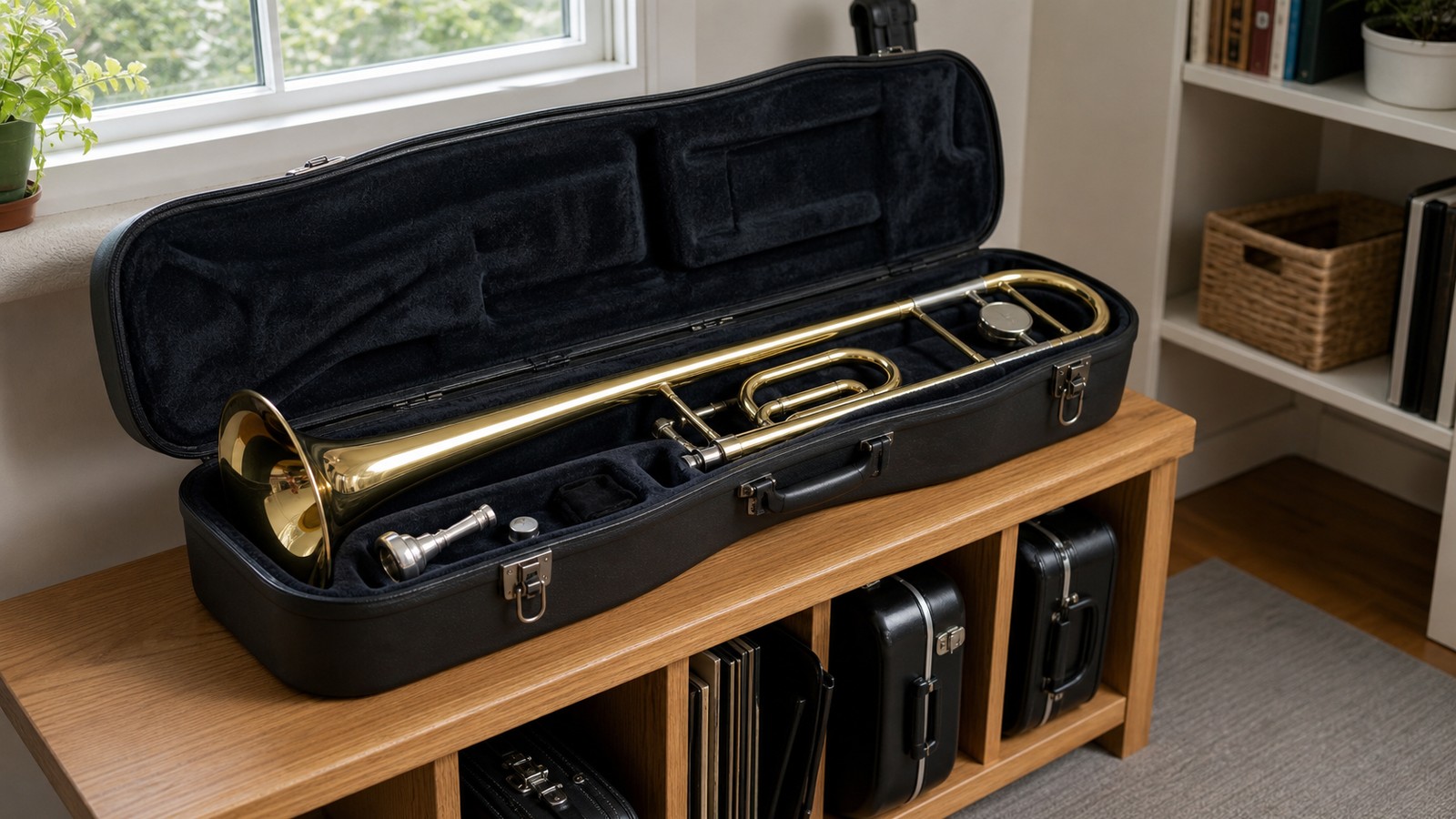
The safest everyday storage place for most trombones is the fitted case. A good case supports the slide and bell, keeps small parts contained, and protects the instrument from room traffic. Leaving the trombone assembled may feel convenient, but convenience often creates risk.
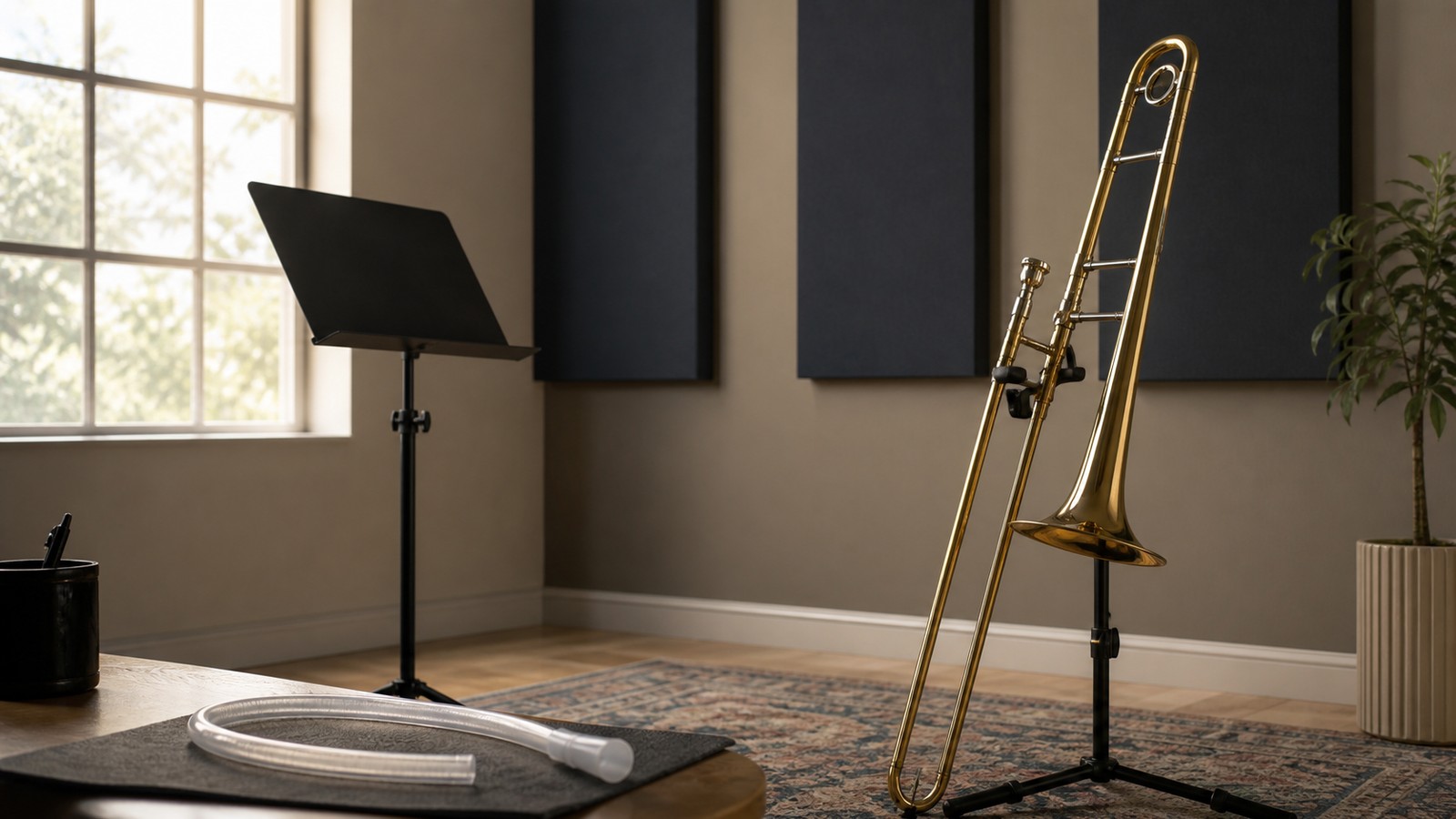
If the horn must stay out briefly, use a stable trombone stand designed for the instrument. Chairs, couches, beds, and walls are not storage systems.
Lock the Slide Before Packing
An unlocked slide can shift while the player carries the case or lifts the section. Locking the slide is a tiny habit that prevents some of the most frustrating damage.
Check the Case Channels
Each part should sit in its intended place. The slide should rest in its channel without pressure, the bell should be supported, and the mouthpiece should not roll loose. If the case layout is confusing, ask a teacher to show the correct packing pattern.
Cases wear out. Padding compresses, latches loosen, and accessory pockets stretch. A case that used to protect the horn may become less trustworthy after years of use.
Inspect the case as part of storage. The case is not just a box; it is part of the instrument's protection system.
Keep Accessories Away From Brass
Mouthpieces, mutes, pencils, bottles, stands, and cleaning tools can dent or scratch the trombone if they sit against the instrument. Use compartments and pockets. If the case does not have enough storage, carry accessories separately.
This is especially important for students who toss everything into one case after rehearsal. A single loose mouthpiece can do real damage.
Avoid Floors and Doorways
A case on the floor can be stepped on, kicked, or blocked by bags. A trombone near a doorway can be hit by people who never see it. Store the case where it is visible, stable, and out of walking paths.
Choose a Stable Home Location
At home, choose a shelf, bench, closet area, or music corner that does not require balancing the case awkwardly. The location should be dry, moderate in temperature, and easy enough to access that the player will actually use it.
If storage is inconvenient, players start leaving the horn in risky places. A safe routine has to fit the room.
Control Moisture Before Closing the Case
Empty the water key and wipe obvious moisture before packing. A case is not a drying rack. Trapped moisture can create odor, residue, and unpleasant storage conditions.
Let wet cloths dry outside the case when possible. A damp cloth pressed against brass or lining can create a stale environment.
Moisture control is simple, but it affects how the instrument feels the next time it comes out.
Do Not Store Assembled on a Chair
A trombone balanced on a chair looks safe until someone moves the chair, bumps the slide, or sits down without noticing. Between practice sessions, disassemble and case the instrument or use a proper stand for short breaks.
Be Careful With Car Storage
Cars can become too hot, too cold, or too visible to leave instruments safely. Temperature changes can affect lubricants, finishes, and case materials. Theft risk also matters. A trombone should not live in a car as a routine storage plan.
For short transport, place the case where it cannot slide, fall, or be crushed by other gear. Heavy bags should not sit on top of the slide area.
Store School Instruments Predictably
Band rooms are busy. Store the trombone in the assigned locker, shelf, or rack with the case closed and latched. Do not leave it in aisles, under chairs, or on top of unstable piles.
If the assigned storage area is too crowded, tell the director. A bad storage setup can damage several instruments, not just one.
Students should learn that putting the horn away correctly is part of rehearsal, not something after rehearsal.
Use Stands Only for Short Breaks
A good trombone stand can be helpful during practice, doubling, or teaching. It should be stable, placed away from foot traffic, and used only when the player is nearby. A stand does not replace the case for overnight storage.
Watch Temperature and Humidity
Extreme heat, cold, and damp storage can affect the instrument and its supplies. Avoid attics, garages, damp basements, and sunny windowsills when possible. A normal indoor room is usually better than an extreme storage space.
Humidity can also affect case interiors and cloths. If the case smells musty, investigate rather than ignoring it.
Teach Young Players a Closing Check
Before closing the case, beginners should look for three things: the slide is locked and seated, the mouthpiece is in its slot, and no accessory is trapped under the horn. This check takes seconds and prevents many accidents.
Parents can ask the same questions until the student internalizes them. The goal is not nagging; it is making safe storage automatic.
A student who packs carefully usually assembles more carefully too.
Keep the Case Latched
An unlatched case can spill open when lifted. Always close and latch the case before moving it. If a latch is broken, repair or replace the case before carrying the instrument around as if nothing changed.
Separate Long-Term Storage From Daily Storage
A trombone stored for a season or year needs more preparation than one stored overnight. Clean it, dry it, grease appropriate slides, remove loose debris, and choose a stable indoor location. Check it periodically rather than forgetting it completely.
When returning after long storage, inspect before playing hard. Lubricants may have dried, slides may need attention, and the case may have collected dust.
Make Safe Storage Easy
The best storage plan is the one the player follows every day. If the case is buried, the shelf is awkward, or the accessory pouch is missing, risky shortcuts will appear. Adjust the environment so the safe choice is also the easy choice.
That may mean clearing one shelf, adding a small supply pouch, repairing the case, or changing where the instrument lives after practice.
Preventing damage is rarely about one heroic rule. It is about designing a room and routine that protect the trombone automatically.
Plan Storage During Rehearsal Breaks
Many accidents happen during short breaks, not during long-term storage. A player sets the trombone across a chair, leans it on a stand leg, or leaves the slide extended while talking. Decide in advance where the horn goes during breaks so the safest choice does not require improvisation.
Use Travel Time as a Risk Check
Before a trip, ask what will sit near the case, who will carry it, and whether the slide side could be crushed. A trombone riding in a car with backpacks, stands, and mutes needs more thought than one sitting alone on a shelf.
After travel, open the case and inspect the horn before playing. If accessories shifted or the case took a hit, catching the issue early can prevent a rough rehearsal.
Respect Shared Living Spaces
Homes, dorms, apartments, and band rooms are shared environments. A trombone stored safely for the player may still be in the way of someone else. Choose storage that other people can understand and avoid, rather than hoping everyone notices a fragile instrument.
This may mean using a labeled shelf at school, a consistent closet space at home, or a case position that does not block doors. The goal is not isolation. It is predictable protection.
When others know where the trombone belongs, they are less likely to move it carelessly.
Check Case Age and Fit
A case can become unsafe gradually. Padding compresses, hinges loosen, handles weaken, and the interior shape no longer supports the horn. Players often trust a case because it looks familiar, not because it still fits well.
Store Accessories by Weight
Heavy accessories should not sit above delicate brass or slide tubes. Mutes, stands, and books may need a separate bag. Small items like pencils and cloths still need pockets so they do not slide under the bell or near the water key.
Thinking by weight helps students make better decisions quickly. The heavier and harder the item, the farther it should stay from the instrument.
Make Storage Part of the End Routine
The end of practice is when players are tired and most likely to rush. Build the closing routine into the final minute: empty moisture, lock the slide, seat the parts, secure accessories, latch the case, and put it in its normal location.
This routine is more reliable than a general promise to be careful. It gives the player steps to follow when attention is fading.
Over time, the closing routine becomes a quiet signal that practice is complete.
Choose Visibility Without Exposure
A stored trombone should be easy for the player to find but not exposed to traffic. A case on a stable shelf or bench is visible enough to remember and protected enough to avoid feet, doors, and piles. That balance makes safe storage sustainable.
Plan for Multi-Instrument Spaces
Many homes and schools store several instruments together. Trombones need enough length and slide protection that they should not be squeezed under smaller cases or stacked beneath heavy items. The long case shape needs its own realistic space.
If multiple players share a room, decide whose case goes where. Clear storage zones prevent rushed stacking after rehearsals.
Use Cases During Setup Delays
Sometimes a player opens the case and then has to wait. The director is talking, the room is being rearranged, or the lesson has not started. During those delays, keep the trombone in the case until it is actually needed.
Partly assembled instruments are vulnerable because they are neither packed nor being played. A slide resting across a chair or a bell section sitting on the floor can be damaged in seconds.
Waiting safely is a storage skill. It matters during rehearsals, auditions, and backstage moments.
Repair Storage Furniture Problems
If the shelf, locker, or stand area is unstable, fix the storage area instead of asking the player to work around it forever. A wobbly shelf or crowded locker will eventually win.
Keep Storage Rules Visible
For young students, a small visual routine near the practice area can help even without written instructions in the article itself. The family can use simple cues at home: case closed, slide locked, accessories pocketed, shelf clear.
The point is repetition. Safe storage becomes easier when the environment keeps reminding the player what good habits look like.
Revisit Storage as Players Grow
A storage plan that works for a beginning student may need revision as the player adds mutes, stands, music folders, or a better instrument. More gear creates more chances for pressure and clutter.
Review the case and shelf whenever equipment changes. The safest system is the one that grows with the player instead of assuming last year's setup still fits.
This review keeps storage practical, not sentimental.