A Good Trombone Cleaning Kit Is Practical, Not Crowded
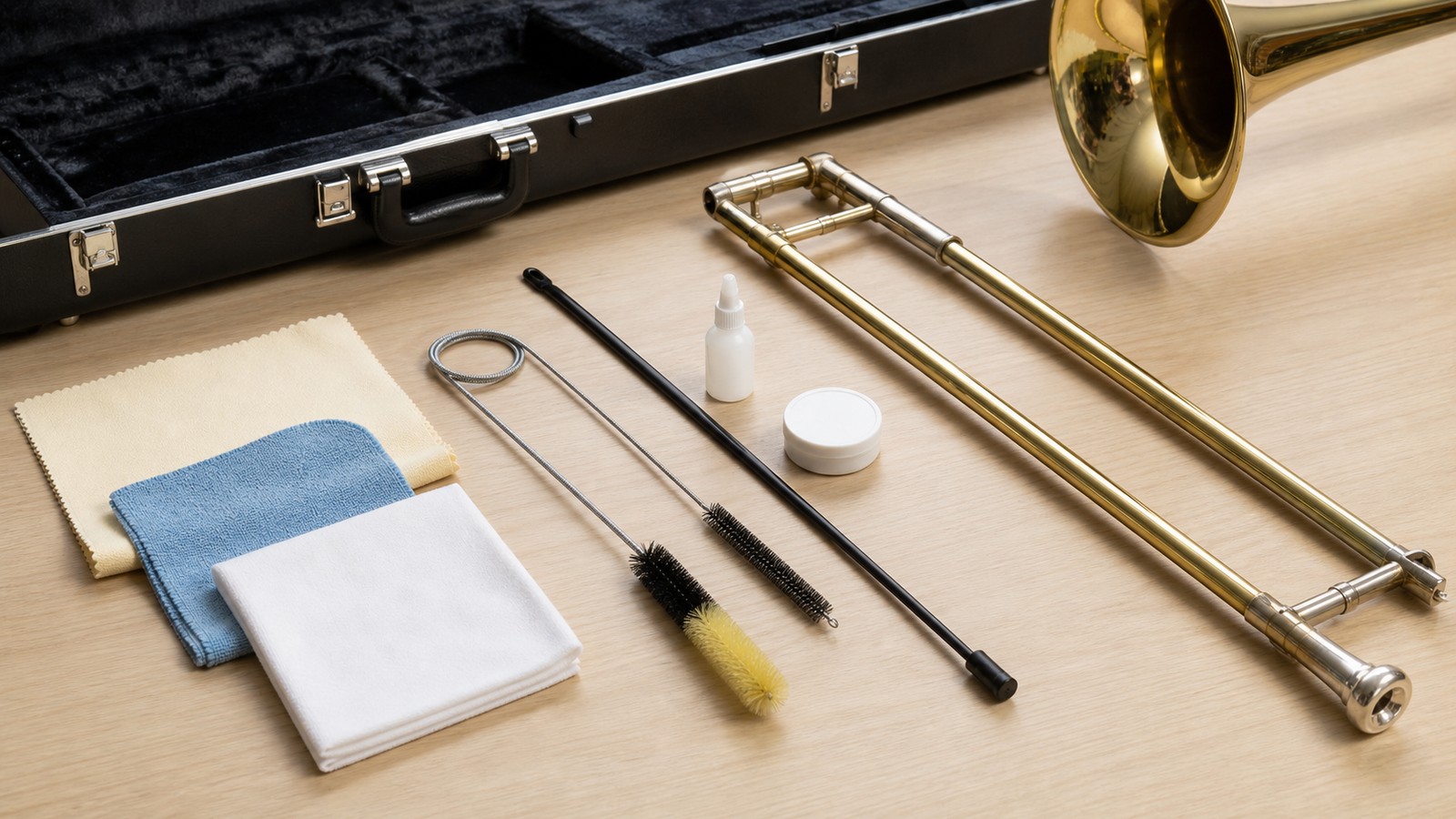
Trombone cleaning kits should make regular maintenance easier without filling the case with tools a player does not understand. The best kit includes the basics: clean cloths, a mouthpiece brush, safe slide-care supplies, a flexible cleaner or snake, tuning slide grease, and a way to store everything neatly. Some kits include extra items that are useful; others include pieces that look impressive but rarely get used. The right kit depends on the player's age, instrument type, teacher guidance, and whether the goal is daily care, deeper cleaning, or school-program organization.
A: A mouthpiece brush, soft cloth, slide product, tuning slide grease, and safe storage.
A: No. A smaller kit used correctly is usually better.
A: No. Hand slides and tuning slides need different products.
A: No. Dent repair belongs with trained repair technicians.
A: It can help, but it should be used gently and appropriately.
A: In a pouch or pocket where they cannot press against the instrument.
A: Yes. Brushes, cloths, and bottle tips need care too.
A: Some tools can be shared, but mouthpiece hygiene items should be personal or cleaned carefully.
A: Useful supplies, safe quality, clear purpose, and products the player will actually use.
A: When the instrument has dents, leaks, stuck parts, severe buildup, or alignment problems.
Start With the Mouthpiece Brush
A mouthpiece brush is one of the most important kit items because it reaches the throat and backbore where residue collects. It should fit the mouthpiece properly and be rinsed after use. A dirty brush is not a cleaning tool for long.
Students should learn how far to insert it and how gently to move it. The goal is to clean, not jam the brush until it bends.
Include Soft Clean Cloths
A kit should have at least one soft cloth for wiping fingerprints, moisture, and light residue. Microfiber or other soft instrument-safe cloths are useful, but they need washing or replacement when dirty.
Choose Slide Lubricant Carefully
Trombone kits should include a real trombone slide product, not a random oil. Slide cream, liquid lubricant, or a two-part system can all work when matched to the instrument and player. Teacher guidance is valuable here.
For beginners, the best product is often the one they can apply correctly without creating buildup. A complicated system used badly is not better than a simple product used well.
The kit should also keep the product sealed. A leaky bottle can damage case lining and make every other supply dirty.
Add Tuning Slide Grease
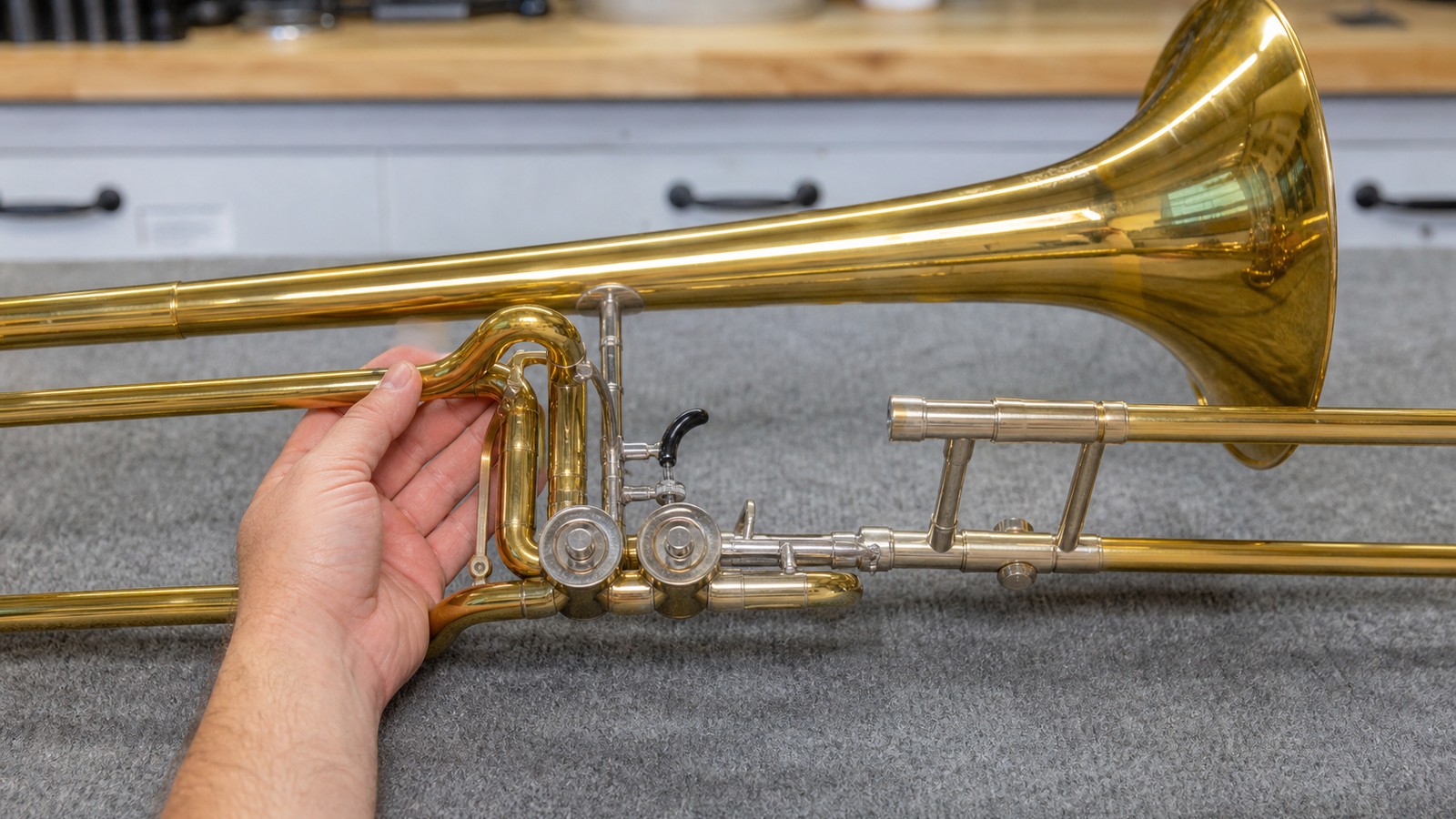
Tuning slides need a different type of product than the hand slide. Grease helps tuning slides move smoothly and seal properly. It should be applied sparingly and only where appropriate.
Beginners should be shown which slides receive grease. Putting heavy grease on the hand slide is a classic confusion that makes the instrument unpleasant to play.
Use a Flexible Cleaner With Care
A flexible snake brush can help clean tubing, but it should be used gently and only in appropriate parts of the instrument. Cheap or damaged snakes can scratch, shed, or catch.
Consider a Cleaning Rod
Some players use a cleaning rod with cloth for slide care. This can be useful when done correctly, but it can also cause damage if forced. The rod should be smooth, appropriate for trombone use, and guided by someone who understands slide cleaning.
If a student is not ready for a rod, leave it out of the daily kit and let an adult or teacher handle deeper slide cleaning.
Keep a Small Water Mister if Needed
Some slide products work best with a light mist of water. If the player's product requires that, a small clean mist bottle can belong in the kit. It should be unlabeled or clearly understood and stored so it does not leak.
Do not add water to products that do not call for it. The kit should support the chosen routine, not mix every possible method.
The bottle should be cleaned occasionally because dirty mist can put grime back on the slide.
Skip Tools the Player Cannot Use Safely
A kit does not need dent tools, pliers, screwdrivers, abrasive pads, chemical cleaners, or mystery oils. Those items create false confidence. If a task requires repair tools, it should probably involve a repair technician.
Add a Storage Pouch
A pouch keeps supplies together and prevents bottles, brushes, and cloths from floating around the case. It also makes maintenance more likely because the player can find everything quickly.
The pouch should not be overstuffed. If it presses against the trombone inside the case, it becomes a damage risk instead of a solution.
Build Kits Differently for Beginners
Beginner kits should be simple: mouthpiece brush, soft cloth, teacher-approved slide product, tuning slide grease, and safe storage. A young student does not need every possible tool on the first day.
Adding too much can make maintenance feel intimidating. Start with what the student can use correctly.
More advanced tools can be added after the player understands the instrument.
Think About School Program Kits
School programs may need shared supplies, but mouthpiece hygiene and personal cloths should be handled carefully. A director may prefer each student to own a mouthpiece brush and cloth while larger cleaning tools stay with the program.
Know What a Kit Cannot Replace
A cleaning kit cannot replace repair work. It cannot fix dents, align slides, solder braces, replace water-key corks, or solve severe buildup on its own. Kits are for maintenance, not full restoration.
If the instrument still smells bad, sticks, leaks, or feels wrong after normal care, the answer may be professional service.
Check Quality Before Buying
Not every kit is equally useful. Look for brushes that fit, cloths that feel soft, bottles that seal, and tools that match trombone maintenance rather than generic brass packaging. A smaller high-quality kit can beat a crowded cheap kit.
Ask a teacher which products they prefer. Local repair shops can also tell players which supplies create fewer problems.
A kit should make good habits easier, not create more decisions.
Keep the Kit Clean
Cleaning supplies need cleaning too. Rinse brushes, wash cloths, wipe bottle tips, and remove old debris from the pouch. A kit full of dirty tools is just a portable mess.
Match the Kit to the Case
A large kit is not helpful if it has nowhere safe to go. Check the case pockets before buying extras. Supplies should not press against the bell, slide, water key, or tuning slide.
If the case is small, carry the kit separately in a music bag. Protecting the instrument matters more than keeping everything in one box.
Buy for the Routine You Will Follow
The best cleaning kit is the one that supports a real routine. If the player cleans the mouthpiece weekly, checks the slide by feel, wipes the horn after practice, and stores supplies neatly, the kit is doing its job.
Do not buy complexity for its own sake. Buy clarity, safety, and repeatability.
A practical kit turns maintenance from a mystery into a normal part of playing.
Replace Consumables Before They Fail
Cloths wear out, brushes bend, bottles leak, and grease containers collect dirt. A cleaning kit should be reviewed periodically so old supplies do not quietly undermine the routine. Replacing a tired brush is cheaper than pretending it still reaches the places it should.
Keep Repair Supplies Separate
Players sometimes mix maintenance supplies with small repair items, spare screws, pliers, or mystery tools. That makes the kit look prepared but can encourage unsafe fixes. Maintenance and repair should stay mentally separate.
If a director or technician keeps repair items for emergencies, those should live in an adult-controlled tool area. The student's personal kit should contain supplies they are allowed to use.
Build a Kit Around Demonstrated Skills
A supply belongs in the kit when the player knows what it is for, when to use it, and when to stop. A mouthpiece brush is easy to teach. A cleaning rod requires more care. A flexible cleaner needs guidance about where it can go safely.
This skill-based approach prevents clutter. Instead of asking what a kit could contain, ask what the player can use correctly this month. The kit can grow with the player's knowledge.
Teachers can make this practical by demonstrating one new maintenance item at a time.
Think About Spill Control
Liquids and creams should be stored so they cannot leak onto velvet lining, music, or brass. A small sealed pouch can prevent one bottle from turning the whole case sticky. Spill control is part of kit design, not an afterthought.
Make School Kits Easy to Audit
For school programs, kits should be simple enough to inspect quickly. Directors may need to see whether brushes are missing, bottles are empty, or cloths are too dirty to use. Clear organization saves time during busy rehearsal weeks.
A shared program kit may also need replacement supplies in reserve. Waiting until every bottle is empty creates rushed substitutes and inconsistent student care.
Do Not Let the Kit Crowd the Case
A kit that fits poorly can become a damage source. If the pouch presses against the slide, bell, or water key, move it to a separate music bag. Keeping everything together is not worth risking a dent.
Before closing the case, check whether supplies shift when the case is tilted. Movement inside the case predicts trouble during real travel.
Good kit storage protects both the tools and the trombone.
Evaluate Kits After a Month
After several weeks, ask which items were used, which stayed untouched, and which were confusing. That review is more useful than judging the kit on purchase day. A practical kit proves itself through repeated maintenance, not through how complete it looks in the package.
Restock Before Concert Season
A kit should be checked before the busiest part of the year. Concert season, marching events, auditions, and camps are bad times to discover an empty lubricant bottle or missing mouthpiece brush. Restocking early prevents rushed substitutes.
School programs can do this as a group check. Individual players can do it before the first long rehearsal block.
Separate Personal and Shared Tools
Some supplies are personal by nature. Mouthpiece brushes, mouthpiece pouches, and cloths that touch the face area should not be passed around casually. Larger tools may be shared if they are cleaned and supervised.
This distinction helps school programs stay practical without ignoring hygiene. Not every student needs every tool, but every student needs a clean personal routine.
A well-designed kit makes those boundaries obvious.
Avoid Buying by Item Count
A kit with many pieces is not automatically better. A five-item kit that solves real maintenance needs can outperform a crowded bundle filled with tools the player should not use.
Keep Instructions With Supplies
Players forget which product goes where, especially when kits include both slide lubricant and tuning slide grease. A teacher demonstration helps, and families can keep manufacturer directions or teacher notes with the supplies.
Clear instructions prevent the most common kit problem: owning the right item but using it in the wrong place.
Review the Kit With the Instrument Present
A cleaning kit makes more sense when the trombone is open nearby. The player can point to the hand slide, tuning slide, mouthpiece, case pocket, and cloth storage while naming which supply belongs where.
This quick review catches confusion before it becomes misuse. It also shows whether the kit physically fits the case without pressing against the horn.
For beginners, that connection between tool and instrument turns maintenance from a bag of objects into a clear routine that can be repeated before lessons, rehearsals, camps, and ordinary home practice without confusion or last-minute guessing reliably in busy weeks.