The Slide Changed What Brass Instruments Could Do
The slide trombone revolutionized brass performance by giving players a flexible, continuous way to change pitch before valves became the normal solution for brass instruments. Instead of relying only on natural harmonic notes, the trombone could move chromatically, tune precisely, imitate vocal lines, and create expressive slides between notes. That design made it useful in sacred music, civic ensembles, orchestras, bands, jazz, and modern studios. The slide is simple to see but sophisticated to use. It made the trombone one of the most adaptable brass instruments in Western music.
A: It gave brass players practical chromatic access and flexible tuning.
A: It requires strong ears and coordination, but it also gives exceptional control.
A: Not in the same continuous way as a slide.
A: Players can adjust slide placement continuously while listening.
A: No. Attachments expand options while the hand slide remains central.
A: Jazz highlighted smears, falls, scoops, and speech-like phrasing.
A: The audience can see the slide create pitch movement.
A: They are guides; players adjust by ear.
A: It connects pitch, listening, movement, and breath from the start.
A: It solves musical problems no other common brass mechanism solves the same way.
Brass Instruments Needed More Notes
Early brass instruments were limited by the harmonic series unless they used crooks, holes, slides, or later valves. The trombone's slide solved the problem in a direct physical way. By lengthening or shortening the tubing, the player could reach notes that fixed-length brass could not easily produce.
This flexibility made the instrument valuable long before modern valve systems became common.
The Slide Made Chromatic Playing Practical
Chromatic playing means moving through notes outside a single natural harmonic set. The slide gave trombonists a reliable path to those notes while keeping a strong brass sound.
Pitch Became a Physical Continuum
On the trombone, pitch is not only a button choice. It is a moving relationship between ear, hand, air, and embouchure. The slide creates a continuous path rather than a set of fixed valve combinations.
That continuity gives players extraordinary pitch control. It also demands constant listening because positions are guides, not exact mechanical locks.
The instrument therefore trained brass players to think physically and aurally at the same time.
The Trombone Could Blend With Voices
Because the slide allows subtle tuning, the trombone could blend well with singers. This was important in Renaissance and sacred settings where brass needed to reinforce lines without overpowering them.
The instrument's vocal quality is not accidental. It comes from the ability to shape pitch, line, and tone with fine control.
Glissando Became a Signature Effect
The slide also made true glissandos possible. A player could move between pitches smoothly in a way valves cannot fully duplicate. That sound became useful for comedy, jazz expression, modern concert effects, and vocal-style phrasing, but it works best when the player controls timing and destination carefully.
Precision and Expression Grew Together
The slide is sometimes seen as funny or showy, but its real innovation is the combination of precision and expression. It can tune a chord carefully, then create a vocal smear, then return to a clean attack.
That range of behavior made the trombone useful in both disciplined ensemble writing and highly personal solo styles.
The Slide Shaped Ensemble Tuning
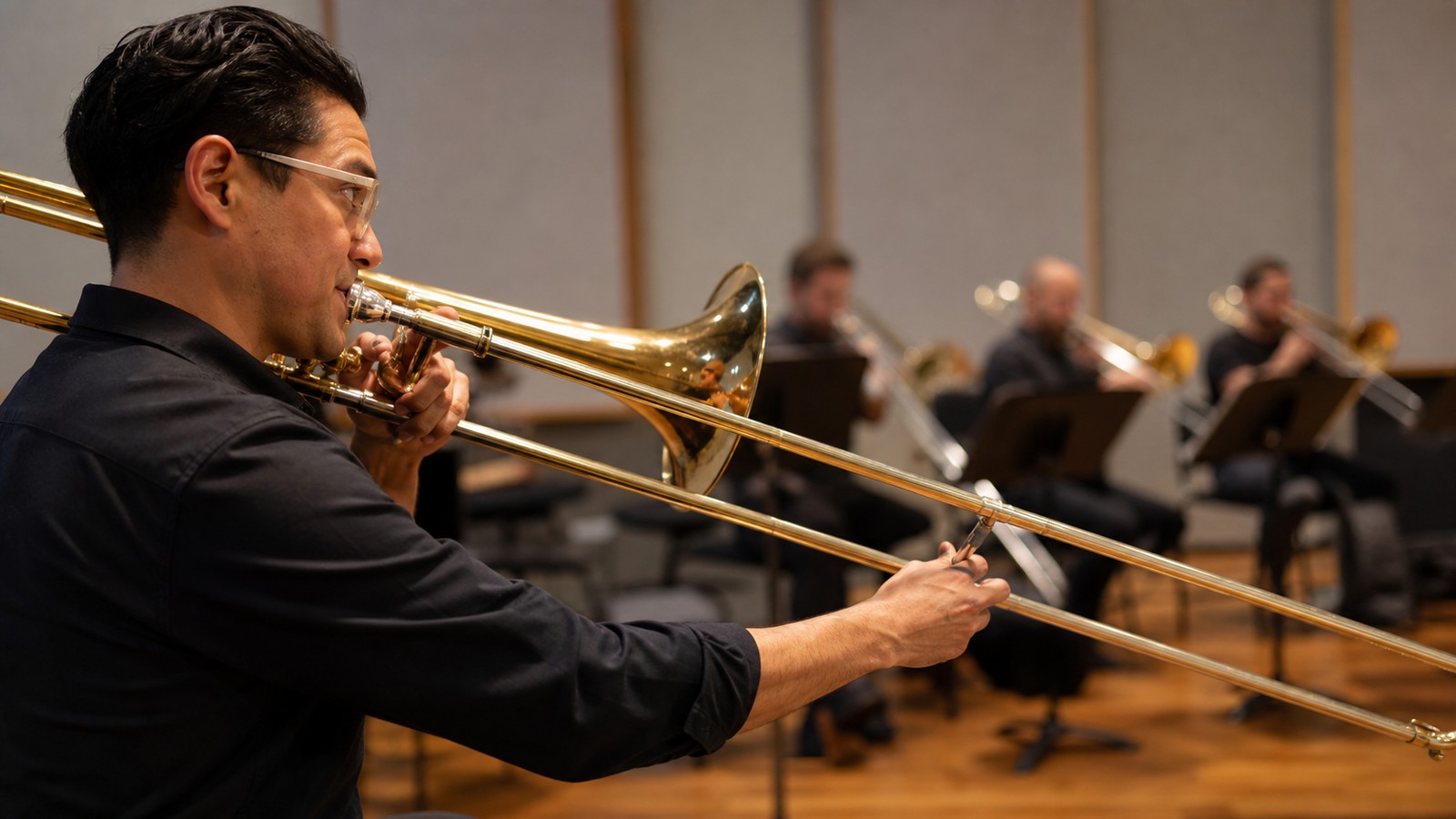
Trombonists can adjust positions to match harmony, temperature, register, and chord function. In ensembles, this makes the section capable of very refined tuning when players listen well.
Fixed valves can also be adjusted through embouchure and alternate fingerings, but the slide gives a visible, immediate pitch tool.
This is one reason trombone choirs and brass sections can sound so stable when played by skilled musicians.
The Design Encouraged Strong Ears
A trombonist cannot rely on the instrument to place every note automatically. Good playing requires hearing the pitch before and during the slide movement. This makes ear training part of the instrument's design because the hand must constantly respond to what the player hears in the ensemble.
Slide Positions Became a Learning System
The seven-position system gives beginners a practical map. It turns continuous tubing into teachable locations. The map is useful, but it is only the beginning of slide mastery.
Advanced players adjust positions constantly for intonation, style, and speed. The revolution is not just that the slide moves; it is that players learn to control that movement musically.
The Slide Created Visual Performance
The trombone is one of the most visually obvious brass instruments. Audiences can see the pitch change happening. This made the instrument memorable in bands, jazz, comedy, and stage performance.
Visual motion can be expressive, but it must stay controlled. Good slide technique looks natural because it is efficient.
The sight of the slide became part of the instrument's identity.
Valves Did Not Make the Slide Obsolete
When valves transformed brass instruments, the trombone kept the slide because it offered something different. Valves are fast and compact, but they do not create the same continuous pitch path.
Attachments Expanded, Not Replaced, the Idea
F attachments and bass trombone valve systems added alternate tubing and technical options. They helped players reach lower notes and alternate positions. Still, the hand slide remained central.
This is an important design lesson: innovation did not erase the original mechanism. It extended what the slide instrument could do.
Jazz Revealed the Slide's Personality
Jazz made the slide's expressive possibilities famous. Smears, scoops, falls, growls, and speech-like phrasing showed that the trombone could sound conversational, humorous, mournful, or bold.
The same mechanism that served careful church tuning became a vehicle for individual style.
That transformation helped the trombone claim a distinctive place in popular music.
Classical Playing Preserved Discipline
While jazz highlighted personality, classical playing preserved the slide's disciplined side. Orchestral and chamber music require exact entrances, blended chords, and controlled line. The same slide that can smear expressively must also land silently, tune precisely, and move with almost invisible efficiency in formal ensemble writing.
The Slide Changed Technique Priorities
Trombonists must coordinate arm movement with breath and articulation. Slide technique is not separate from sound. A late hand creates late pitch, and a tense arm can disturb phrasing.
This makes trombone technique unusually whole-body. The instrument rewards relaxed movement, efficient reach, and accurate listening.
Modern Players Use Both Tradition and Speed
Today the slide trombone appears in orchestras, jazz ensembles, wind bands, salsa sections, commercial recordings, film scores, and experimental music. Players need clean positions, fast technique, expressive motion, and stylistic awareness.
The instrument remains modern because the slide still solves musical problems in a unique way.
No other common brass instrument looks, feels, and phrases quite like it.
The Revolution Was Elegant
The slide did not require hidden complexity. It lengthened the instrument's tubing in plain view. That elegant idea gave brass players chromatic access, tuning flexibility, and expressive movement in one design.
Why the Slide Still Matters
The slide remains central because it connects music to motion so directly. The player hears, moves, adjusts, and shapes the sound in real time.
That connection is why the trombone can feel ancient and fresh at once. Its revolution is still happening every time a player uses the slide musically.
A Simple Mechanism With Deep Consequences
The trombone slide may look like a straightforward tube, but it changed the expectations for brass performance. It let players reach more notes, tune more flexibly, imitate voices, create glissandos, and develop a visible musical language.
That combination explains the instrument's long survival. A design this useful does not become obsolete easily.
The slide turned brass playing into something more flexible, more vocal, and more physically expressive.
Natural Brass Limits Explain the Breakthrough
The slide's importance becomes clearer when compared with brass instruments limited to natural harmonics. Those instruments could be brilliant, but they did not offer the same immediate chromatic pathway. The trombone made pitch choice visibly adjustable.
Alternate Positions Added Strategy
As players developed technique, the slide became more than a straight position chart. Alternate positions allowed smoother motion, better tuning, and quicker solutions in awkward passages.
This strategic side of the slide keeps advancing players engaged. The instrument rewards planning as well as instinct.
Teachers Turned Motion Into Method
The slide revolution also required pedagogy. Teachers had to explain positions, partials, intonation tendencies, and movement habits in a way students could repeat. A continuous mechanism needed a practical map.
That map made the instrument accessible in schools and bands. Beginners could learn positions first, then gradually discover finer pitch adjustment.
The teaching system helped preserve the slide's advantages across generations.
Comedy Did Not Diminish Serious Use
Because the slide can make comic sounds, audiences sometimes associate it with humor. That history is real, but it sits beside sacred, orchestral, jazz, and studio uses. The same mechanism can laugh and mourn.
Physical Distance Shaped Phrasing
Unlike valves under the fingers, the slide requires visible travel. Long movements affect timing, articulation, and breath planning. Trombonists learn to phrase with the distance between notes in mind.
This physical geography gives the instrument a unique feel. Musical lines are also movement routes.
The Revolution Continues in Practice Rooms
Every beginner who learns first through seventh position reenacts the slide's basic breakthrough. They discover that pitch can be mapped in space and corrected by ear.
Advanced players keep deepening that discovery through alternates, micro-adjustments, glissandos, and style-specific motion.
The slide remains revolutionary because it never stops asking the player to listen while moving.
Slide Motion Changed Musical Timing
Because slide movement takes space, trombonists think about timing differently. The hand must leave early enough, arrive cleanly, and avoid disturbing the air. This makes physical planning part of musical rhythm.
The Mechanism Encouraged Personal Sound
Two trombonists can play the same note with different slide timing, articulation, vibrato, and color. The slide gives room for personal decisions because pitch is controlled continuously rather than selected mechanically.
That personal quality helped the instrument thrive in jazz and expressive solo work.
The Slide Rewards Efficient Technique
A long slide does not have to mean slow playing. Efficient routes, alternate positions, relaxed grip, and good anticipation allow the instrument to move quickly. The revolution becomes practical only when motion is trained.
Students should learn that fast trombone playing is not arm athleticism alone. It is planning, listening, and minimal tension.
The best slide technique looks easy because extra movement has been removed.
Innovation Became Tradition
What began as a practical solution became a tradition with its own sound world. The slide is now historical, technical, expressive, and visual at the same time. That layered identity is why the trombone still feels distinct.
The Slide Made Pitch Visible
On most instruments, pitch changes are hidden in keys, valves, or strings. On trombone, the audience sees distance become sound. That visibility helped the instrument become memorable in education, theater, jazz, and popular culture.
For players, visibility adds responsibility. Efficient motion looks confident, while careless motion can distract from the phrase.
A Revolution Built on Listening
The slide did not remove the need for musicianship. It made listening more important. Every note asks the player to confirm pitch with the ear and shape motion with intention.
That is why the trombone's breakthrough remains demanding. The mechanism offers freedom, but the player must make that freedom accurate.
The slide revolutionized brass performance by giving control to the musician in a remarkably direct form.
The Player Completes the Mechanism
A slide by itself is only moving tubing. The revolution happens when the player adds hearing, breath, timing, and judgment. That partnership between simple hardware and trained musicianship is why the trombone remains expressive across so many styles.
Practice Makes the Breakthrough Practical
The slide's promise only becomes real through daily control. Scales, slow position work, flexible tuning, and clean articulation turn the invention into usable music that can survive real ensemble pressure.
That is why the trombone still rewards patient players. The mechanism opened the door, but practice teaches the player how to walk through it with accuracy, style, and confidence.