Marching Band Trombones Need Strength Before Shine
The best marching band trombones for 2025 are the ones that survive field use, stay playable in changing weather, project without forcing, and remain simple enough for students to maintain during a long season. Marching band is hard on instruments in ways a practice room never is. Players carry horns outside, move quickly, deal with dust and humidity, and rehearse while tired. A beautiful tone still matters, but durability, slide action, balance, case protection, and school repair support matter just as much. The right choice is usually a reliable straight tenor or sturdy student/intermediate model that lets the trombone section focus on timing, posture, and sound instead of emergency fixes.
A: Usually not on the field unless the program specifically supports that choice and the player accepts the risk.
A: Most marching students are better served by a lighter straight tenor trombone.
A: Slide reliability, durability, fit, case protection, and school repair support matter most.
A: Yes, if the slide, braces, case, and tuning slide are inspected carefully.
A: Marching instruments travel constantly, and weak cases lead to preventable damage.
A: Both matter, but an unreliable field horn will undermine sound quickly.
A: Hold the horn standing, reach outer positions, and watch for shoulder or grip tension.
A: Only if they play well, have return support, and can handle real season use.
A: Before band camp and again early in the season if problems appear.
A: Choose dependable equipment that lets the student rehearse without distraction.
Start With the School's Reality
Before comparing models, ask what the band program actually expects. Some schools provide marching instruments, some recommend rentals, and others allow students to use personal horns. That policy changes the buying decision immediately. A student who already owns a delicate professional trombone may still need a tougher field horn.
Directors also know which instruments survive the local season. A horn that works well in a dry indoor studio may not be the best choice for humid night rehearsals, long bus rides, or crowded storage rooms. School experience is practical data, not just opinion.
Choose a Horn With a Dependable Slide
A marching trombone lives or dies by slide reliability. Field music often asks players to move while playing, recover after choreography, and line up rhythm with a large ensemble. If the slide drags, catches, or requires constant attention, the player loses timing and confidence. Smooth slide action should be a non-negotiable part of the inspection.
Favor Straight Tenor Simplicity
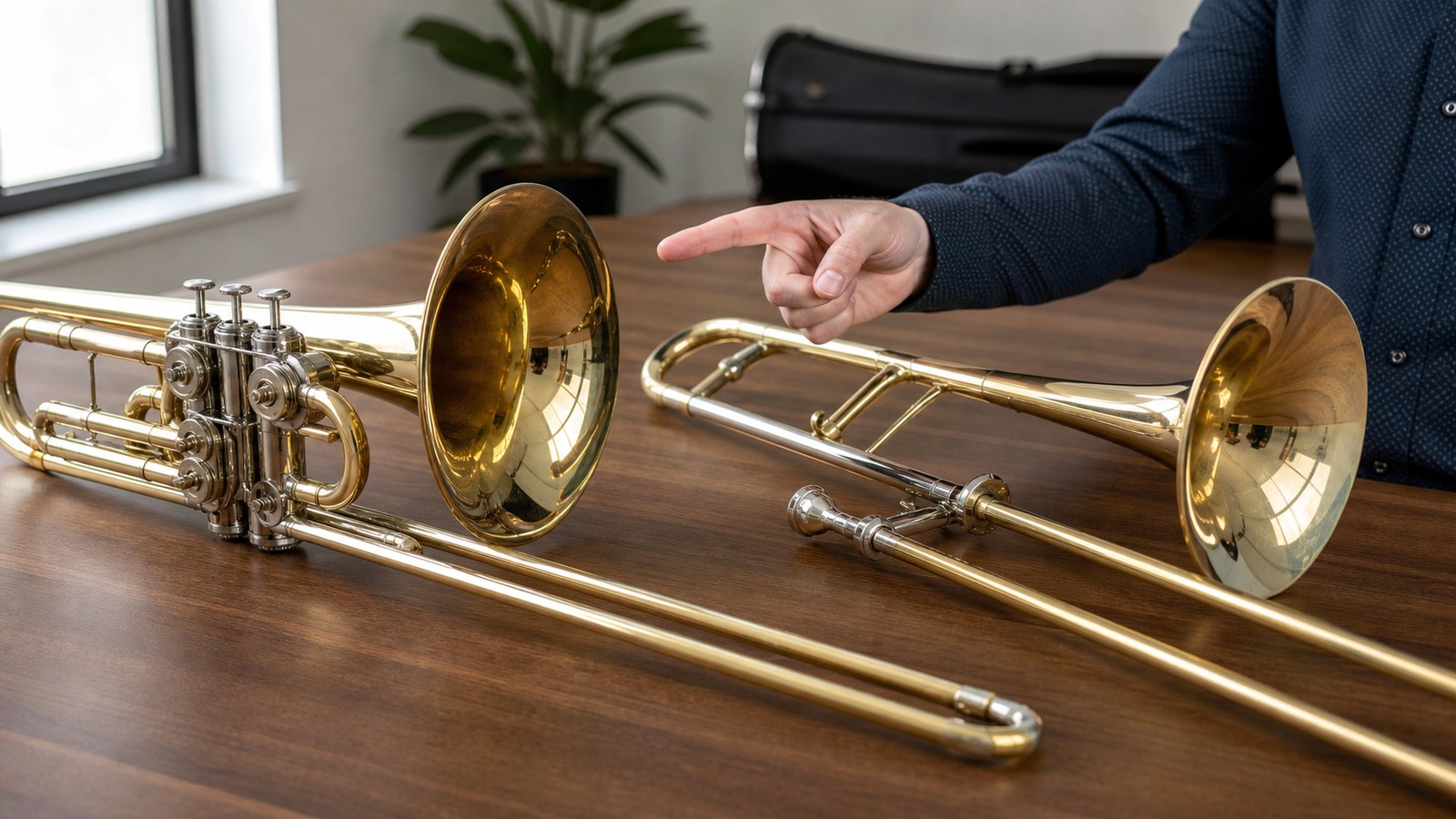
Most marching players do not need an F attachment on the field. A straight Bb tenor trombone is lighter, easier to hold, simpler to maintain, and less expensive to repair. It also gives beginners fewer moving parts to worry about during rehearsals.
That does not mean F-attachment horns are bad instruments. They can be excellent for concert band and advanced repertoire. On the field, though, the extra valve, tubing, and weight may create more risk than benefit for many students.
A durable straight tenor from a school-friendly brand is often the most sensible marching choice. It keeps the focus on slide position, sound, and ensemble timing.
Balance Weight With Sound
A marching horn should not be so heavy that posture collapses halfway through rehearsal. Smaller players especially need an instrument they can hold at playing angle without raising the shoulders or gripping the brace too hard. Fatigue can damage tone, slide accuracy, and marching form.
At the same time, the horn should still produce a confident section sound. Very flimsy instruments may feel light but respond poorly. The best choice balances manageable weight with enough stability to project clearly.
Think About Weather and Handling
Marching season exposes trombones to sun, cold, moisture, dust, grass, and fast transitions between indoor and outdoor spaces. Finish wear is not the biggest concern. Mechanical reliability is. A horn that can be cleaned easily and inspected quickly is a better field companion than one that looks impressive but is fussy.
Consider Common Student Models
Many programs lean toward familiar student tenor trombones from makers such as Yamaha, Bach, Conn-Selmer, King, Jupiter, and Getzen because repair shops know them and parts are easier to discuss. Specific availability changes, but these categories remain common in school programs.
For a family purchase, the exact model should be checked against the director's recommendation and current inventory. Used examples can be strong values if the slide is clean, the case is secure, and the horn has not been abused by previous field seasons.
Do Not Overbuy for the Field
A professional concert trombone may be a poor marching purchase even if it sounds wonderful. The field adds dents, drops, weather, and storage risk. Students may also need to move quickly in formations where a lighter, simpler horn is safer.
Overbuying can create anxiety. A player who is worried about damaging an expensive instrument may hold back physically and musically. A good field horn should be respected, but it should not make every rehearsal feel financially terrifying.
If the student is advanced, consider keeping the better horn for indoor work and using a reliable marching horn outdoors. That separation protects both the music and the instrument.
Inspect the Case Like Part of the Instrument
Marching trombones travel. The case may be tossed into buses, stacked in band rooms, carried across parking lots, and opened on rehearsal breaks. Weak latches, poor padding, broken handles, or warped shells can lead to avoidable damage.
Check Projection Without Overblowing
A marching trombone must speak outdoors, but the answer is not always playing louder. A horn that responds quickly lets the player project with clearer tone and less force. Overblowing can spread pitch, create harsh section sound, and tire students early in rehearsal.
Test the horn at a strong but controlled dynamic. The sound should carry without becoming brittle. If the player has to fight for every entrance, the instrument may not be serving the field setting.
Plan Maintenance Before Band Camp
A trombone that seems fine in spring can arrive at band camp with a dry slide, dirty inner tubes, loose bumpers, or a case problem. Have the horn checked before the season begins. A small repair or cleaning is easier before the schedule becomes intense.
Match the Horn to the Player
The best marching trombone for one student may be wrong for another. A tall, experienced player may handle a slightly heavier instrument comfortably. A younger beginner may need the lightest reliable straight tenor available. Fit is practical, not cosmetic.
Have the student hold the horn at playing angle and move the slide through the outer positions. Watch posture, shoulder tension, and slide reach. If the player cannot handle the instrument comfortably when standing still, marching will make the problem larger.
A good fit lets the player focus on breath, feet, and ensemble timing. A poor fit turns basic rehearsal into a strength test.
Evaluate Used Horns Carefully
Used marching trombones can be good bargains, but field wear hides in predictable places. Check the outer slide, braces, bell rim, water key, tuning slide, and case corners. A dented bell may be tolerable. A misaligned slide is a much bigger concern.
Ask whether the horn has been used for marching before. That is not automatically bad, but it tells you where to look. A repair shop inspection can turn a risky listing into a confident purchase.
Avoid Mystery Bargains for Hard Use
Very cheap instruments may look tempting for marching because damage feels less scary. The problem is that poor slide action or weak construction can make the season harder from day one. A bargain that constantly needs adjustment is not a bargain for a student learning field timing.
Protect Indoor Progress
Marching season can dominate a player's routine, but indoor technique still matters. Choose a field horn that does not encourage bad habits such as gripping, overblowing, or accepting rough slide motion. Those habits can follow the student back into concert band.
A durable horn should still reward good air, clean articulation, and pitch awareness. Marching equipment is practical, but it is still a musical instrument.
Make the Final Choice Boring in the Best Way
The best marching trombone may not be the flashiest option on the wall. It may simply be the horn that works every day, fits the student, survives transport, and can be repaired locally. That kind of boring reliability is exactly what a marching season needs.
If two options sound similar, choose the one with better slide action, better case protection, and stronger school support. Field success is built on consistency.
A good marching trombone lets the player blend, move, project, and rehearse with confidence. That is a stronger recommendation than any shiny feature list.
Recheck After the First Few Rehearsals
The first week of marching use can reveal issues that a shop test misses. The slide may collect grit, the case may feel awkward, or a bumper may loosen after daily transport. Recheck the horn early instead of waiting until a performance week. Small adjustments at the beginning of the season protect the student from bigger interruptions later.
Keep a Simple Field Care Kit
A marching trombone should have a small care routine that is easy to follow on busy days. Slide lubricant, a soft cloth, a mouthpiece brush, and a safe place for the case can prevent many routine problems. Students do not need a complicated repair bench. They need consistent habits that keep the horn playable.
The care kit should travel in a way that does not scratch the instrument. Loose bottles, pencils, and mouthpieces can damage a horn if they roll around inside the case. Practical storage is part of field readiness.
Listen for Section Blend Outdoors
Outdoor sound changes the way trombones blend. The section may feel quieter from the player's position than it sounds from the stands. Directors often ask for more clarity, not just more volume. A good marching horn should help the player center the sound so the section projects as one voice across the field.
Decide Whether One Horn Can Do Both Jobs
Some students use the same trombone for marching and concert band. That can work if the horn is sturdy, comfortable, and musically acceptable indoors. The risk is that field wear may slowly affect the instrument used for more delicate ensemble work.
Families should talk through that tradeoff before the season starts. If the student is serious about concert performance, a separate field horn may be worth considering later. If the student is new, one reliable school-friendly horn may be the practical choice.
Make Repairs Normal, Not Embarrassing
Students sometimes hide small damage because they are afraid of getting in trouble. That delay can turn a minor issue into a larger repair. Band programs should make it clear that reporting a sticky slide, loose brace, or case problem early is responsible behavior.
Use the Same Horn in Drill Tests
A horn can feel fine in a chair and very different during basic drill. Before the season becomes intense, have the student test playing angle, slide reach, horn carriage, and simple direction changes with the actual marching trombone. This reveals whether the instrument supports the movement required by the show.
The goal is not to practice full drill in a store. It is to confirm that the horn remains balanced when the player stands, breathes, turns, and resets. That practical test can prevent weeks of discomfort.
Choose Reliability for the Whole Season
A marching trombone has to be good in September, not only on the day it is purchased. The best pick is the one that can handle daily setup, weather changes, transport, rehearsal fatigue, and quick maintenance without turning into a distraction. If a student can trust the slide, carry the case safely, and produce a centered section sound after a long rehearsal, the instrument is doing the job.
Keep the Section Standard Consistent
Marching sections sound better when the instruments support similar articulation and response. The horns do not all need to be identical, but wildly mismatched equipment can make blend harder for young players.
If the director recommends a consistent model family, take that seriously. Uniform reliability helps the section rehearse musical details instead of compensating for equipment differences.